
West Virginia contains one of the most extensive systems of federally protected public lands in the Appalachian region, including more than a million acres set aside in national parks, national forests, national recreation areas, and national wildlife refuges.
Managed by the National Park Service, U.S. Forest Service, and U.S. Fish and Wildlife Service, these public lands preserve the state’s mountains, rivers, forests, wildlife habitats, and historic resources while providing opportunities for recreation, conservation, scientific research, and education.
Federal conservation lands occupy hundreds of thousands of acres throughout the Mountain State and include a national park and preserve, national historical parks, national scenic rivers, national recreation areas, national forests, wilderness areas, and national wildlife refuges. Together they form a network that protects some of the most biologically diverse and historically significant landscapes in the central Appalachian Mountains.
National Park Service Units
The National Park Service, established in 1916, manages six official units in West Virginia. These areas preserve both natural and cultural resources and are part of the National Park System.
New River Gorge National Park and Preserve
The most prominent National Park Service unit in West Virginia is New River Gorge National Park and Preserve, which became the nation’s 63rd national park in December 2020. The designation elevated the former New River Gorge National River while retaining its preserve status, allowing hunting in designated portions of the property.
The park protects approximately 70,000 acres along more than 50 miles of the New River, one of the oldest rivers on Earth. The gorge features sandstone cliffs, extensive hardwood forests, historic coal-mining communities, and one of the highest concentrations of whitewater rapids in the eastern United States.
The park is internationally recognized for rock climbing, hiking, mountain biking, fishing, hunting, and whitewater rafting. The New River Gorge Bridge, completed in 1977, spans the canyon at a height of 876 feet and has become one of West Virginia’s most recognizable landmarks.
Gauley River National Recreation Area
Established by Congress in 1988, Gauley River National Recreation Area protects approximately 25 miles of the Gauley River and five miles of the Meadow River. The area is nationally known for its challenging whitewater rapids. Seasonal releases from Summersville Dam each autumn create what is commonly known as “Gauley Season,” attracting paddlers from across North America.
The recreation area preserves important aquatic ecosystems, forest habitats, and recreational resources while maintaining public access for boating, fishing, hiking, and hunting.
Bluestone National Scenic River
Established in 1988, Bluestone National Scenic River protects approximately 10.5 miles of the Bluestone River in Summers County. The river corridor preserves one of the least-developed watersheds in southern West Virginia. Dense forests, steep slopes, and relatively undisturbed habitats support a wide variety of plant and animal species. The area is managed primarily for conservation, fishing, hiking, and low-impact recreation.
Harpers Ferry National Historical Park
Harpers Ferry National Historical Park preserves the nationally significant historic town at the confluence of the Potomac and Shenandoah rivers. Authorized in 1944, the park interprets events spanning centuries of American history, including early industry, westward expansion, the Civil War, abolitionism, and African American education.
The park is best known for John Brown’s 1859 raid on the federal armory, an event widely considered a catalyst for the Civil War. The park encompasses historic structures, museums, battlefields, and portions of the Appalachian National Scenic Trail.
Chesapeake and Ohio Canal National Historical Park
A small section of Chesapeake and Ohio Canal National Historical Park extends into West Virginia along the Potomac River opposite Harpers Ferry. The park preserves the historic C&O Canal, constructed in the nineteenth century to facilitate transportation between the Ohio River Valley and Washington, D.C. Visitors can access the canal towpaths, locks, and other historic transportation features.
Appalachian National Scenic Trail
Although not administered solely within West Virginia, approximately four miles of the Appalachian National Scenic Trail pass through the state near Harpers Ferry. The trail extends more than 2,100 miles between Georgia and Maine and is one of the nation’s most celebrated long-distance hiking routes. Harpers Ferry serves as a symbolic midpoint for many thru-hikers.
National Forests
National forests are managed by the United States Forest Service, an agency of the Department of Agriculture. Unlike national parks, national forests are managed under a multiple-use philosophy that includes recreation, wildlife conservation, timber production, watershed protection, and other public uses.
Monongahela National Forest
Established in 1920, Monongahela National Forest is the largest federally managed public land unit in West Virginia. The forest encompasses nearly one million acres across ten counties in the Allegheny Highlands of eastern West Virginia. Elevations range from approximately 1,000 feet to 4,863 feet atop Spruce Knob, the highest point in the state.
The forest contains many of West Virginia’s most famous natural landmarks, including:
• Spruce Knob
• Seneca Rocks
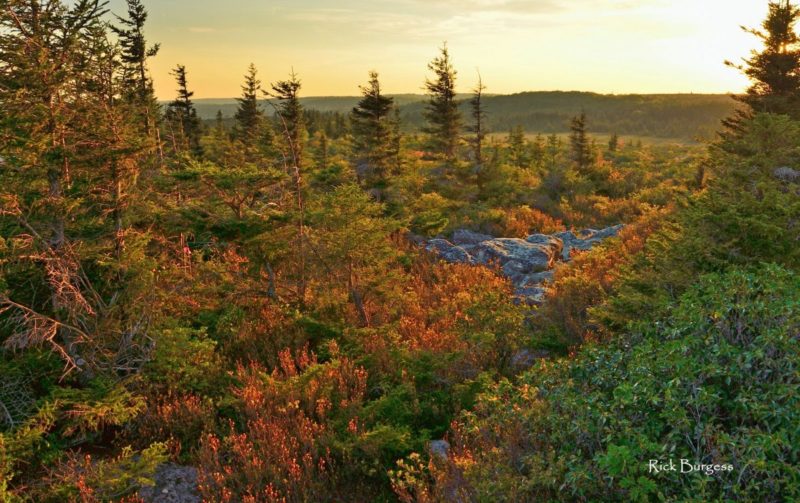
• Dolly Sods Wilderness
• Cranberry Wilderness
• Otter Creek Wilderness
• Laurel Fork Wilderness
• Roaring Plains West Wilderness
• Spice Run Wilderness
• Big Draft Wilderness
The Monongahela is recognized for its extensive trail system, trout streams, high-elevation spruce forests, and exceptional biodiversity. It provides habitat for numerous rare species and serves as one of the most important conservation landscapes in the central Appalachians.
George Washington National Forest
Portions of George Washington National Forest extend into eastern West Virginia, primarily in Pendleton, Hardy, and Hampshire counties, as well as adjoining counties. Most of the forest lies in Virginia, but its West Virginia holdings protect important ridges, forests, and watersheds within the Ridge-and-Valley region of the Appalachians.
Jefferson National Forest
Small portions of Jefferson National Forest extend into Monroe County and neighboring areas of southeastern West Virginia. Like George Washington National Forest, the majority of the forest lies in Virginia. The two forests are administered jointly as the George Washington and Jefferson National Forests.
National Recreation Areas
National recreation areas are federal lands designated primarily for outdoor recreation and conservation.
Spruce Knob–Seneca Rocks National Recreation Area
Created by Congress in 1965, Spruce Knob–Seneca Rocks National Recreation Area was the first national recreation area established within a national forest.
Located within Monongahela National Forest, the area encompasses approximately 100,000 acres and protects three iconic West Virginia landscapes:
• Spruce Knob, the state’s highest mountain
• Seneca Rocks, a 900-foot quartzite formation popular with climbers
• Smoke Hole Canyon along the South Branch Potomac River
The recreation area is among the most visited destinations in the state and serves as a center for hiking, camping, climbing, fishing, and scenic driving.
National Wildlife Refuges
National wildlife refuges are managed by the U.S. Fish and Wildlife Service and focus primarily on habitat conservation and wildlife protection.
Canaan Valley National Wildlife Refuge
Established in 1994, Canaan Valley National Wildlife Refuge became the nation’s 500th wildlife refuge. In Tucker County, the refuge protects more than 16,000 acres within one of the highest mountain valleys east of the Mississippi River. The area contains extensive wetlands, northern hardwood forests, bogs, and grasslands that support species uncommon elsewhere in the region.
The refuge provides habitat for migratory birds, black bears, white-tailed deer, bobcats, and numerous rare plant species.
Ohio River Islands National Wildlife Refuge
Established in 1990, Ohio River Islands National Wildlife Refuge consists of twenty-two islands and several mainland tracts distributed along approximately 362 miles of the upper Ohio River.
Headquartered near Williamstown, the refuge protects riverine ecosystems that support freshwater mussels, fish, waterfowl, bald eagles, and other wildlife dependent on large river habitats. The refuge encompasses more than 3,000 acres and preserves some of the last remaining natural islands in the Ohio River system.
Conservation Significance
Federal public lands play a vital role in protecting West Virginia’s natural and cultural heritage. They safeguard headwater streams that supply drinking water, preserve habitat for hundreds of wildlife species, protect historic sites significant to American history, and support a growing outdoor recreation economy.
These lands also contain some of the most intact forests in the eastern United States, serving as important reservoirs of biodiversity and providing opportunities for scientific research, environmental education, and public enjoyment.
From the cliffs of Seneca Rocks and the wetlands of Canaan Valley to the rapids of the Gauley River and the historic streets of Harpers Ferry, West Virginia’s federally protected lands represent a diverse collection of landscapes that continue to define the character and identity of the Mountain State.