
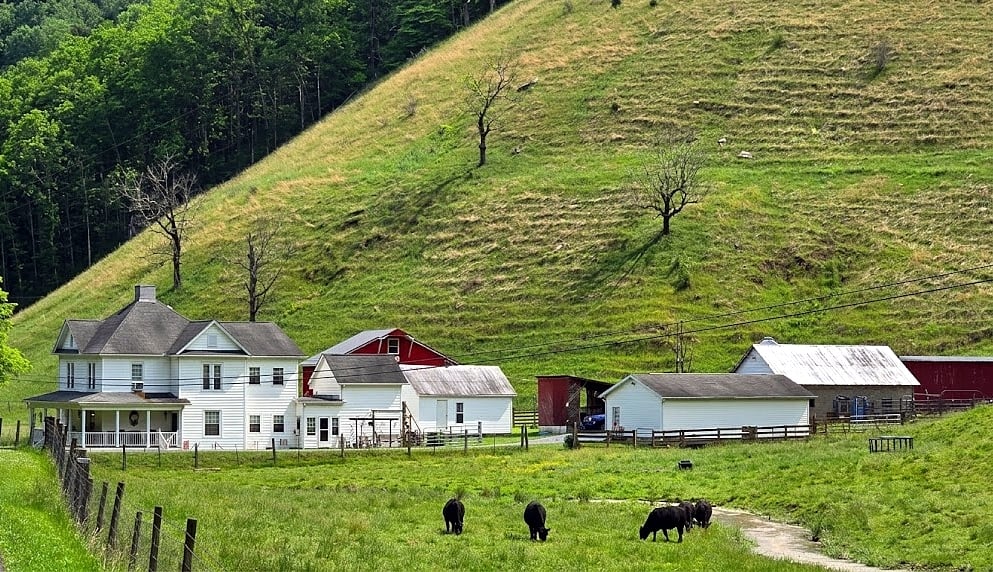
West Virginia Heartland real estate includes residential, commercial, agricultural, and recreational properties throughout the state’s central counties, a region often characterized by small towns, rolling hills, forested landscapes, and its strategic location near the geographic center of the Mountain State. It includes farms, hunting properties, recreational properties, and historic homes in and near Glenville, Grantsville, Cairo, West Union, Elizabeth, Spencer, and Clay.
West Virginia Heartland Real Estate Sponsors
David Sibray, Foxfire Realty
Phone: (304) 575-7390
Historian and publisher David Sibray has made a life’s work of promoting West Virginia and its landscape, as a marketer of tourism and of farms, forests, and fine homes. An expert in historic preservation, he serves on the board of the state’s Preservation Alliance and brings a wealth of knowledge to the sale of heritage properties and heartland real estate.
More about West Virginia Heartland Real Estate
West Virginia Heartland real estate encompasses residential, commercial, agricultural, and recreational properties throughout the state’s central counties, a region often characterized by small towns, rolling hills, forested landscapes, and its strategic location near the geographic center of the Mountain State. Commonly including all or parts of Braxton, Gilmer, Clay, Roane, Calhoun, and neighboring counties, the Heartland offers a real estate market defined by affordability, rural character, outdoor recreation, and deep cultural traditions. The region attracts homebuyers seeking a slower pace of life, retirees, outdoor enthusiasts, investors, and remote workers looking for access to natural amenities and lower housing costs.
Geography and Property Types
The Heartland region lies at the transition between West Virginia’s northern and southern regions, featuring a landscape of wooded ridges, river valleys, farmland, and small communities. Properties range from historic homes in county seats such as Clay, Harrisville, Elizabeth, Spencer, Sutton, Glenville, and West Union to modern residences, working farms, hunting tracts, timberland, and undeveloped acreage. Large parcels of rural land remain common throughout the region, offering opportunities for agriculture, recreation, conservation, and residential development. The area’s relatively low population density contributes to a market where land ownership remains an important component of real estate activity.
Historic Communities and Residential Development
Many Heartland communities trace their origins to early frontier settlements, transportation corridors, and agricultural centers. Historic districts, courthouse squares, and traditional neighborhoods remain defining features of towns throughout the region. Glenville, home to Glenville State College, combines educational, cultural, and commercial influences that support a diverse housing market. Harrisville is known for its historic architecture and preserved downtown district, while Calhoun is known for its low light pollution and star-spangled skies. Residential development generally occurs at a modest pace compared to the state’s larger metropolitan regions, preserving much of the area’s traditional character.
Agriculture, Timber, and Rural Land
Agricultural and timber properties play a significant role in the Heartland real estate market. Family farms, cattle operations, hay fields, and forested tracts occupy much of the region’s landscape. Many rural properties combine residential, agricultural, and recreational uses, reflecting long-established patterns of land ownership in central West Virginia. Timber resources remain economically important in several counties, while growing interest in sustainable forestry, conservation easements, and recreational land ownership has diversified demand for rural acreage.
Recreation and Tourism-Driven Demand
Outdoor recreation has become an increasingly influential factor in Heartland real estate. The Elk River Trail, the North Bend Rail Trail, and numerous state parks and wildlife management areas attract visitors and property buyers seeking access to boating, fishing, hunting, hiking, and camping. Vacation cabins, second homes, and recreational retreats have become more common in areas near lakes, rivers, and public lands. The region’s scenic beauty and relative seclusion appeal to buyers seeking a connection to West Virginia’s natural environment without the higher property values often associated with resort destinations.
Economic Factors and Emerging Opportunities
Historically dependent on agriculture, natural resources, and small-scale manufacturing, the Heartland economy has diversified through tourism, healthcare, education, government services, and remote employment opportunities. Improved broadband access in some communities has increased the region’s appeal to remote workers seeking affordable housing and rural lifestyles.
Transportation routes including Interstate 79, U.S. Route 19, and several major state highways provide connections to larger population centers while allowing communities to retain their small-town character. Commercial real estate activity remains concentrated in county seats and transportation corridors, where retail, healthcare, and service industries support local economies.
Contemporary Market Trends
West Virginia Heartland real estate continues to attract buyers seeking affordability, privacy, and outdoor recreation. Compared with many regions of the eastern United States, housing costs remain relatively modest, allowing purchasers to acquire larger homes and landholdings at lower prices. Interest from retirees, former residents returning to the state, and remote workers has contributed to increased demand in some markets, particularly near recreational destinations and community centers.
As broadband expansion, tourism development, and infrastructure improvements continue, the Heartland remains an important and evolving segment of West Virginia’s real estate landscape, balancing economic growth with the preservation of its rural heritage and natural resources.
Since 2020, the remote work revolution has dramatically changed the West Virginia Heartland real estate market, according to David Sibray, a real estate agent with Foxfire Realty and publisher of West Virginia Explorer. “Rural benefits and proximity to major cities like Charleston have changed the heartland real estate market dramatically,” Sibray said.
West Virginia Heartland Real Estate Markets
All or part of the following counties may be considered to be part of the Kanawha Valley Real Estate region—Calhoun County, Clay County, Ritchie County, Wirt County, Gilmer County, Kanawha County, Doddridge County, Putnam County, and Roane County.