
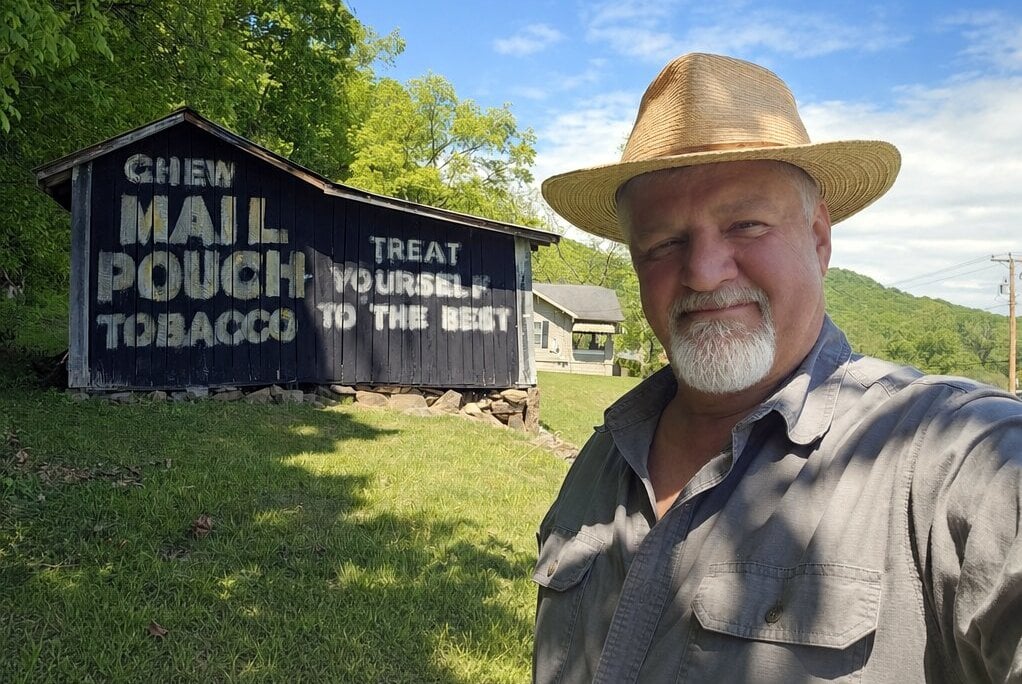
CHARLESTON, W.Va. — Authentically West Virginian, Mail Pouch barns are gaining national attention. Now, three roadside barns in West Virginia, painted with the slogan “Chew Mail Pouch,” have been added to the National Register of Historic Places.
The 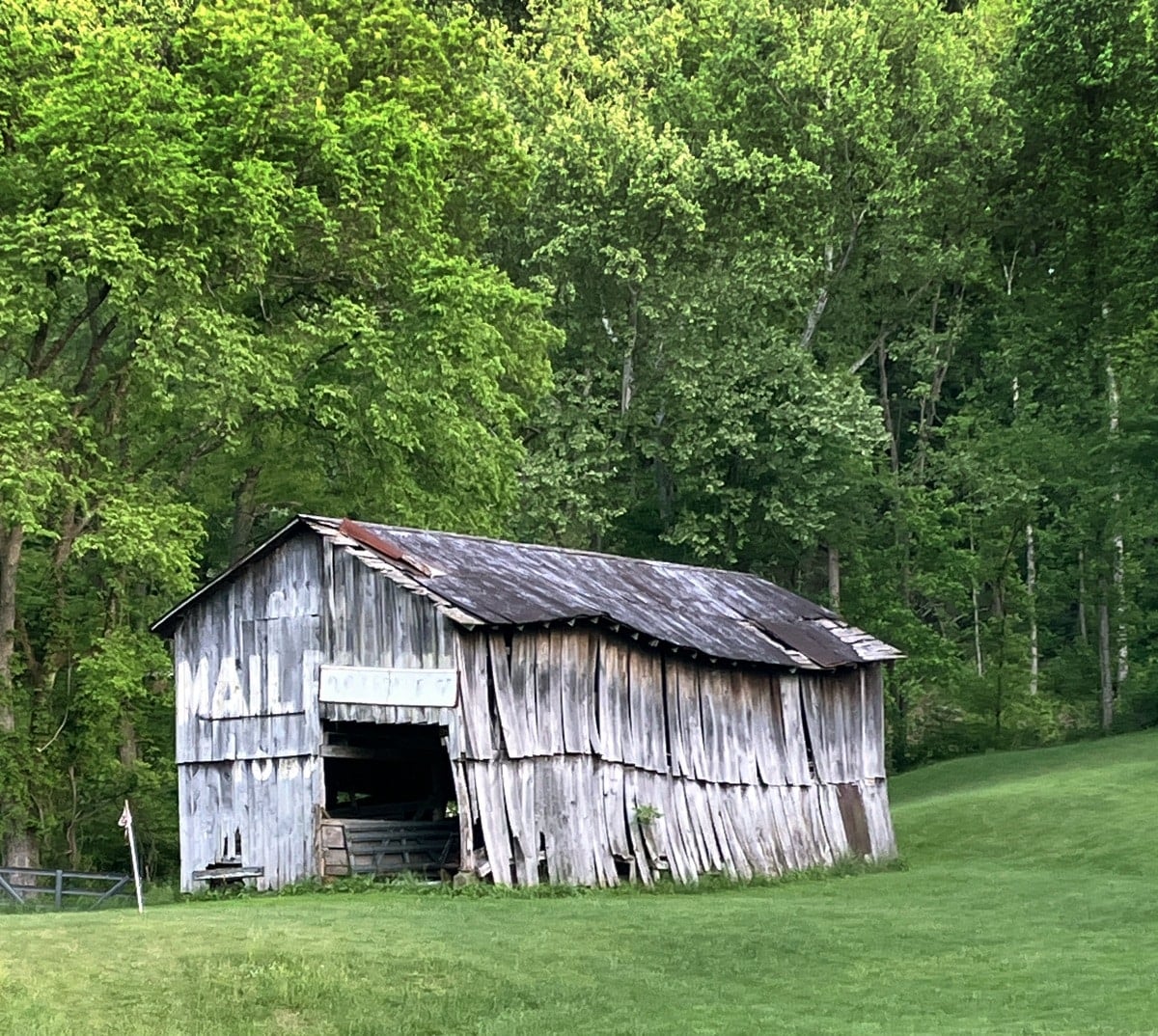 Owners of Mail Pouch barns have access to financing and technical support for maintenance. (Photo courtesy Cody Straley)[/caption]
They began selling the clippings as a new product, which they branded “Mail Pouch.” The origins of the name are hazy, but it is believed to have been suggested by a mailman during a naming contest and to refer to the large sacks or pouches of mail that arrived in the city on riverboats.
The blend proved so popular that the brothers focused exclusively on selling it. They closed their store, stopped making cigars, and built a large factory on the south side of town. In 1890, Aaron and Samuel Bloch incorporated as the Bloch Brothers Tobacco Co.
Much of Mail Pouch’s success stemmed from advertising—in newspapers, on trading cards, in-store displays, and on thermometers. But its most enduring marketing effort was the use of large, hand-painted signs. The “Chew Mail Pouch” sign, with a black background and white-and-yellow letters, emerged in the 1910s and was used consistently for decades.
The company first began painting signs on commercial buildings in urban areas, but soon gravitated toward barns. They and many other business owners sought to capitalize on the rise of automobiles by placing advertisements along the budding road network. Roadside barns, which were abundant, proved an ideal canvas. They were large, easy to see while driving, and inexpensive to lease.
Bloch Brothers probably wasn’t the first company to advertise with barn signs, but their campaign was the longest and most prolific. Some estimates claim that up to 20,000 Mail Pouch signs were painted during the twentieth century. Many were in Ohio, Kentucky, West Virginia, and Pennsylvania—but there were also some in New York, Maryland, Indiana, Michigan, Illinois, and as far away as the Pacific Northwest. Today, Mail Pouch is ubiquitous with the practice of barn sign painting.
Painting a Mail Pouch barn
Acquiring, painting, and maintaining barns required both effort and strategy. The company dispatched teams of painters to travel cross-country to find suitable barns and negotiate leases. Contrary to popular belief, painters did not offer to paint an entire barn for free in exchange for adding a Mail Pouch sign. They painted only the side or sides that would be used for the sign. As compensation, Bloch Brothers offered owners cash, tobacco, and magazine subscriptions. After a sign was painted, crews would return every few years to touch it up, provided the owners renewed their leases.
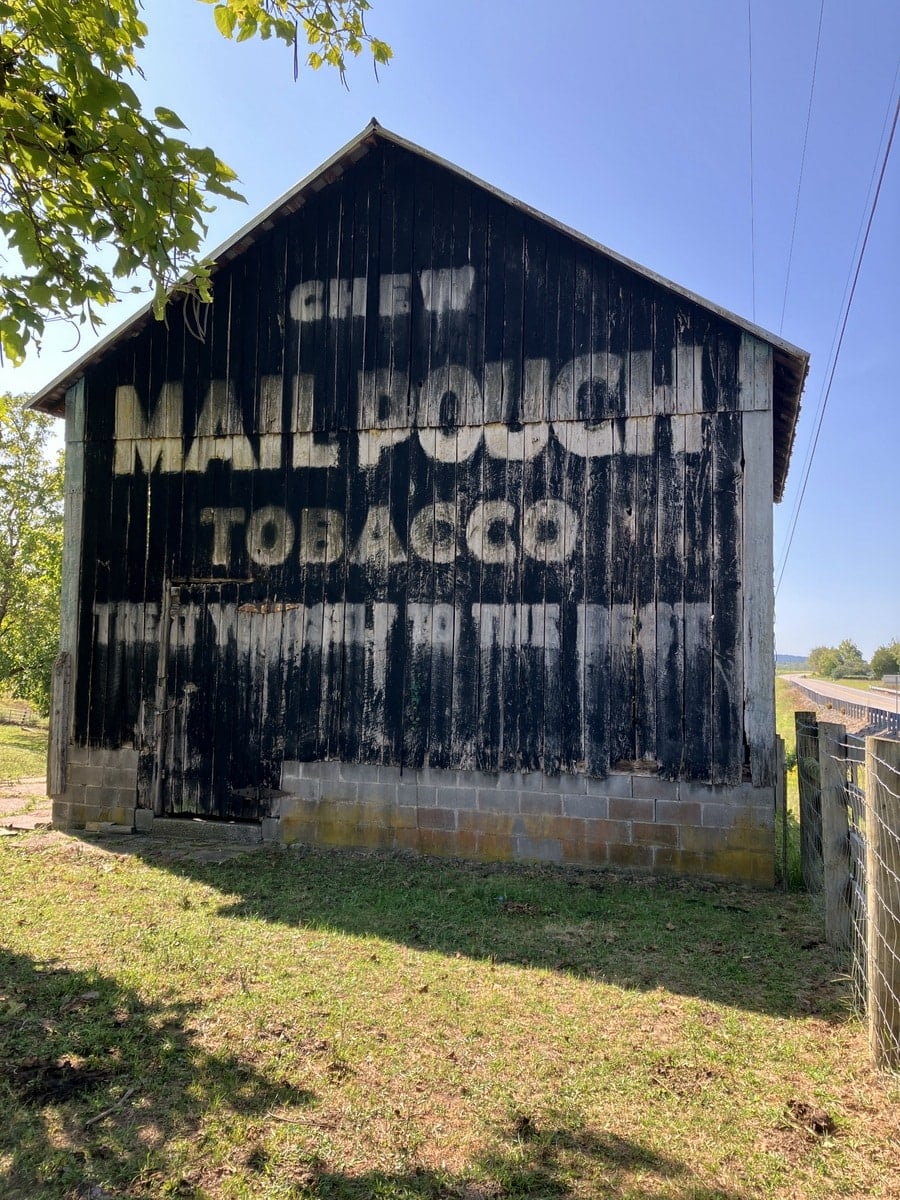
A barn painting crew typically consisted of two men equipped with hand brushes, ladders, a hand-pulley scaffold, large kegs of paint, and a pickup truck. To create the heavy black paint, they mixed thick white lead paint with lampblack and gasoline or linseed oil. Yellow paint was bought separately.
The less-experienced of the two painted the black background, while the other handled the lettering, which required more care. Mail Pouch painters did not use stencils or measuring tools but determined the location, size, and spacing of the letters entirely by eye. Usually, they started by painting one of the middle letters in the phrase, such as the “P” in “Mail Pouch.” From there, they expanded to the left and right, filling in the remaining letters. Under ideal conditions, one crew could paint an entire barn sign in several hours. Sometimes, they did up to three a day.
The golden years of Mail Pouch barn painting ended in 1965 with the passage of the 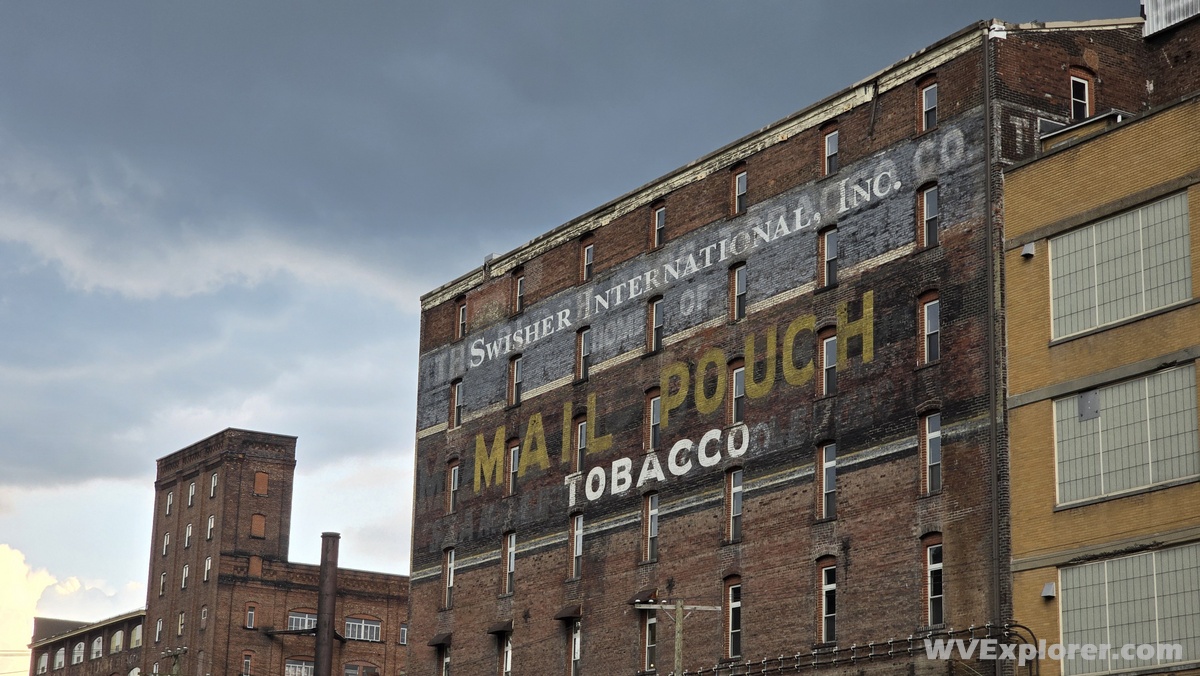 The Bloch Brothers factory in South Wheeling was later owned by the Swisher Company, manufacturer of Swisher Sweets cigars.[/caption]
Following a corporate merger, Bloch Brothers, now rebranded as the Helme Tobacco Co., dramatically scaled back barn painting due to federal regulations. Changes in the marketing industry also played a role, as radio and television advertisements became more lucrative than outdoor signage. The company kept a single painter on its payroll to continue, mainly for nostalgic reasons. By this time, Mail Pouch tobacco and its barns had become inseparable in the public imagination.
Harley Warrick, of Belmont, Ohio, carried the distinction of being “the last barn painter.” He had joined the painting crew in 1946 and made his first Mail Pouch sign on a barn near Ripley. Soon, he achieved minor celebrity status as the last person employed to paint Mail Pouch signs. Warrick gave numerous interviews, starred in a television commercial, and painted Mail Pouch signs for exhibition at places such as the 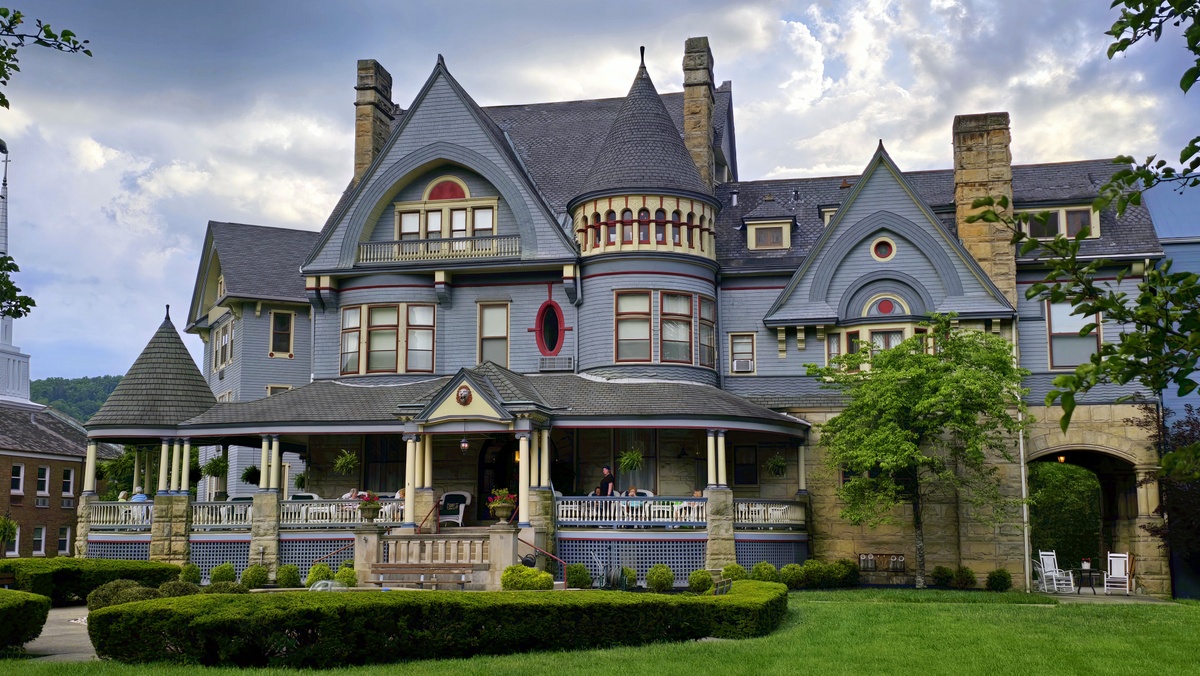 The Elmwood estate dazzles on the National Road in Wheeling, West Virginia. (Photo: Dave Sibray)[/caption]
WHEELING, W.VA. — Perhaps the most fantastic Victorian residence ever built in West Virginia was that of the founder of the company known for Mail Pouch Tobacco. Samuel Bloch, co‑founder and president of Bloch Brothers Tobacco Co., spared no expense in 1891 while creating the elaborate 20-room mansion on National Road in Pleasant Valley, which was then among the most fashionable addresses in the country.
After cutting his teeth as a grocer and court reporter, Bloch, at age 29 in 1879, turned to tobacco production with his brother, Aaron. Their rapid success lay in packaging flavorful scrap tobacco into “Mail Pouch,” which soon became popular across rural America. READ THE FULL STORY HERE.
There were 2 mail pouch barns in Grant/Hardy county on Route 220. They were both on the stretch of road between Petersburg and Moorefield. They have both unfortunately been painted over these days.
5 miles west of romney wv on Parker Bros.farms barn.
There is a mail pouch barn here in Putnam county wv,it’s at the Putnam county fairgrounds, looks like it might need some love.
I along with several classmates from West Liberty State College were employed during winters breaks to work at Mail Pouch. Our job primarily consisted of stomping on warm tobacco inside a large packaging box and preparing the boxes for shipment overseas. It was great fun, we took turns stomping, made good money and I used a portion of my earnings to fly to Florida for Spring Break. You kinda needed a break from the heavy layer of tobacco fumes and flavored tobacco.