
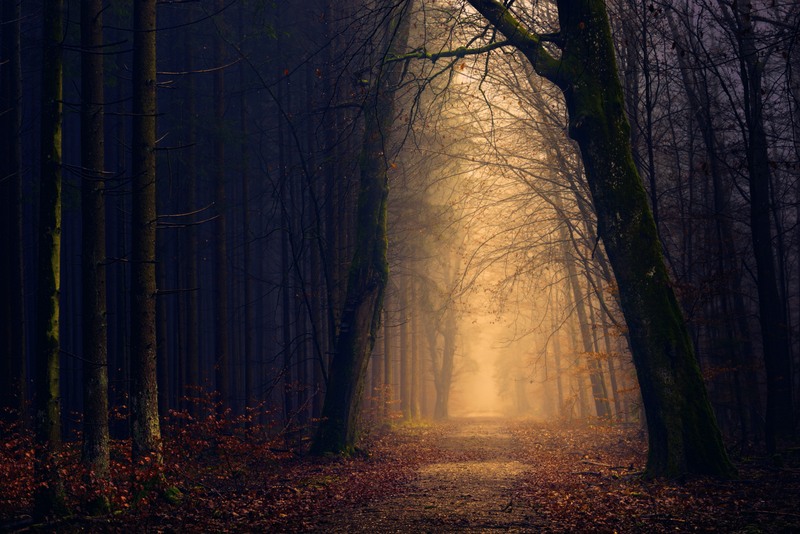
Historians once assumed that West Virginia had been shaded by a vast unbroken forest, but an expert on old forests in the Mountain State says the region was, instead, a patchwork landscape of woodlands and fields opened by Native Americans.
“I’ve heard it said that a squirrel could run limb-to-limb across West Virginia without touching the ground,” says Doug Wood, “but that squirrel would have to follow a pretty circuitous path.
“West Virginia was a mosaic of vegetative features, and there were plenty of open lands from the late 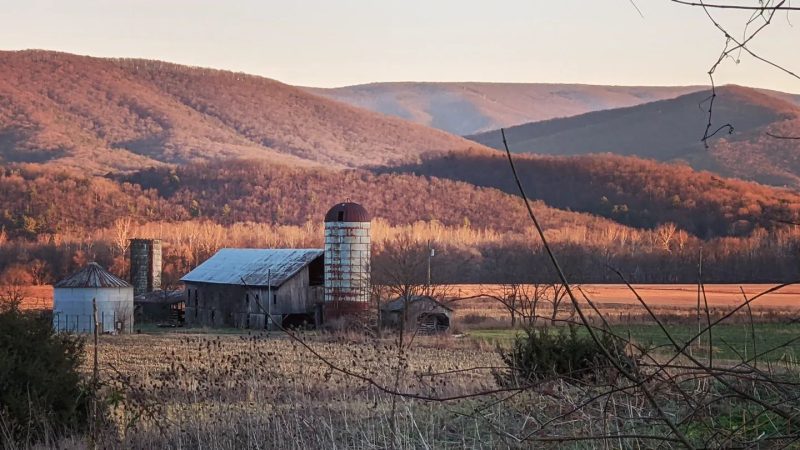 Old Fields, in Hardy County, was named for fields found by settlers in the valley of the South Branch of the Potomac. (Photo courtesy Mark Wilt)[/caption]
“You’ll find maps and mentions of old fields and Indian meadows and savannahs—and that’s what these were,” he says. Before the arrival of European settlers, only about one percent of forest fires were started by lightning strikes, and the rest were manmade.
The first settlers often found the already-cleared land ideal for their cabins, though finding wood to build with in these open lands could sometimes be difficult if the opening was vast.
In some cases, large grasslands were so vast that bison, which were not native to the mountain forests, moved in after natives left the settlements in the 1600s.
“It wasn’t until after the Beaver Wars when the Iroquois forced inhabitants out of the mid-Ohio Valley region that buffalo started to move into the region,” Wood said.
“We don’t find any archaeological evidence of buffalo in the Kanawha Valley or the central part of the state before about 1700, though we do find plenty of evidence of deer, of course, and elk.”

Sign up to receive a FREE copy of West Virginia Explorer Magazine in your email weekly. Sign me up!