
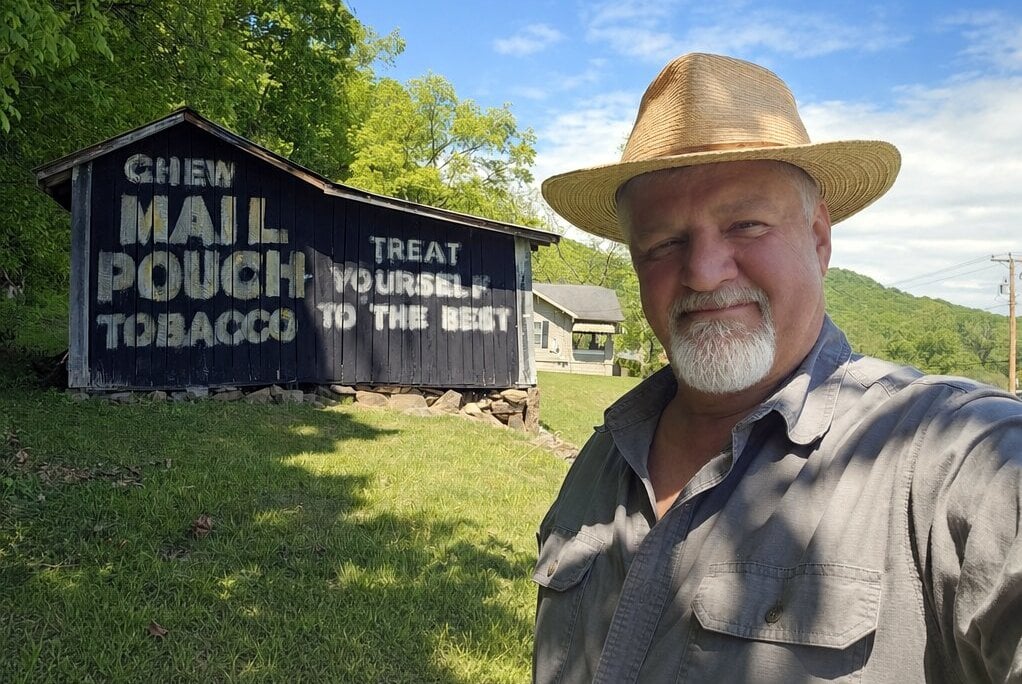
CHARLESTON, W.Va. — Authentically West Virginian, Mail Pouch barns are gaining attention nationally. Three roadside barns in West Virginia, painted with the slogan “Chew Mail Pouch,” have been added to the National Register of Historic Places.
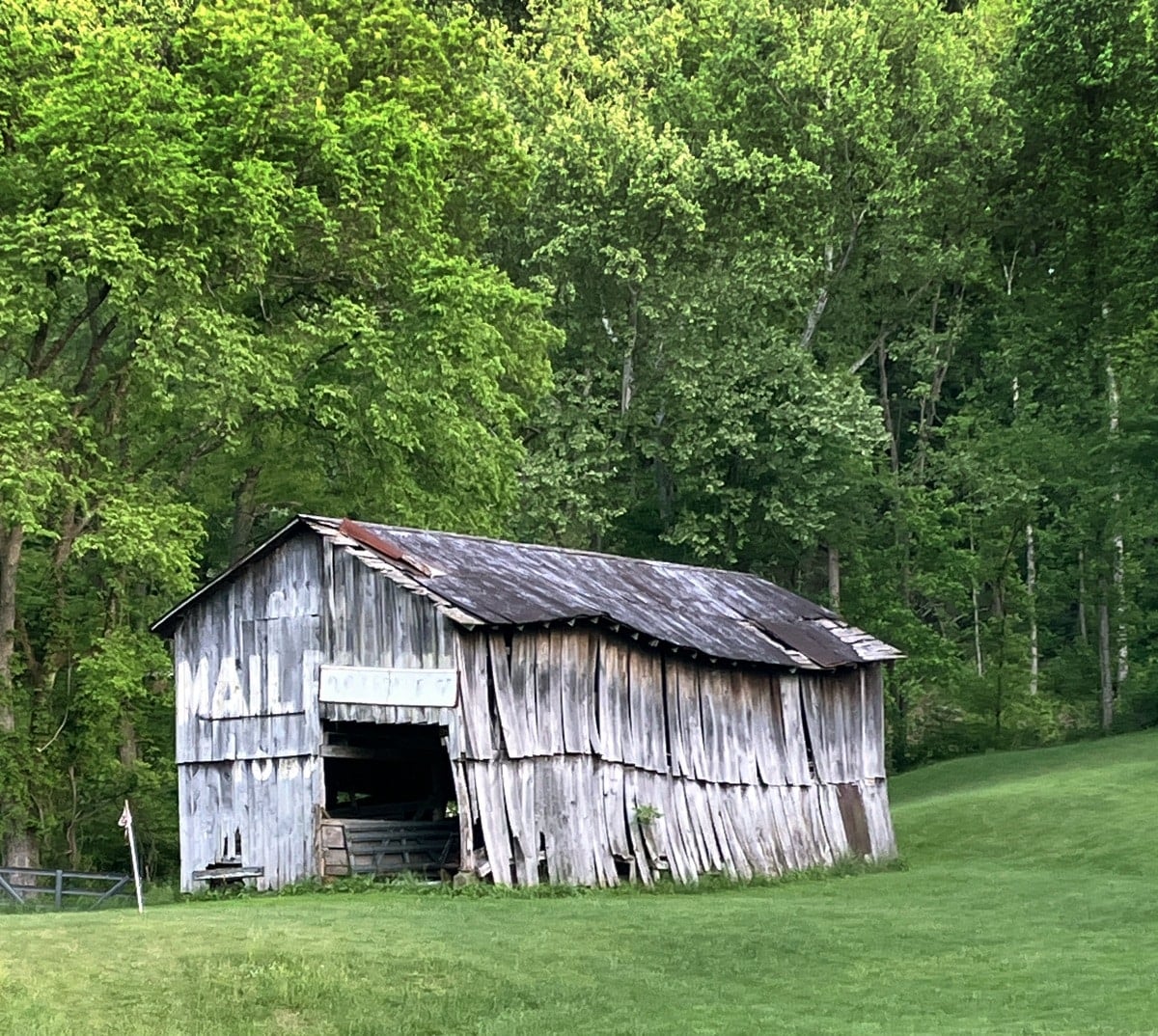
The See Barn in Randolph County, the Wilson Barn in Mason County, and the Fulk-Parsons_Hutchison Barn in Jackson County are among the increasingly rare examples of an advertising phenomenon that swept the American countryside in the early 20th century, but began in West Virginia.
The rise of Mail Pouch tobacco in West Virginia
On the Ohio River, the city of Wheeling, West Virginia, was a prominent tobacco producer. There, German-American brothers Aaron and Samuel Bloch, on the second floor of their dry goods store, operated a small cigar store. One day, they noticed their employees chewing on leftover clippings.
They began selling the clippings as a new product, which they branded “Mail Pouch.” The origins of the name are hazy, but it is believed to have been suggested by a mailman during a naming contest and to refer to the large sacks or pouches of mail that arrived in the city on riverboats.
The blend proved so popular that the brothers focused exclusively on selling it. They closed their store, stopped making cigars, and built a large factory on the south side of town. In 1890, Aaron and Samuel Bloch incorporated as the Bloch Brothers Tobacco Co.
Much of Mail Pouch’s success stemmed from advertising—in newspapers, on trading cards, in-store displays, and on thermometers. But its most enduring marketing effort was the use of large, hand-painted signs. The “Chew Mail Pouch” sign, with a black background and white-and-yellow letters, emerged in the 1910s and was used consistently for decades.
The company first began painting signs on commercial buildings in urban areas, but soon gravitated toward barns. They and many other business owners sought to capitalize on the rise of automobiles by placing advertisements along the budding road network. Roadside barns, which were abundant, proved an ideal canvas. They were large, easy to see while driving, and inexpensive to lease.
Bloch Brothers probably wasn’t the first company to advertise with barn signs, but their campaign was the longest and most prolific. Some estimates claim that up to 20,000 Mail Pouch signs were painted during the twentieth century. Many were in Ohio, Kentucky, West Virginia, and Pennsylvania—but there were also some in New York, Maryland, Indiana, Michigan, Illinois, and as far away as the Pacific Northwest. Today, Mail Pouch is ubiquitous with the practice of barn sign painting.
Painting a Mail Pouch barn
Acquiring, painting, and maintaining barns required both effort and strategy. The company dispatched teams of painters to travel cross-country to find suitable barns and negotiate leases. Contrary to popular belief, painters did not offer to paint an entire barn for free in exchange for adding a Mail Pouch sign. They painted only the side or sides that would be used for the sign. As compensation, Bloch Brothers offered owners cash, tobacco, and magazine subscriptions. After a sign was painted, crews would return every few years to touch it up, provided the owners renewed their leases.
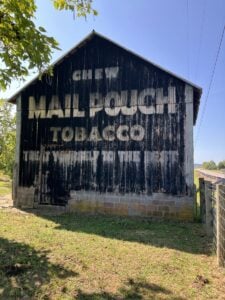
A barn painting crew typically consisted of two men equipped with hand brushes, ladders, a hand-pulley scaffold, large kegs of paint, and a pickup truck. To create the heavy black paint, they mixed thick white lead paint with lampblack and gasoline or linseed oil. Yellow paint was bought separately.
The less-experienced of the two painted the black background, while the other handled the lettering, which required more care. Mail Pouch painters did not use stencils or measuring tools but determined the location, size, and spacing of the letters entirely by eye. Usually, they started by painting one of the middle letters in the phrase, such as the “P” in “Mail Pouch.” From there, they expanded to the left and right, filling in the remaining letters. Under ideal conditions, one crew could paint an entire barn sign in several hours. Sometimes, they did up to three a day.
The golden years of Mail Pouch barn painting ended in 1965 with the passage of the U.S. Highway Beautification Act, which introduced new regulations on highway advertising. Billboards, including barn signs, were banned anywhere within 660 feet of highways and interstates. A large proportion of Mail Pouch barns fell within that range. Potentially thousands were destroyed, either by being painted over or by the barns themselves being demolished. In response to public outcry, new highway legislation passed in 1974 created an exemption for barn signs, reflecting a growing recognition of their historic and cultural value. But the damage had been done.

Following a corporate merger, Bloch Brothers, now rebranded as the Helme Tobacco Co., dramatically scaled back barn painting due to federal regulations. Changes in the marketing industry also played a role, as radio and television advertisements became more lucrative than outdoor signage. The company kept a single painter on its payroll to continue, mainly for nostalgic reasons. By this time, Mail Pouch tobacco and its barns had become inseparable in the public imagination.
Harley Warrick, of Belmont, Ohio, carried the distinction of being “the last barn painter.” He had joined the painting crew in 1946 and made his first Mail Pouch sign on a barn near Ripley. Soon, he achieved minor celebrity status as the last person employed to paint Mail Pouch signs. Warrick gave numerous interviews, starred in a television commercial, and painted Mail Pouch signs for exhibition at places such as the W.Va. Culture Center. Many newspaper and magazine articles treated him as the last torchbearer of a dying folk art.
The Decline and Preservation of America’s Mail Pouch Barns
Warrick’s 1993 retirement marked the permanent end of the Mail Pouch barn painting program, though he continued painting signs on occasion until his death in 2000. It’s likely that every surviving Mail Pouch barn in West Virginia has been painted or repainted by Warrick. Most have received no maintenance since then.
Some sources estimate that there may have been as many as 1,000 barns in West Virginia, though those figures might include repainted preexisting signs. Those numbers have plunged dramatically since then, mainly due to neglect. Photographer Steve Shaluta, who published a picture book of Mail Pouch barns, estimated that fewer than 150 remained in the state by 2005. Today, there are only around 60 surviving in West Virginia, according to data from the nonprofit organization Mail Pouch Barnstormers. More are lost each year as old paint fades and aging barns deteriorate.
The National Register designation for three Mail Pouch barns offers hope that this part of rustic Americana can be preserved. There is potential for additional Mail Pouch barns to be added to the National Register in the future. The West Virginia State Historic Preservation Office recently produced a National Register Multiple Property Documentation paper called “Mail Pouch Tobacco Barns of West Virginia.” This document provides background on the barns’ history and explains what qualifies them for the National Register. The paper’s intent is to help others write their own nominations for Mail Pouch barns.
Listing on the National Register does not guarantee funding or legal protections for a historic property, but it does open the opportunity to apply for matching grants and historic rehabilitation tax credits to help maintain the property.
Additionally, Mail Pouch Barnstormers offers a $1,000 annual grant to barn owners to have their sign repainted by trained professionals. Owners are encouraged to seek out these opportunities to preserve this unique chapter in West Virginia history.