
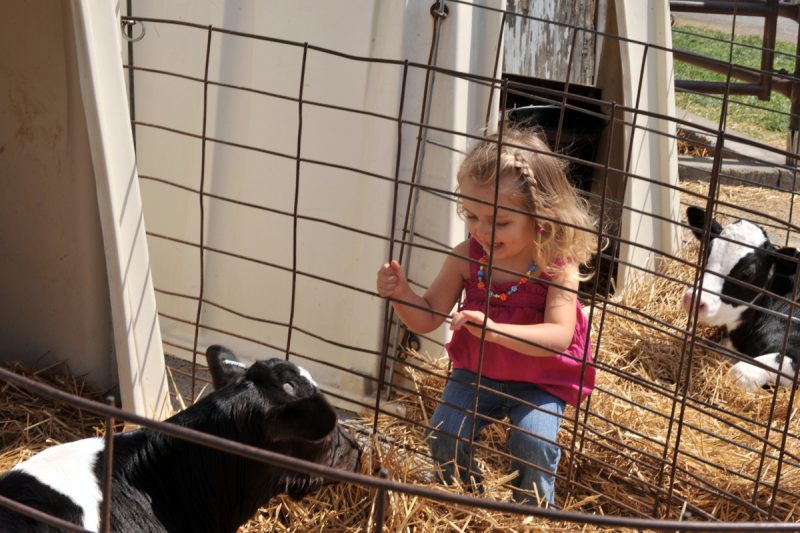
MORGANTOWN, W.Va. — To help farmers and ranchers incorporate agritourism into their business models, a West Virginia University researcher is gathering a team of national experts to develop guidelines for generating agritourism revenue.
Agritourism is boosting the economy in West Virginia and providing an additional revenue source for farmers. In 2022, direct sales on U.S. farms increased to $4.5 billion, according to Doolarie “Dee” Singh-Knights, a university extension specialist and agribusiness professor.
“Agritourism is a valid farm diversification strategy,” Singh-Knights said. “But we have a society where we don’t understand where our food comes from. We think it comes from Kroger. We don’t have that link back to agriculture.
“So, we find that if we bring visitors to the farm, we’re closing that knowledge gap with our consumers, and we’re also providing additional revenue sources for the farmers, which they need to remain profitable.”
With support from the National Institute of Food and Agriculture, Singh-Knights is building guidelines with national agritourism experts from the University of Vermont, Penn State University, University of California, Davis, Troy University, Cornell University, Rutgers University, Clemson University, American Indian Alaska Native Tourism Association, FarmStay USA and Cultivating Tourism.
Bringing visitors to a farm exposes them to potential hazards, and farm and ranch owners may not be aware of the increased liability. Some states, like California and Oregon, have stringent regulations regarding zoning and what qualifies as agritourism, but operators may still need help implementing the nuances safely and legally.
He says that agritourism liability, laws, and regulations may be equally complicated for educators and extension agents working with farms, so the national team aims to increase educators’ technical capacity.
“We are educating other extension educators, and the educators are then going to work with the farmers,” Singh-Knights said.
The group will build the curriculum in the project’s first year. In year two, they will train agritourism operators to use it. In the third year, they will test the curriculum with farmers, make improvements, and make it widely available.
The project will include 16 advisory committee members representing diverse stakeholders, including entities like visitors’ bureaus, tour companies, and chambers of commerce, as well as networks like the Global Agritourism Network and the National Extension Tourism Agritourism Working Group.
“We’re working with the entire agritourism ecosystem,” Singh-Knights said, “including Indigenous groups like American Indian Alaska Native Tourism Association, because agritourism on Indigenous cattle farms is going to look very different than a traditional cattle farm.”
Agritourism began in Italy in the 1960s, when visitors often experienced farms with lodging and a restaurant. Modern experiences and promotional efforts vary by country and region due to the differences in crops and livestock.
Landscapes look different in California versus Florida or West Virginia, and agriculture is happening in those regions. Agritourism in Maine includes ocean-based experiences, like seafood. The project will develop a curriculum to help each region promote its unique identity.
Educating the public on environmental initiatives in farming is also a goal. These include growing plant-based foods and managing climate events.
“We have farmers doing everything within their power to implement carbon sequestration initiatives,” Singh-Knights said. “A lot of sustainable and regenerative farming happens. I think it’s important that society understands that farming can emit carbon, but we’re also doing a lot to make sure we’re managing that carbon emission.”
As the project unfolds, the team of national experts will link to the Global Agritourism Network to transmit and promote the curriculum, even extending it to other countries that might use it with their practices and regulations.
While the public may think of agritourism as hayrides or weddings at farms, an activity is only considered such if it has a direct link to a working farm.
“We’re not just apple picking or strawberry picking,” Singh-Knights said. “This is a working farm that produces food, fiber or forestry products. We want you to understand what we do on this farm.
“We want you to buy our products, whether that is a commodity product or a value-added product, like alpaca socks. And we also want you to have fun on the farm, because the farm is a great place to have fun.”