





West Virginia creates special access roads for hunters with disabilities
CHARLESTON, W.Va. — West Virginia officials are reminding hunters with disabilities that special access roads in national forests and state-owned wildlife management areas are open specifically to them.
Brett McMillion, director of the W.Va. Division of Natural Resources, said that designating hunting areas for disabled hunters is a program that encourages everyone to hunt.
“Hunting is a cherished tradition in West Virginia, and the Class Q program makes that tradition more accessible to everyone,” McMillion said.
“Through our partnership with the U.S. Forest Service, we’re proud to provide hunters with disabilities greater access to our public lands and opportunities to enjoy the outdoors.”
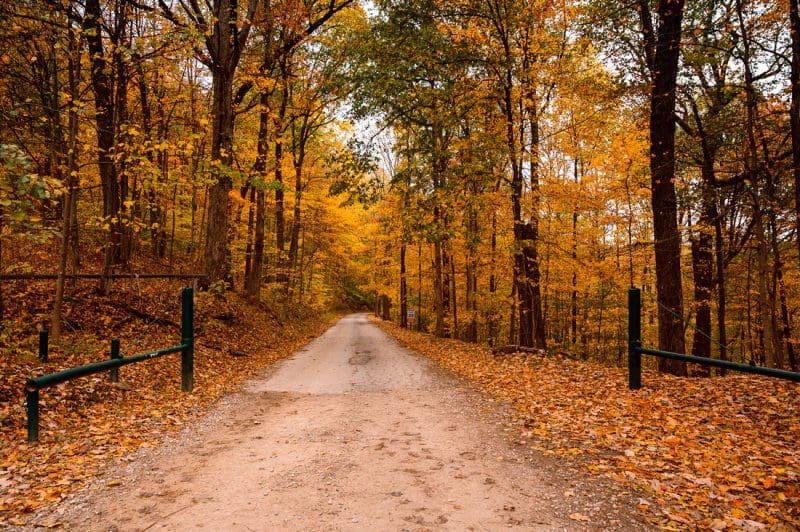
The Class Q hunting program allows improved, extended vehicular access on certain limited-access gated roads in the George Washington and Jefferson National Forests and the Monongahela National Forest, as well as certain limited-access gated roads in state wildlife management areas.
Access is limited to hunters with Class Q permits, which are available to individuals with permanent and irreversible respiratory, cardiovascular, or lower extremity use limitations. For a list of Class Q access road sites, visit WVDNR.gov/hunting/class-q-hunting.
Rules for Using Class Q Access Roads
- Hunters may hunt from a stationary vehicle with the engine turned off, but may not park on public roads or highway rights-of-way.
- Hunters may be accompanied by one assistant at least 16 years old inside the vehicle. On national forest lands, an assistant is required. Assistants are not permitted to hunt.
- All hunting regulations apply. Class Q permit holders must carry the proper licenses, stamps, and permits while hunting.
- ATVs and UTVs are not allowed on national forests or WMAs. Hunting with bait is prohibited on public lands.
- Additional rules apply on national forest lands through a Special Land Use Permit granted to the division by the U.S. Forest Service.
- Hunters with approved permits receive a wallet-sized card, which must be presented at the appropriate national forest or division district office to receive a letter of authorization and a gate key for designated roads.
To qualify, applicants must meet the requirements set in West Virginia Code Chapter 20 and have their application certified by a licensed physician. Applications and more information are available at all WVDNR offices or online at WVHunt.com.
About adaptive hunting opportunities nationally
Hunting is an activity that connects people with nature, provides food, and fosters a sense of community. For individuals with disabilities, adaptive hunting practices ensure that this tradition remains accessible, safe, and rewarding.
Advances in technology, adaptive equipment, and inclusive programs have significantly expanded opportunities, allowing people with a wide range of physical or cognitive limitations to participate fully.
Adaptive Equipment and Technology
One of the most crucial aspects of adaptive hunting is the use of specialized equipment. Mobility aids, such as all-terrain wheelchairs, track chairs, and off-road vehicles, enable hunters to reach remote locations that would otherwise be inaccessible.
Adaptive firearms and crossbows are also widely available; for instance, trigger mechanisms can be modified for use with limited hand strength or operated by sip-and-puff systems for quadriplegic hunters.
Mounting systems allow firearms to be secured and aimed with precision, while scopes with digital enhancements assist hunters with visual impairments.
Equally important are the supportive structures around hunting. Many states offer special hunting permits or seasons for individuals with disabilities, often granting closer access to hunting grounds, extended seasons, or additional assistance.
These accommodations reduce physical barriers and increase safety. Nonprofit organizations and veteran support groups also host adaptive hunting events, pairing participants with trained guides and volunteers who provide logistical help and encouragement. Such programs not only enable the hunt but also build camaraderie and confidence.
Safety and Education
Safety remains a central focus. Hunters with disabilities may need assistance with transport, weapon handling, or field dressing game. Adaptive practices emphasize teamwork, ensuring that hunters can participate actively while minimizing risks.
Education plays a vital role as well, with adaptive hunter education courses tailored to address specific needs while maintaining ethical standards of wildlife conservation and responsible harvesting.
Benefits Beyond the Hunt
Beyond equipment and logistics, adaptive hunting also contributes to emotional well-being. Many hunters report that the opportunity to return to the field restores a sense of independence and identity.
For veterans and others coping with trauma or injury, the experience often serves as a form of therapy, offering peace, resilience, and renewed purpose in the outdoors.
Hunting practices for people with disabilities integrate specialized equipment, supportive regulations, and community-based programs to create a safe and inclusive environment.
These adaptations honor the principle that hunting is not solely about the pursuit of game but also about connection—connection to nature, tradition, and one another.
Nightfall’s Value: Light pollution can diminish real estate worth in W.Va.
WINFIELD, W.Va. — An increasing number of new West Virginia residents are being drawn to its rolling hills and quiet valleys to escape brightly lit...
Inside Appalachian Escapes: Themed rentals, escape rooms, and a love letter to West Virginia
FAYETTEVILLE, W.Va. — What began as a search for an affordable retirement option has turned into one of southern West Virginia’s most imaginative...
West Virginia bottler wins silver award at international water competition
BERKELEY SPRINGS, W.Va. — Le Sage Natural Water, of Lesage, has been awarded a silver medal for its purified water at the 36th annual Berkeley...
West Virginia uniquely prepared to dominate 21st-century outdoor economy
CHARLESTON, W.Va. — West Virginia is uniquely prepared to dominate in the 21st-century outdoor economy of the U.S., thanks to its unmatched...
Flood risk outpaces warnings, advocates say, as W.Va. considers changes to resiliency fund
CHARLESTON, W.Va. — As the W.Va. House of Delegates considers changes to Senate Bill 390, the West Virginia Rivers Coalition warns that the state...
We asked AI how its own data centers could pollute West Virginia. Here’s what it had to say
(The following article was generated partly by ChatGPT in response to a prompt about how data centers pollute. As ChatGPT is powered by data...
Inaugural W.Va. Outdoor Economy Summit to unite leaders around $2.1 billion growth
CHARLESTON, W.Va. — West Virginia’s outdoors are more than a scenic backdrop. They’re a strategic economic asset. That message will take...
West Virginia State Parks Foundation launches online merchandise store
HURRICANE, W.Va. — The West Virginia State Parks Foundation has launched an official online merchandise store, offering supporters a new way to...
West Virginia Travel Safety: What it means for residents and visitors in 2026
CHARLESTON, W.Va. — Travel safety in West Virginia is shaped less by headline-grabbing crime and more by geography, weather, and the realities of...
Did Abraham Lincoln and Jefferson Davis secretly meet in West Virginia?
PHILIPPI, W.Va. — Did Abraham Lincoln and Jefferson Davis secretly meet in what is now West Virginia just days after the first land battle of the...