















Flood risk outpaces warnings, advocates say, as W.Va. considers changes to resiliency fund
CHARLESTON, W.Va. — As the W.Va. House of Delegates considers changes to Senate Bill 390, the West Virginia Rivers Coalition warns that the state risks narrowing its flood strategy at a time when disasters are becoming more frequent, more costly, and more destructive.
The organization points to a growing gap between early-warning technology and long-term flood prevention, arguing that while alert systems can save lives, they do not reduce the physical risk communities face when storms arrive. According to the coalition, flood resilience requires sustained investment in mitigation, particularly nature-based solutions, long before rainfall begins.
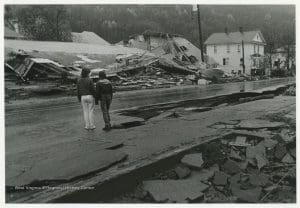
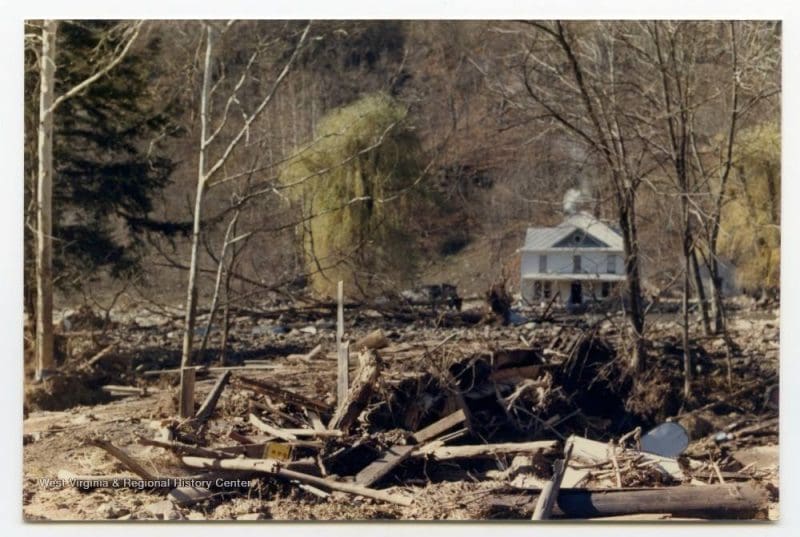
Historic floods in 1985 and 2016 killed dozens of residents and caused billions of dollars in damage statewide.
A new analysis by Rebuild by Design underscores that concern. Its report, Atlas of Disaster: West Virginia, documents 23 federally declared disasters between 2011 and 2024, all of which required federal assistance.
Nineteen of those disasters involved flooding, while 17 included landslides or mudslides. Every county in the state has been affected, with Lincoln County recording the most disaster declarations.
Together, those events triggered more than $950 million in FEMA and HUD assistance, according to the report, a figure that the coalition says reflects the long-term costs of underinvesting in flood mitigation.
“Warning systems help people react,” said Jennie Smith, executive director of the coalition. “But they don’t prevent floodwaters from entering homes, overwhelming infrastructure, or destabilizing hillsides.”
Smith says proposed changes tied to SB 390 could weaken the structure of the state’s Flood Resiliency Trust Fund by removing required funding allocations for nature-based solutions and low-income communities.
Without those guardrails, the organization argues, there is less assurance that money will be spent on projects that measurably reduce flood risk or reach communities that historically bear the greatest damage.
Research cited by the group suggests prevention is significantly more cost-effective than recovery. A 2024 study by the U.S. Chamber of Commerce Foundation and Allstate found that every $1 invested in disaster resilience saves $13 in economic losses, cleanup costs, and long-term damage.
Flood impacts, Smith noted, are not evenly distributed across the state. Communities with limited resources often face the greatest exposure and the longest recovery periods, a reality the coalition members say should shape how public funds are allocated.
The coalition emphasizes nature-based strategies such as stream restoration, floodplain reconnection, wetlands protection, and riparian buffers. These approaches, the group argues, slow and absorb floodwaters, improve water quality, and reduce downstream damage—benefits that early warning systems alone cannot provide.
Carrie Decker, community engagement manager for the coalition, says the scale of flooding damage across the state reflects a systemic challenge that cannot be addressed by any single policy or technology.
“West Virginia communities know the devastation caused by flooding all too well,” Decker said. “It will take collaborative effort across the state to address flood prevention and mitigation. Partnering with organizations like Rebuild by Design allows us to ground those efforts in data and science while supporting the state’s long-term economic development.”
Coalition members also question how early-warning systems would function during power outages or in communities without the resources to act on alerts. According to the organization, resilience planning must account for what happens after a warning is issued, including evacuation capacity, emergency response, and recovery funding.
Rebuild by Design’s report echoes those concerns, calling for dedicated, long-term funding streams for resilient infrastructure, including sewer upgrades, elevated roadways, voluntary relocation from high-risk areas, and green buffers designed to reduce flood intensity.
In recent history, there has been an urgency for such investments. West Virginia suffered catastrophic flooding in 1985 and again in 2016, resulting in dozens of deaths and billions of dollars in damage. More recently, severe flooding events struck southern West Virginia in February 2025 and northern counties in June.
Taken together, the coalition says, that without a shift from reactive disaster response to proactive flood prevention, the financial and human toll of flooding will continue to rise.
The Atlas of Disaster: West Virginia report and related tools are available through Rebuild by Design.
Nightfall’s Value: Light pollution can diminish real estate worth in W.Va.
WINFIELD, W.Va. — An increasing number of new West Virginia residents are being drawn to its rolling hills and quiet valleys to escape brightly lit...
Inside Appalachian Escapes: Themed rentals, escape rooms, and a love letter to West Virginia
FAYETTEVILLE, W.Va. — What began as a search for an affordable retirement option has turned into one of southern West Virginia’s most imaginative...
West Virginia bottler wins silver award at international water competition
BERKELEY SPRINGS, W.Va. — Le Sage Natural Water, of Lesage, has been awarded a silver medal for its purified water at the 36th annual Berkeley...
West Virginia uniquely prepared to dominate 21st-century outdoor economy
CHARLESTON, W.Va. — West Virginia is uniquely prepared to dominate in the 21st-century outdoor economy of the U.S., thanks to its unmatched...
We asked AI how its own data centers could pollute West Virginia. Here’s what it had to say
(The following article was generated partly by ChatGPT in response to a prompt about how data centers pollute. As ChatGPT is powered by data...
Inaugural W.Va. Outdoor Economy Summit to unite leaders around $2.1 billion growth
CHARLESTON, W.Va. — West Virginia’s outdoors are more than a scenic backdrop. They’re a strategic economic asset. That message will take...
West Virginia State Parks Foundation launches online merchandise store
HURRICANE, W.Va. — The West Virginia State Parks Foundation has launched an official online merchandise store, offering supporters a new way to...
West Virginia Travel Safety: What it means for residents and visitors in 2026
CHARLESTON, W.Va. — Travel safety in West Virginia is shaped less by headline-grabbing crime and more by geography, weather, and the realities of...
Did Abraham Lincoln and Jefferson Davis secretly meet in West Virginia?
PHILIPPI, W.Va. — Did Abraham Lincoln and Jefferson Davis secretly meet in what is now West Virginia just days after the first land battle of the...
Study finds WVU and its health system account for 17% of West Virginia’s economy
MORGANTOWN, W.Va. — West Virginia University and the WVU Health System together generate $14.3 billion in annual economic impact in West Virginia,...