




Ghost town fundraiser to highlight film, uncertain future of Thurmond, West Virginia
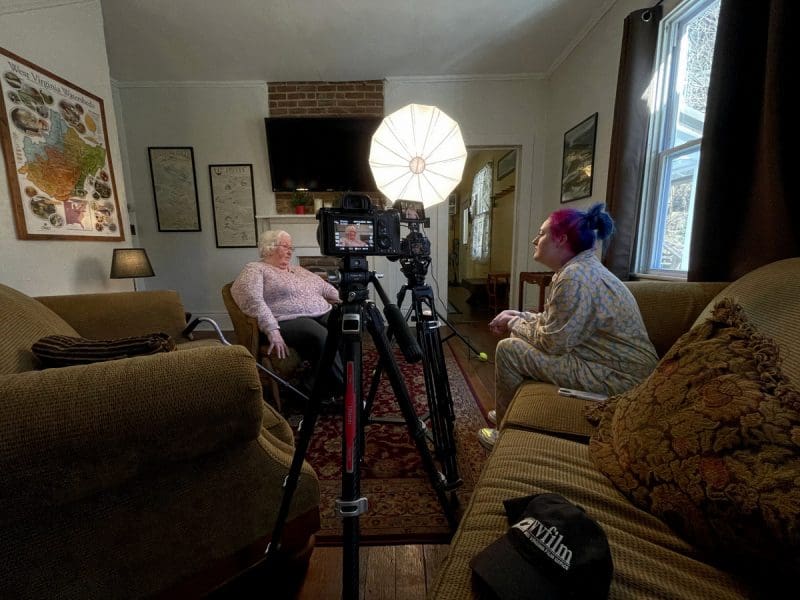
HICO, W.Va. — Deep in the New River Gorge, the tiny town of Thurmond is drawing global attention. With just four full-time residents, it is technically one of America’s smallest towns, but filmmaker Jillian Howell insists there is nothing lifeless about it.
On January 4, 2026, Howell and her all-Appalachia crew will bring Thurmond’s story—and its fight for survival—front and center at a special fundraiser at Freefolk Brewery in Hico.
Experts have recommended that buildings slated for demolition in the New River Gorge be maintained, though Congress and the National Park Service have turned a blind eye.
The event, inspired by the years 1901 to 1930, will launch the next phase of production for Howell’s documentary feature film, “Almost Ghost Town,” a cinematic exploration of Thurmond’s past, present, and uncertain future.
Attendees are encouraged to arrive dressed in era-appropriate attire, enjoy craft brews and period cocktails, try their hand at high-stakes poker, and preview early scenes from the film.
“Every brick in Thurmond tells a story,” Howell says. “Whether it’s fact or fiction, the history runs deep—more than 120 years deep. This film isn’t just about preserving the past. It’s about showing why Thurmond still matters.”
A Living Town With a Precarious Future
What makes Thurmond special? For starters, it’s absurdly small—just one looping road, a handful of structures, and a thin strip of land wedged between the railroad and the roaring New River. It is entirely located inside the New River Gorge National Park & Preserve, making it both protected and precariously controlled.
In an unprecedented move, the National Park Service has announced plans to demolish many of the town’s historic structures rather than pursue a leasing program widely used in other parks. Local residents, New River Gorge natives, and historians have reacted with alarm. Even some private investors who hoped to restore the buildings have been turned away.

Local businesses have successfully converted historic buildings in Thurmond into lodging facilities.
“Thurmond’s story is West Virginia’s story—of resilience, community, and the determination to preserve what matters,” Howell says. “This fundraiser is our chance to make sure these voices aren’t lost.”
Several surviving structures in Thurmond have been carefully maintained by private owners as short-term rentals, offering glimpses of what adaptive reuse could look like if leasing were permitted throughout the town.
Meanwhile, congressional leaders—Sens. Jim Justice, Shelley Moore Capito, and Congresswoman Carol Miller have remained largely silent despite calls for federal intervention.
A Past So Wild It Became Legend
To understand Thurmond’s pull, Howell says, you have to understand its past.
Local lore once claimed that “the only difference between Hell and Thurmond is that a river runs through Thurmond.” The quote’s origin remains hazy, but its meaning is unmistakable. At its peak in the early 1900s, Thurmond was a bustling railroad hub, the calm eye of a storm swirling with vice, violence, industry, and excess.
Across the river, the famed Dun Glen Hotel became legendary for its indulgence. The “world’s longest poker game”—allegedly lasting fourteen years straight—was said to have taken place there, although neither “Guinness” nor “Ripley’s Believe It or Not!” ever confirmed it, as had been widely rumored.
“Whether it happened or not almost doesn’t matter,” Howell says with a laugh. “The legend tells you everything about the spirit of the place.”
Old photographs show Thurmond’s streets lined with businesses, boarding houses, rail offices, and hotels. Today, some of those structures remain standing—barely—forming one of the nation’s most intact early-20th-century railroad towns.
Modern Legends and New Chapters
Many people assume Thurmond’s history ended when the railroad boom faded, but the 20th century added its own lore. Thurmond played a surprising role in the birth of West Virginia’s whitewater rafting industry, which now attracts more than 250,000 paddlers each year.
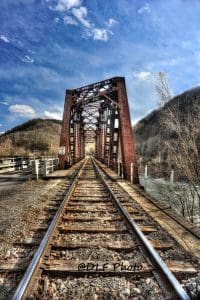
Both cars and trains must share the bridge across the New River at Thurmond. Photo courtesy Dan Friend
Locals still talk about Fatty Lipscomb’s guesthouse, the Bankers’ Club, and the time a husband-and-wife team ran against each other for mayor. In a town of four residents, Howell notes, the mayor represents 25 percent of the population.
“You can’t help but laugh,” she says. “But you also can’t help but respect the seriousness with which they care for their home.”
Though called a ghost town, Thurmond remains animated by its residents. Residents welcomed Howell’s crew with surprising warmth, inviting them to barbecues, holiday gatherings, and even to help in emergencies. One Memorial Day, when tourists became trapped in town by a fallen tree, locals simply folded the stranded visitors into a community picnic.
“People think small West Virginia towns aren’t welcoming to outsiders, but that couldn’t be further from the truth,” Howell says.
A Landscape That Shapes Its Stories
Thurmond’s geography is as distinctive as its folklore. The main “street” is effectively the still-active railroad line—complete with an Amtrak stop. To one side, the New River churns in a deep sandstone canyon. To the other, cliffs rise sharply, sheltering the loop road and aging structures from sun and cell service alike.
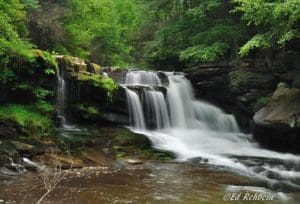
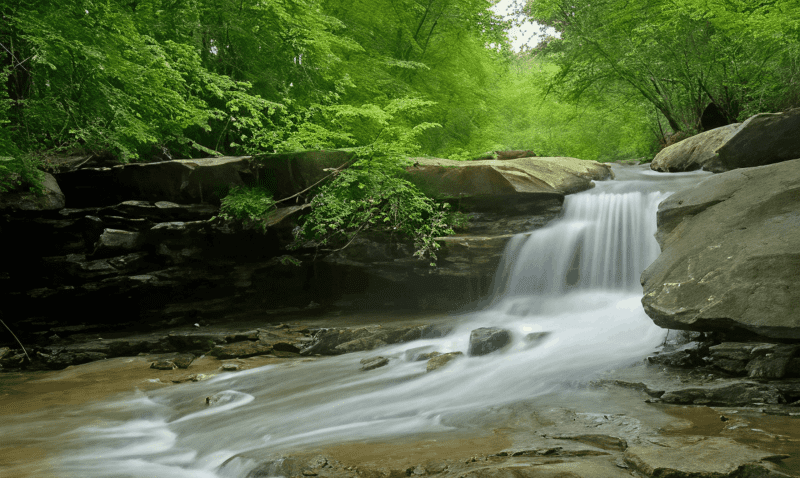
Dunloup Creek cascades through its gorge to join the New River near Thurmond, W.Va. (Photo courtesy Ed Rehbein)
Nearby, Dunloup Falls, the largest waterfall on Dunloup Creek, tumbles through a gorge just a short drive from town, drawing photographers and travelers who might otherwise miss Thurmond entirely.
“There is nowhere else on earth quite like it,” Howell says. “You can shoot the most beautiful footage of old brick buildings, but it’s the people—and the landscape—that make them come alive.”
Why Thurmond Stories Matter Now
With demolition plans looming, Howell sees urgency in documenting the town before the wrecking crews move in. The goal of “Almost Ghost Town” is not simply to mourn Thurmond but to show why it deserves to survive.
“It was built on kinship and, some say, a bit of spite,” Howell says. “That stubbornness is what’s kept it alive long after other boomtowns faded.”
The upcoming fundraiser is designed not only to support the film financially but to rally the community and raise awareness nationwide.
Jazz-Age Revelry for a 21st-Century Cause
Organizers are transforming Freefolk Brewery into an early 1900s-era celebration for the January 4 fundraiser. Your ticket directly supports independent filmmaking while treating you to a night of jazz-age revelry, a themed photo booth, silent-auction treasures, and the chance to step inside cinema history.
Event Highlights
- Exclusive proof-of-concept screening
- Q&A with director Jillian Howell
- Themed photo booth with 1900s-era props
- Poker table
- Silent auction of unique regional prizes
- Raffle with a grand prize
- After-party with bachelor auction
Ticket Information
Only 63 tickets are available across three tiers:
- General Admission: $25
- Supporter: $50
- VIP: $100 (includes early access, meet-and-greet, and exclusive perks)
- Super Early Bird (15% off) ends Dec. 6
- Early Bird (10% off with code “earlybird”) ends Dec. 20
Event Details
Date: January 4, 2026
Time: 6–8 p.m. (After-party follows)
Location: Freefolk Brewery, Hico, WV
Dress Code: 1901–1930s attire encouraged
Tickets: bit.ly/thurmondtickets
Fayetteville Creates
The fundraiser is presented as part of Fayetteville Creates, a town-wide artist residency launching in January 2026. Seven visiting creatives will be in attendance, connecting with local residents and regional culture throughout the month.
A Film With a Mission
“Almost Ghost Town” is currently in production. Howell’s all-West-Virginian and Appalachian crew aims to preserve stories of the state’s smallest incorporated town while capturing the voices of the people whose lives continue to shape it.
“Hands down, the people are the secret ingredient,” Howell says. “Thurmond isn’t just a ghost town—it’s a living story.”
Filmmaker says here’s why everyone should visit this West Virginia ghost town
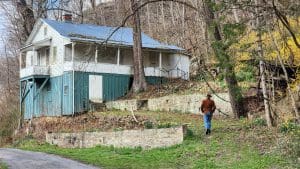
Despite the park’s will to demolish, consultants recommend maintenance rather than demolition for historic structures in New River Gorge National Park.
THURMOND, W.Va. — Deep in the New River Gorge, the town of Thurmond is attracting attention worldwide. With four full-time residents, it’s technically a ghost town, but filmmaker Jillian Howell insists there’s nothing lifeless about it. “Every brick in Thurmond tells a story,” she says. “Whether it’s fact or fiction, the history runs deep—more than 120 years deep.” She says her effort isn’t just about preserving the past, but showing why Thurmond still matters. READ THE FULL STORY.
Nightfall’s Value: Light pollution can diminish real estate worth in W.Va.
WINFIELD, W.Va. — An increasing number of new West Virginia residents are being drawn to its rolling hills and quiet valleys to escape brightly lit...
Inside Appalachian Escapes: Themed rentals, escape rooms, and a love letter to West Virginia
FAYETTEVILLE, W.Va. — What began as a search for an affordable retirement option has turned into one of southern West Virginia’s most imaginative...
West Virginia bottler wins silver award at international water competition
BERKELEY SPRINGS, W.Va. — Le Sage Natural Water, of Lesage, has been awarded a silver medal for its purified water at the 36th annual Berkeley...
West Virginia uniquely prepared to dominate 21st-century outdoor economy
CHARLESTON, W.Va. — West Virginia is uniquely prepared to dominate in the 21st-century outdoor economy of the U.S., thanks to its unmatched...
Flood risk outpaces warnings, advocates say, as W.Va. considers changes to resiliency fund
CHARLESTON, W.Va. — As the W.Va. House of Delegates considers changes to Senate Bill 390, the West Virginia Rivers Coalition warns that the state...
We asked AI how its own data centers could pollute West Virginia. Here’s what it had to say
(The following article was generated partly by ChatGPT in response to a prompt about how data centers pollute. As ChatGPT is powered by data...
Inaugural W.Va. Outdoor Economy Summit to unite leaders around $2.1 billion growth
CHARLESTON, W.Va. — West Virginia’s outdoors are more than a scenic backdrop. They’re a strategic economic asset. That message will take...
West Virginia State Parks Foundation launches online merchandise store
HURRICANE, W.Va. — The West Virginia State Parks Foundation has launched an official online merchandise store, offering supporters a new way to...
West Virginia Travel Safety: What it means for residents and visitors in 2026
CHARLESTON, W.Va. — Travel safety in West Virginia is shaped less by headline-grabbing crime and more by geography, weather, and the realities of...
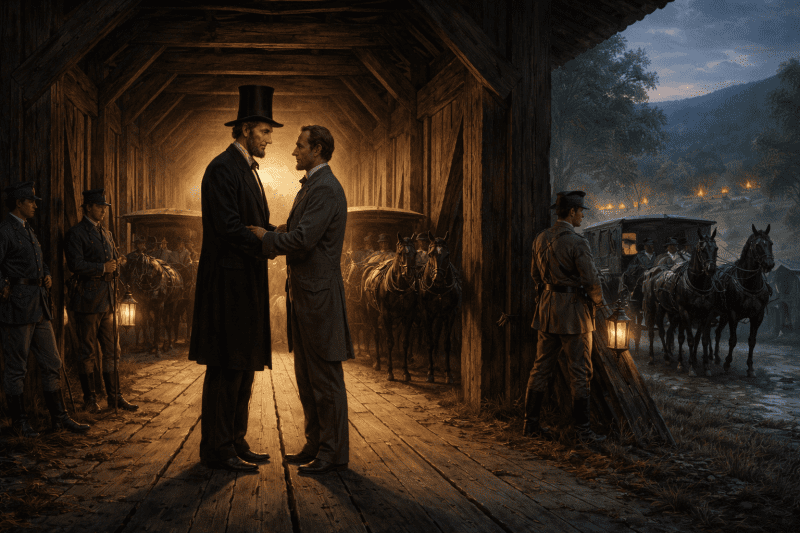
Did Abraham Lincoln and Jefferson Davis secretly meet in West Virginia?
PHILIPPI, W.Va. — Did Abraham Lincoln and Jefferson Davis secretly meet in what is now West Virginia just days after the first land battle of the...