
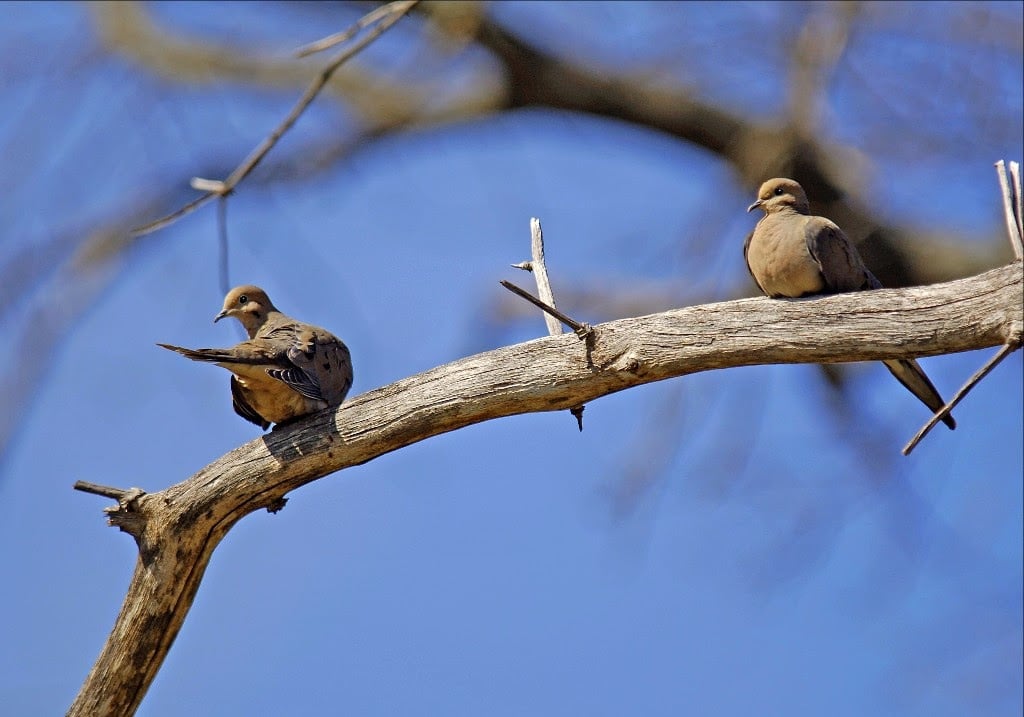
ROMNEY, W.Va. — Mourning dove hunters no longer need to apply for a limited permit to hunt at the South Branch Wildlife Management Area in Hardy and Hampshire counties. They will now be able to hunt doves in two fields in the Stonewall Jackson Wildlife Management Area in Lewis County. Both two-day hunting seasons are scheduled for September 1 and 2.

Brett McMillion, director of the W.Va. Division of Natural Resources, said the two hunts are designed to control the dove population. The dove is a favorite game bird that breeds prolifically.
South Branch Wildlife Management Area
“The change at South Branch gives hunters more flexibility while allowing us to manage the area based on current wildlife populations and participation levels,” McMillion said.
The division maintains fields and early successional habitat at South Branch to support mourning doves, rabbits, turkeys, and other wildlife. The area follows stretches of the South Branch of the Potomac River and includes forested ridges, river bottoms, and open fields that serve as wildlife habitat. It covers about 1,092 acres and is divided into several separate tracts along the South Branch near the gorge known as The Trough.
For questions about mourning dove hunting at the wildlife management area, contact the division’s Romney district office at 304-822-3551.
Stonewall Jackson Wildlife Management Area
Due to high demand, the division is establishing a new controlled mourning dove hunt at Stonewall Jackson, where two designated dove fields will be restricted to permit-only hunting from state-controlled posts during those dates. Permits for the controlled hunt are nontransferable, and applications are due by August 1.
McMillion said the controlled hunting area will be clearly marked with signs and include designated hunting posts. Hunters must remain within five yards of their assigned post while hunting. Shooting hours for the controlled hunt will follow statewide regulations for mourning doves, even if other hunting seasons are open concurrently.
The Stonewall Jackson Wildlife Management Area covers about 18,289 acres, making it one of the larger wildlife management areas in north-central West Virginia. The property surrounds much of Stonewall Jackson Lake and includes forested hills, coves, and managed wildlife habitat.
The area includes mixed hardwood forest, steep ridges, coves, and shoreline habitat that support populations of deer, turkey, black bear, squirrels, and small game. The wildlife management area also provides fishing access to Stonewall Jackson Lake for bass, crappie, catfish, and muskellunge, as well as opportunities for boating, hiking, camping, and wildlife viewing near Stonewall Resort State Park.
About Mourning Doves
Mourning dove are small birds related to pigeons and classified as migratory game birds. They are among the most abundant and widespread North American birds and a popular gamebird, with more than 20 million birds shot annually in the U.S., for both sport and meat. Its ability to sustain its population under such pressure is due to its prolific breeding. In warm areas, one pair may raise up to six broods, each with two young, in a single year.
The meat of the Mourning Dove is dark, lean, and mild compared with that of many other game birds. Hunters often describe it as closer to duck or squab than chicken, though it is generally less fatty than duck.
Because the birds are small and active fliers, the breast meat is tender but very lean, so it can dry out quickly if overcooked. Dove is commonly prepared by grilling, pan-searing, or wrapping the breasts in bacon to add moisture and flavor. The flavor can vary somewhat depending on the bird’s diet, which often includes seeds and grains.
Additional information about this season and other migratory game bird hunting opportunities will be available in the 2026-2027 West Virginia Migratory Bird Hunting Regulations, which will be available by the end of August at WVDNR.gov/hunting-regulations.