
PRINCETON, W.Va. — In 1872, when the name Frank James still carried the weight of fear and notoriety across the border states, the older brother of Jesse James quietly rode into Princeton, West Virginia, and walked straight into the Bank of Princeton—not to rob it, but to study it.
The incident, preserved in a March 23, 1957, column by West Virginia historian Shirley Donnelly, offers a rare, unusually human glimpse into the life of one of the nation’s most infamous outlaws and into a small Appalachian town that unknowingly hosted him.
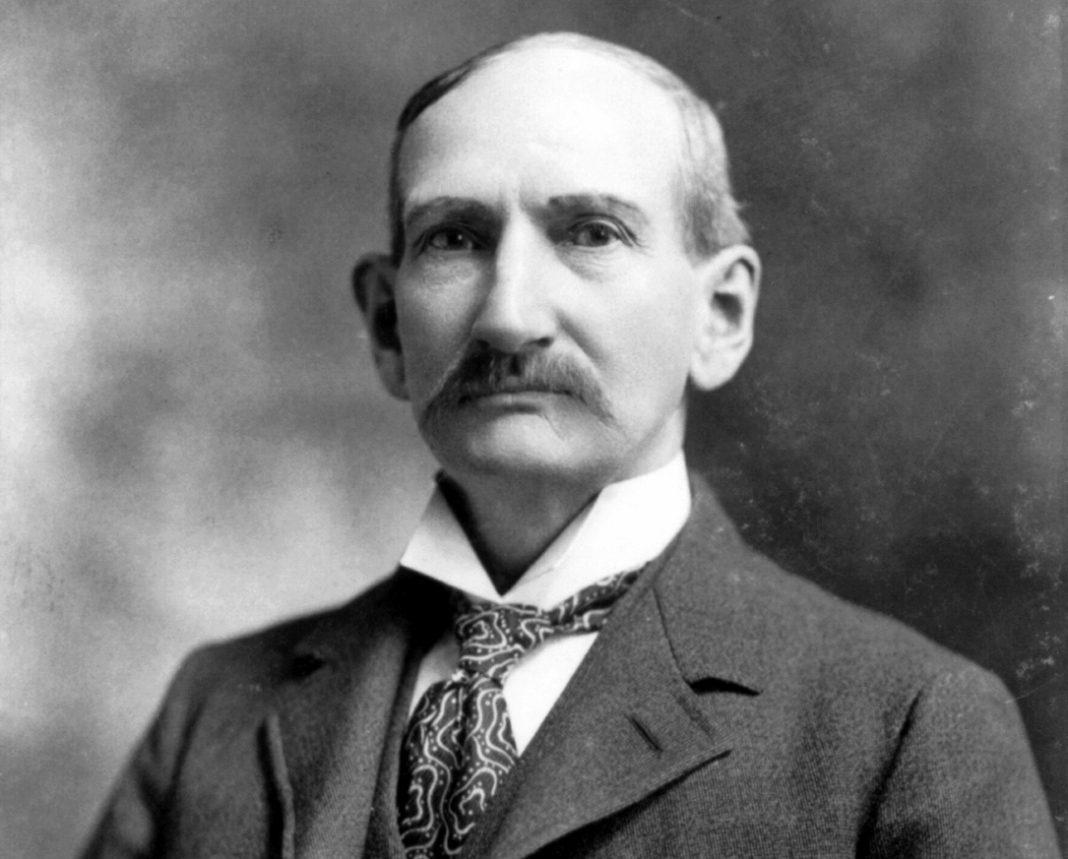
Frank James, born Alexander Franklin James in Missouri in 1843, was already a seasoned former Confederate guerrilla and a key figure in the James-Younger Gang. By the early 1870s, he and his brother Jesse were at the height of their outlaw careers, robbing banks, trains, and stagecoaches across the Midwest and Upper South.
According to Donnelly’s account, James had learned that the Bank of Princeton was capitalized at $25,000, a substantial sum for the era. He decided to see for himself whether the institution presented an opportunity.
As Donnelly wrote, James’ first stop in town was the bank itself, where he entered under the pretense of ordinary business, “casing the joint,” as the underworld phrase went. Inside, James found little to impress him.
The bank’s interior consisted of what Donnelly described as a “little room” furnished with split-bottom chairs, a modest cashier’s desk, and a rickety bed where the night watchman slept while guarding the bank’s assets. An old barrel-back trunk sat nearby, along with a high-covered beaver hat stuffed with yellow papers—items that appeared to function as makeshift storage rather than serious security.
From the outset, Donnelly wrote, James could see that “the outlook was not very promising.”
What James did not expect was the reaction of David E. Johnson, the bank’s president. Rather than panic or call for help, Johnson greeted James warmly. He recognized him, or at least strongly suspected who he was, and treated him not as an outlaw, but as a fellow veteran of hard times following the Civil War. He invited James home for dinner.
Donnelly’s account suggests that Johnson deliberately disarmed the situation with hospitality. He spoke openly about financial hardship, struggling to make ends meet, and the lingering wounds of the war. The conversation struck a nerve. James, himself shaped by guerrilla warfare and a difficult postwar life, listened.
By the end of the evening, James had abandoned any thought of robbery. He mounted his horse and rode away from Princeton, calling back to Johnson, “Thanks for everything, brother Johnson. It was nice meeting you, old friend. I wish you the best of luck in the bank.”
Only later, Donnelly noted, would it be understood just how close the bank may have come to disaster. The unassuming trunk James had seen—along with the hat filled with papers—actually served as the bank’s daytime safe, holding currency and negotiable documents.
At the close of business each day, directors divided deposits among themselves and carried the funds home for safekeeping, avoiding the risk of keeping all assets in one place.
The Bank of Princeton would later acquire a massive safe, so large it required a six-horse team to haul it from the depot—a public event that Donnelly described as a local triumph. For years afterward, townspeople lined the road to see it pass.
Frank James never robbed the Bank of Princeton
The episode, preserved by Donnelly decades later, stands as a reminder that West Virginia’s history often unfolded at the intersection of national legend and local character — where a small town’s humanity, prudence, and timing quietly altered the course of a notorious life.
Frank James would surrender to authorities a decade later, after Jesse James was killed in 1882. Unlike many of his contemporaries, he lived into old age, dying peacefully in 1915.
Princeton, meanwhile, remained what Donnelly called “a nice town with lovely people and a friendly atmosphere,” carrying on long after the outlaw rode away.
Frank James in Princeton, West Virginia
Who: Frank James (1843–1915), older brother of outlaw Jesse James and a leading figure in the James-Younger Gang
When: 1872 (account documented in 1957)
Where: The Bank of Princeton, Mercer County, West Virginia
What Happened: Frank James rode into Princeton, entered the local bank to assess it as a possible robbery target, and left without committing a crime.
Why It Matters: One of the few documented appearances of Frank James in West Virginia demonstrates how local banking practices and personal hospitality helped deter an infamous outlaw. It highlights West Virginia’s role as a Reconstruction-era borderland, shaped by the Civil War but resistant to postwar outlaw violence
What Stopped the Robbery:
- Small, informal bank layout
- Limited on-hand cash
- A disarming invitation to dinner from the bank president
- Daily practice of removing deposits for safekeeping
Source: West Virginia historian Shirley Donnelly, writing in a March 23, 1957, newspaper column
Sign up to receive a FREE copy of West Virginia Explorer Magazine in your email weekly. Sign me up!