
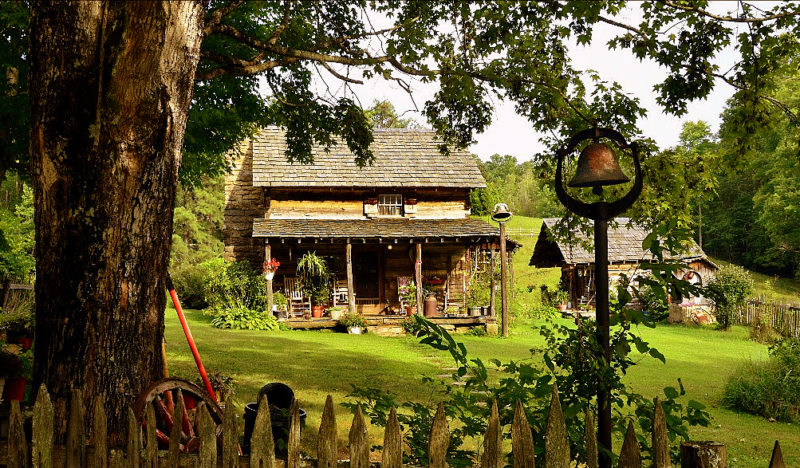
SAULSVILLE, W.Va. — Perhaps no other form of architecture is more strongly associated with West Virginia than the old-fashioned log cabin or what might more appropriately be called the hewn-timber house.
New England has saltboxes, and the South has Greek Revivals, but the Virginian frontier, including what’s now West Virginia, produced a habitation that had never been seen before.
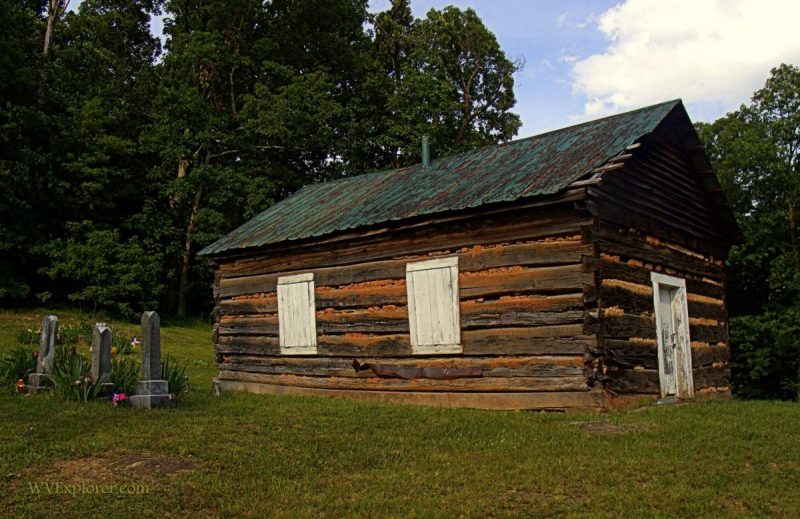
According to Lee and Virginia McAlester, among the foremost authorities on U.S. architecture, the “log house” was born of a combination of influences that converged along the eastern slopes of the Blue Ridge and swept westward over the Appalachians through West Virginia.
Here, Germanic immigrants from the north, accustomed to building with timber, shared their knowledge with immigrants from the British Isles in the Tidewater South, who came from lands where timber was scarce.
The result set in motion a building method that became synonymous with West Virginia and the American South as far west as Texas and Oklahoma.
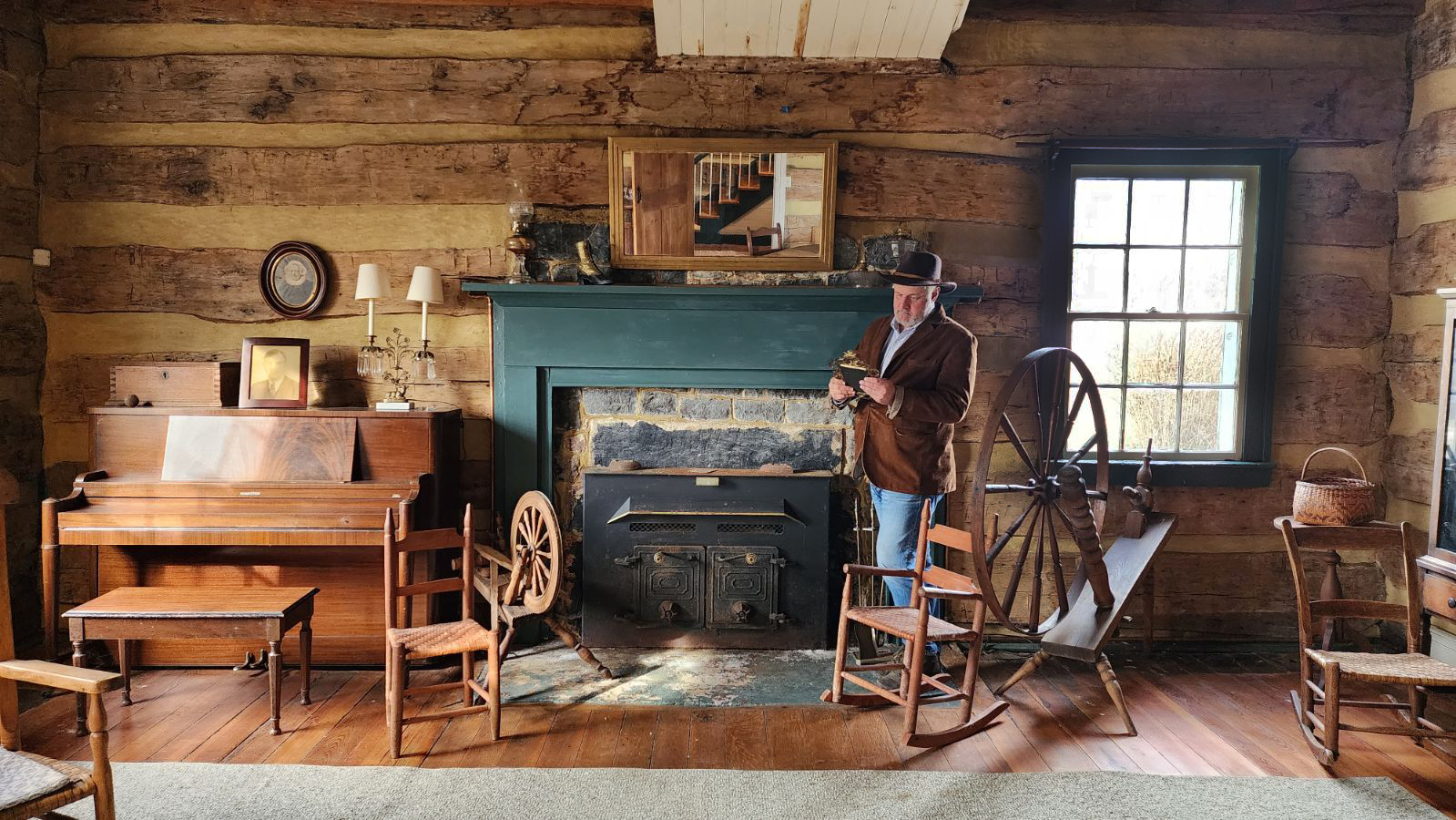
“It began in the middle colonies—Pennsylvania, New Jersey, Deleware, Maryland—where Germanic immigrants from heavily wooded areas of central and northern Europe introduced techniques of building with logs hewn square and placed horizontally, one on top of the other, to make a solid wooden wall.
“They built large log houses with an almost-square three-room plan and a central chimney. This pattern persisted as settlement spread westward from the core area to central Pennsylvania and then southward along the forelands and valleys in front of the Appalachian Mountains barrier, which loomed to the west.”
In this secondary core area, Germanic settlers were joined by Scotch-Irish and English pioneers who quickly adopted log-building techniques. These techniques were much more straightforward than constructing complex hewn frameworks to be covered with laboriously split planks or shingles.
“These settlers from the British Isles, however, modified the shape of the three-room Continental House into the familiar one-room deep linear plan with an external chimney that dominated in the Tidewater South.”
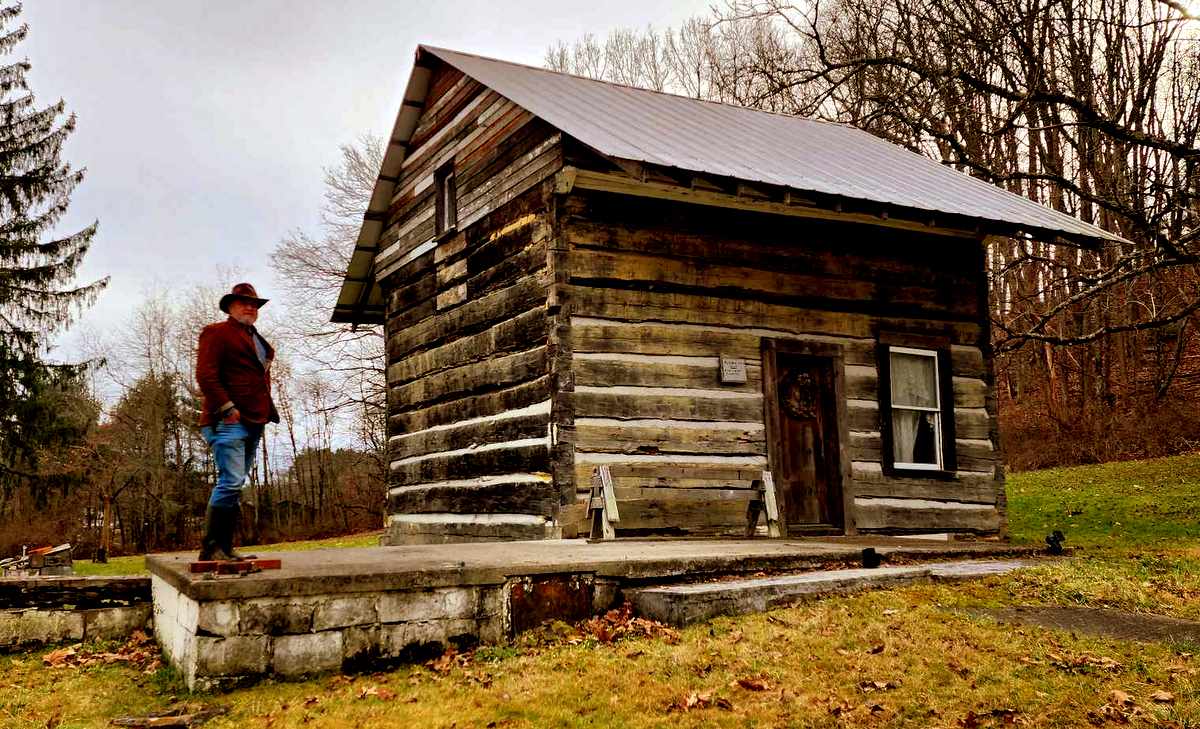
Thus, the Midland Log House was born — a tradition carried across the Appalachians by frontiersmen to become the dominant pre-railroad folk housing over much of the heavily wooded eastern half of the country. Sturdy and durable, log houses in West Virginia have been said to match the temper of West Virginians themselves.
So, when you drive through the West Virginia woodland and find a house of squared timbers, know that you’re looking at a real piece of American history. The McAlesters explain the process in more detail in A Field Guide to American Houses.
The word “hillbilly” was once a term of endearment in Appalachia
The word “hillbilly” was originally a term of endearment in the southern Appalachian Mountains region during the early 1800s, although it later developed negative connotations. The former publisher of the West Virginia Hillbilly newspaper, the late Jim Comstock, believed that residents of the valleys in southern Appalachia first used the term to describe their neighbors in the mountains, though they meant no ill intent. READ THE FULL STORY HERE.
Sign up to receive a FREE copy of West Virginia Explorer Magazine in your email twice weekly. Sign me up!
David Sibray,
The next time you visit Monongalia County, I invite you to “explore” our two-story log home in the Cheat Lake area. Remudded in the mid 1800’s, this cabin was purchased by my husband’s (Bob) family in the late 1960’s. Roman numerals are carved in the logs to show the order in which they were set to form the wall. It served as a stagecoach stop for the Morgantown-Uniontown Turnpike, which is still viewable from the property. This was an important north-south overland route for mail, agriculture, manufactured goods, and stagecoach traffic using the National Road (Route 40 in PA). The National Road was open to the public in 1818 and the Morgantown-Uniontown Turnpike was part of this system. On this same property was a full smithy for the horses and a carriage repair shop. Coaches stopped to check on equipment before beginning the ascent up the hill to PA.
The plan of the cabin is one-room-up and one-room-down. The original fireplace and chimney and the chinking between the logs are intact. In the overhead beams on the 1st floor, you can see holes where curtains secured with pegs were hung so that sleeping areas for women and children could be made. The men and older boys slept on the 2nd floor. We believe This home is a true historical gem waiting to be seen!