
ELKINS, W.Va. — Recreational trails are a major part of West Virginia’s tourism economy, especially in the rugged landscape of the Monongahela National Forest, where thousands of hikers and mountain bikers explore its scenic backcountry each year.
To strengthen tourism and improve trail conditions in the forest’s northern region, a new partnership has been formed to maintain more than 500 miles of trails leading to destinations such as 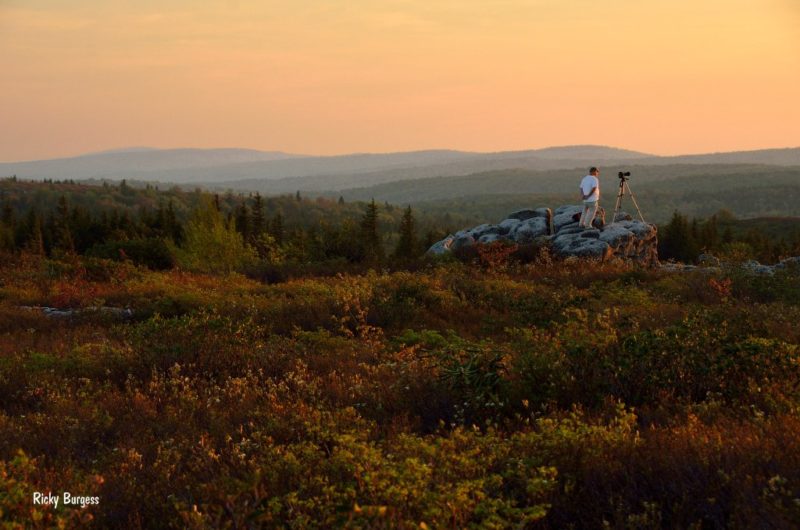 Photographer Dan Friend visits Dolly Sods in the Monongahela National Forest. (Photo courtesy Rick Burgess)[/caption]
Josh Nease, executive director of the Mon Forest Towns Partnership, based in Elkins, West Virginia, says his organization has launched a fundraising campaign to support a dedicated seasonal trail crew that will start in 2027.
“The Monongahela National Forest is West Virginia’s largest recreation asset, encompassing over 920,000 acres, with nearly 900 miles of multi-use trail and 200 developed recreation sites,” Nease says.
However, trail maintenance falls to a limited number of recreation-focused forest service employees, none of whom are dedicated solely to trail maintenance, and who must rely on volunteers to keep the system open.
The campaign addresses a growing maintenance backlog across the 566 miles of multi-use trail that anchor the outdoor recreation economies of twelve gateway communities in the forest.
Despite those efforts, Nease says the need continues to outpace available resources, leaving a significant backlog of deferred maintenance.
He says the organization’s trail crew pilot replicates a model already proven effective in the forest’s southern district, where funding from the Great American Outdoors Act supports a crew through the Snowshoe Highlands Area Recreation Collaborative.
The Mon Forest Towns partnership and the U.S. Forest Service are working together to bring the same approach north, with the forest service covering half the total cost and the partnership raising the remaining half through grants and this public campaign.
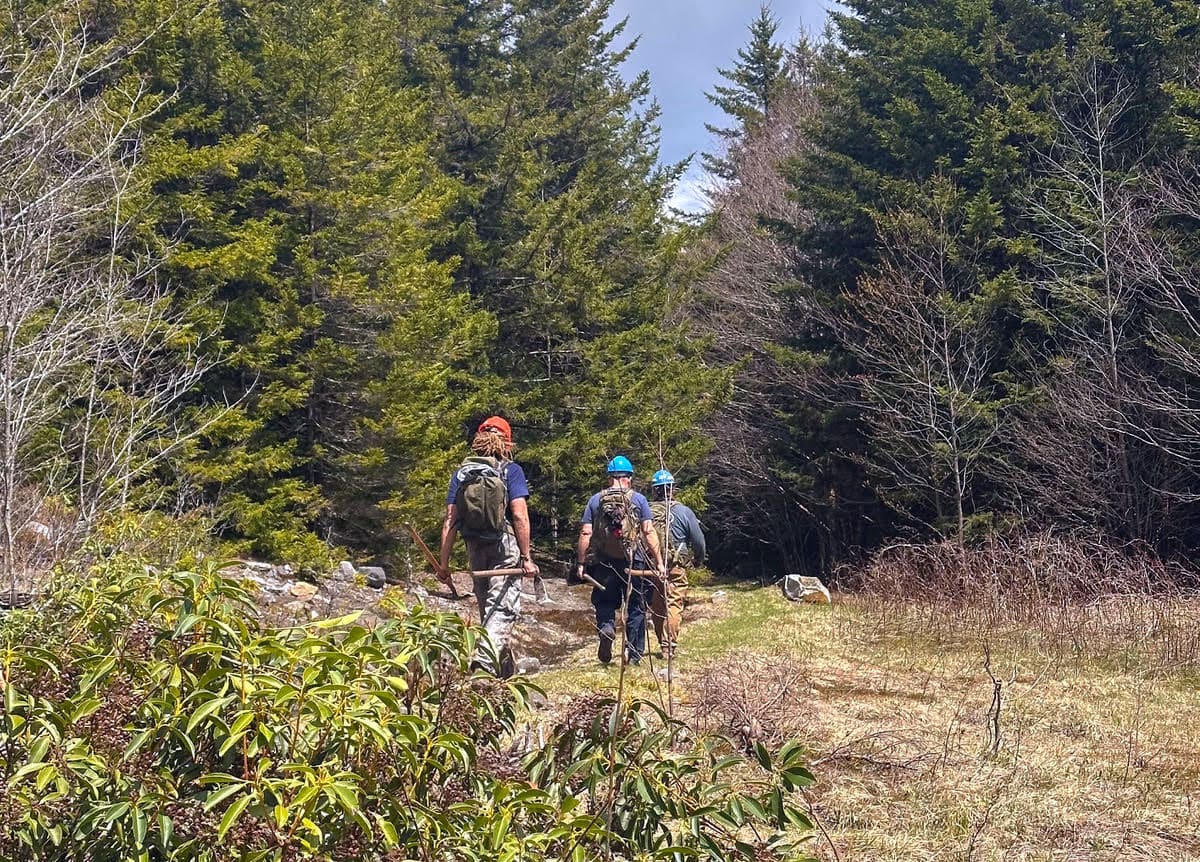
The three-person seasonal crew will conduct a first pass of trail maintenance, widening corridors, clearing downed trees, and improving drainage, at a rate of three to five miles per day, with a goal of improving more than 300 miles in the first season alone.
“There is a clear need,” Nease said. “The passion of the trail maintenance volunteers across the region and the dedication of our forest service partners simply cannot keep pace with the scale of the north zone’s trail needs.”
“This new seasonal crew is designed to be the essential support system they deserve,” he added. “Now we’re asking the communities and trail users who depend on this Forest to help us close the funding gap.”
“A well-maintained trail isn’t just a better experience for visitors; it’s also a healthier ecosystem and a stronger economic driver for the towns that border it.”
The northern section of the forest contains many of the forest’s most recognizable assets, including the Otter Creek and Laurel Fork wilderness areas and the Canaan Mountain and Seneca Creek backcountry trail systems.
Nease says the partnership envisions the pilot as the foundation for a long-term program that can serve every mile of the north zone trail network and expand to support other recreation land managers throughout the region. To learn more or contribute, visit Mon Forest Towns Partnership.

About Monongahela Forest Towns
The Mon Forest Towns Partnership, employing a colloquial abbreviation of “Monongahela,” is a regional nonprofit organization that works to strengthen outdoor recreation, tourism, and economic development in communities surrounding the Monongahela National Forest. The partnership includes twelve-member communities: Cowen, Davis, Durbin, Elkins, Franklin, Marlinton, Parsons, Petersburg, Richwood, Seneca Rocks, Thomas, and White Sulfur Springs.
1973 Ron Thomason. Director Mountain Forest Festival. Great Job Promoting our beautiful State
. I HAVE GREAT.MEMORYS DIRECTING THE FESTIVAL IN I973.
.