
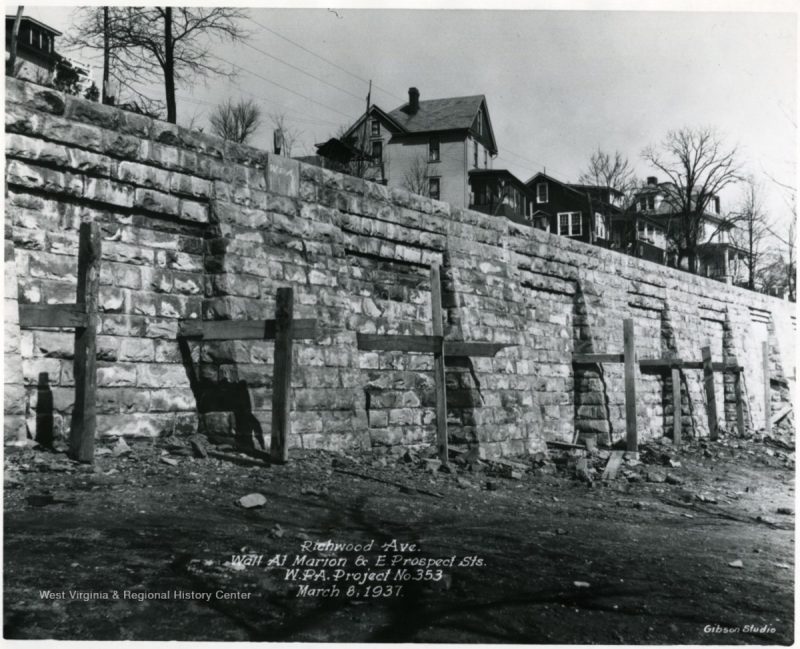
MORGANTOWN, W.Va. — The National Park Service has accepted the nomination of historic stone walls in Morgantown, West Virginia, to the National Register of Historic Places, recognizing their enduring craftsmanship, cultural significance, and contribution to the city’s Depression-era landscape.

The efforts of the Preservation Alliance of West Virginia resulted in a successful nomination, which highlighted the walls constructed during the 1930s and 1940s by workers employed through federal relief programs. These programs included the Civilian Conservation Corps, the Federal Emergency Relief Administration, and the Works Progress Administration.
“These New Deal stone walls are tangible reminders of a pivotal era,” said Jamie Billman, the organization’s preservation manager. “They represent the resilience of our communities, the ingenuity of federal programs, and the dedication of the men who built them.”
A Monumental Step for Historic Preservation
The National Register of Historic Places serves as the nation’s official list of historic sites worthy of preservation. Listing provides formal recognition of a property’s historical and architectural importance and can open doors to preservation grants and tax incentives.
Danielle Parker, executive director of the organization, says the nomination follows years of advocacy and documentation efforts aimed at protecting the state’s masonry heritage.
In 2024, the organization added stone walls across West Virginia to its list of Most Endangered Historic Properties, citing threats from neglect and demolition.
“Our goal was to ensure these magnificent structures receive the recognition and protection they deserve,” Parker said. “This listing helps secure their future and brings attention to their role in shaping our communities.”
What was the New Deal?
A Legacy of Craftsmanship and Community
Constructed primarily during the Great Depression, the stone walls were built to stabilize slopes, terrace farmland, and enhance the beauty of public spaces. Billman said many were designed and constructed by local laborers using traditional masonry techniques, blending practicality with artistry.
Beyond their function, the walls stand as testaments to the impact of the New Deal on West Virginia’s infrastructure and workforce. They reflect a time when federal investment in public works helped restore livelihoods and transform landscapes.
Free Field Guide for Communities
To encourage continued documentation and appreciation of these historic stone features, the alliance has released “A Field Guide to West Virginia New Deal Masonry,” a free public resource available at the alliance website. The guide helps residents identify and record local examples of New Deal-era stonework.
Billman stated that both the Morgantown Historic Landmarks Commission and the West Virginia State Historic Preservation Office supported the nomination effort, with initial research contributions from West Virginia University’s Public History Program.
“This recognition is a victory for preservationists and communities alike,” Billman added. “These stone walls may seem like quiet features of our landscape, but they tell powerful stories about perseverance and pride.”

Forget about a bunch of old walls no one cares about ,and repair the roads that everyone one uses.and prevent all the damage that we endure, just driving to work, pot hole to hell, WV theme song.
Why would it be a historic preservation organization’s job to maintain roads? Also, this isn’t a repair project, it’s a National Register of Historic Places designation.
Why would it be a historic preservation organization’s job to maintain roads? Also, this isn’t a repair project, it’s a National Register of Historic Places designation.
you most definitely have a point I’m not from here but when I moved here,I quit driving.I couldn’t believe how ill kept the roads were and still are.why are they always patching these potholes and not repaving certain areas is beyond me.Where does the money go that is given to the state or city to repair them right instead of just patching them over in spots.????? Listening to other people talk, this is one of the hugest problems West Virginia has. it’s such a beautiful, gorgeous state but with these roads and the shape they are in, causes that beauty to be lost, which is so sad.
(my two cents for what its worth)
The WPA also did a lot of roadwork in West Virginia. The reason the secondary roads are not well-maintained in West Virginia today is because, as a society, we’re always looking to cut taxes, especially for wealthy political donors. So, there isn’t enough revenue to keep up with increasing needs.