



Six West Virginia landmarks added to the National Register of Historic Places
CHARLESTON, W.Va. — Six landmarks across West Virginia have been added to the National Register of Historic Places, highlighting the state’s architectural diversity and rich cultural heritage, according to state officials.
The additions were approved by the West Virginia Archives and History Commission at its July 15 meeting and later accepted by the National Park Service. The new listings include properties in Jefferson, Kanawha, Marshall, Wetzel, Morgan, and Roane counties.
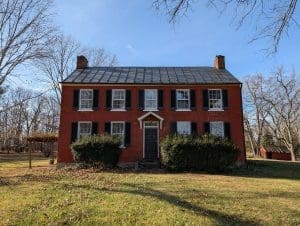
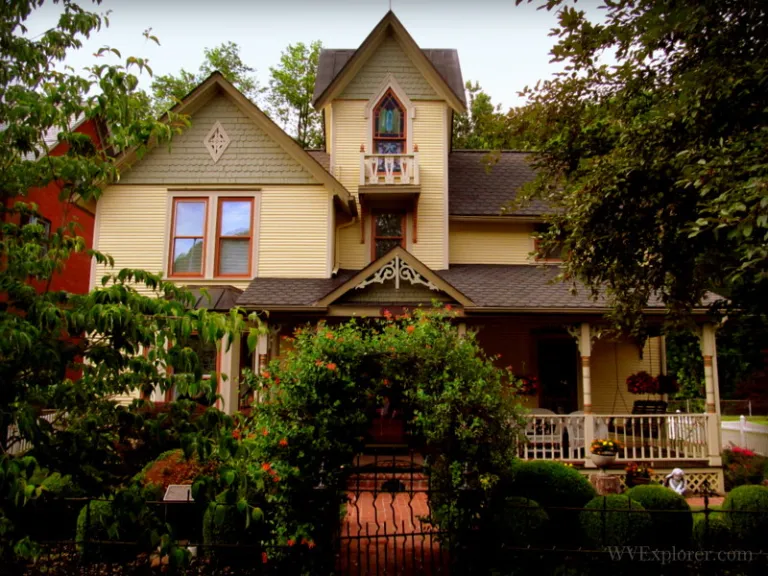
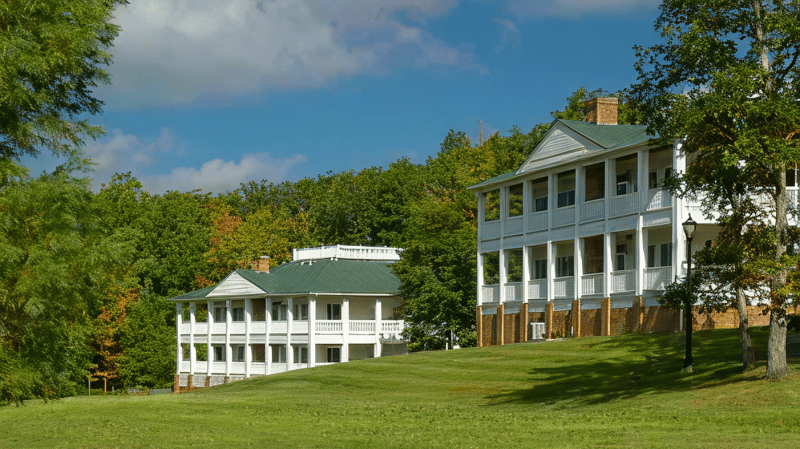
Built in 1860, the main portion of the house exhibits distinctive characteristics of mid-19th-century construction. (Photo: W.Va. Department of Tourism)
Ennis Smith, deputy secretary of the West Virginia Department of Tourism, said the additions bolster the Mountain State’s economic potential.
“What a great opportunity for our state to have these six unique sites added as new points of interest on the National Register of Historic Places,” Smith said.
“West Virginia’s cultural heritage continues to inspire, and it’s wonderful to see that shared far and wide.”
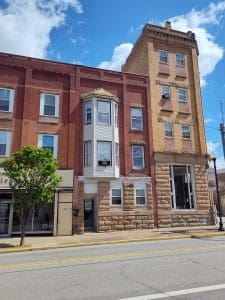
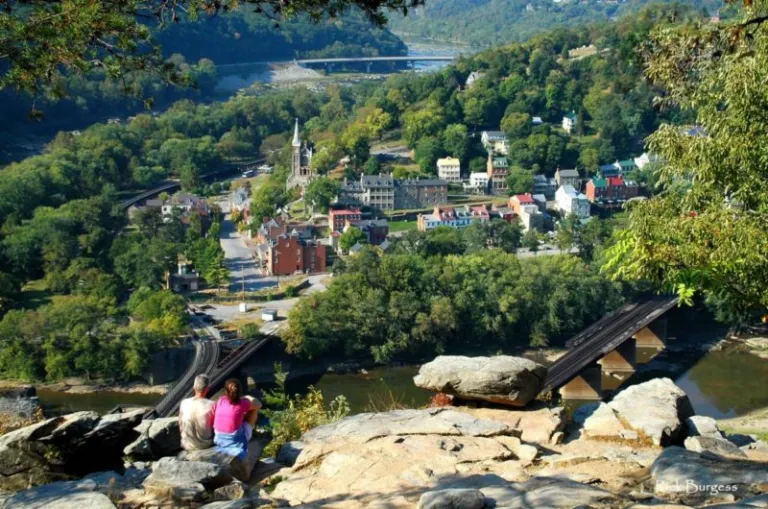
Much of downtown Spencer has now been added to the national register. (Photo: W.Va. Department of Tourism)
The National Register of Historic Places is the federal government’s official list of properties recognized for their historical, architectural, or cultural significance.
Listing a site provides recognition and may qualify owners for preservation grants, federal and state tax credits, and other incentives that help maintain historic properties and encourage community revitalization.
Meredith Dreistadt, acting director of the West Virginia State Historic Preservation Office, said the six sites underscore West Virginia’s remarkable history.
“We are pleased to announce that in September, six new West Virginia resources were added to the National Register of Historic Places,” Dreistadt said.
“Together, all of these places represent a variety of locations, time periods, and historic themes that make West Virginia’s cultural heritage unique.”
Historic West Virginia Landmarks
- Jacob Folk House, Jefferson County — Built in 1860, the brick, L-shaped farmhouse near Shepherdstown is a well-preserved example of mid-19th-century rural architecture.
- Carter G. Woodson School, Kanawha County — Operated as an African American school from 1912 to 1940 in Saint Albans and later became the meeting hall for American Legion Post 73.
- Pennsylvania Sinclair Cornerstone, Marshall and Wetzel counties — An 1883 obelisk marking Pennsylvania’s southwest corner, part of a resurvey of the Mason-Dixon Line conducted by surveyor Cephas Sinclair.
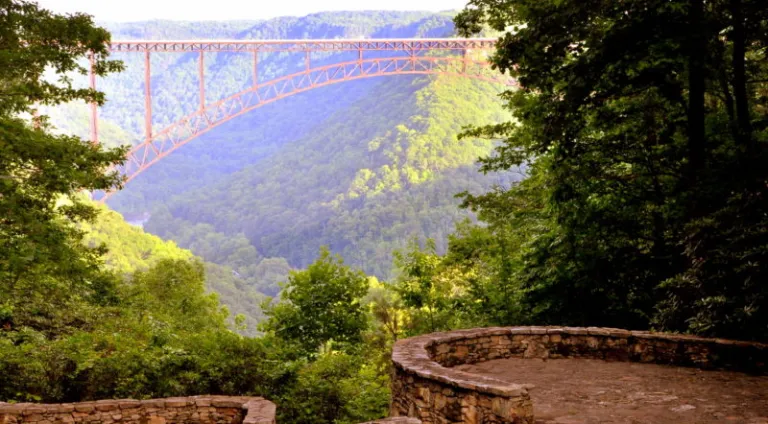
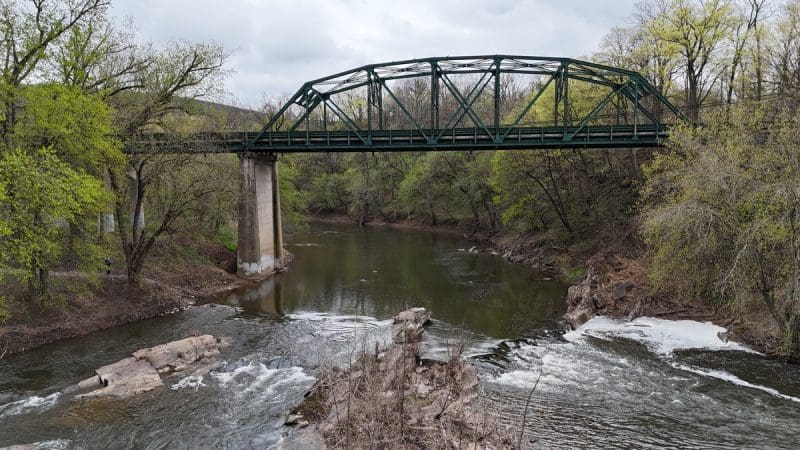
- Largent Bridge, Morgan County — Built in 1916 and widened in 1935, the bridge spans the Cacapon River and reflects early 20th-century engineering practices.
- Great Cacapon Bridge, Morgan County — Constructed in 1937, this bridge also crosses the Cacapon River and is recognized for its transportation and engineering significance.
- Spencer Commercial Historic District, Roane County — Encompasses several blocks of downtown Spencer, including the Roane County Courthouse and surrounding historic commercial buildings.
Heritage tourism benefits West Virginia
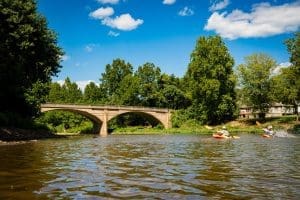
The Largent Bridge was listed for its association with historic engineering techniques and transportation. (Photo: W.Va. Department of Tourism)
Heritage tourism, one of the fastest-growing segments of West Virginia’s travel industry, benefits directly from such designations. Visitors drawn to historic districts, landmarks, and cultural attractions tend to stay longer and spend more locally, boosting small businesses and rural economies.
State officials say that protecting and promoting these places not only preserves the past but also supports jobs, revitalization, and pride in local communities.
“These new listings highlight the stories, craftsmanship, and resilience that define the Mountain State,” Smith said.
Heritage tourism in the U.S.
Heritage tourism in the U.S. is a large and growing sector. The heritage tourism market generated about $128.7 billion in revenue in 2024 and is projected to grow substantially over the next decade, reaching around $162.5 billion by 2030.
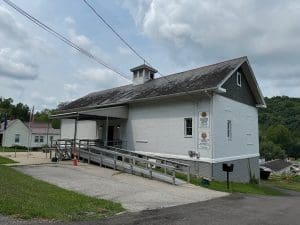
Carter G. Woodson operated an African American school in Saint Albans from 1912 to 1940. (Photo: W.Va. Department of Tourism)
More than half of U.S. leisure travelers engage in activities that can be classified under cultural or heritage tourism (visiting historic sites, museums, cultural festivals, etc.).
In many analyses, heritage tourism accounts for 53–56% of heritage tourism revenue and represents a sizeable share of total tourism spending in the U.S., making it not just a niche but a core component of the wider tourism industry.
Applying for the National Register
Getting a property listed on the National Register of Historic Places involves a detailed nomination and review process led by both state and federal agencies.

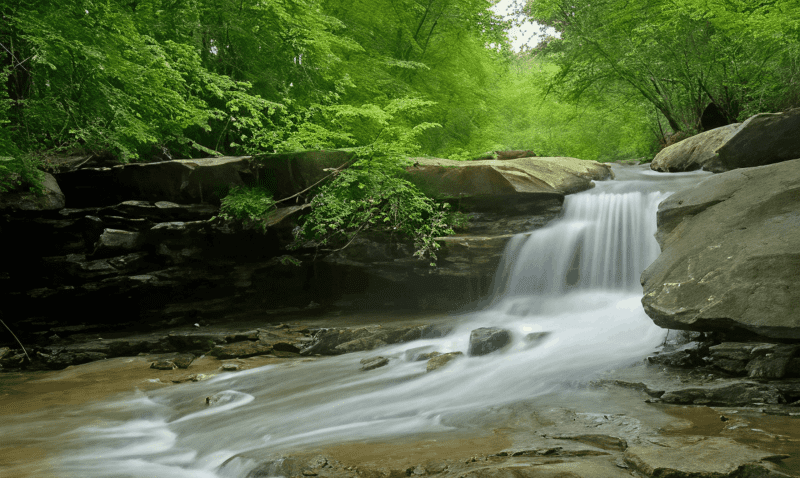
The Sinclair cornerstone was part of a project to resurvey and permanently delineate the Mason-Dixon Line in 1883-1885. (Photo: W.Va. Department of Tourism)
Anyone—property owners, local governments, or preservation groups—can prepare a nomination, which must document the site’s historical, architectural, or cultural significance and demonstrate that it meets at least one of the National Register’s eligibility criteria.
Nominations are first reviewed by the State Historic Preservation Office (SHPO), which may offer guidance and technical assistance before presenting them to the State Review Board for approval.
Once endorsed at the state level, the nomination is forwarded to the National Park Service, which makes the final determination. If approved, the property is officially added to the National Register, becoming eligible for preservation grants, tax incentives, and other benefits that encourage long-term protection and reuse.
For more information about the national register or funding for historic landmarks in West Virginia, contact the West Virginia State Historic Preservation Office.
Nightfall’s Value: Light pollution can diminish real estate worth in W.Va.
WINFIELD, W.Va. — An increasing number of new West Virginia residents are being drawn to its rolling hills and quiet valleys to escape brightly lit...
Inside Appalachian Escapes: Themed rentals, escape rooms, and a love letter to West Virginia
FAYETTEVILLE, W.Va. — What began as a search for an affordable retirement option has turned into one of southern West Virginia’s most imaginative...
West Virginia bottler wins silver award at international water competition
BERKELEY SPRINGS, W.Va. — Le Sage Natural Water, of Lesage, has been awarded a silver medal for its purified water at the 36th annual Berkeley...
West Virginia uniquely prepared to dominate 21st-century outdoor economy
CHARLESTON, W.Va. — West Virginia is uniquely prepared to dominate in the 21st-century outdoor economy of the U.S., thanks to its unmatched...
Flood risk outpaces warnings, advocates say, as W.Va. considers changes to resiliency fund
CHARLESTON, W.Va. — As the W.Va. House of Delegates considers changes to Senate Bill 390, the West Virginia Rivers Coalition warns that the state...
We asked AI how its own data centers could pollute West Virginia. Here’s what it had to say
(The following article was generated partly by ChatGPT in response to a prompt about how data centers pollute. As ChatGPT is powered by data...
Inaugural W.Va. Outdoor Economy Summit to unite leaders around $2.1 billion growth
CHARLESTON, W.Va. — West Virginia’s outdoors are more than a scenic backdrop. They’re a strategic economic asset. That message will take...
West Virginia State Parks Foundation launches online merchandise store
HURRICANE, W.Va. — The West Virginia State Parks Foundation has launched an official online merchandise store, offering supporters a new way to...
West Virginia Travel Safety: What it means for residents and visitors in 2026
CHARLESTON, W.Va. — Travel safety in West Virginia is shaped less by headline-grabbing crime and more by geography, weather, and the realities of...
Did Abraham Lincoln and Jefferson Davis secretly meet in West Virginia?
PHILIPPI, W.Va. — Did Abraham Lincoln and Jefferson Davis secretly meet in what is now West Virginia just days after the first land battle of the...