












Data centers collide with West Virginia’s new profitable remote-work, recreation brand
CHARLESTON, W.Va. — West Virginia has spent the past decade successfully selling itself as a place where people can trade traffic for trailheads. Now, a different kind of growth is knocking at its door—one that gives power back to outside interests: industrial-scale data centers and the power plants and transmission upgrades needed to feed them.
Data center supporters call it a once-in-a-generation chance to diversify the economy, modernize broadband, and capture a share of the fast-growing demand for cloud computing and artificial intelligence.

Critics say higher costs could deter new businesses from establishing in West Virginia.
Critics say the state economy is already diversifying as new small businesses arrive on a wave of remote work, an economic shift the state’s old regime hasn’t accepted. Data, they say, is a new form of extraction that will strain local infrastructure, raise electricity bills, and undermine the very qualities that draw newcomers to the Mountain State.
That tension is no longer theoretical. Across West Virginia, multiple large projects are being proposed, and the state has adopted policies designed to make it easier to build “high-impact” data centers and associated microgrids, as outlined in House Bill 2014.
Where data centers are being proposed in West Virginia
While proposals and corporate structures shift, reporting and public records point to several focal areas:
Tucker County (Thomas–Davis area): A high-profile proposal tied to Fundamental Data LLC has galvanized residents and business owners in the tourism towns of Thomas and Davis. The project has been widely described as an off-grid power plant and data center concept sometimes referred to as the “Ridgeline” facility.
Berkeley and Jefferson counties (Eastern Panhandle): A data center campus near Kearneysville has advanced through local planning steps. Reporting describes a roughly 300-acre site split between the two counties; Berkeley County’s planning commission approved a concept plan for the Berkeley portion.
Mason County (Point Pleasant): Texas-based Fidelis New Energy has promoted plans for a significant project in Mason County that includes a data center campus connected to a broader energy-development concept.
Mingo County: Residents have filed legal action over a proposal described as involving power plants and a data center complex; advocacy groups and local reporting have identified TransGas Development Systems as a company engaged in the controversy.
State officials and public media have also characterized “major data center developments” as underway across Tucker, Mingo, Berkeley, and Jefferson counties as rulemaking continues.
Why West Virginia, and why now?
The explosive growth of AI computing, cloud services, and advanced manufacturing is driving the data center boom. All require dense clusters of servers, networking equipment, and constant power.
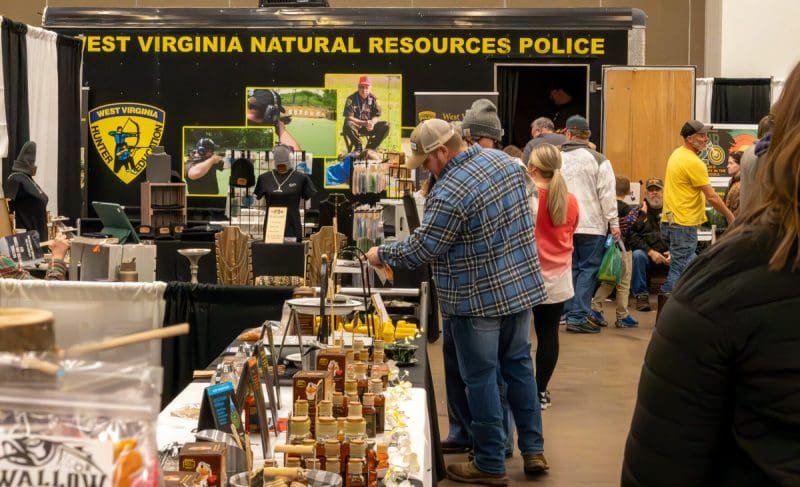
At the forefront of the state’s economic revolution, tourism leaders gathered at the 2025 tourism conference in Morgantown.
While adjacent northern Virginia remains the nation’s most famous data-center hub, West Virginia lawmakers have argued that concentrating too much digital infrastructure there can create vulnerabilities and that the state’s proximity to major East Coast markets positions it to compete.
But the pitch isn’t only about geography. For many developers, the deciding factors are power, fiber, land, and permitting, and West Virginia has moved aggressively on permitting, moving quickly to take decision making power for local communities.
In 2025, lawmakers advanced and enacted policy changes designed to streamline development for certified “microgrid districts” and certified “high-impact data centers,” including limits on local regulation for accredited projects and a special framework for taxation and revenue distribution.
Supporters say those tools make the state competitive in an era where large loads can shop among states for speed and certainty. Opponents argue that the same tools erode local control in places that will bear the impacts.
The economic promise: construction booms, a new tax base, and a “modern” infrastructure story
Data centers can deliver a dramatic headline number—capital investment! They often require massive site work, high-voltage electrical equipment, new substations, redundant fiber lines, and specialized construction trades.

An adventurer rides a zip-line at Pipestem Resort State Park. (Photo courtesy W.Va. Dept. of Tourism)
That can mean several years of high-paying construction work, plus permanent jobs in security, electrical, and mechanical operations, and network and facility management. However, critics note that headcounts are often modest once a facility is built.
There’s also the “spillover” argument that a data center corridor can help justify broadband expansion and grid hardening that benefits nearby communities. That’s been a key point for a state trying to recruit remote workers who demand reliable internet and fewer service outages. However, Elon Musk’s revolutionary Starlink has partly eliminated the need.
West Virginia’s new program framework explicitly links data centers to microgrids and power generation, reflecting a view that “power-ready” sites will win.
For counties that have long watched young people leave, the vision is seductive: a 21st-century employer class, new infrastructure, and more economic activity that isn’t tied to a single season.
The fear: electricity costs, grid strain, and the bill arriving at the kitchen table
The sharpest concern is not aesthetic. It’s arithmetic: how much power these facilities use, and who pays to provide it.
The PJM Interconnection, the grid operator serving about 65 million people across 13 states and Washington, D.C., including West Virginia, has seen capacity-market prices spike to record highs in recent auctions, with multiple analyses pointing to surging demand mainly driven by data centers.

Since the advent of the remote work revolution, small businesses are gaining a foothold in West Virginia, keeping money in the Mountain State. (Photo: Dan Burton)
On Dec. 17, 2025, Reuters reported that PJM’s latest auction produced a record capacity price of $333.44 per megawatt-day, raising the prospect of higher utility bills and highlighting concerns about whether enough generation will be built quickly enough to meet forecast demand growth.
PJM’s long-term load forecasting projects significant increases over the coming decade, reflecting a broader regional debate about how quickly new generation and transmission can come online.
Even analysts who favor new development warn that rapid growth in large-load capacity can ripple into household affordability. One assessment of PJM’s capacity-price surge emphasized the role of data-center demand in driving costs.
For a state courting remote workers, at least in part, on affordability and quality of life, that’s a vulnerability. If electricity becomes meaningfully more expensive, or reliability worsens, the “move here” pitch gets harder.
Water, noise, diesel backup, and the “leisure living” brand
Data centers vary widely in design. Some use air cooling; others use water-intensive systems. Many require extensive backup power—typically diesel generators—to ensure continuous operation during outages. Those details matter most at the local level, where residents weigh proposals against drinking-water systems, river corridors, and the everyday experience of living nearby.
In Tucker County, where tourism, second homes, and the arts economy are profitable, opposition has been fueled by concerns that an industrial-scale campus could alter the character of Thomas and Davis and the surrounding landscape. National and regional coverage has described a fierce local pushback after residents learned of a related air permit process and began digging for details.
That fight has become emblematic of a broader question: can West Virginia pursue high-energy industrial loads without jeopardizing its homestyle and outdoor brand?
The conflict looks familiar to native West Virginians—a promised boom in which struggling locals shoulder the downsides while outsiders capture the upside.
The political flashpoint: who gets to decide, and who gets the tax revenue?
A major driver of controversy is governance.
The Associated Press reported that West Virginia lawmakers moved to limit local authority over certified projects as part of a push to attract data centers and microgrids — and that those changes became a lightning rod in Tucker County after residents discovered a proposal they believed was aimed at powering a massive data center campus.

West Virginians have repeatedly battled invasions by outside interests—here at the Battle of Blair Mountain.
Local governments and school systems are closely monitoring another issue—tax distribution. Under the new framework for state and regional reporting, certified projects may be subject to a special valuation and revenue-sharing system that changes the share retained by host counties.
That matters in a state where property-tax receipts are central to funding services. The more communities believe a project’s tax benefits are being diverted from local needs—roads, emergency services, schools—the more likely political backlash becomes.
A tale of two West Virginias: the industrial corridor vs. the mountain towns
In the Eastern Panhandle, the development context is different. Berkeley and Jefferson counties are closer to Northern Virginia’s data center ecosystem and are already familiar with logistics facilities, warehousing, and industrial parks.
A proposed campus near Kearneysville has moved through planning review, with reporting describing two data center buildings and related infrastructure on the Berkeley side of a larger site.

Canaan Valley Resort is expanding its tubing park from 10 to 17 lanes as Tucker County benefits from tourism and new residents. (Photo courtesy Canaan Valley Resort)
In Tucker County, the conversation is less about fitting into an industrial corridor and more about whether a project fits at all near a recreation destination, one of the state’s signature mountain areas.
And in southern West Virginia, the Mingo County fight has taken on its own identity. In December 2025, West Virginia Watch reported that residents filed a federal lawsuit against a company involved in building power plants and a data center complex.
Advocacy organizations have also highlighted a proposal involving TransGas Development Systems and mountaintop locations, describing growing local organizing against the project.
The throughline is the same statewide: people want economic opportunity, but unlike before, when out-of-state interests colonized the state, they also want a say in what arrives, and assurances that the benefits will be local, durable, and worth the tradeoffs.
The rulebook is still being written
Even as projects move forward, the state is still shaping how data centers and microgrids will be regulated and certified. West Virginia Public Broadcasting reported in early December 2025 that the state is seeking public input on proposed rules and that significant data center developments were underway in multiple counties.
That’s a critical point for communities: the framework that governs siting, reporting, oversight, and revenue distribution is not just a technical matter. It determines whether data centers feel like a partnership or a takeover.
What “success” would look like—and what could go wrong
For West Virginia, the best-case scenario could be a managed transition: new investment that strengthens the grid rather than stresses it; a broadband buildout that extends beyond the fence line; and local agreements that fund emergency services, road upgrades, and workforce training.
The worst-case scenario is usual for the state and far easier to imagine. Communities lose control of land-use decisions. Household electricity bills rise. The state’s outdoor-and-remote-work brand dented by fights over noise, water, diesel backup, and industrialization in places that market quiet and dark skies.
In the short term, the question isn’t whether data centers will come. It’s where, under what rules, and whether state residents or outsiders win.
Nightfall’s Value: Light pollution can diminish real estate worth in W.Va.
WINFIELD, W.Va. — An increasing number of new West Virginia residents are being drawn to its rolling hills and quiet valleys to escape brightly lit...
Inside Appalachian Escapes: Themed rentals, escape rooms, and a love letter to West Virginia
FAYETTEVILLE, W.Va. — What began as a search for an affordable retirement option has turned into one of southern West Virginia’s most imaginative...
West Virginia bottler wins silver award at international water competition
BERKELEY SPRINGS, W.Va. — Le Sage Natural Water, of Lesage, has been awarded a silver medal for its purified water at the 36th annual Berkeley...
West Virginia uniquely prepared to dominate 21st-century outdoor economy
CHARLESTON, W.Va. — West Virginia is uniquely prepared to dominate in the 21st-century outdoor economy of the U.S., thanks to its unmatched...
Flood risk outpaces warnings, advocates say, as W.Va. considers changes to resiliency fund
CHARLESTON, W.Va. — As the W.Va. House of Delegates considers changes to Senate Bill 390, the West Virginia Rivers Coalition warns that the state...
We asked AI how its own data centers could pollute West Virginia. Here’s what it had to say
(The following article was generated partly by ChatGPT in response to a prompt about how data centers pollute. As ChatGPT is powered by data...
Inaugural W.Va. Outdoor Economy Summit to unite leaders around $2.1 billion growth
CHARLESTON, W.Va. — West Virginia’s outdoors are more than a scenic backdrop. They’re a strategic economic asset. That message will take...
West Virginia State Parks Foundation launches online merchandise store
HURRICANE, W.Va. — The West Virginia State Parks Foundation has launched an official online merchandise store, offering supporters a new way to...
West Virginia Travel Safety: What it means for residents and visitors in 2026
CHARLESTON, W.Va. — Travel safety in West Virginia is shaped less by headline-grabbing crime and more by geography, weather, and the realities of...
Did Abraham Lincoln and Jefferson Davis secretly meet in West Virginia?
PHILIPPI, W.Va. — Did Abraham Lincoln and Jefferson Davis secretly meet in what is now West Virginia just days after the first land battle of the...