
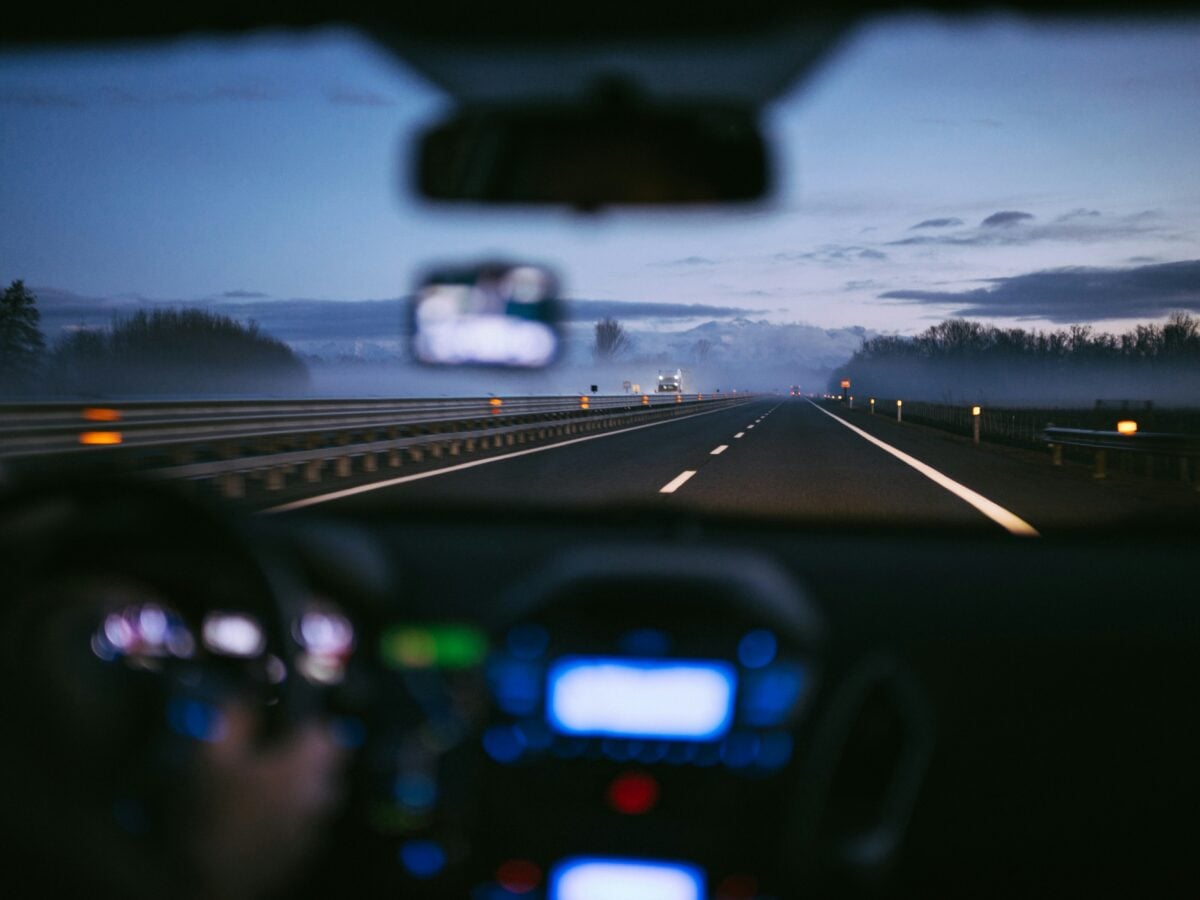
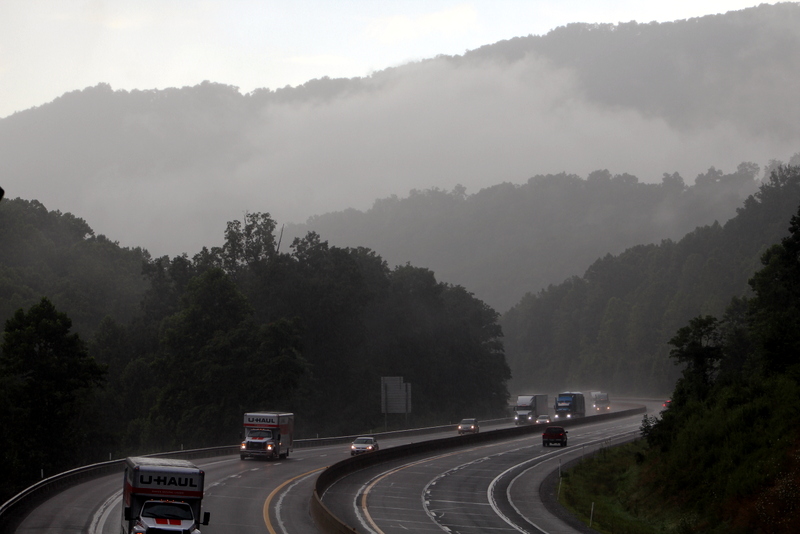
MORGANTOWN, W.Va. — The scenic country roads for which West Virginia is beloved can become much less welcoming as our eyes age, especially when conditions such as fog and winding mountain highways come into play.
Changing weather and lighting can make life even more difficult for people with eye diseases such as cataracts, glaucoma, macular degeneration, and diabetic retinopathy, says a West Virginia University professor, though there may be solutions.
Heather Livengood, of the WVU School of Medicine in Morgantown, said understanding how weather, glare, and lighting affect vision is important for those with impaired vision, as well as their caregivers and family members.
Contrast and Acuity
“People with vision loss often see worse on cloudy or rainy days and may experience decreased acuity and difficulty with contrast,” Livengood said. “However, on bright, sunny days, they might see more clearly but could be sensitive to light.”
By way of explanation, Livengood says “visual acuity” is the ability to clearly distinguish detail, color, and shapes, for example, being able to read print on a sign.
“Contrast,” she says, refers to the ability to detect differences between items that are similar in color, or to detect differences in how bright an item appears relative to its background, such as distinguishing steps, curbs, or spilled water on a surface.
“This is typical for people with macular degeneration, diabetic retinopathy, or cataracts,” she said.
According to Livengood, cloudy and rainy conditions can create additional challenges for people with vision impairment because light becomes more scattered by clouds and rain, making the environment look flatter.

As a result, people with vision loss may experience difficulty with depth perception, distinguishing textures, and reduced visual acuity at mid-range and longer distances.
She also noted that sensitivity to light can make it harder for the eyes to adjust between different lighting conditions.
“Sensitivity to light can refer to light-dark adaptation—the ability of the eyes to adjust to changing light levels—which can result in a sense that details are washed out and more difficult to see,” she said. “For example, walking from a dimly lit room into a very sunny day outdoors.”
Glare
Glare is another common problem for people with vision impairment, she said, especially while driving at night or during rainstorms.
“Another example of sensitivity to light is glare, the undesirable sensation that occurs when we look toward a light that is much brighter than what the eyes are used to—for example, the headlights of an oncoming vehicle when driving at night,” she said.
“Rain can also cause glare from wet surfaces such as pavement, puddles, and car windshields by reflecting more light than dry surfaces.”
Livengood recommended several practical ways to reduce glare and improve visibility.
“There are some simple, everyday items people can use to help minimize the effects of glare and manage sensitivity to light,” she said. “Wear hats or visors with brims to reduce the amount of glare that comes from overhead.”
She added that specialized filters and lenses may also help. “With the help of an eye care professional, identify whether a filter that can be worn or clipped onto eyeglasses would be useful,” Livengood said.
“A yellow filter may be helpful in fog, rain, or at dusk. A polarized brown lens may reduce glare from wet surfaces and improve contrast.”
She also suggested using water-repellent sprays on eyeglasses and electronic device surfaces, “so water will roll off faster and potentially reduce blur.”
Adapting to vision impairment
Livengood encouraged people with vision impairments to adapt the way they move through their environment.
“Taking time to move more slowly and use more deliberate actions, such as sweeping the head in wider side-to-side arcs and using the eyes to scan, can improve awareness of the environment,” she said.
Livengood said emergency preparedness is another important concern for people with impaired vision.
“While preparing for emergencies is important for everyone, some special considerations should be made for people with visual impairment,” she said.
She recommended labeling flashlights, radios, and medication bottles with tactile cues such as “bump dots, rubber bands, or Velcro dots” so people with vision loss can rely more on touch.
Livengood also advised families to “create and practice nonvisual evacuation routes by identifying tactile landmarks such as handrails, floor textures, and turns,” and to memorize routes by counting steps, doorways, and turns.
She further encouraged establishing “multiple communication backups that do not rely on vision,” including phone screen readers and remote-controlled audible devices near exits that can be activated during emergencies.
Finally, Livengood urged people with visual impairments to “pre-register with local emergency services for accessibility accommodations.”
“During an emergency, officials will be aware of special needs and alerted to the greater risk of harm than for someone without special needs,” she said.