
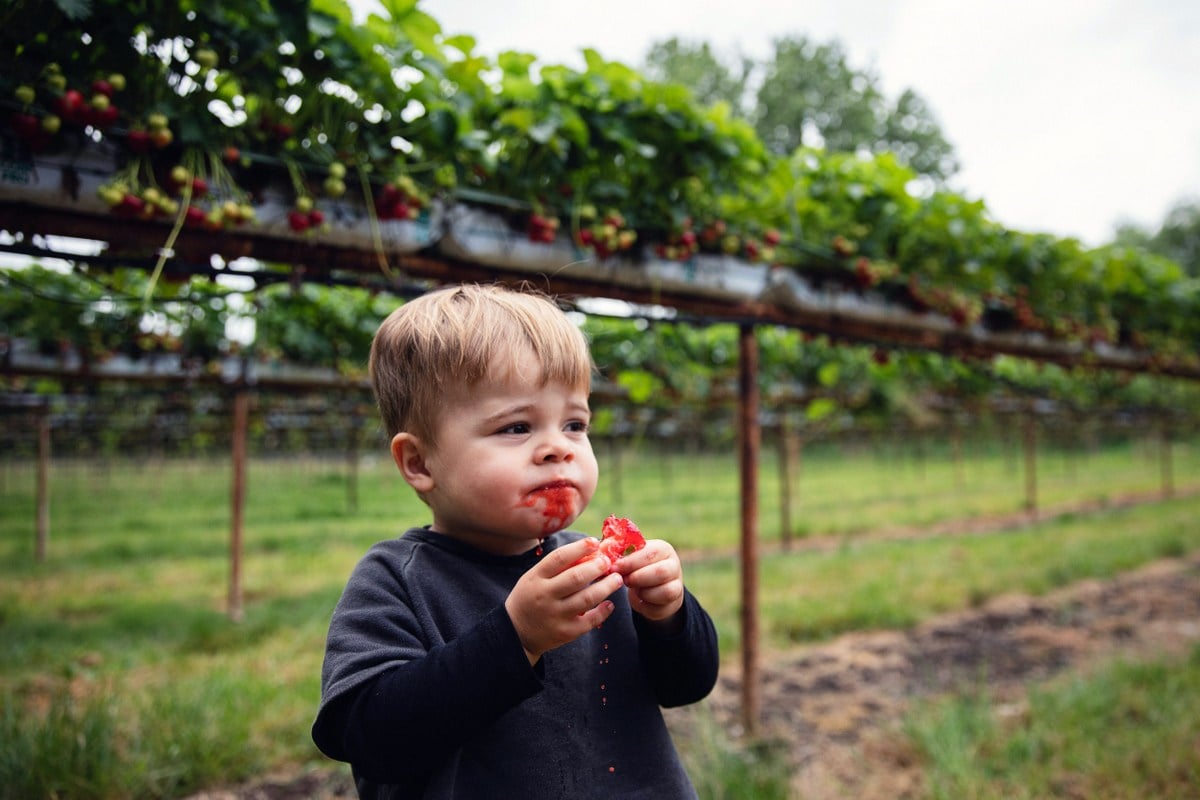
MORGANTOWN, W.Va. — A groundbreaking robotic harvesting technology, developed with the help of a West Virginia University researcher, could one day transform how strawberries and other delicate fruits are grown and harvested in West Virginia, reducing food waste while helping farmers deliver higher-quality produce to consumers.

The innovation comes as strawberry production continues to grow in popularity across West Virginia, where the state’s climate and geography have long provided favorable conditions for the highly perishable fruit.
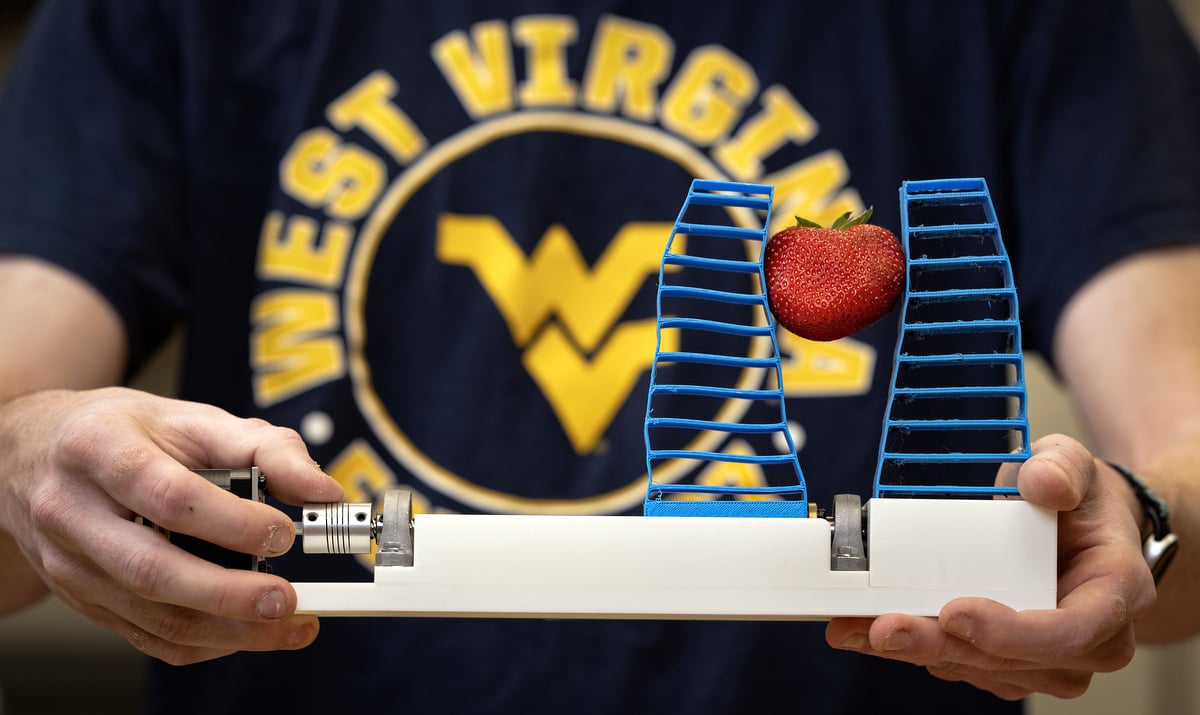
Anand Mishra, assistant professor in the WVU Department of Mechanical, Materials, and Aerospace Engineering, is part of a team that has developed a soft robotic gripper capable of assessing fruit ripeness and harvesting delicate produce without bruising or damaging it.
The technology, detailed in a recent study published in the journal Nature Communications, uses flexible silicone and polyurethane “fingers” equipped with advanced sensors that can assess a fruit’s size, shape, color, firmness, and ripeness before deciding whether to pick it.
The development could prove particularly important for strawberry growers in West Virginia, where strawberries are among the state’s most successful fruit crops but remain highly vulnerable to spoilage and harvesting challenges.
West Virginia well-suited for strawberry production
While states such as California dominate national strawberry production, West Virginia has several natural advantages for growing high-quality berries.
Cool winters provide the chilling hours strawberry plants require, and moderate spring temperatures help produce flavorful fruit. Abundant rainfall and fertile soils also support successful harvests across much of the Mountain State. Strawberries have historically been concentrated in Upshur, Monongalia, Mineral, Randolph, Lewis, and Grant counties.
Strawberries are typically harvested in May and June, though timing varies by elevation. The state’s mountainous terrain often yields berries known for their sweetness and flavor, qualities that consumers seeking locally grown produce prize. Yet strawberries pose a significant challenge for growers.
Unlike apples or peaches, strawberries have a remarkably short harvest window. Fruit often reaches peak ripeness for only a day or two before quality begins to decline. Their thin skins and soft flesh make them especially susceptible to bruising during harvesting and transportation.
As a result, losses can be substantial. According to Mishra, strawberry farmers can incur post-harvest losses of up to 25%, representing a major financial burden for growers and retailers alike.
“Our gripper’s quick, accurate inspections and harvesting can reduce fruit spoilage and lower supply chain costs,” Mishra said.
A robot inspired by nature
Unlike traditional industrial robots that rely on rigid mechanical parts, the new system was designed to mimic biological organisms.
The five-fingered gripper resembles both a human hand and a starfish. Each flexible finger contains stretchable optical fibers that serve as tactile sensors, allowing the robot to “feel” fruit much like a human picker.
A miniature camera and a distance sensor mounted in the palm provide additional visual information. Mishra said the design reflects the philosophy of his WVU research group, the Robiotics Lab.
“My research group at WVU is called the Robiotics Lab because we focus on robots that mimic biology,” he said. “We design squishy, squeezy, rubbery robots inspired by animals.”
The result is a machine capable of making complex decisions while handling fruit with exceptional care.
Traditional robotic harvesting systems often struggle outdoors and can bruise fruit with hard mechanical grippers. The WVU-associated design instead adapts to each fruit’s shape, applying only the pressure necessary to determine ripeness and complete the harvest.
For strawberries, the robot can simply twist the stem free rather than cutting it.
Solving agriculture’s labor problem
The technology arrives as farmers nationwide continue to face labor shortages and rising production costs.
Fruit harvesting remains one of agriculture’s most labor-intensive activities. Determining when fruit is ripe enough to pick often requires experienced workers who can make nuanced judgments based on appearance, firmness, and texture.
Those decisions directly affect profitability. Fruit harvested too early may lack flavor and quality, while fruit harvested too late may spoil before reaching consumers.
Mishra said that relying entirely on human labor presents challenges, including workforce shortages, health concerns, and inconsistencies in harvesting decisions.
“Fruit inspections are critical for harvesting decisions that have traditionally been made by human workers,” he said.
Researchers believe robotic systems capable of making accurate harvesting decisions could supplement farm labor while reducing losses throughout the agricultural supply chain.
Beyond Strawberries: A Future for Pawpaws?
The technology may also help solve one of the most persistent challenges facing Appalachia’s most distinctive native fruit—the pawpaw.
Often described as North America’s largest native fruit, the pawpaw grows naturally throughout parts of West Virginia and the Appalachian region. Despite its rich tropical flavor, the fruit remains largely absent from supermarket shelves.
The reason is simple. Pawpaws bruise easily and spoil quickly, making long-distance transport difficult. As a result, current harvesting and distribution systems have largely limited the fruit to local markets, roadside stands, and specialty producers.
Because the new robotic gripper can assess ripeness while handling fruit gently, researchers believe similar technologies could eventually enable wider distribution.
The implications extend beyond strawberries and pawpaws. Avocados, raspberries, blackberries, and numerous specialty crops face similar challenges in assessing ripeness and handling damage.
Nearly perfect accuracy
Researchers tested the soft robotic gripper on both supermarket strawberries and living strawberry plants. Results demonstrated impressive capabilities.
The gripper can open and close in less than two seconds and lift objects weighing up to one kilogram—more than sixteen times its own weight. Researchers also reported nearly 100% accuracy in predicting fruit shape.
The device can detect not only firmness and curvature but also slipping, allowing it to recognize when its grip on a fruit has become unstable. That sensory feedback helps ensure fruit is harvested without damage while maximizing harvesting efficiency.
Applications beyond farming
Although the project was developed with agriculture in mind, Mishra sees potential applications far beyond orchards and berry patches.
The same technology could be used in health care, biomedical robotics, underwater exploration and even future space missions. “This system offers applications in space exploration, health care, food handling and underwater manipulation,” Mishra said.
The combination of soft materials and advanced sensing could improve rehabilitation devices, wearable robotic systems and machines designed to interact safely with delicate objects and environments.
A high-tech future for Mountain State agriculture
For West Virginia farmers, however, the most immediate promise lies in the field. As demand for locally grown food continues to rise, technologies that reduce waste and improve harvest quality could help strengthen specialty agriculture statewide.
For strawberry growers especially, innovations that identify peak ripeness, reduce bruising, and shorten the time between field and market may offer a powerful new tool.
For consumers, that could ultimately mean fresher strawberries, less food waste, and perhaps even greater access to uniquely Appalachian fruits such as pawpaws, which have long been difficult to bring to grocery store shelves.
As agricultural robotics continues to advance, West Virginia researchers are helping ensure that the future of farming may be as soft, flexible, and adaptable as the fruits it seeks to harvest.
Rachel Brosky, media manager for WVU Strategic Communications and Marketing, contributed to this story.