
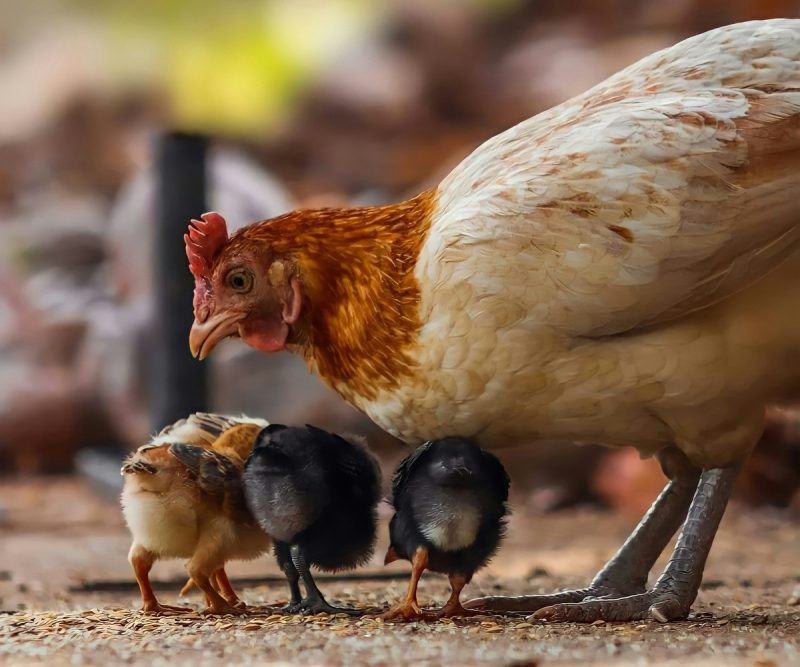
RIPLEY, W.Va. — State officials have confirmed the presence of highly pathogenic avian influenza in a backyard flock in  Barn on Cabin Fork in Jackson County, West Virginia[/caption]

West Virginia Commissioner of Agriculture Kent Leonhardt said backyard flocks are especially susceptible during winter migrations.
“As we enter the winter migration season, this case should serve as a reminder that backyard flocks are especially vulnerable when wild birds are on the move,” Leonhardt said
“We urge all poultry owners, large and small, to take extra precautions. Simple steps like keeping birds enclosed, limiting visitors, and preventing contact with wild waterfowl can make all the difference in stopping the spread of this virus.”
The department has notified industry partners and state health officials and will continue following established response protocols. The agency remains committed to prompt communication to help mitigate the risk of additional spread.
Avian influenza is an airborne respiratory virus that spreads through respiratory secretions, manure, and contaminated surfaces. Wild migratory waterfowl serve as natural carriers, increasing the risk to outdoor and backyard flocks.
While it has been detected in some mammal species, the U.S. Centers for Disease Control and Prevention notes that the public health risk remains low. Properly handling and thoroughly cooking poultry and eggs remains safe.
To prevent the spread of the flu, the department urges poultry owners to:

- Keep backyard flocks enclosed or under cover to avoid contact with wild birds.
- Remove or secure outdoor feed that may attract wildlife.
- Limit and record movement of people, vehicles, and animals on the property.
- Restrict access to essential personnel only.
- Avoid visiting other poultry operations or mixing birds from different locations.
- Disinfect equipment, footwear, and tools after contact with birds.
- Isolate any ill animals and contact a veterinarian immediately.
What is Highly Pathogenic Avian Influenza (HPAI)?
Highly Pathogenic Avian Influenza (HPAI) is a severe, rapidly spreading viral disease that affects domestic poultry, wild birds, and, occasionally, mammals. In backyard flocks, the virus can be introduced through contact with infected wild birds, contaminated equipment, feed, or footwear.
Because backyard birds often live in open or semi-open environments, they are more exposed to migratory waterfowl and other carriers of the virus. Once introduced, it spreads rapidly from bird to bird through respiratory secretions and feces, often infecting an entire flock within days.
Sudden death, respiratory distress, neurological symptoms, reduced egg production, and swelling or discoloration of the comb and wattles characterize the disease.
The impact of HPAI on backyard flocks is typically severe, as mortality rates approach 90–100 percent in many outbreaks, and there is no effective treatment once birds are infected. To prevent further spread, state or federal animal-health authorities may require quarantines and depopulation of affected flocks.
The disease also poses significant economic and emotional consequences for small flock owners, who may lose both birds and the ability to repopulate for a period of time. Strict biosecurity—such as limiting contact between domestic birds and wildlife, controlling access to coops, and maintaining clean equipment—is the primary means of reducing risk and protecting backyard poultry from HPAI.
Some kinds of birds are more susceptible
Highly Pathogenic Avian Influenza, also known informally as “bird flu,” can infect a wide range of bird species, but some groups are especially vulnerable or commonly affected.
Domestically, chickens, turkeys, ducks, geese, guinea fowl, quail, pheasants, and backyard mixed flocks are highly susceptible. Chickens and turkeys are typically the most severely affected, with rapid transmission and high mortality. Domestic ducks and geese may show milder symptoms but can shed large amounts of virus, acting as unnoticed carriers within a flock.
In the wild, it’s most frequently associated with waterfowl, including ducks, geese, and swans, which often carry the virus with few or no signs of illness. They play a significant role in spreading the virus during migration.
Raptors such as hawks, eagles, and owls that feed on infected waterfowl can develop severe disease, and scavengers like crows, vultures, and gulls may also become infected.
Songbirds, including backyard feeder birds, are generally less susceptible, though occasional infections have been documented.
Can avian flu infect humans?
The virus can infect humans, but such cases are rare and usually occur only after prolonged, very close contact with infected birds, their droppings, or heavily contaminated environments.
Most human cases worldwide have been linked to people who handle sick or dead poultry directly, such as farm workers, cullers, or individuals keeping birds in close household settings.
Human infections can range from mild symptoms (fever, cough, conjunctivitis) to severe respiratory disease, and in some strains, the illness has been severe or even fatal.
Importantly, it does not spread easily from person to person, and sustained human-to-human transmission has not been documented. Public health officials emphasize that the general population is at very low risk.
For backyard flock owners, the best protection includes wearing gloves when handling birds, washing hands thoroughly after contact, avoiding exposure to sick or dead wild birds, and reporting sudden poultry deaths to state animal-health authorities. Cooking poultry and eggs to safe internal temperatures eliminates the virus and poses no danger.
Within avian influenza, there are different strains and categories, including Low Pathogenic Avian Influenza (LPAI) and Highly Pathogenic Avian Influenza (HPAI). These labels describe how severe the disease is in poultry, not whether it can affect humans. So while the wording may differ, they all describe the same family of viruses that primarily infect birds.
Poultry owners in West Virginia should report unusual death loss, a sudden drop in egg production, or any sick domestic birds to the WVDA Animal Health Division at 304-558-2214.
A Virus has never been proven to exist.
If anyone says otherwise simply show a virus isolated and purified of all other material.
This simply has never been done.
Virologist like to claim virus are isolated all the time but are deceptive in their methods never isolating a thing and instead killing everything in a petri dish and claiming the virus did that…….seriously…that is how the pseudoscience of virology rolls.
FOIA from many different countries fail to confirm the existence of any avian virus.
I work on an organic regenerative farm and the only animals that become sick are animals that are unhealthy, because if an animal is HEALthy it will not get sick due to the the animal is healthy which should be as obvious as an unhealthy animal will get sick, diseased, ill because it is unhealthy.
Government has a long history of killing farm animals…. it is called Control/Govern.
Government does not know how to Farm!
The Agencies that govern have zero idea how to farm.
Government to any degree should stay far and away from Farms and Food.
One last thing Contagion (Like Viruses) in men/woman has NEVER been proven.
There have been many studies over the last 100 + years trying to have healthy people ‘catch’ from the diseased the illness that inflicts them….you name it Spanish Flu, Polio, AIDS no healthy person has ever had the illness transmitted in the ways the people are all led to believe or think it is transmitted.