
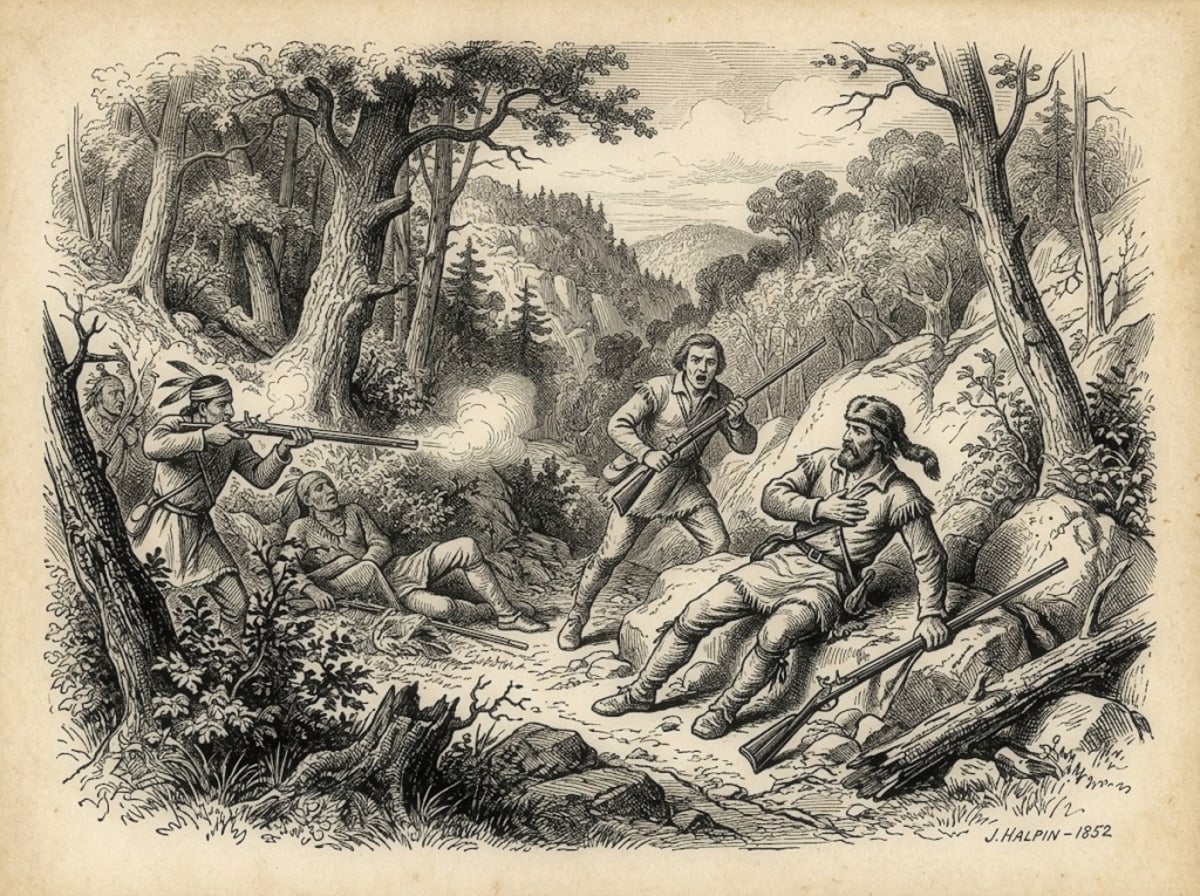
MINNORA, W.Va. — In a wooded gap along a rural road near Minnora, two graves have long fascinated local residents and students of West Virginia history. Known collectively as the Mike Fink grave site, the burial ground marks the location of a deadly frontier encounter that occurred during the turbulent years when Native Americans and Virginia settlers competed for control of the Appalachian wilderness.
The site lies in a low mountain pass known simply as “Low Gap,” where the headwaters of Finks Run and Hardways Run nearly meet. Today, travelers can reach the graves by following Milo Road west from W.Va. Route 16 near Minnora. The quiet setting offers little indication of the violence that unfolded there more than two centuries ago.
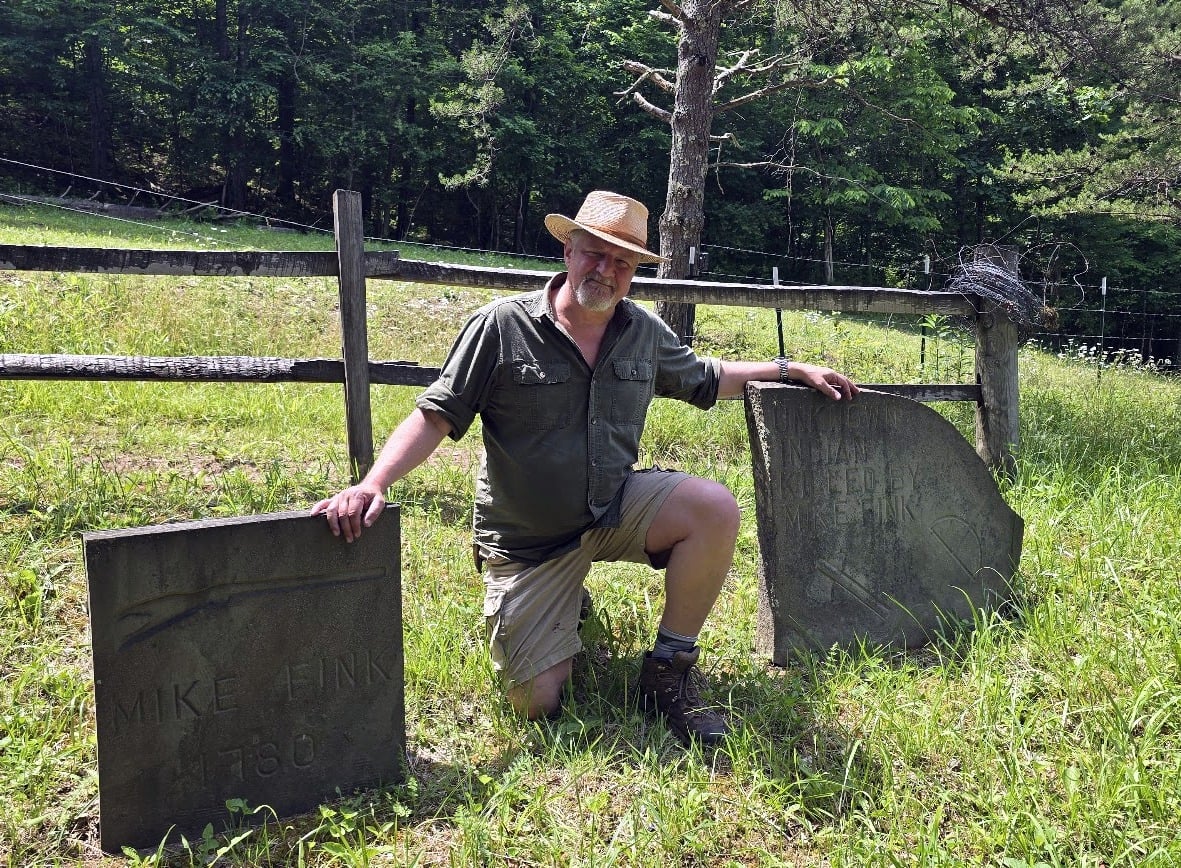
According to an account published by West Virginia historian Boyd Stutler in 1964, Mike Fink was a pioneer hunter who settled in what is now Braxton and Calhoun counties in the late 1700s. In 1780, while hunting with noted frontiersman Adam O’Brien, Fink encountered a small party of Native Americans in the gap.
Stutler, drawing on earlier local histories, wrote that Fink fired first, killing one member of the group. Another Native warrior immediately returned fire, mortally wounding Fink. Both men died in the encounter.
“For more than a century,” Stutler wrote, “two graves have been landmarks, lying side by side in the low gap dividing the waters of Hardways Run of the West Fork of the Little Kanawha, and Finks Run, a tributary of Beech Fork, not far from Minnora, in Calhoun County.
“Mike Fink was a pioneer and hunter who had drifted into the Braxton-Calhoun county area and was killed by an Indian in 1780 while hunting with Adam O’Brien, a famous frontiersman and hunter. When the Indians were sighted, Fink fired on them, killing one. His companion returned the fire, mortally wounding Fink. The two men were buried where they fell by a party led back to the site by O’Brien.”
For generations, the burials have remained a familiar landmark in the area, attracting visitors interested in frontier history and the conflicts that shaped early settlement in what would later become West Virginia.
“Early settlers saw to it that the graves were marked with rough slabs of field stones,” Stutler wrote, “and care of the graves has been continued down to this day.”
Stutler’s story was preserved in local tradition and later recorded by Colonel Daniel De Weese in his 1904 volume Recollections of a Lifetime. Stutler considered De Weese’s account the most important surviving source on the incident.
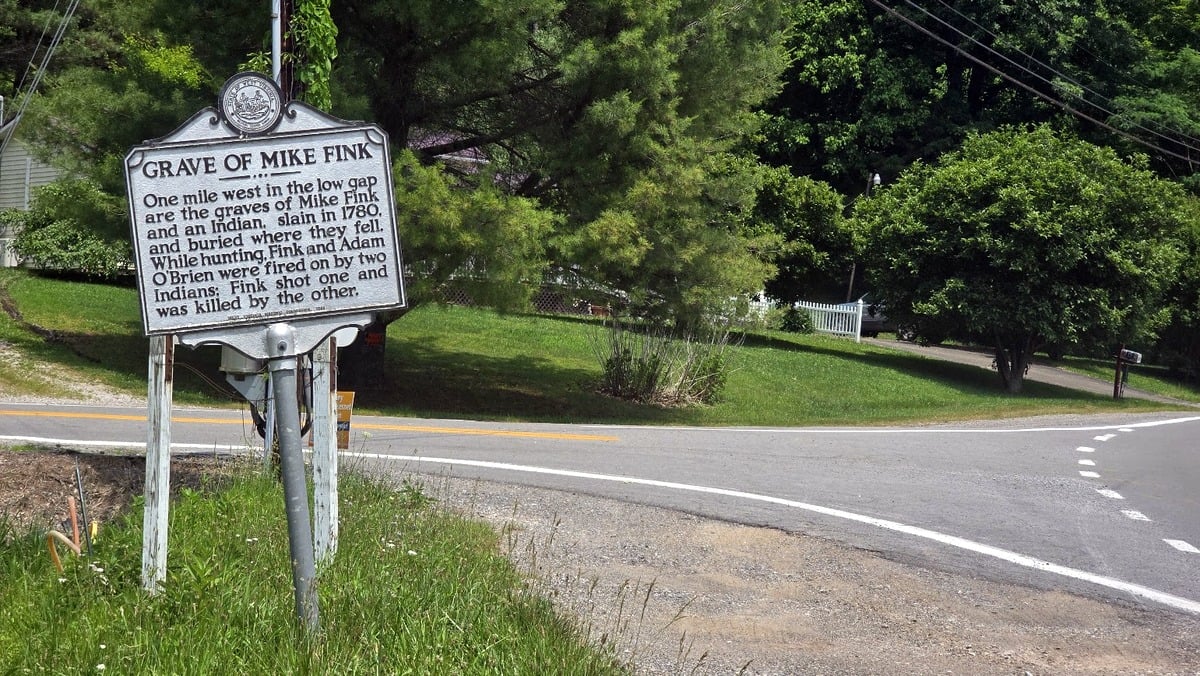
The Mike Fink grave site gained additional recognition in 1963 when the West Virginia Historic Markers Commission erected a roadside marker near the mouth of Hardways Run. The marker directs visitors to the graves approximately one mile west of the highway.
Although the original grave markers were replaced in recent decades, the site remains one of the state’s most unusual frontier landmarks. Few locations in West Virginia preserve the resting places of both participants in a fatal encounter between a settler and a Native American warrior.
The graves also illustrate the strategic importance of mountain gaps during the frontier era. Such passes provided the easiest routes through the rugged Appalachian landscape and were commonly used by Native Americans, hunters, settlers, and wildlife moving between river valleys. As a result, they frequently became places where rival groups unexpectedly crossed paths.
The conflict that claimed the lives of Mike Fink and the unidentified Native warrior occurred during a period of frequent violence across the central Appalachian region. Throughout the late eighteenth century, Shawnee and allied tribes contested the advance of Virginia settlers into lands that both groups considered vital to their future.
Today, the Mike Fink grave remains a tangible reminder of that era. Located beside a quiet country road in Calhoun County, the paired graves preserve the memory of two men who met in a brief but deadly encounter on the Appalachian frontier in 1780.
Visiting the Mike Fink Grave
The graves are located on Milo Road (County Route 13), approximately one mile west of West Virginia Route 16 near Minnora in Calhoun County. They stand on the south side of the road near the crest of Low Gap, where Finks Run and Hardways Run approach one another. A state historical marker along Route 16 points visitors toward the site. The Mike Fink Grave is approximately an hour’s drive from Charleston, West Virginia, by way of I-79.
(The Mike Fink grave is not the grave of another frontier character named Mike Fink, or Miche Phinck, a legendary Pittsburgh boatman who died in the Rocky Mountains in 1823.)
Interesting article. Day trip for us to view graves. Unusual site with both Settler and Native American buried side by side.
Definitely a day trip from up here in OHIO COUNTY ,love this stuff .
Thank you so much, I can’t show how much i appreciate this.
Thank You for a Great article!
More of West Virginia’s history and legends need to be shared with the Young people of today. It would be a true shame to see such things erased from future memories.
I rode through that gap every morning on a school bus going to the Minnora Grade School. Amazing how history can be right under your nose and you’re not even aware of it. Thanks for keeping WV history alive and in the forefront of our lives.