
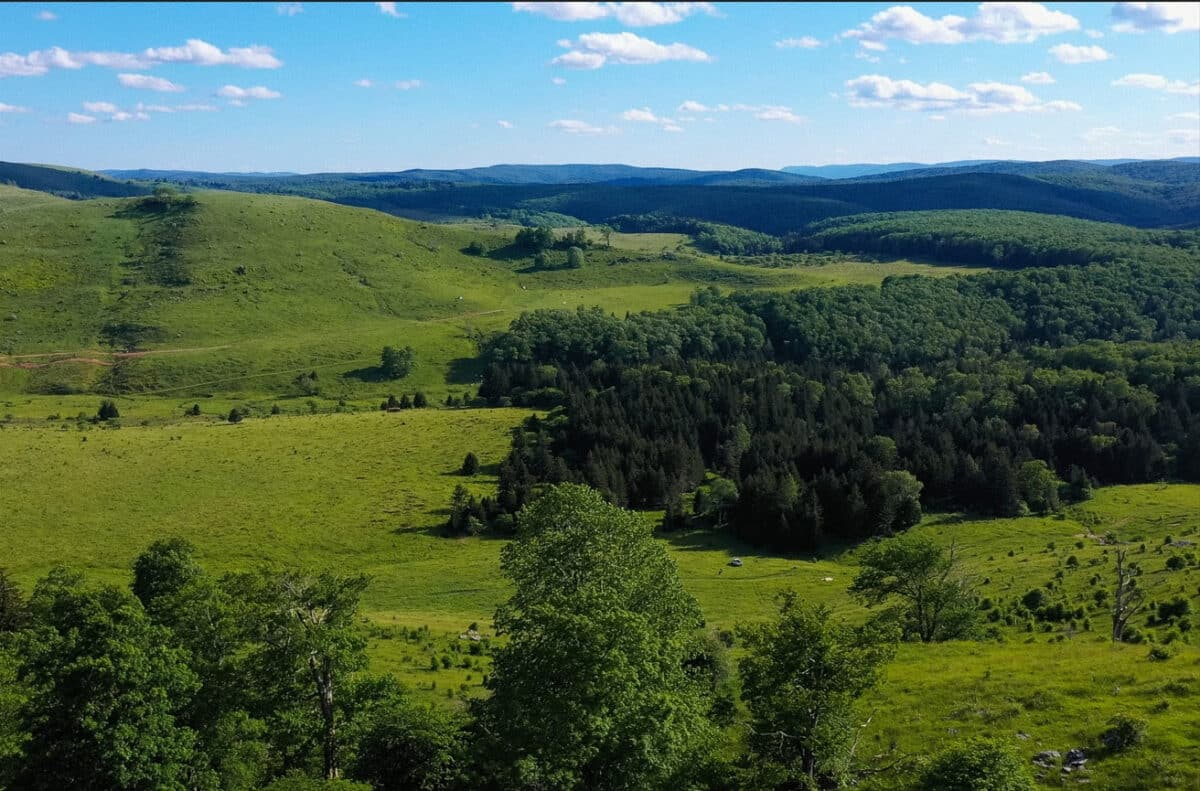
ELKINS, W.Va. — The Monongahela National Forest has acquired a 427-acre tract in Randolph County known as the Cunningham Knob addition, expanding public land near Cunningham Knob and the Laurel Fork area.
The property was purchased from 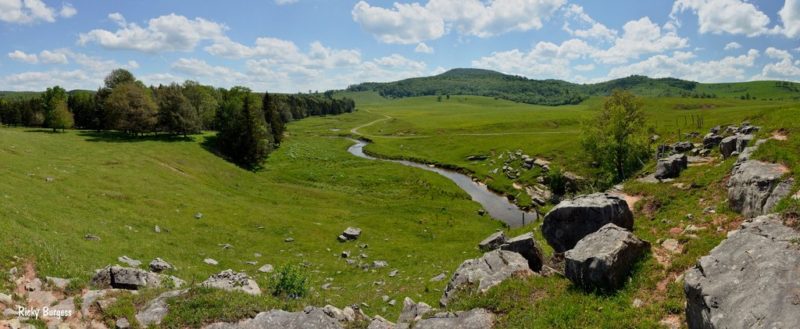 Cunningham Knob rises above the Sunks of Gandy. Photo by Rick Burgess[/caption]
Greenbrier District Ranger Shane Jones said the addition will increase public access, help protect trout streams, and improve connectivity for high-elevation red spruce ecosystems near the Sinks of Gandy.
“The Cunningham Knob area is a key landscape on the Greenbrier Ranger District,” Jones said. “ This is a key landscape on the Greenbrier Ranger District increasing public access, protecting trout streams, improving high-elevation spruce ecosystem connectivity, protecting cultural resources, and sustaining heritage grazing activities in this unique landscape near the famed Sinks of Gandy.”
The Sinks of Gandy is a natural cave system where Gandy Creek disappears underground for about a half-mile before emerging downstream, creating one of the state’s best-known karst formations.
Officials with the conservancy said the land contains limestone pastures, spring-fed streams, wetlands, and remnant red spruce forests that support native brook trout, rare plants, and wildlife habitat.
Todd Miller said the organization purchased the property with the intention of eventually transferring it to the national forest system. He said restoration work included reforesting stream corridors and installing fencing to support continued cattle grazing on portions of the land.
Miller said the project was completed in cooperation with local landowners and contractors and reflects a long-standing partnership between the conservation group and the Forest Service.

Preservation of the Cunningham Knob area
“The Nature Conservancy works with public and private landowners to protect and restore our most resilient landscapes to support nature and people,” Miller said. “The Cunningham Knob area is one of those landscapes. Its limestone geology has created rich pastures, cold, spring-fed streams, and unique wetland habitats, all surrounded by remnant red spruce forests. These ecosystems support native brook trout, rare plant communities, and numerous wildlife species, as well as a proud local cattle ranching tradition.
“We acquired this beautiful property to restore and protect its unique habitats, and to eventually transfer ownership to the Monongahela National Forest. We made a substantial investment not only to purchase and hold the property but also to reforest stream corridors. And we worked with local landowners and contractors to fence the reforested areas and property boundaries so that portions of the property and adjacent private lands could be managed for cattle grazing, continuing historic local land use that maintains lush pastures for grassland birds and other wildlife species.”
Forest officials said visitors should continue to observe an existing closure order affecting two locations in the area. Additional information is available on the Monongahela National Forest website.
The U.S. Forest Service manages 193 million acres of public land nationwide and oversees conservation and forestry programs across the country.
The Monongahela National Forest spans nearly one million acres across 10 counties in the highlands of West Virginia, providing clean water, wildlife habitat, productive timber resources, and year-round recreational opportunities. It is a vital part of the region’s economy and culture, and it supports some of the most diverse and scenic landscapes in the Appalachians.
I think I would have preferred this tract to stay in the possession of the Nature Conservancy. The way our government seems to be working now, I fear it will eventually likely be sold off to the highest corporate bidder for logging.
I tend to agree, the way our present government has tried to unsuccessfully sell off large portions of our national forests in recent years scares me . I would hate to see this beautiful area lost to some large corporation. So yes I agree it should stay in the nature conservancy hands.