
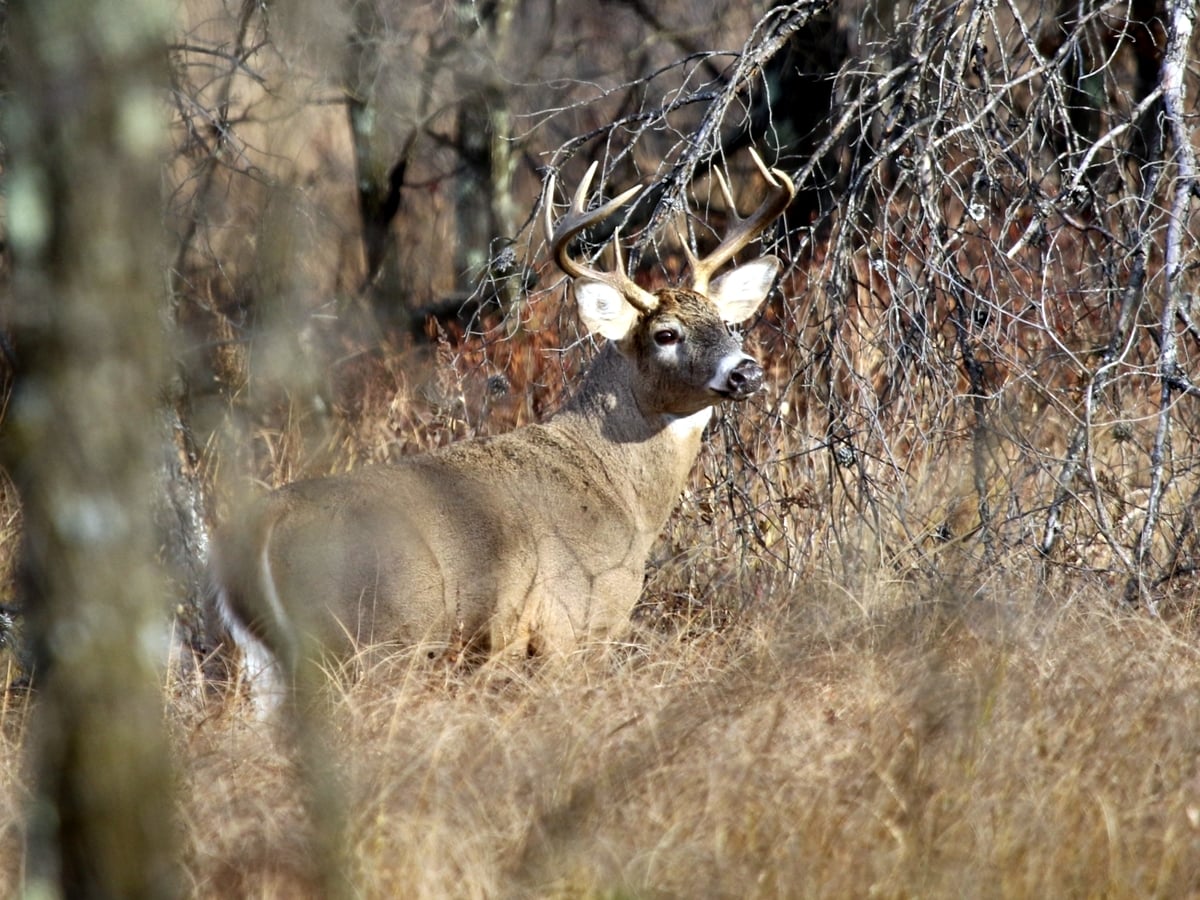
CHARLESTON, W.Va. — West Virginia’s annual buck firearms season opened Monday, Nov. 23, with state wildlife officials predicting a larger deer harvest than last year as a reduced acorn crop changes how deer move through the state’s forests.
The two-week season continues through Dec. 6 in 51 of the state’s 55 counties; Logan, McDowell, Mingo, and Wyoming counties remain closed to firearms deer hunting.
Brett Skelley, leader of the W.Va. Division of Natural Resources’ Deer Project, said conditions appear favorable following a season marked by abundant forest food and an outbreak of deer disease.
“It really should be a good week or two of hunting,” Skelley told WV MetroNews in an interview published Monday.
Fewer acorns could mean more deer harvested
West Virginia hunters harvested 92,553 white-tailed deer during the combined 2025–26 hunting seasons, according to figures division biologists released in March. That represented a 17 percent decline from the previous year and was 14 percent below the five-year average.
The traditional buck firearms season accounted for 33,823 deer, according to the agency’s preliminary figures.
Wildlife officials attributed the decline partly to an abundance of acorns and other nuts, collectively known as hard mast. With food plentiful throughout the forests, deer could remain dispersed rather than concentrating near particular feeding areas.
An outbreak of epizootic hemorrhagic disease, transmitted by biting midges, also affected deer in several western counties, particularly around the Mid-Ohio Valley.
Skelley told WV MetroNews that populations in affected areas are expected to recover, although the process could take several years.
Conditions have changed this fall. According to the division’s 2026 Hunting Outlook and Mast Survey, the statewide mast index is 14 percent below its long-term average and 16 percent below last year’s level.
“Overall hard mast production, especially red oak and black oak, is down this year and is expected to be less abundant across the state,” said Avery Echevarria, mast survey project leader for the division’s Wildlife Resources Section.
Echevarria said soft mast production, including fruits and berries, was higher than in 2025 but remained slightly below its long-term average.
With fewer acorns available, deer may travel farther to find food, potentially increasing hunting opportunities. As West Virginia Explorer reported in October, the division expects a higher harvest this year.
“Most areas of the state we have pretty high deer densities overall, so it’s not really a concern,” Echevarria said in an October interview with WV News.
Why deer hunting matters to Appalachian forests
Regulated hunting is one of the principal methods wildlife managers use to control deer populations and limit damage to forests and agricultural lands.
White-tailed deer feed on seedlings, shoots, leaves, and other vegetation. When populations are unusually high, repeated browsing can prevent young trees from establishing and reduce native plant diversity.
Researchers at Pennsylvania State University have documented how excessive deer browsing affects forest regeneration and wildlife habitat.
According to Penn State’s Department of Ecosystem Science and Management, high deer densities can reduce the abundance of oaks and other desirable tree species in the forest understory. The loss of shrubs and seedlings can also affect birds that depend on low vegetation for nesting and shelter.
Although the research concerns Pennsylvania forests, the findings illustrate ecological pressures that can occur in hardwood forests elsewhere in the Appalachian region.
West Virginia wildlife managers use harvest records, habitat conditions, and other information to guide deer regulations. Appropriate deer densities vary by region, depending on available habitat and management objectives.
Hunting remains important to rural economies
The opening of firearms season brings hunters into rural communities, where they purchase groceries, fuel, lodging, equipment, and other supplies.
According to figures cited in Gov. Patrick Morrisey’s announcement, more than 265,000 hunters spent $867 million on hunting-related purchases in West Virginia in 2022.

The spending generated an estimated $912 million in economic activity and supported 7,420 jobs. Those figures cover hunting year-round, not just deer season.
“Buck firearms season is more than a time of year. It is woven deep into West Virginia’s culture and heritage,” Morrisey said.
The Thanksgiving-week opening has long influenced family schedules, hunting camps, and holiday gatherings. For many residents, deer season provides an annual opportunity to return to family property or reunite with relatives and friends.
What hikers and other forest visitors should know
The opening of firearms season also affects hikers, photographers, birdwatchers, and others who use West Virginia’s forests for recreation.
According to the division, West Virginia has 96 wildlife management areas, eight state forests, and nearly 1.1 million acres of national forest land that provide public hunting opportunities. Together, those areas offer more than 1.6 million acres of public hunting grounds.
Hunting is permitted in many areas of the Monongahela National Forest, state forests, and wildlife management areas, although restrictions vary by property.
West Virginia requires hunters to wear at least 400 square inches of blaze orange when hunting in areas with an open deer firearms season.
Although the requirement generally does not apply to hikers and other nonhunters, brightly colored clothing can make visitors more visible. Keeping dogs under control and outfitting them with orange vests are additional precautions.
Hunting is generally prohibited in West Virginia state parks except where specifically authorized. Restrictions also apply in designated safety zones on other public lands.
Visitors should consult the regulations for individual properties before entering the woods. WVDNR provides an interactive hunting and fishing map showing public hunting opportunities.
Additional information is available through the West Virginia Explorer hunting guide.
Hunters provide venison for West Virginia food banks
Deer season also supports food assistance programs through donations of legally harvested animals.
WVDNR’s Hunters Helping the Hungry program has distributed more than 1.15 million pounds of venison since its establishment in 1992, providing the equivalent of more than 1.5 million meals.
During a November announcement covered by West Virginia Public Broadcasting, Morrisey encouraged hunters to participate in the program, citing its contributions to West Virginians experiencing food insecurity.

The program accepts deer through participating meat processors, which prepare the venison for distribution through Mountaineer Food Bank in Gassaway and Facing Hunger Food Bank in Huntington.
Participating processors are reimbursed for their work. The program also accepts financial donations to support processing and distribution.
Information about donating deer is available through WVDNR’s Hunters Helping the Hungry program.
Hunting regulations and Big Buck Photo Contest
Hunters participating in the firearms season must comply with state licensing, safety, and game-checking requirements.
All harvested deer must be field tagged and electronically checked through WVHunt.com.
Hunters ages 15 and older generally must have a valid hunting license unless they qualify for an exemption, including certain resident landowner privileges.
A base hunting license permits the harvest of one buck during the firearms season. Hunters seeking a second buck must have purchased the appropriate Class RG or RRG stamp before the season opened. Additional county-specific restrictions apply.
Deer carcass transportation, baiting, and feeding restrictions are in effect in several eastern counties to limit the spread of chronic wasting disease, a fatal neurological disease affecting deer and related animals.
WVDNR has also announced the return of its Big Buck Photo Contest, which offers prizes including lifetime hunting licenses, state park cabin stays, and outdoor equipment packages.
Eligible resident and nonresident hunters, including youth, may enter by submitting a photograph of themselves with a legally harvested buck, a valid game-check number, and a hunt account of no more than 500 words.
Entries must be submitted by Jan. 8, 2027. A random drawing will select finalists, after which a judging committee will evaluate the photographs, antlers, and accompanying narratives.
Complete contest rules are available at WVdnr.gov/photocontest.
Hunters should consult the 2026–27 West Virginia hunting regulations for season dates, licensing requirements, safety rules, and county-specific restrictions.