
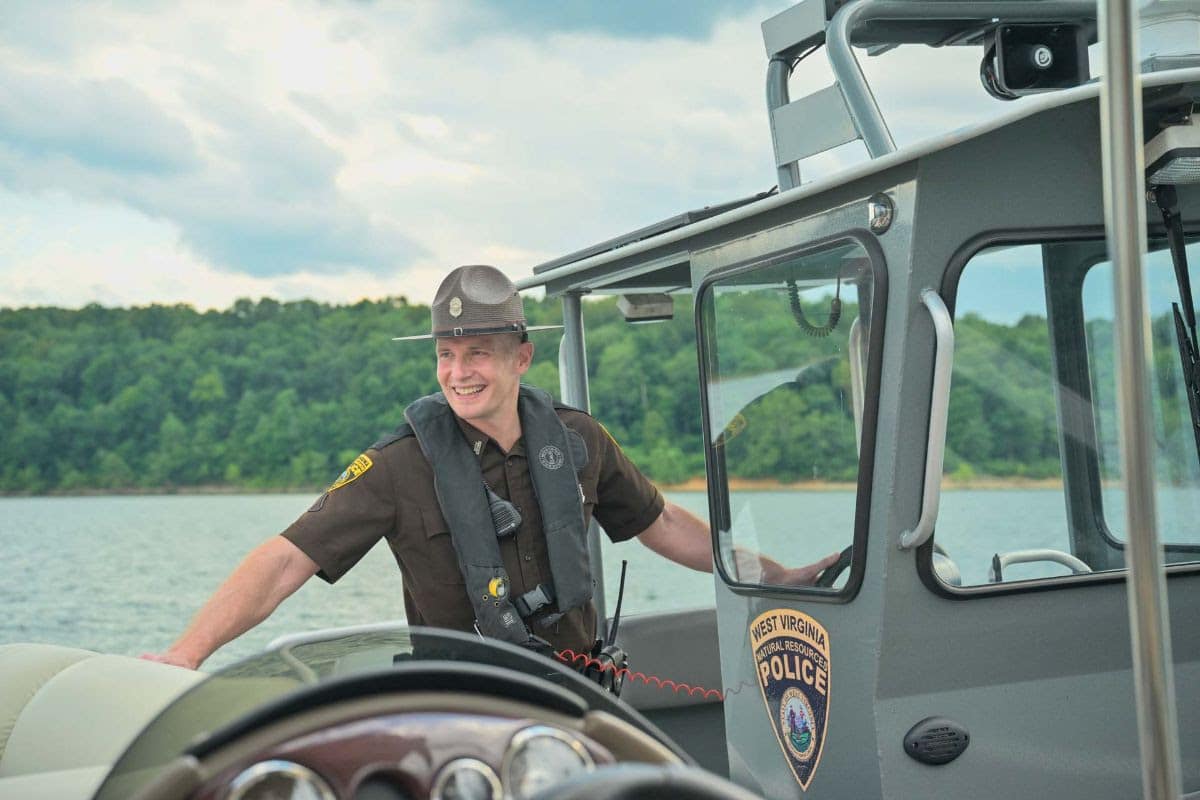
CHARLESTON, W.Va. — To help promote National Safe Boating Week, officials at the W.Va. Division of Natural Resources and its law enforcement section are reminding boaters about the importance of boating safety and wearing life jackets.

Observed this year from May 16-22, National Safe Boating Week marks the start of the summer boating season and promotes the Safe Boating Campaign, a global initiative administered by the U.S. Coast Guard and funded by the Sport Fish Restoration and Boating Trust.
Brett McMillion, the director of the W.Va. DNR, stresses that boaters wear life jackets above all else.
“As we head into the summer boating season, wearing a life jacket is one of the simplest and most effective ways to protect yourself and your loved ones on the water,” McMillion said. “We encourage everyone in West Virginia to make boating safety a priority every time they go boating.”
West Virginia Boating Safety Compliance
One of the most common issues natural resources police encounter during the boating season is compliance with West Virginia’s life jacket laws. Under state law, every person aboard a boat must have a properly sized Coast Guard-approved life jacket that is readily accessible and in good condition. Children under 13 must wear a life jacket while the boat is underway, unless they are below deck or in an enclosed cabin.
Captain Warren Goodson of the division police force oversees the division’s boating education program and says that, in addition to being vital, modern life jackets are stylish.
“There are a lot of myths about life jackets, but the reality is they save lives,” Goodson says. “New life jackets are more comfortable, lightweight, and stylish than the bulky orange style most boaters are familiar with.”
Drowning was the reported cause of death in three out of every four recreational boating fatalities in 2024, according to the U.S. Coast Guard, and 87 percent of those who drowned were not wearing life jackets.
West Virginia Boating Safety Facts
The following West Virginia boating safety tips and facts will help keep you and your guests safe and help boat operators maintain their privilege to operate watercraft.
- West Virginia has thousands of acres of public water available for boating, including major recreation areas such as Bluestone Lake, Burnsville Lake, Summersville Lake, and Stonewall Jackson Lake.
- The busiest boating months in West Virginia are typically May through September, when warmer temperatures draw anglers, paddlers, and recreational boaters onto lakes and rivers.
- West Virginia law requires every vessel to carry one properly sized U.S. Coast Guard-approved life jacket for each passenger aboard the boat.
- Children younger than 13 must wear a life jacket while a vessel is underway unless they are below deck or inside an enclosed cabin.
- According to the U.S. Coast Guard, most recreational boating drowning victims nationwide were not wearing life jackets at the time of the accident.
- Anyone born after Dec. 31, 1986, must complete an approved boating education course before operating a motorboat in West Virginia.
- Boating under the influence of alcohol or drugs is illegal in West Virginia and carries penalties similar to impaired driving on highways.
- Afternoon thunderstorms are common in the Appalachian region during summer and can create sudden, hazardous conditions on open water.
- Water temperatures in mountain lakes and rivers can remain cold even during warm weather, increasing the risk of cold-water shock if someone falls overboard.
- Many boating accidents involve operator inexperience, excessive speed, or failure to maintain a proper lookout.
- Popular activities on West Virginia’s waterways include fishing, kayaking, canoeing, water skiing, and pontoon boating.
- Officials recommend that boaters carry emergency supplies, including a first-aid kit, flashlight, whistle, and a charged cellphone.
- Float plans, which inform family members of a boat’s location and expected return time, can help emergency responders during search operations.
- West Virginia law requires anyone born on or after Dec. 31, 1986, to complete a boater education course approved by the National Association of State Boating Law.
To learn more about boating, rules and laws, boating safety practices, and the state boater education program, visit WVDNR.gov/boating.