West Virginia is increasingly popular as a fishing destination in the eastern United States. A half-day’s drive from many of the largest cities in the eastern states—including Columbus, Washington, Pittsburgh, and Charlotte—it also boasts some of the cleanest waters in the eastern U.S.

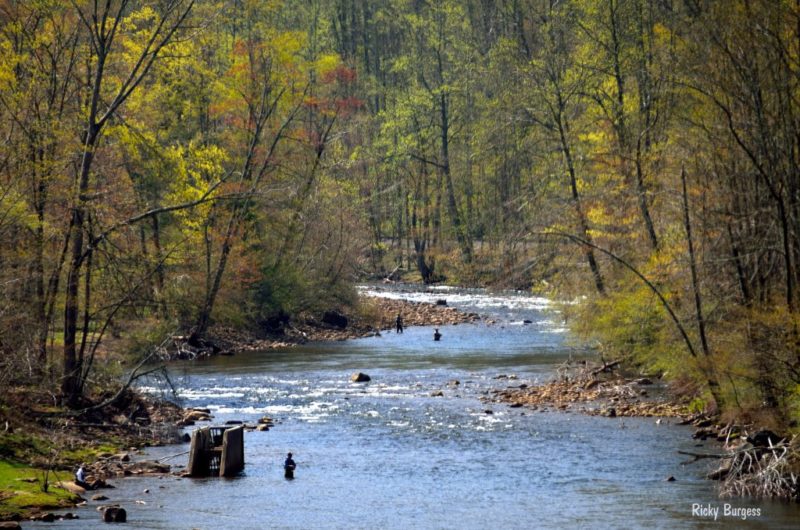
One of the state’s overall strengths is variety. Anglers can fish mountain trout streams, warm-water rivers, reservoirs, and large navigable rivers within a few hours’ drive. Public access is also extensive because of state parks, wildlife management areas, and federal lands.
Four Seasons Fishing
Fishing opportunities in West Virginia change significantly with the seasons because water temperatures and fish behavior vary throughout the year.
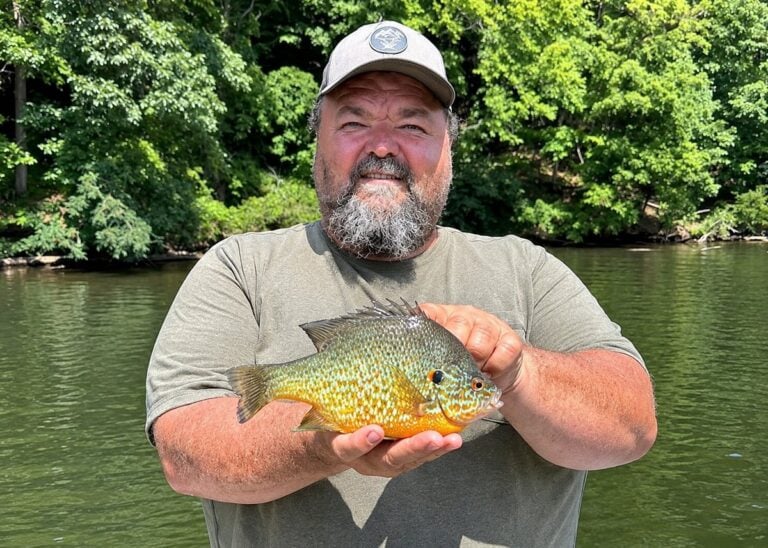
Spring is widely regarded as one of the best overall fishing seasons. Trout stocking begins across much of the state, making streams and lakes productive for rainbow and golden trout. Smallmouth bass become more active in rivers as water temperatures rise, and walleye fishing improves in reservoirs and major rivers during spawning runs. Spring also brings strong crappie fishing in lakes and backwaters.
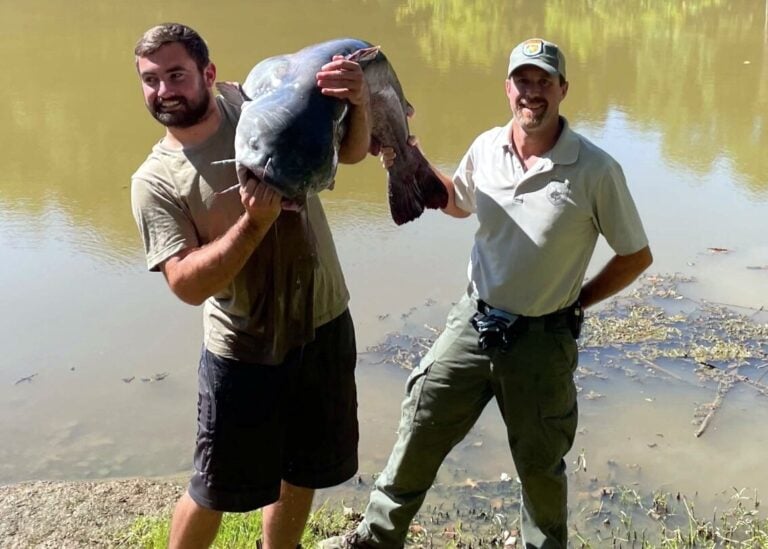
Summer is the peak season for warm-water species. Smallmouth bass fishing is productive in rivers such as the New and Greenbrier, especially in the early morning and evening. Catfish fishing improves on the Ohio River and other large rivers at night. Deep reservoirs yield walleye and striped bass, while mountain streams continue to support trout fishing where the water remains cold enough. Its streams do not grow sluggish in late summer.
Fall is often considered the best season for serious anglers. Cooler water temperatures increase feeding activity among smallmouth bass, muskellunge, trout, and walleye. Musky fishing becomes especially popular in rivers and reservoirs because fish are more aggressive before winter. Trout fishing also improves as water temperatures drop and stocking programs resume in some areas.
Winter offers fewer options, but it can still yield productive fishing. Tailwater trout fisheries below dams remain active because water temperatures remain stable. Walleye and catfish can still be caught in large rivers and reservoirs. In colder mountain regions, some anglers fish for stocked trout year-round. Ice fishing occurs occasionally on smaller lakes during cold winters, though it is less common and less reliable than in northern states.
Fisheries Management
Fishing in West Virginia is heavily managed by the W.Va. Division of Natural Resources through fish stocking programs, habitat management, licensing, and fishing regulations. The agency oversees trout hatcheries, warm-water hatcheries, public access areas, and statewide fishing regulations designed to maintain fish populations and recreational opportunities.
West Virginia is especially known for its trout stocking program, which places rainbow, golden rainbow, brook, and brown trout into streams, rivers, lakes, and ponds across the state. The division manages trout stocking in more than 200 streams and rivers and more than 70 lakes and ponds, giving anglers broad access to stocked fisheries throughout much of the year.
The state also manages warm-water fisheries for species such as smallmouth bass, muskellunge, walleye, catfish, and crappie in rivers and reservoirs throughout the state. Fishing regulations establish creel limits, size restrictions, and seasonal rules intended to balance recreation with long-term fish population health.
Public access is supported through wildlife management areas, state parks, boat launches, and fishing piers maintained or coordinated by the agency. The division publishes annual fishing regulations, stocking reports, online maps, and public fishing information to help anglers locate waters and understand current rules.
Federal agencies also support fisheries and aquatic habitat restoration projects in West Virginia through conservation and stream restoration programs. The U.S. Fish and Wildlife Service operates programs that provide technical and financial assistance for habitat restoration on private lands and for the protection of aquatic species and watersheds.
West Virginia also contains a federal fish hatchery, the White Sulphur Springs National Fish Hatchery. Operated by the U.S. Fish and Wildlife Service, it produces rainbow trout eggs for hatcheries across the country and supports freshwater mussel conservation and aquatic species restoration work.
In addition, federal funding and partnerships help support boat ramps, public fishing access sites, stream improvement projects, and scientific monitoring programs throughout the state. Much of modern fisheries management in West Virginia is therefore a combination of state management and long-running federal conservation funding programs.
Bait and tackle shops exist in almost every county in West Virginia, and fishing camps, for rent or sale, may be found on almost every stream.
Fishing in the Mountain State is notably accommodated by its wealth of well-watered fisheries. Its streams do not grow sluggish in late summer. Though small streams may dry to a trickle, hundreds of larger fishing streams remain productive year-round.
- Favorite Fish Species
- Fishing Guides & Outfitters
- Bait & Tackle Shops
- Trout Stocking Lakes & Ponds
- Trout Stocking Rivers & Streams
Help build our guide to fishing in West Virginia.
Fishing is one of the most popular forms of recreation accommodated in West Virginia, and it’s hard to keep up with the constant change and expansion. If you’ve noted inaccuracies in our content or would like to contribute as a correspondent, please contact a member of our editorial staff.