
CHARLESTON, W.Va. — The invasive spotted lanternfly has been confirmed in Kanawha County, marking another step in the insect’s steady expansion across West Virginia.

Officials with the W.Va. Department of Agriculture said an infestation was discovered in St. Albans near the intersection of West Main Street and Strawberry Road. The U.S. Department of Agriculture‘s Animal and Plant Health Inspection Service confirmed the finding, making Kanawha the 22nd county in the state where the destructive pest has been detected.
The spotted lanternfly, native to Asia, first appeared in West Virginia in 2019 after spreading from neighboring states. Although harmless to people and pets, the insect poses a growing threat to vineyards, orchards, hardwood forests, and ornamental landscapes by feeding on plant sap.
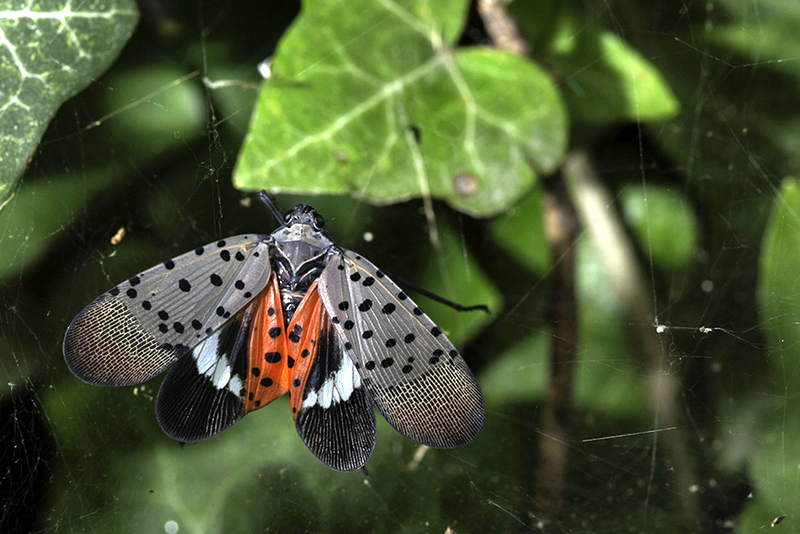
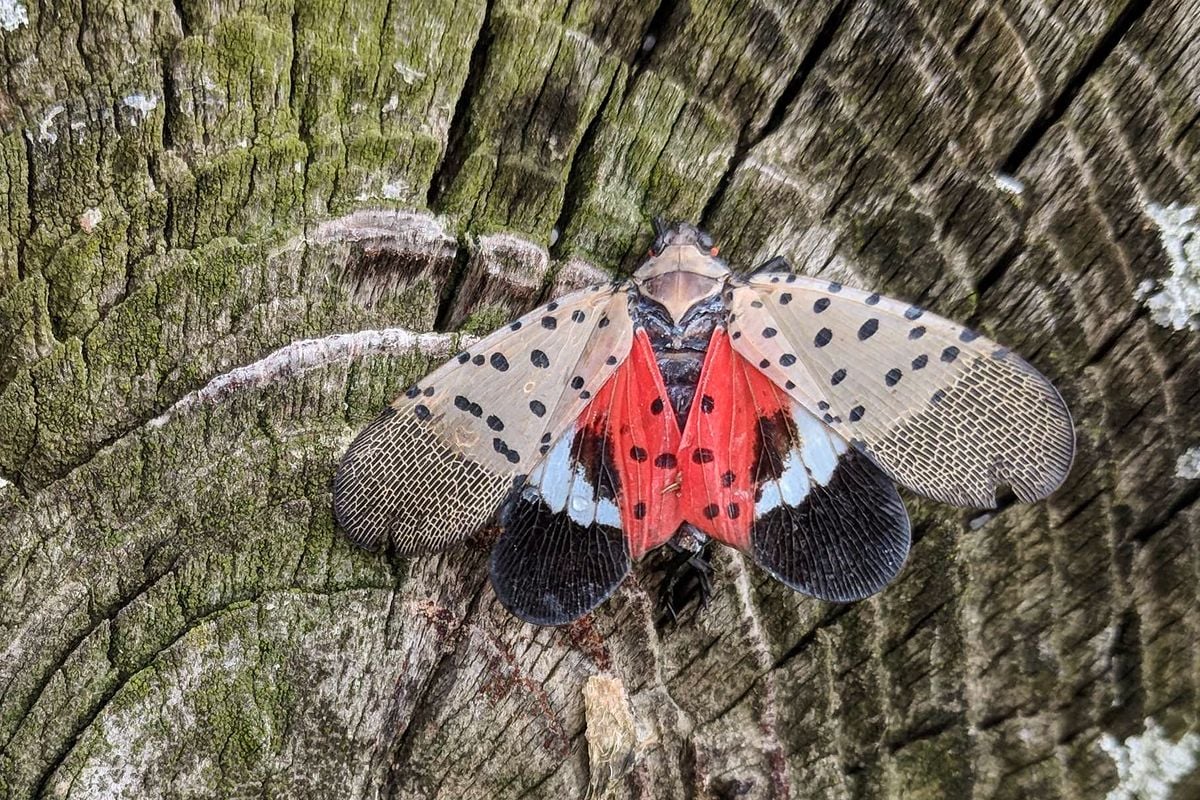
Adults are about an inch long with gray wings marked by black spots. When they open their wings, bright scarlet hindwings become visible. Young lanternflies, known as nymphs, begin life as black insects with white spots before turning red later in the summer.
Why the insect matters
Unlike many invasive insects that feed on a single plant, spotted lanternflies attack dozens of species. Their preferred host is the invasive tree-of-heaven (Ailanthus altissima), but they also feed on grapes, apples, hops, black walnut, maples, and numerous hardwood trees.
Heavy infestations can weaken plants by removing sap while coating leaves, patios, decks, and vehicles with a sticky substance called honeydew. That residue encourages black sooty mold and can create significant nuisance problems around homes and businesses.
“The WVDA is working closely with USDA-APHIS to identify and treat areas where spotted lanternfly is found,” West Virginia Commissioner of Agriculture Kent Leonhardt said. “However, with no known native predators, spotted lanternfly will continue to spread across our state, impacting agriculture industries and private property. We hope a more robust federal effort to contain and slow the spread of these insects will be initiated soon.”
How lanternflies spread
Although adult lanternflies can hop and glide short distances, experts say people unintentionally move them much farther.
The insects frequently hitch rides on automobiles, campers, trailers, boats, recreational vehicles, firewood, landscaping materials, and outdoor equipment. Egg masses laid on virtually any smooth surface can survive through winter before hatching the following spring.
State agriculture officials encourage anyone traveling through infested areas to inspect vehicles, trailers, boats, ATVs, and other equipment before returning home.
What homeowners can do
The Department of Agriculture recommends removing tree-of-heaven where practical because it serves as the insect’s preferred host. Property owners who discover spotted lanternflies in counties where the insect has not yet been confirmed are encouraged to report the sighting.
“There has been some success treating infested areas with insecticide. Removing tree-of-heaven from your property is another step to take to slow the spread,” said James Watson, the department’s spotted lanternfly program coordinator. “We are also encouraging landowners who see SLF in counties not known to have an infestation to report any sightings. It is important that we track their movement. We rely heavily on the public to aid us in this effort.”
Residents should include a photograph, location, and contact information when reporting new sightings to bugbusters@wvda.us.
What is a Spotted Lanternfly?
Despite its name, the spotted lanternfly is not a true fly but an invasive planthopper native to China. It feeds by piercing plants and sucking sap from stems and trunks. While it rarely kills mature trees outright, repeated feeding weakens plants and leaves behind sticky honeydew that attracts mold and other insects.
The insect has become one of the most troublesome invasive pests in the eastern United States because it reproduces quickly and can easily hitchhike on vehicles and outdoor equipment.
I found several of the Lanternfly on my property in Taylor co. WV.