
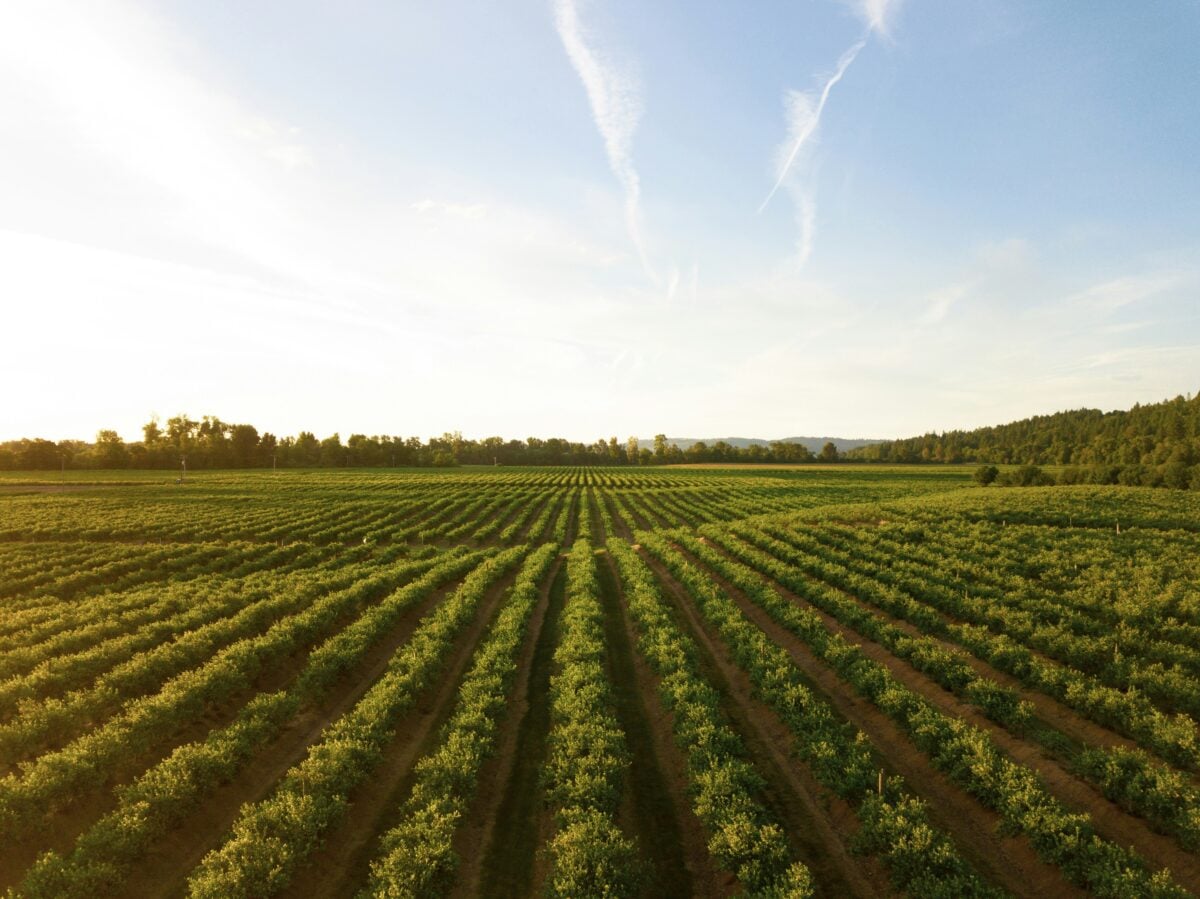
CHARLESTON, W.Va. — Thousands of acres along West Virginia’s Ohio River are being targeted for massive data center developments, prompting the state’s agriculture commissioner to warn that industrial expansion could permanently reduce the farmland available for food production.

Agriculture Commissioner Kent Leonhardt is urging developers to avoid productive agricultural land when selecting sites for data centers and the electrical infrastructure required to operate them.
“When it comes to data centers and other large-scale developments, I strongly encourage developers to consider land that is less suitable for agricultural production,” Leonhardt said in a statement Thursday.
“We should not be cutting ourselves short on the prospect of agricultural economic development by taking farmland out of production.”
His comments come as developers advance plans for multibillion-dollar data centers in Mason County, where the Ohio River valley offers large tracts of relatively level land suitable for both agricultural and industrial construction.
Among the largest is the Monarch Compute Campus near Point Pleasant, where technology company Nscale is developing a data center complex on a site encompassing as much as 2,250 acres. The development includes plans for a large natural gas-powered electrical generation facility.
Another major development, the Tamarack Data Center, is also proposed by Starwood Digital Ventures in Mason County.
Although the amount of productive farmland the developments would displace has not been independently established, their scale illustrates the potential competition for land in West Virginia’s river valleys.
Why West Virginia’s river valleys attract data centers
West Virginia’s mountainous terrain limits the availability of large, relatively level sites for industrial development. The Ohio and Kanawha River valleys offer comparatively broad expanses of land, established electrical infrastructure, and access to water that may be needed for cooling or power generation.
Some of these same lowlands support agricultural operations, creating potential competition between farming and industrial development.
Large rivers, however, are not essential to every data center. Some facilities use air cooling or closed-loop systems that reduce water consumption, while smaller modular data centers can operate on existing industrial sites.
Reliable electricity, sufficient transmission capacity, and high-speed network connections are also major considerations in selecting sites. Depending on their computing requirements, some facilities could be developed on previously used industrial land rather than occupying new acreage.
How data centers could change farmland values
Large industrial developments can change the market for agricultural property by introducing buyers willing to pay for its development potential rather than its farming productivity.
For landowners interested in selling, that demand can create opportunities to realize prices that traditional agricultural operations might not support. For farmers hoping to expand, competition from industrial buyers can make additional acreage more expensive to acquire.
Effects on surrounding property values are less predictable. Land near a data center may gain value if it becomes attractive for additional industrial or commercial development.
Nearby residential properties, however, could face different market pressures associated with changes in traffic, noise, appearance, and surrounding land uses.
Local sales evidence is not yet sufficient to establish how the proposed Mason County data centers will affect neighboring property values.
A 2023 study published in the Journal of Housing Economics examined more than 16,000 farmland transactions and approximately 1.9 million residential sales in the Midwest. Researchers found that proximity to electrical transmission lines was associated with lower residential property values but higher farmland values in some markets.
The agricultural premium was stronger in areas with substantial wind-energy potential. Those findings concern transmission infrastructure rather than data centers themselves and do not establish how the Mason County developments will affect property prices.
Billions in development proposed for Mason County
The financial stakes are substantial. An October analysis released by West Virginia Treasurer Larry Pack estimates that the Monarch and Tamarack developments could eventually generate more than $231 million annually in property tax revenue, based on their announced plans and projected taxable values.
The companies have announced planned investments totaling $64.9 billion for the first phase of Monarch and $12 billion for Tamarack.
According to the treasurer’s analysis, the developments could generate approximately $90.3 million annually for Mason County schools and $47.5 million for the county commission.

The estimates assume the projects reach their proposed scale and are not revenues currently being collected.
West Virginia’s Power Generation and Consumption Act, approved in 2025, established a framework for high-impact data centers and associated power generation. The legislation also restricted local government authority over qualifying developments.
Transmission lines raise additional concerns
Leonhardt said protecting farmland requires attention beyond the property occupied by data centers.
Large electrical transmission projects can require corridors extending for miles across privately owned land, potentially affecting agricultural operations far beyond the developments they serve.
“That same consideration for our land must extend to proposed power transmission lines,” Leonhardt said. “I understand there are economic benefits for participating landowners. However, transparency throughout the entire process is essential.”
Transmission rights-of-way can restrict construction, limit certain agricultural activities, and complicate the use of large farm equipment. Depending on their placement, towers and associated infrastructure can divide fields or interfere with farming operations.
Leonhardt said utilities should use existing corridors whenever practical rather than establish new routes across productive agricultural land.
“Every effort should be made to protect farmland and minimize the disruption of agricultural operations,” he said. “Whenever possible, new transmission lines should follow existing utility corridors or rights-of-way rather than cutting through productive farmland.”
The commissioner also suggested that landowners affected by transmission projects should receive compensation that reflects the continued use of their property.
“Landowners whose properties are impacted should also receive fair and just compensation,” he said. “That should include considering ongoing annual payments since the transmission lines will use their land for many years.”
His comments come as West Virginia regulators consider the proposed Mid-Atlantic Resiliency Link, a high-voltage transmission project intended to connect electrical infrastructure in Pennsylvania and Virginia through West Virginia and Maryland.
The project is intended to improve regional grid reliability as electricity demand increases. Its proposed route and associated property rights have drawn scrutiny from affected communities.
Balancing development and farmland preservation
Leonhardt emphasized that he supports economic development and respects private landowners’ rights to decide how their property is used.
His statement does not call for prohibiting data centers or preventing farmers from selling their land. Instead, he is encouraging developers and public officials to consider the agricultural value of potential sites before committing them to industrial uses.

“Balancing economic development with the preservation of our agricultural land is not always easy,” Leonhardt said. “But with open communication, thoughtful planning and a willingness to work together, I believe we can create opportunities for economic growth while protecting the farmland that remains so vital to West Virginia’s future.”