

MORGANTOWN, W.Va. — As weight-loss medications such as Ozempic and Wegovy reshape the bodies of millions of Americans, their influence may be reaching beyond doctors’ offices and into closets, fashion studios and clothing stores.

A West Virginia University fashion researcher says the rapid rise of the medications coincides with a retreat from the body-size inclusivity that became increasingly visible in fashion over the past decade. Recent runway and retail data suggest that shift is no longer confined to cultural debate: Larger models are becoming scarcer on runways, while some retailers are reducing the availability of larger clothing sizes.
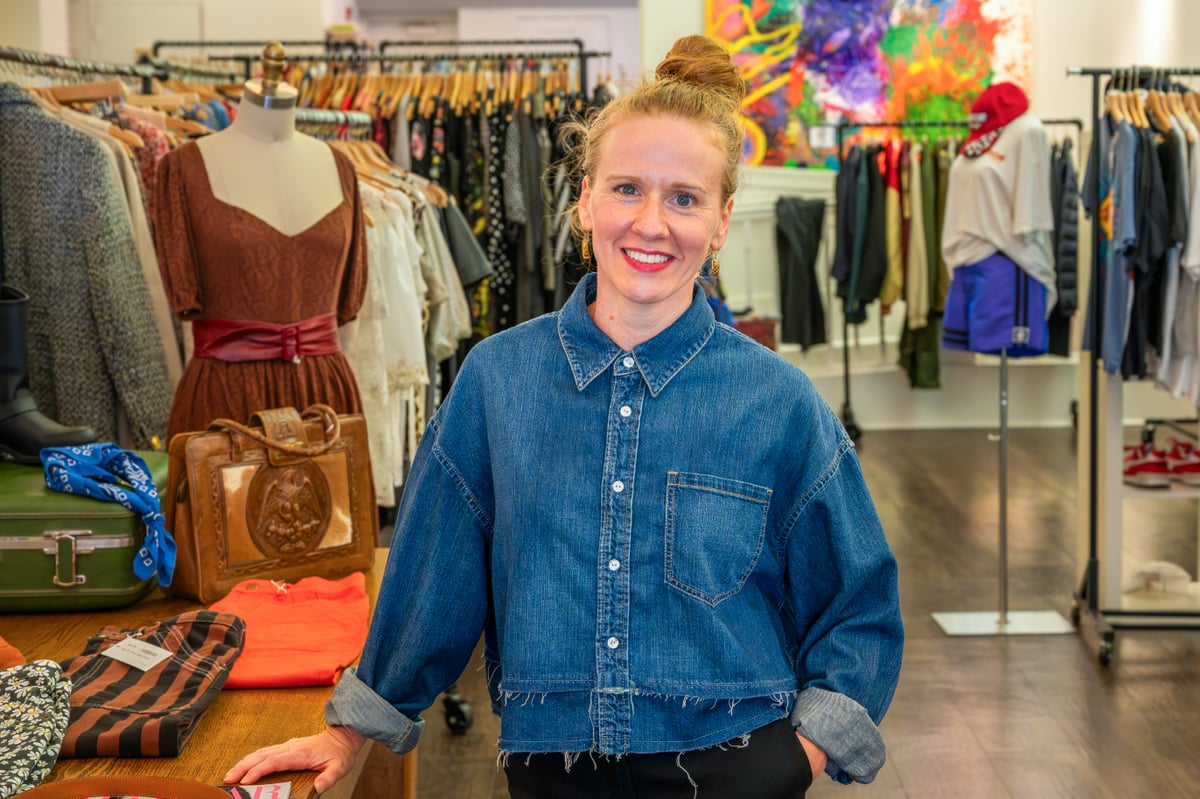
Katie Baker Jones, associate professor and coordinator of WVU’s Fashion Design and Merchandising program in Morgantown, examined the phenomenon in a recent study titled “My Body Has Gone Out of Style,” published in the journal Media, Culture & Society. Her research analyzed coverage in the American editions of Vogue and Elle following the emergence of a new generation of weight-loss medications.
“It’s not just the shape of a sleeve, or where a hemline falls, it’s that bodies themselves are now subject to fashion,” Jones said. “That has been the case before, but what does it mean when a body can trend?”
Runways are becoming thinner again
Jones says the change is particularly striking on fashion runways.
A Vogue Business analysis of 7,817 looks presented at 182 fall and winter 2026 fashion shows found that 97.6% were shown on straight-size models, generally U.S. sizes 0 through 4. Mid-size models, sizes 6 through 12, accounted for 2.1%, while plus-size models, size 14 and above, accounted for just 0.3%.
The numbers represent a broader reversal in representation. When Vogue Business began tracking runway sizing three years ago, 95.6% of looks were straight-size. By fall and winter 2026, that figure had climbed to 97.6%. Over the same period, mid-size representation fell from 3.8% to 2.1%, while plus-size representation was cut in half, from 0.6% to 0.3%.
Models, agents, casting directors and designers interviewed separately by Vogue this year also described a renewed preference for very thin models. Some connected the change partly to the availability of weight-loss medications, although other cultural and fashion trends are also involved.
Jones said the medications resemble earlier weight-loss crazes in some respects, but with a significant difference.
“I do think GLP-1s are in line with other diet crazes,” she said. “The difference is it’s not just managing caloric intake and a workout regimen; it’s a medical intervention.”
Larger sizes are disappearing from some stores
Jones says the shift may matter to consumers who never set foot near a fashion runway.
An August analysis by The Guardian found that several major retailers have reduced their offerings of larger women’s sizes as weight-loss medications have become more widespread.
At H&M, for example, 2% of new dresses offered during spring and summer 2025 were available in sizes 3XL or 4XL. In the comparable period this year, the newspaper found none. Availability of XXL dresses also declined. The analysis identified contractions in larger-size offerings at other retailers, including Mango and Anthropologie.
The changes do not establish that weight-loss medications alone caused retailers to reduce larger sizes. Fashion companies make decisions based on numerous factors, including sales, production costs and changing consumer preferences. But they provide real-world evidence for an industry discussion Jones said is already underway.
“There’s been a marked decrease of what the industry calls ‘curve models,’ which could be anything above a size four,” Jones said, “and talk has circulated about buyers not having to buy as many large and extra-large sizes in size runs because we’re presuming everyone’s going to be on these drugs.”
That assumption could carry its own risks. A Vogue Business survey of 687 readers in the United States and United Kingdom found that 51% described themselves as mid-size and 25% as plus-size. Poor fit and inconsistent sizing were among the leading reasons respondents gave for deciding not to buy clothing.
Weight-loss medications may be changing part of the market, but American bodies have not suddenly become uniform. People who do not use the medications, those who discontinue them, and those whose bodies remain larger still need clothing.
Has body positivity lost ground?
For Jones, the change also raises questions about what happened to the body-positivity movement that challenged longstanding expectations about what fashionable bodies should look like.
Body-image pressures are also being studied elsewhere at WVU, including recent research examining how injury can affect athletes’ attitudes toward their bodies, food and exercise.
“There’s a wide range of concern that this undid all the work that had been done in the last 10 years for the body positivity movement,” Jones said, “and a lot of conversation about what happens now when this drug is so widely available.”
The tension has become especially visible when celebrities lose substantial amounts of weight.
Jones said some consumers have reacted negatively when celebrities previously associated with body positivity or fashion at larger sizes have lost weight or discussed using weight-loss medications. In some cases, she said, relationships between celebrities and their fans have become strained.

The subject also raises questions about privacy. Public figures may face demands to explain dramatic changes in their appearance even when doing so would require disclosing personal medical information.
“What right the public has to comment on celebrity women’s bodies has always been a part of the conversation, but now GLP-1s have been added into the equation of what you’re even allowed to ask about someone’s body because this is private medical information,” Jones said.
“At no point is anyone required to divulge that they’re on a particular medication.”
Men and women can face different reactions
Jones also sees a distinction in how changing male and female bodies are discussed.
She points to comedian Jim Gaffigan, whose comedy has long incorporated jokes about food and his weight and who has publicly discussed using weight-loss medication. Jones contrasts the relatively brief reaction to his disclosure with the continuing public discussion surrounding singer Lizzo and what her changing body supposedly says about the body-positivity movement.
“There are conversations about bodies of all genders in this space,” Jones said, “but as has always been the case, expectations for male versus female bodies in the public continue to be very distinct.”
For fashion and lifestyle journalists, the medications have created another challenge. Publications accustomed to covering clothing, beauty and celebrity culture increasingly find themselves reporting on prescription drugs, health and medical privacy.
Jones said that it places lifestyle journalism in territory it was not necessarily designed to navigate.
“This phenomenon also sits at the intersection of lifestyle media and medical journalism,” she said, “forcing fashion and lifestyle journalists to cover heavily scientific matter on platforms that are not really engineered for that.”
What happens when a body becomes a trend?
The larger question may be where the fashion industry goes from here.
Designers and retailers routinely try to anticipate what consumers will want months before clothing reaches stores. Weight-loss medications add another variable: Companies may now be trying to anticipate not only which colors, fabrics and silhouettes customers will want, but what sizes their customers will be.
Related: WVU experts explain why layering, not bulky clothing, keeps people warmer in winter
Jones argues that the industry should be wary of treating changes in American body size as permission to return to a single fashionable ideal.
Fashion history is filled with changing expectations for women’s bodies, from one preferred silhouette to another. What makes the current moment unusual is the arrival of medications that can help many people substantially alter their weight, while fashion appears to be moving back toward thinner models.
That is why Jones chose “My Body Has Gone Out of Style” as the title of her study.
“Looking at the way trends have impacted us in the past, we need to make sure we’ve learned the right lessons when it hasn’t gone well,” she said, “and learn how we can continue to create space for people of all body sizes within the fashion industry.”