
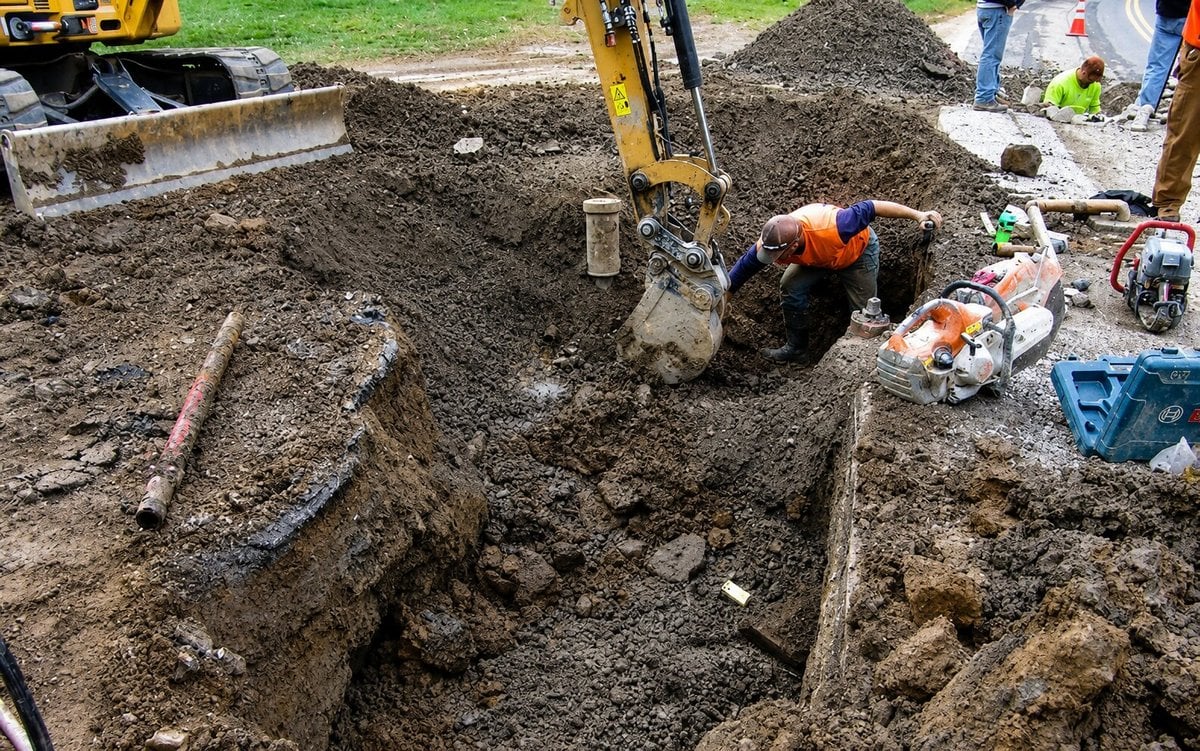
BECKLEY, W.Va. — West Virginia will commit an additional $145 million to water and wastewater infrastructure over the coming year under a new state strategy that will give greater consideration to communities facing failing systems, boil-water orders, public health concerns and financial distress.

Gov. Patrick Morrisey announced the investment Wednesday in Beckley as part of the state’s new Clean, Clear Water Strategy.
The state is also partnering with West Virginia University, Marshall University and West Virginia’s 11 regional planning and development councils to provide grant-writing and technical assistance to small and understaffed water systems.
“We went into these communities, listened to the problems people are facing, and now we are acting,” Morrisey said. “We’re putting real resources behind fixing West Virginia’s water infrastructure and making sure that money produces results.”
According to the governor’s office, West Virginia provided more than $174 million in state grants and low-interest loans for water and wastewater infrastructure during the first 19 months of the Morrisey administration, helping advance more than $552 million in projects through the end of July.
The administration says the additional $145 million is expected to leverage federal, local and other funding and push the total value of projects advanced during the administration above $1 billion.
State assessment identified nearly $18 billion in needs
The West Virginia Infrastructure and Jobs Development Council‘s 2023 statewide needs assessment estimated nearly $18 billion would be required to rehabilitate existing water and wastewater infrastructure and extend service to unserved areas.
The assessment estimated approximately 64,000 West Virginians were not connected to centralized water service and nearly 254,000 were not connected to centralized sewer service.

The Morrisey administration has also identified water loss as a problem in some systems.
Following a recent water listening tour through Wayne, Mingo, Wyoming and McDowell counties, the governor’s office reported that some systems in Wayne County were losing as much as 70% of their treated water before it reached customers.
The state brought in West Virginia American Water to assist with leak detection and is providing resources for repairs, according to the governor’s office.
Small utilities to receive help seeking funding
Under the new strategy, WVU, Marshall and the regional planning and development councils will provide grant-writing and technical assistance to small and understaffed water systems.
The West Virginia Grant Resource Centers, operated through WVU and Marshall, will participate in that effort.
The centers help communities and organizations identify funding sources, develop projects and prepare grant applications.
Liz Vitullo, WVU assistant vice president for Economic Innovation and co-founder of the grant resource centers, said the centers are intended to help communities compete for discretionary funding.
“The grant centers expand local capacity and increase West Virginia’s competitiveness for discretionary funding by helping communities submit stronger, more strategic applications,” Vitullo said.
According to WVU, the centers will identify state and federal funding opportunities, provide grant-writing support, offer training and help develop grant applications. The centers also plan to hire a grant writer dedicated to the water infrastructure effort.
At WVU, university programs will be assigned to projects based on community needs and each project’s scope, university officials said.
The Appalachian Collaborative for Training and Technical Assistance can provide technical assistance and training to rural water and wastewater utilities, while the West Virginia Water Research Institute can assist with water-quality issues.
The university’s Cyber-Resilience Resource Center could also help organizations seeking to protect water infrastructure from cyber threats, according to WVU.
“With our state and local partners, WVU will support efforts to find clean water solutions in areas of most need,” said Travis Mollohan, vice president of WVU Government Relations and Strategic Affairs. “We appreciate the Governor and his team taking steps to invest in the partnerships and strategies that can improve and modernize water systems across the state.”
State changes how projects are reviewed
The Clean, Clear Water Strategy also calls for changes to how the state reviews and tracks water and wastewater projects.
According to the governor’s office, projects under binding commitment will move to 60-day reviews. The state also plans to establish a public dashboard to track projects and applications.
Communities experiencing failing systems, boil-water orders, public health concerns and financial distress will receive greater consideration for funding under the strategy, according to the administration.
The state plans to report the number of miles of water line constructed or repaired, treatment facilities upgraded and homes and businesses receiving new or improved service.
Morrisey also said his administration will work with the Legislature on changes to utility laws intended to reduce paperwork and give struggling utilities additional ways to share resources.
“Marshall, WVU, and our 11 Regional Planning and Development Councils are going to bring their expertise to bear for communities that need it most,” Morrisey said.
“They will help small water systems compete for funding, navigate complicated requirements, and get projects moving. At the same time, we’re going to cut through red tape when projects get stuck and make sure West Virginians can see the results.”
The $145 million investment follows Morrisey’s two-day water listening tour through southern West Virginia earlier this month.
During the tour, Morrisey met with local officials, utility representatives and residents in Wayne, Mingo, Wyoming, McDowell, and Mercer counties to discuss water and wastewater systems.
At the conclusion of the tour in Princeton, Morrisey said state water needs exceed the money currently available and that the state would have to address projects incrementally by coordinating agencies and combining funding sources.
“We’re not the wealthiest state in the nation, and we don’t print money in state government,” Morrisey said. “That’s the federal government.”