
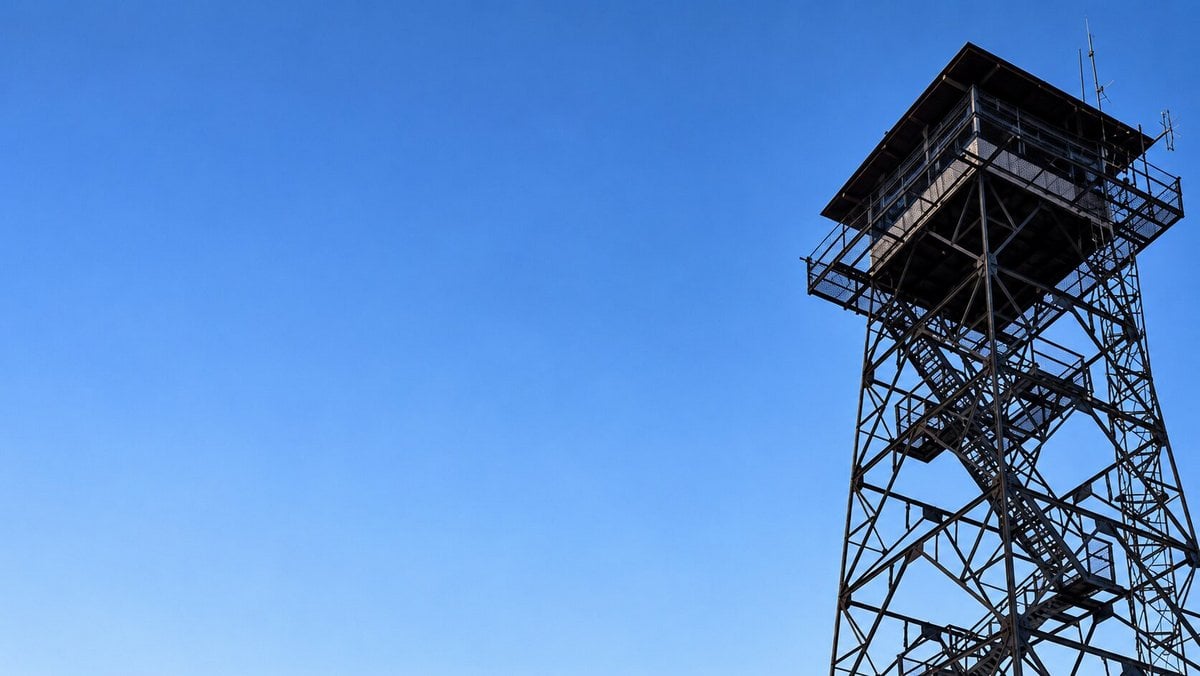
COWEN, W.Va. — Travelers can now spend the night 80 feet above a remote West Virginia forest, sleeping in a restored fire lookout for as little as $100 a night.

The Red Oak Fire Lookout opened Tuesday for overnight stays in the Monongahela National Forest. Its 14-by-14-foot cab sits atop a steel tower at an elevation of 3,704 feet.
About 12 miles south of Cowen in Webster County and roughly 15 miles from Richwood, the cab accommodates two adults and includes two cots, folding chairs, a small table, electric lights, and outlets.
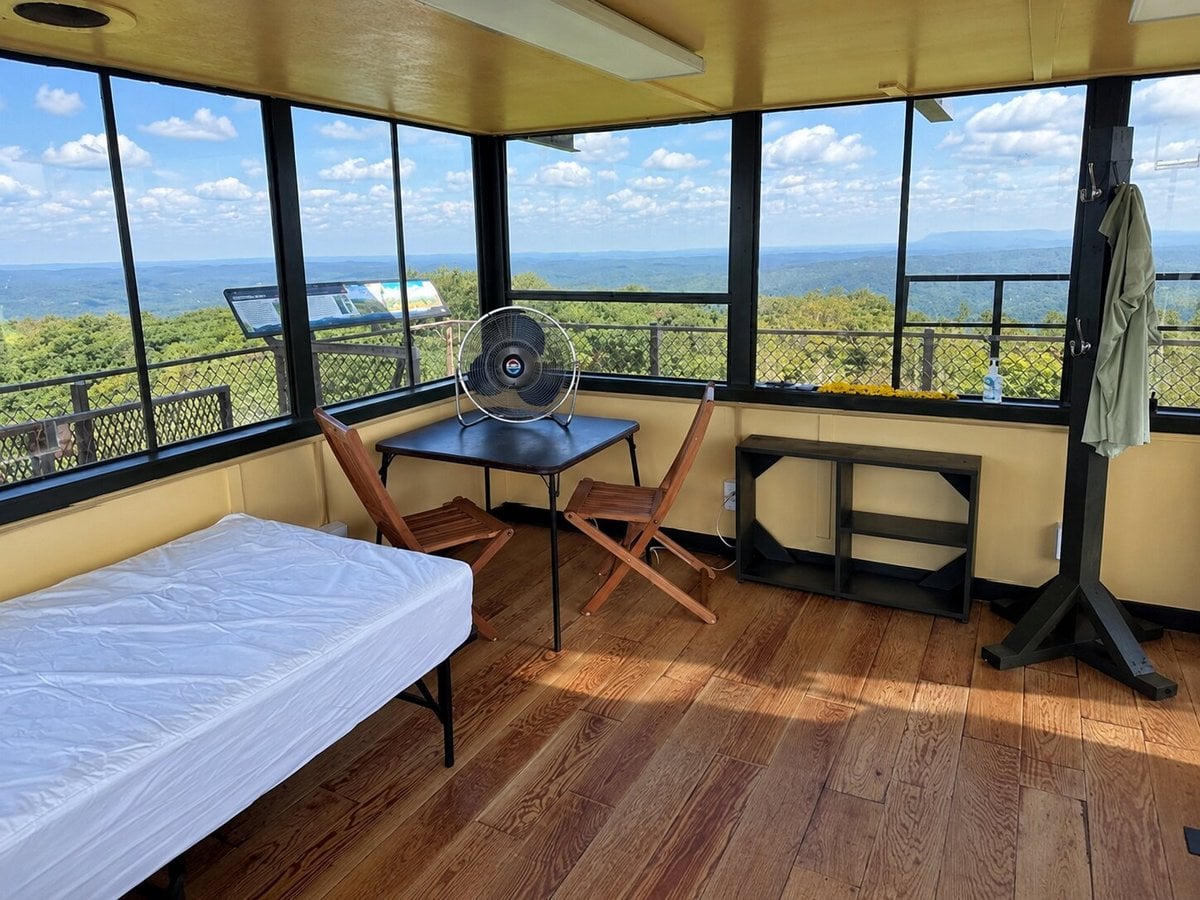
The September opening gives visitors an opportunity to reserve the tower during the approaching fall foliage season. The 2026 rental season continues through Nov. 30.
Guests must carry their own bedding and provisions up the steep stairway. Drinking water isn’t available, cellphone service can be unreliable, and the Forest Service recommends a high-clearance, four-wheel-drive vehicle for the narrow mountain roads leading to the site.
The overnight accommodation gives a new purpose to a structure built to watch the surrounding mountains for wildfire.
A lookout with roots in the Civilian Conservation Corps
Andrea Brandon of the U.S. Forest Service said the Civilian Conservation Corps built the original Red Oak Fire Tower in 1934. The wooden-framed structure and observation cab were replaced in 1964 by the steel tower standing today.
Like the other fire towers once operated in the Monongahela National Forest, Red Oak was retired from fire-detection service by the late 1970s, Brandon said.
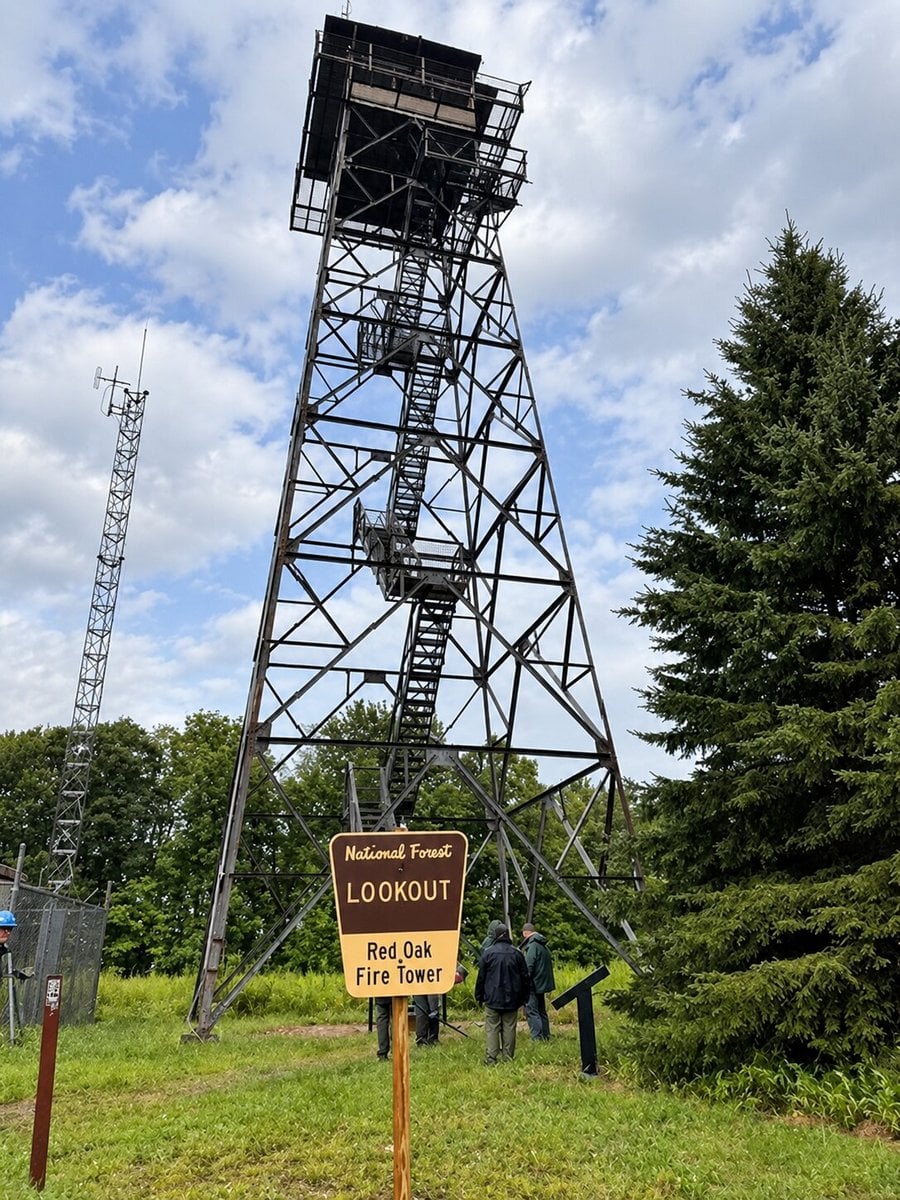
By 2018, preservation crews were rehabilitating Red Oak, and Forest Service officials said they hoped to open it as a vacation rental in 2019. Work included repairs to the tower footings and roof, replacing the cab floor and windows, and painting the interior and exterior.
The rehabilitation earned recognition that year, when the Preservation Alliance of West Virginia presented the project team with its Heritage Tourism Award. The overnight rental ultimately opened eight years after those plans were announced.
Brandon said the project was made possible through a restoration partnership involving the forest service, HistoriCorps, the Preservation Alliance of West Virginia, and the Appalachian Forest National Heritage Area, with funding through the Secure Rural Schools Act.
What visitors will find at Red Oak?
Visitors must provide their own sleeping bags or other linens, blankets, and pillows. Because of the height and steep stairway, the Forest Service discourages children younger than 14 from staying in the cab. Pets are not permitted inside.
A campsite at the base can accommodate up to 10 additional people, with the entire reservation limited to 12 people and four vehicles.
The campsite includes 30- and 50-amp electrical hookups for recreational vehicles, two picnic tables, a combination fire ring and grill, a lantern post and a vault toilet. Accessible amenities are available at ground level, although the historic tower itself is not accessible. Visitors must bring drinking water and pack out their trash.
Brandon said the surrounding forest provides opportunities for wildlife watching, hunting, and exploration. The National Forest Service also lists birding, stargazing, gravel biking, and berry picking, while the nearby Cranberry and Williams rivers provide fishing opportunities.

The Cranberry Mountain Nature Center is approximately 20 miles away.
Visitors should prepare for changing mountain weather. The forest service cautions that snow and ice can occur during the spring and fall rental seasons.
The lookout also has a lightning-protection system. During thunderstorms, forest service instructions advise guests who cannot safely reach their vehicle to remain inside the cab and avoid touching metal furnishings.
Red Oak isn’t West Virginia’s only overnight fire tower
The 65-foot Thorny Mountain Fire Tower at Seneca State Forest in Pocahontas County has welcomed overnight guests since 2015. Built in 1935, West Virginia State Parks operates it, and it is generally available for overnight stays from May through October.
The two towers are remarkably close geographically, standing only about 27 miles apart as the crow flies in the Allegheny Mountains, although the mountain-road journey between them is considerably longer.
Red Oak offers another opportunity to stay on federal land in the Monongahela forest. Reservations are required, and walk-in stays are not permitted. Check-in is at 3 p.m., and check-out is at 11 a.m.
Red Oak is available through Nov. 30 this year. Beginning in 2027, Brandon said, the season will run from April 15 through Nov. 30.
Fire towers have become unusual vacation rentals across the U.S.
Red Oak joins a network of former fire lookouts across the United States preserved as recreational destinations and overnight accommodations.
Fire towers were built across the country as wildfire detection expanded during the 20th century, with the Civilian Conservation Corps constructing many during the 1930s. As aircraft and other technologies changed the way fires were detected, many towers were abandoned, demolished, or given new uses. The Forest Fire Lookout Association now works nationally to preserve surviving structures and their history.
Some surviving lookouts have become particularly sought-after vacation rentals. Recreation.gov promotes historic fire lookouts among its unusual public-land lodging, noting that such accommodations can be in high demand. Examples range from the 1934 Deadwood Lookout in Idaho to Calpine Lookout in California, another CCC-era tower whose observation cab is booked for overnight stays.
The experience varies considerably from tower to tower. Some are reachable by vehicle, while others require miles of hiking; many offer little more than beds or cots and panoramic views, leaving visitors to carry in water, bedding, and other supplies. Some still serve their original purpose: Green Ridge Lookout in Oregon, for example, is rented during parts of the year but staffed by Forest Service volunteers for fire detection during summer.
Reservations are available through Recreation.gov, where overnight stays start at $100.
This is an awesome one of a kind experience. I stayed in the fire tower in Seneca Forest was awesome the views are unbelievable beautiful especially sunset and sunrise can’t wait to stay here for a quick getaway. I can’t say I love walking up the stairs but once I got past my anxiety of the height it was nothing you could ever explain it truly is like being in your own world in a slice of heaven.