
HUNTINGTON, W.Va. — By 1899, Halloween had become such a troublesome occasion in Huntington that one resident demanded special police protection, warning that drunken revelers and vandals might provoke a deadly confrontation with homeowners.

In a letter published in the Huntington Advertiser on October 31, the writer complained that Halloween celebrations had deteriorated into an annual ordeal for residents.
“The old time pleasantness and superstitions connected with ‘Hallow eve,’ are lost sight of here, and in their stead are introduced drunkenness and vandalism,” the writer declared.
Signed simply “A Tax Payer,” the letter described frightened women and children, damaged property, and residents who had come to dread October 31.
The writer urged city officials to spend $150 to $200 on additional police protection, arguing that the expense would be preferable to the destruction of private property.
“A man’s house is his castle,” the letter warned, suggesting that homeowners might defend themselves if the authorities failed to intervene.
The complaint, preserved by West Virginia historian Brandon Ray Kirk, referred to disturbances during the preceding several years. Halloween was evidently an established occasion for mischief in Huntington before the 20th century.
Police prepare for Halloween trouble
The following day, the Advertiser reported that Huntington had escaped a repetition of the previous year’s disorder.
“Last year it will be remembered much property was wantonly destroyed and the night made one of hideous revelry,” the newspaper reported on November 1, 1899.
Police had prepared for disturbances, and the newspaper credited their vigilance with preventing serious trouble.
“The taxpayers may now rest in peace for another year,” it concluded.
The account suggests city authorities anticipated trouble and took precautions. It also establishes that Halloween pranks had become a recurring problem enough to warrant newspaper attention.
Meanwhile, another group of Huntington residents had spent the evening celebrating the holiday indoors.
Ghosts and goblins gather at a church
The same November 1 edition described a Halloween party at the First Congregational Church parsonage at 520 Ninth Street.
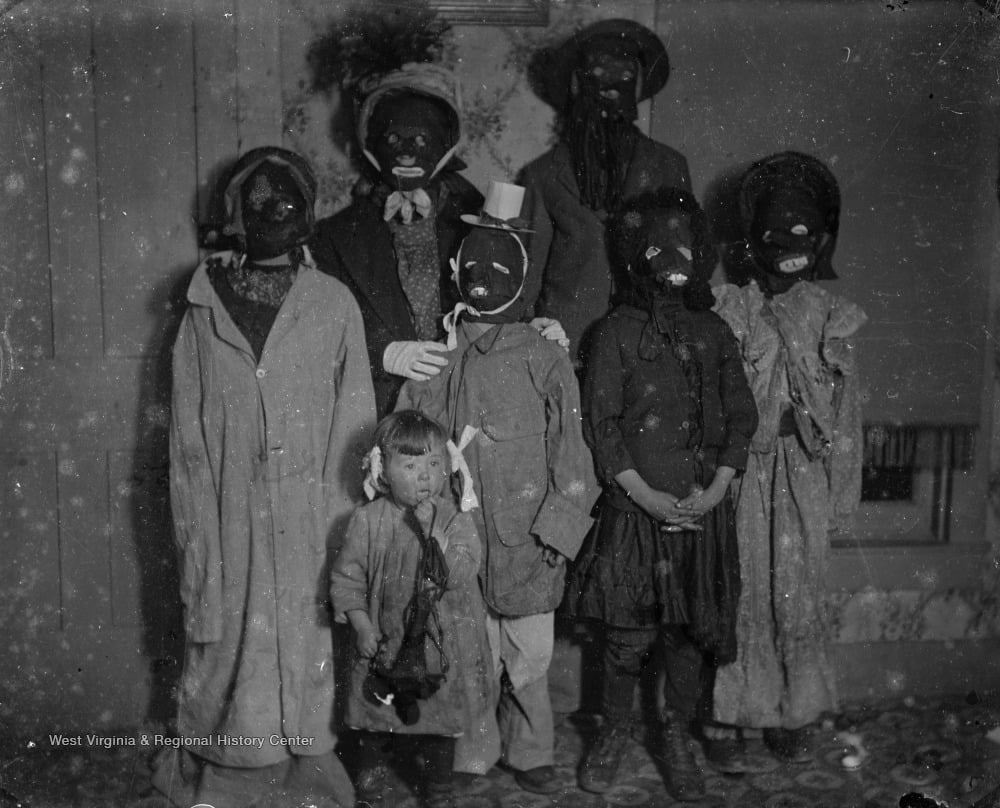
Despite unfavorable weather, the gathering drew a full house. Guests dressed as ghosts, goblins, fairies, and brownies, the mischievous household spirits of British folklore.
The newspaper described ghosts and goblins chanting incantations around a cauldron before the arrival of fairies and brownies brought a cheerful conclusion to the entertainment.
Among the costumed participants were Alfred Whitaker, dressed in a Native American costume; Frank Hullman, a clown; Henry Ensign, in a Chinese costume; Ivor Titus, a fashionable young man known at the time as a “dude”; and Griffin McCarthy, portraying Uncle Sam.
The descriptions reflect the period’s theatrical conventions and ethnic stereotypes.
The gathering demonstrates that Halloween costumes and organized parties were familiar in Huntington by 1899. Adults participated in elaborate entertainments while police watched for disorder elsewhere in the city.
Kirk reproduced both November 1 newspaper accounts from the Huntington Advertiser.
Halloween before trick-or-treating
Halloween’s American customs developed largely through traditions brought by Irish and Scottish immigrants during the 18th and 19th centuries. Disguises, fortune-telling, seasonal games, and practical jokes became associated with October 31.
As two West Virginia University scholars explained in an earlier West Virginia Explorer report on Halloween’s ancient origins, the holiday incorporates customs associated with the Celtic festival of Samhain, Christian observances, and centuries of European folklore.
Aaron Gale, an associate professor of religious studies at WVU, explained that disguises were once associated with the belief that spirits could wander among the living at the end of October.
“Out of fear, people left food offerings or disguised themselves so that wandering spirits wouldn’t recognize or harass them—practices that may have inspired modern trick-or-treating,” Gale said.
Historian Lesley Bannatyne, writing in Smithsonian Magazine, explains that Halloween pranks became increasingly destructive as American communities grew during the 19th and early 20th centuries.
Youngsters rattled windows, damaged property, and played elaborate tricks on neighbors. Some communities responded with police patrols and organized celebrations intended to discourage vandalism.
Huntington’s experience in 1899 fits that national pattern, although the surviving reports do not establish when Halloween celebrations first appeared in West Virginia.
The state’s supernatural folklore was considerably older. Stories of ghosts and unexplained happenings circulated independently of Halloween celebrations, including the legend of the Greenbrier Ghost, whose alleged appearances figured in a celebrated 1897 murder case.
Other accounts, including the Wizard Clip haunting at Middleway, date to the 18th century. Such stories reflect longstanding beliefs about the supernatural, though they should not be mistaken for evidence of Halloween observances.

During the 20th century, Halloween gradually became associated with supervised children’s activities. The modern practice of door-to-door trick-or-treating gained widespread popularity after World War II.
In Huntington, that transformation was still decades away when the Advertiser described Halloween in 1899. Its accounts document a city where residents attended costume parties, police prepared for vandals, and at least one taxpayer considered October 31 a threat to public safety.