
CAIRO, W.Va. — A coast-to-coast relay celebrating America’s 250th anniversary will pass through northern West Virginia in November, bringing national attention to a historic rail trail whose neighboring communities have struggled to capitalize on tourism.

The American Discovery 250 Relay will travel east from Belpre, Ohio, to Pennsboro, West Virginia, on November 6, continuing to West Union on November 7. The event follows part of the 72-mile North Bend Rail Trail, which passes through Wood, Ritchie, Doddridge, and Harrison counties.
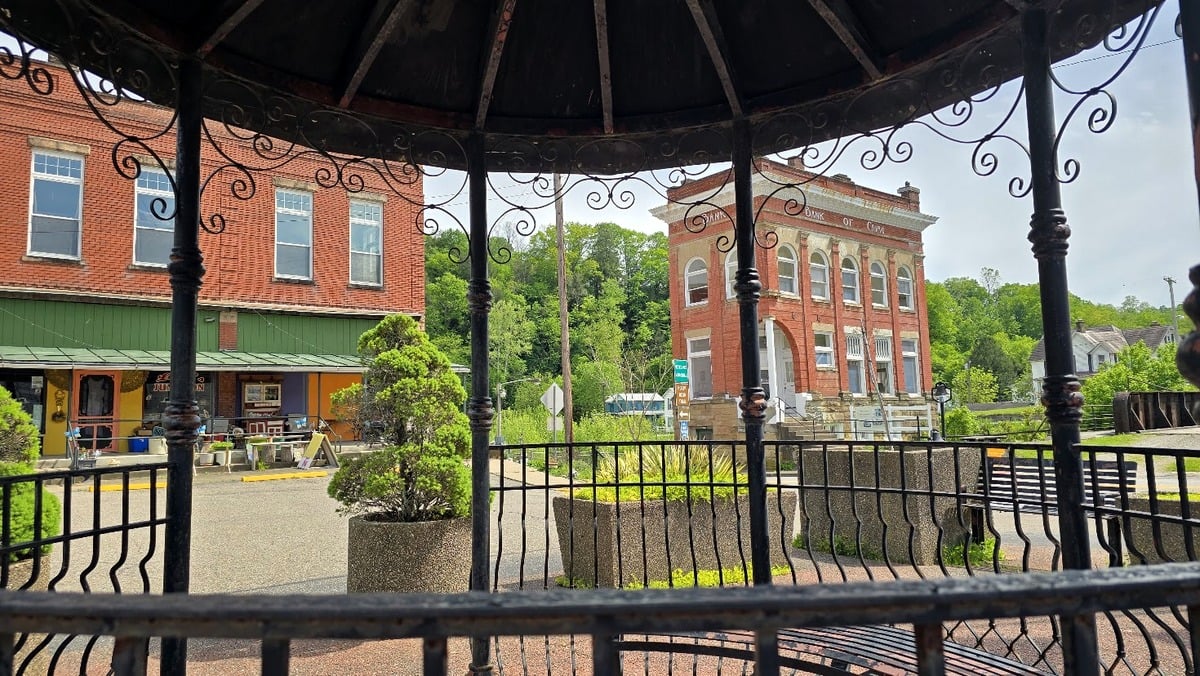
D.J. Allen, a longtime member of the North Bend Rails-to-Trails Foundation, has run Country Trails Bikes in Cairo for 30 years. During that time, she has welcomed visitors from across the United States and overseas, but says relatively few businesses have developed to serve them.
“There’s not much changed as far as what’s available on the trail,” Allen said, recalling how three generations of her family have enjoyed the route.
A new hotel has opened in Ellenboro, but a bed-and-breakfast near the trail recently closed. Allen said additional lodging, restaurants, and specialty shops could help communities attract more visitors and encourage longer stays.
Her own experience illustrates the difficulty of operating a tourism business in a rural community. Although their bike livery still rents bicycles and sells parts, the family is converting the building into a residence.
“We couldn’t make a go of it just simply with the bike shop,” Allen said. “So it’s difficult for rural communities.”
Historic railroad corridor attracts visitors
The North Bend trail follows a former Baltimore and Ohio Railroad corridor built before the Civil War. Originally developed as the Northwestern Virginia Railroad, the line later became part of the B&O system.

After CSX removed the tracks in 1988, local advocates began converting the corridor into a recreational trail. The trail foundation was incorporated in 1989 to support its development.
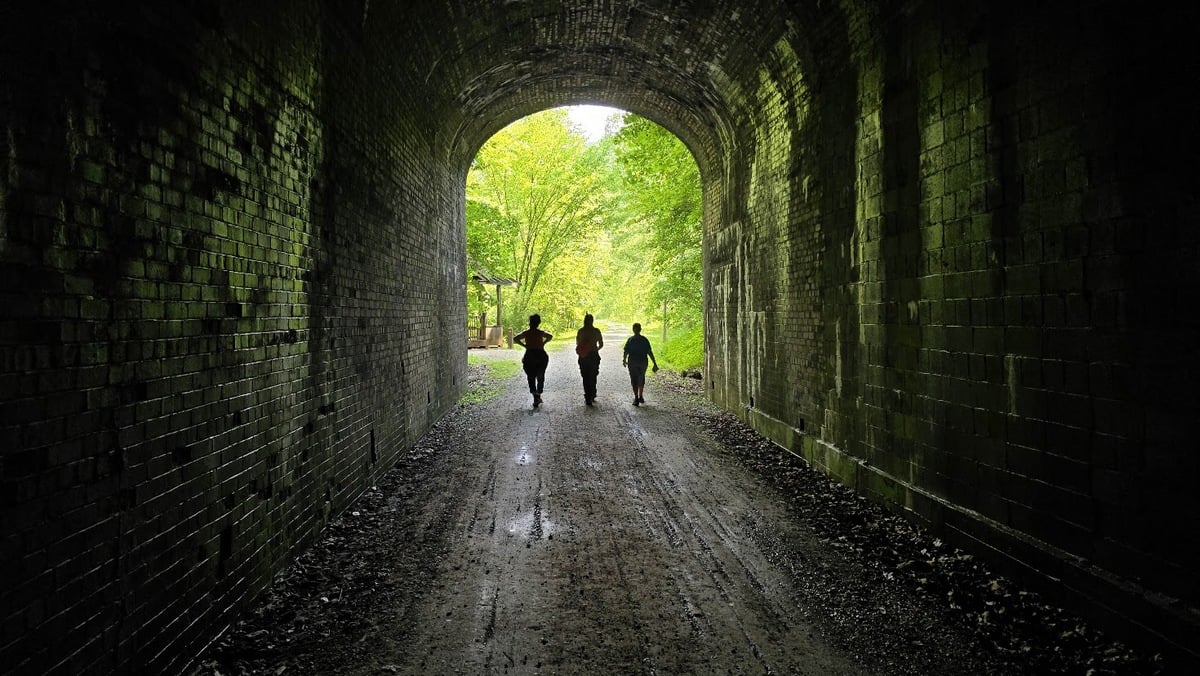
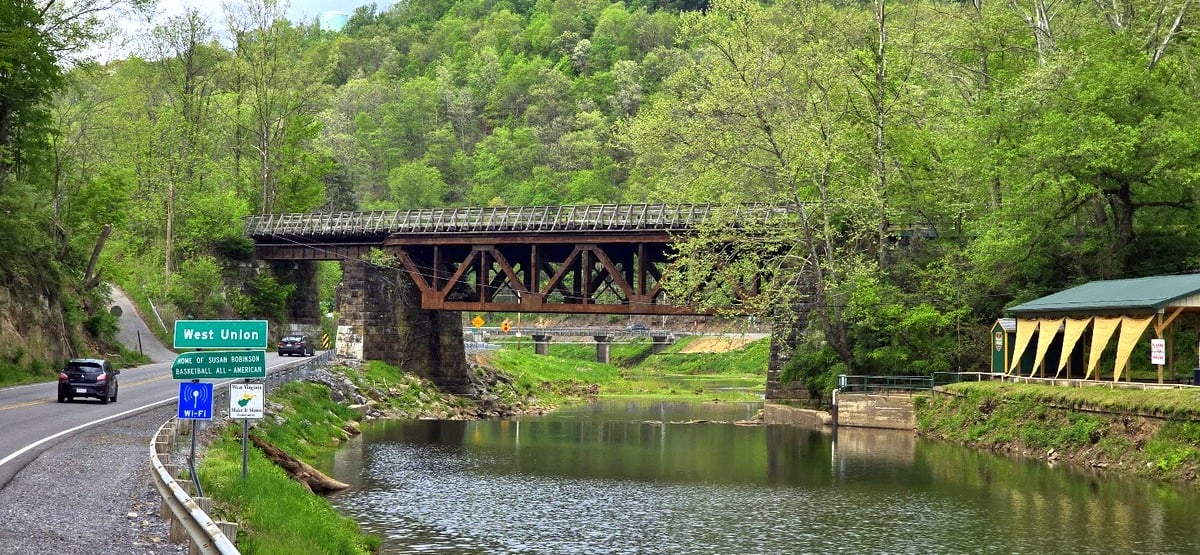
Today, the trail crosses 36 bridges and passes through ten tunnels, connecting former railroad communities with forests and farmland. Its attractions include the reportedly haunted Silver Run Tunnel, which draws visitors interested in West Virginia folklore.
The trail is also part of the American Discovery Trail, a coast-to-coast recreational route connecting Delaware with California and forms part of the developing Pittsburgh-to-Parkersburg connection within the Industrial Heartland Trails network.
Allen said the trail’s railroad history adds to its appeal. “As you’re hiking or biking or on a horse on the trail, you can picture trains, the old steam trains coming through, or the diesels. You’re riding that same route,” she said.
Access from the four-lane U.S. 50 expressway is another advantage. Visitors can reach the trail at Ellenboro, Pennsboro, West Union, and Salem without traveling far. Cairo, for instance, is approximately four miles from the highway and three miles from North Bend State Park.
The tunnels are among its most popular destinations. Allen said visitors frequently ask about the haunted tunnels, including Silver Run and Tunnel No. 2, both featured on merchandise sold by the foundation.
The trail is also included in the West Virginia Paranormal Trail, a statewide tourism initiative featuring places associated with supernatural legends.
What makes a successful trail town?
Recreational trails have helped support new businesses in former industrial communities across the eastern United States. One of the best-documented examples is the Great Allegheny Passage, a 150-mile trail connecting Pittsburgh with Cumberland, Maryland.

A study by Pittsburgh-based consulting firm Fourth Economy estimated that tourism along the passage generated $121 million in regional economic impact in 2019, including approximately $74 million in direct visitor spending.
The study, commissioned by the Great Allegheny Passage Conservancy, estimated that trail tourism supported nearly 1,400 jobs. Researchers surveyed trail users, businesses, and residents to evaluate the economic effects.
The findings illustrate the opportunities available to communities along established recreational trails, although no comparable study has determined the economic impact of the North Bend Rail Trail.
Successful trail towns generally offer a combination of restaurants, cafés, convenience stores, bicycle services, and overnight accommodations. Shops, museums, and historic attractions give visitors additional reasons to stop.
Lodging matters because overnight guests can spend money on several meals, accommodations, and other services during their visits. Communities also need public restrooms, drinking water, bicycle parking, directional signs, and convenient connections between trails and commercial districts.
For small rural towns, however, businesses must attract enough customers to remain viable outside the busiest recreational seasons. Serving local residents and visitors can help sustain year-round operations.
Allen believes communities along North Bend would benefit from businesses offering different services rather than competing for the same customers.
“I’ve tried to stress that if everybody does something different, we all have a chance,” she said. “But when everybody tries to do the exact same thing, none of us have a chance.”
Trail development may also influence residential investment. The Great Allegheny Passage study found that median property values near the trail increased by 13 percent between 2015 and 2019, nearly twice the rate reported across Pennsylvania and Maryland during that period.
The comparison does not establish that the trail caused the increase, but it provides another measure of economic conditions in communities along the route.
The growth of remote work has added another dimension to trail-based economic development in West Virginia. Programs such as Ascend WV have attracted new residents by promoting the state’s outdoor recreation opportunities and quality of life.
Communities along the North Bend Rail Trail could benefit from the same trend, attracting residents who can work remotely while enjoying convenient access to cycling, hiking, and small-town amenities. Unlike seasonal tourists, these residents could support local businesses year-round.
Cairo helped pioneer the rail trail movement
Cairo was among the first communities to develop the North Bend Rail Trail. Allen said early improvements included three-mile demonstration sections in each of the four counties, allowing residents to experience the abandoned railroad corridor as a recreational route.
She credits trail advocate Dick Bias with leading the effort and insisting that development benefit communities throughout the corridor rather than concentrating improvements in Cairo.
The foundation continues that work by raising money for infrastructure and coordinating with state officials responsible for trail maintenance.
Projects have included bridge decking, resurfacing, drainage improvements, restrooms, shelters, and bicycle repair stations. A recently improved stopping area at Walker includes a shelter, restroom, fire ring, and wildlife-resistant trash container.
The foundation is also helping raise matching funds for transportation grants supporting additional improvements.
Allen said Cairo has recently received renewed recognition as an American Discovery Trail Town, although the foundation is awaiting formal documentation.
She believes the designation could encourage more visitors to explore the community and nearby North Bend State Park, which provides lodging and recreational facilities.
Allen recalled a group from Indiana whose members initially visited to ride the trail by bicycle. As they grew older, they returned on motorcycles and eventually in cars, bringing friends and relatives.
“They come back, and they might not do much trail anymore, but they love the area, and they come back for it, and they bring other people with them,” she said.
She also recalled a foundation supporter from Ashtabula, Ohio, who eventually purchased a home in Cornwallis and moved to the area because of the trail.
American Discovery 250 Relay arrives November 6
The American Discovery 250 Relay began in California on July 4 and is scheduled to conclude at Cape Henlopen State Park in Delaware on Thanksgiving Day.
Organized by the American Discovery Trail Society, the event celebrates the nation’s semiquincentennial through walking, running, and cycling segments across the country.
The November 6 segment is scheduled to begin at 8:30 a.m. at Howes Grove Park in Belpre, cross the Ohio River into Parkersburg, and continue toward Pennsboro.
Allen said organizers tentatively expect participants to reach Cairo between 10:30 and 11:30 a.m. and arrive in Pennsboro between noon and 1 p.m. Times may change depending on participation and travel conditions.
On November 7, the relay will continue from Pennsboro to West Union. The North Bend Rails to Trails Foundation plans to host a thank-you picnic at the Lions Club shelter near the trail bridge in West Union, although the time has not been finalized.
Residents can participate by walking, running, or cycling shorter sections of the route. Organizers encourage families, community groups, and individuals to join wherever convenient.
Registration information and participation requirements are available at discoverytrail.org.
Allen hopes residents of all four counties will turn out to support the relay and become more involved with the trail.
“People in the four counties need to really look at what they have,” she said.
For the foundation, the event offers an opportunity to attract visitors while building local support for continued improvements to one of West Virginia’s longest rail trails.