
CHARLESTON, W.Va. — A West Virginia fishing record that didn’t exist until this summer has now been broken three times in less than a month.
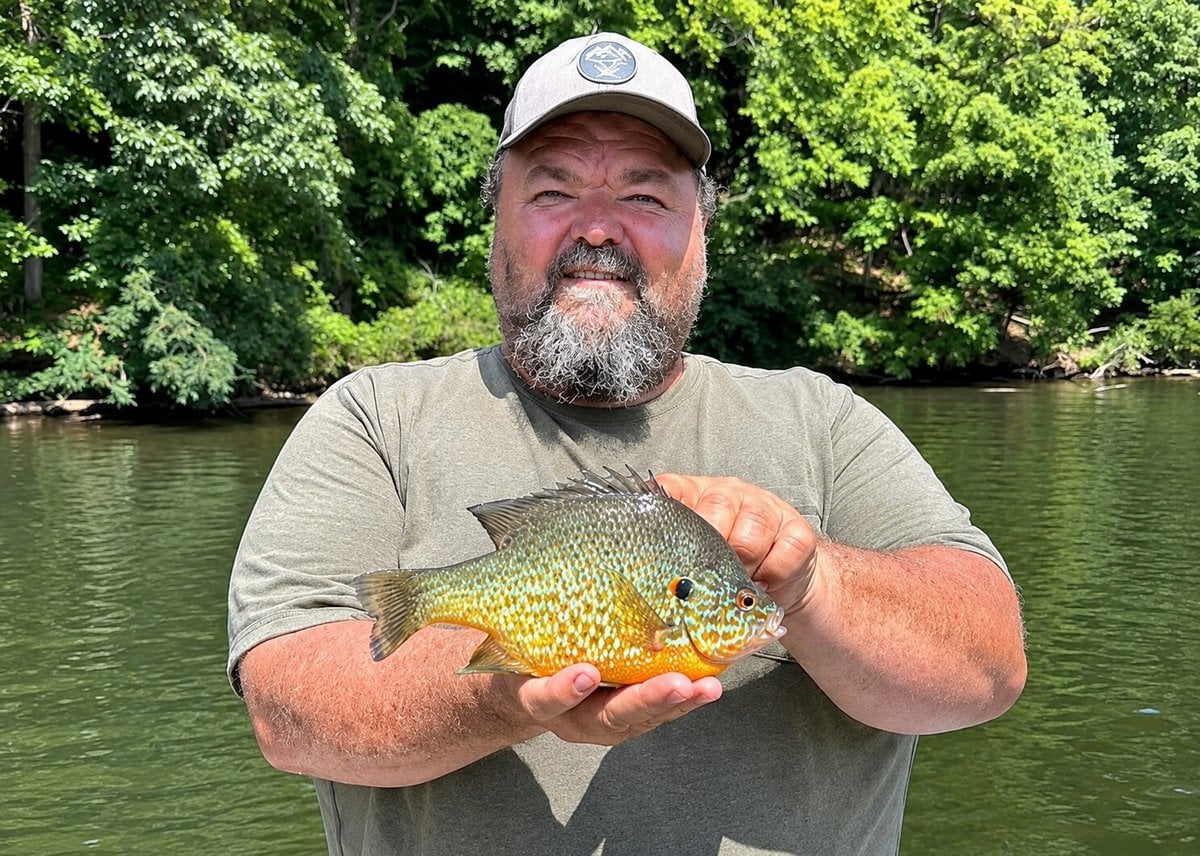
Robert Glover, of Morgantown, landed a 9.76-inch, 0.75-pound pumpkinseed sunfish on Aug. 6 at Cheat Lake in Monongalia County, establishing the latest state record for one of West Virginia’s most colorful freshwater fish.
He caught it using one of fishing’s simplest setups: a nightcrawler and six-pound-test line.
West Virginia Division of Natural Resources fisheries biologist Dustin Smith certified the catch.
What makes Glover’s fish particularly remarkable is how quickly it displaced a record that had already been broken once this summer.
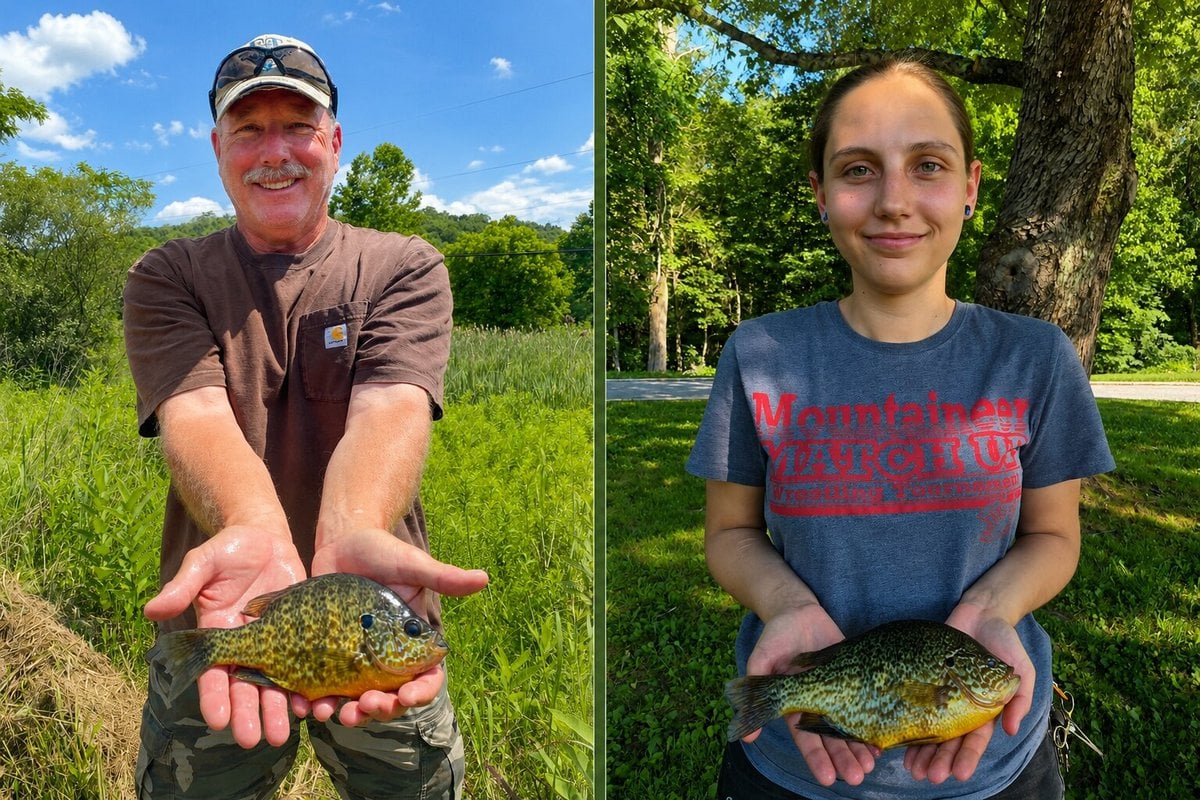
The state’s first official pumpkinseed record was set on June 25 by Ken Neer of Morgantown, whose 9.09-inch, 0.60-pound fish came from Fairfax Pond at Rehe Wildlife Management Area in Preston County.
That record lasted only 19 days.
On July 14, Sierra Adamson of Beverly caught a 9.13-inch pumpkinseed weighing 0.62 pounds from the Tygart Valley River in Randolph County, narrowly surpassing Neer.

Twenty-three days later, Glover’s Cheat Lake fish substantially increased the record, adding more than half an inch to Adamson’s mark.
“The pumpkinseed state record category was established in 2024 along with redbreast, redear, black crappie and redhorse,” said Paul Johansen, chief of Wildlife Resources for the DNR.
“Until this year, a record pumpkinseed hadn’t been caught. However, amazingly, this is the third record set in the last month for this beautiful sunfish.”
A record nobody held until this summer
The unusual succession of records partly reflects how new the category is.
In 2024, the division added pumpkinseed and four other categories to its state-record program, creating an opportunity for anglers to set entirely new records.
However, to qualify, a fish had to meet the agency’s minimum length requirement. The state record remained vacant until Neer’s catch this summer.
Since then, the benchmark has changed three times:
- June 25: Ken Neer — 9.09 inches, 0.60 pounds, Fairfax Pond
- July 14: Sierra Adamson — 9.13 inches, 0.62 pounds, Tygart Valley River
- Aug. 6: Robert Glover — 9.76 inches, 0.75 pounds, Cheat Lake
The three fish also came from three different waters in three West Virginia counties.
One of the region’s most colorful freshwater fish
Pumpkinseed sunfish (Lepomis gibbosus) are small members of the sunfish family and relatives of the familiar bluegill.
They may be small, but they make up for it in appearance.
Pumpkinseeds can display brilliant combinations of orange, yellow, green, and blue, including wavy blue-green markings across the face. A dark flap behind the gill is typically marked with a conspicuous red or orange spot.
Their deep, compressed body helps explain the unusual name: viewed from the side, its rounded outline resembles a pumpkin seed.
The species can reach about 12 inches, according to the U.S. Geological Survey, though fish approaching that size are exceptional.
Pumpkinseeds feed on aquatic insects, crustaceans, and other small animals, but they are particularly well equipped to tackle another kind of prey — snails.
Like other specialized sunfish, pumpkinseeds possess pharyngeal jaws and teeth in the throat that help crush hard-shelled prey.
Despite their diminutive size, the fish are predators themselves and potential prey for larger fish. Finding a pumpkinseed approaching 10 inches is therefore much more notable than the raw weight of three-quarters of a pound might suggest.
A small fish with an international reach
Pumpkinseeds are native to much of eastern and central North America, but humans have carried them far beyond their original range.
Introduced populations have become established in other parts of the United States and abroad. In some places, pumpkinseeds are considered ecologically harmful because they can compete with native species and affect aquatic invertebrate populations.
In West Virginia, however, the little sunfish has suddenly become the focus of an unusual angling competition.
With the record rising from 9.09 inches to 9.76 inches in only six weeks, the question now is whether Glover’s record will prove more durable than the first two.
Frequently asked questions about pumpkinseed sunfish
Why are they called pumpkinseed sunfish?
The name is generally associated with the fish’s deep, rounded body, which resembles a pumpkin seed. The fish can also display striking orange coloration along with blue, green, yellow, and red markings.
How big do pumpkinseed sunfish get?
They are relatively small fish. The U.S. Geological Survey lists a maximum size of about 30 centimeters, or roughly 11.8 inches. A pumpkinseed approaching 10 inches is consequently a notably large specimen.
How can you tell a pumpkinseed from a bluegill?
The two are related and can be confused. Pumpkinseeds are often distinguished by colorful wavy lines on the cheeks and a red or orange marking along the edge of the dark ear flap behind the gill.
What do pumpkinseed sunfish eat?
They feed on aquatic insects, crustaceans, mollusks and other small prey. Their feeding anatomy allows them to crush hard prey such as snails.
Are pumpkinseed sunfish native to West Virginia?
Pumpkinseeds are native to a broad portion of eastern North America. Their native range includes Atlantic, Great Lakes, Hudson Bay, and upper Mississippi drainages, although humans have also introduced the species far beyond its original range.
Are pumpkinseed sunfish good to eat?
Yes. Pumpkinseeds are edible panfish, although their small size means they yield considerably less meat than larger game fish.
West Virginia maintains state records for fish legally taken by rod and reel in state waters. Potential records must be documented and verified according to agency procedures outlined in the state’s fishing regulations, including verification by a state fisheries biologist.
Nice!