
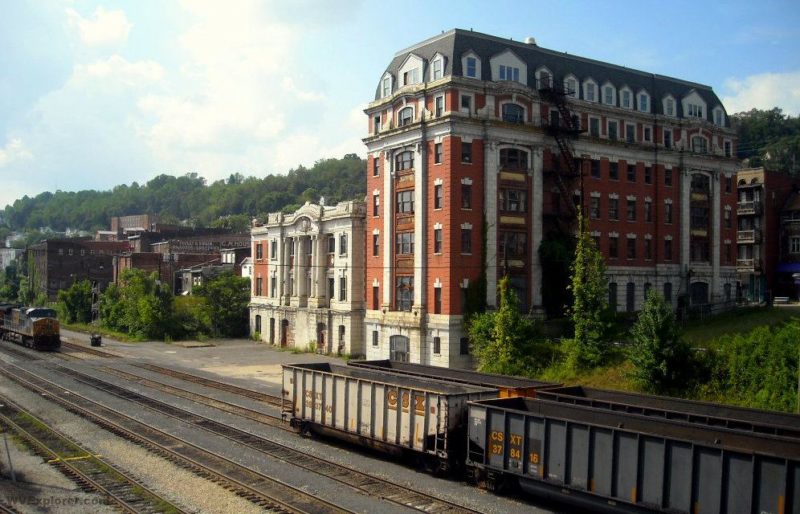
On January 1, 1853, the first train arrived in Wheeling, West Virginia, (then Virginia) on the newly completed Baltimore & Ohio Railroad, the first rail line linking the Atlantic seaboard with the Ohio River.
The event was groundbreaking—not only for what would become northern West Virginia, but for the nation. For more than a quarter century investors in Baltimore had battled to complete the route in an effort to rescue the city’s stagnating economy. The Appalachian barrier and the infancy of railroad engineering itself had delayed construction, which rivaled in importance that of New York’s east-west Erie Canal.
The line secured Baltimore’s situation as the largest metropolis south of Philadelphia and injected unimagined commerce into rural communities across what would become northern West Virginia.
Established towns along the line flourished, and farmsteads blossomed into trade centers. From east to west, 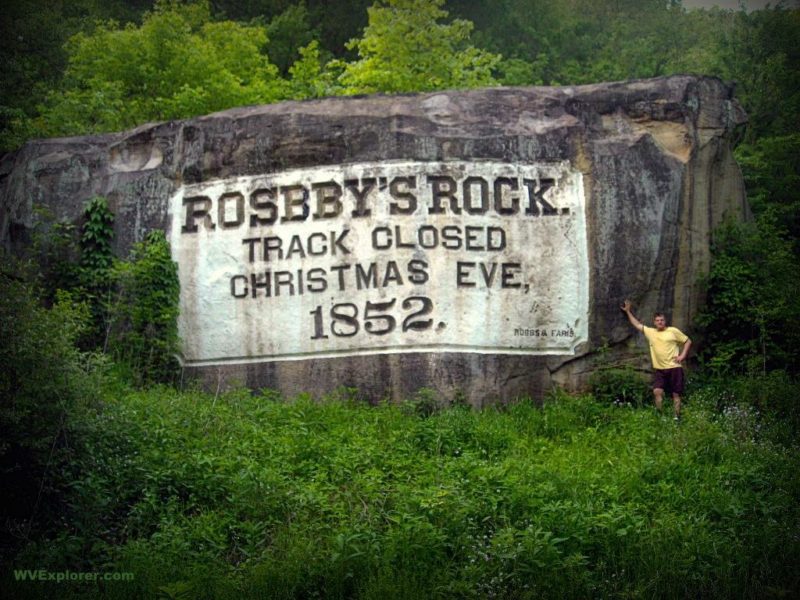 Sibray stands alongside Rosby’s Rock[/caption]
The spike that closed the line had been driven in at 6:05 p.m. on Christmas Eve at “Rosby’s Rock” on Grave Creek some 20 miles south of Wheeling, after which Roseberry Carr, superintendent of the line west of Cumberland, Md., gave the following speech, according to the Wheeling Intellegencer:
‘We have now laid the last bar of the long link of railroad which connects the Chesapeake Bay and the waters of the Ohio, and I call upon all to give three hearty cheers for our president, Thomas Swan, and three more for our chief engineer, Benjamin H. Latrobe. May they both live to make many more connections of the western waters and the seaboard.’
“The cheers were most heartily given by the large united parties of tracklayers, and then the hills once more resounded to ‘three more for Roseberry Carr, Sr.’ This done, the men, tired with a hard day’s service, retired to their camp.”
The lion’s share of pomp and circumstance was reserved for the day of the arrival of the first train at Wheeling, attended by thousands of spectators, according to the Intellegencer:

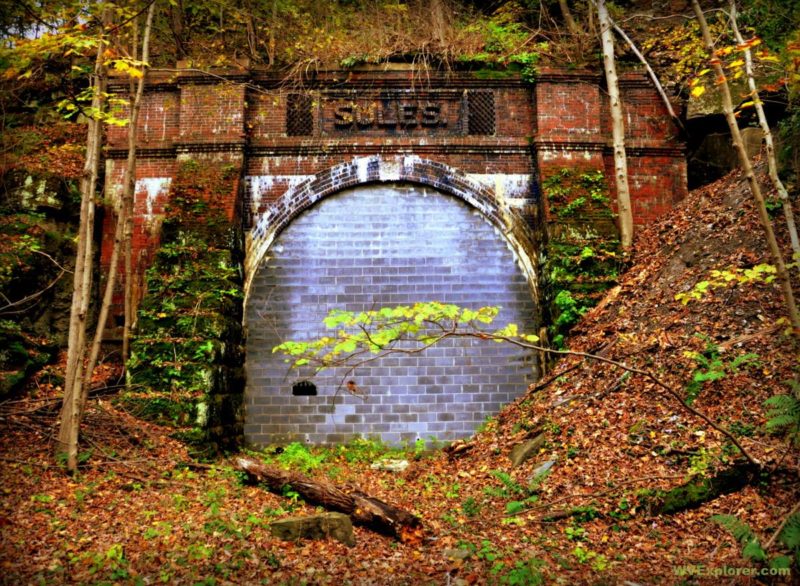
“Yesterday morning dawned upon thousands who had come by steamboats, by coaches, on horses and on foot, from near and far, to participate in the commemoration of one of the greatest works of the age — the completion of an unbroken link connecting the Chesapeake with the waters of the Ohio.
“At an early hour the streets were thronged with a multitude of all ages, sexes and conditions, which was increased by the successive arrivals of various steamers crowded with passengers. Among them we noticed the steamer Wm Knox, with a large number of the citizens of Marietta, and the American Star, with a handsomely uniformed company, the ‘Steubenville Grays,’ commanded by Capt. Webster. This company and the 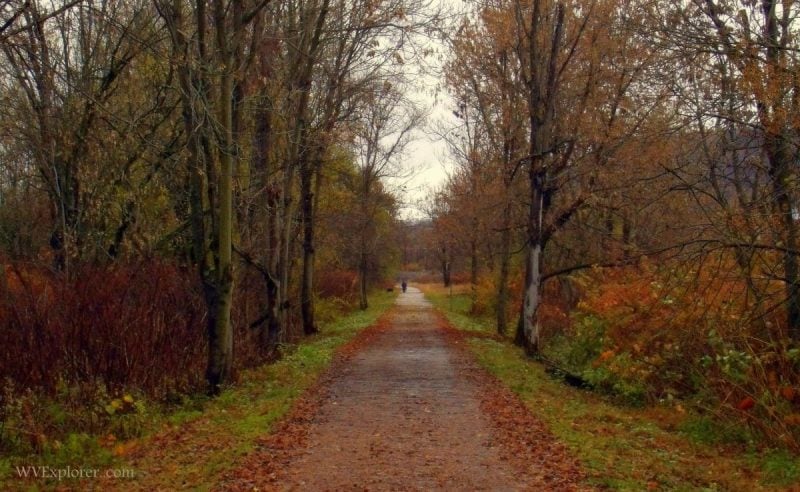 Rail Trail at Glen Dale, W.Va.[/caption]
The last passenger train made its final run on the line into Wheeling on October 26, 1957, and, after final freight runs, the line was abandoned in 1973, and the removal of tracks and bridges commenced in 1974.
Parts of the B&O network today have been converted into rail trails.