
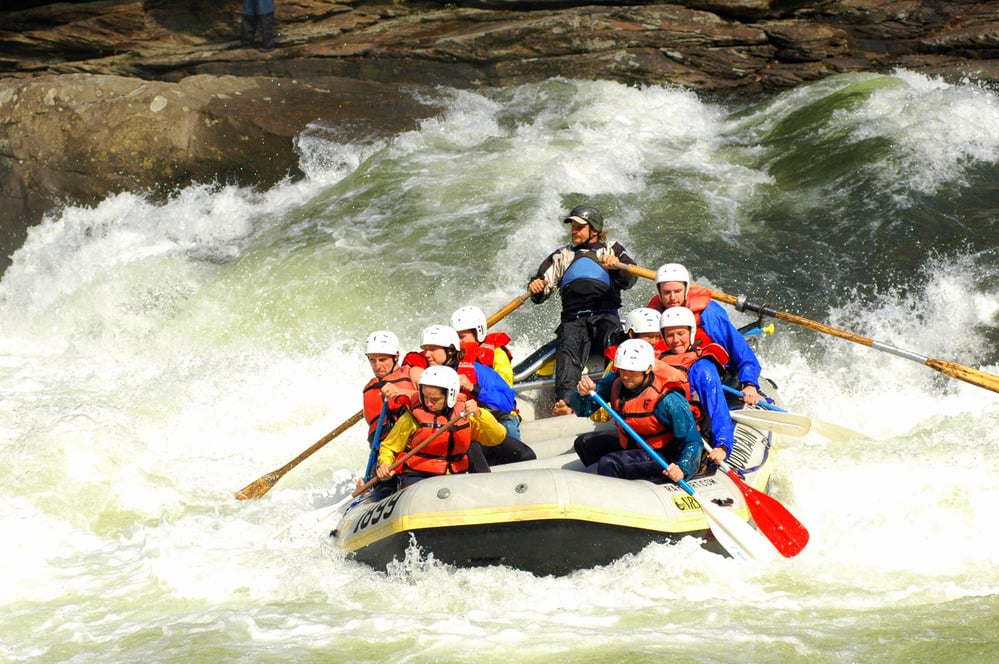
SUMMERSVILLE, W.Va. — For six weekends beginning in September, controlled releases from Summersville Dam will turn the Gauley River in West Virginia into one of the world’s premier whitewater destinations. Veteran river guides say this year’s unusually wet conditions could add another variable to the celebrated fall season.
The 2026 Gauley Season begins Sept. 11 and runs through the weekend of Oct. 17–18, with 22 scheduled release days across six weekends. The season will include Gauley Fest in September and conclude on the same weekend as Bridge Day at the New River Gorge Bridge.
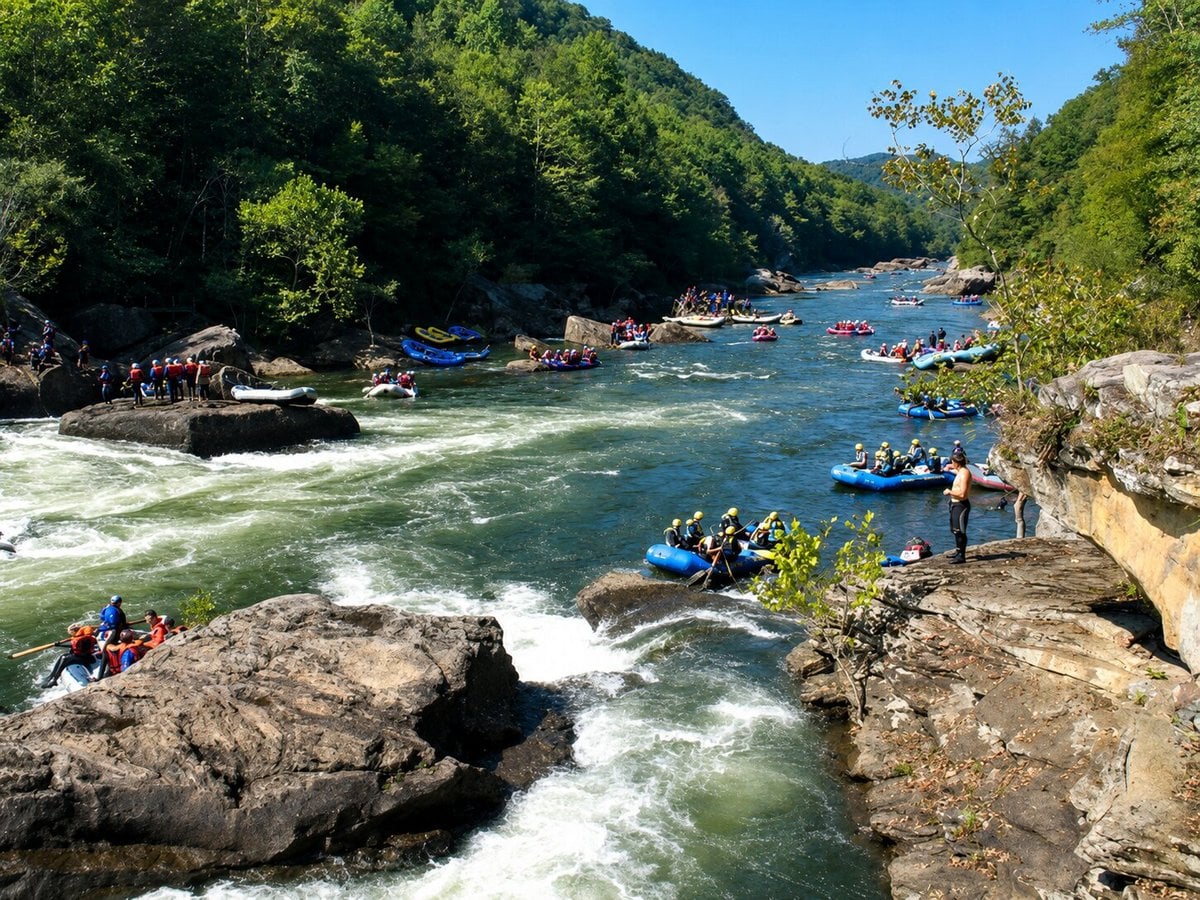
The six-week span is something Bobby Bower, vice president of sales and marketing for Rocky Mountain Rafts and owner of Pro River Outfitters, said many paddlers don’t fully appreciate.
“Gauley Fest is great, but did you know there are another five weekends that are awesome?” Bower said. “It’s not just Gauley Fest, it’s actually Gauley Season. It’s six weeks.”
Those other weekends can offer a substantially different experience for visitors who want to avoid the festival crowds, Bower said. He pointed to the fourth weekend, when river traffic can be lighter without losing the Gauley’s characteristic whitewater.
“You never have to wait in line,” Bower said. “It’s a lot calmer. And it’s still all the badass whitewater that we have on the Gauley, but you don’t have to worry about the crowds.”
More than 100 rapids in 25 miles
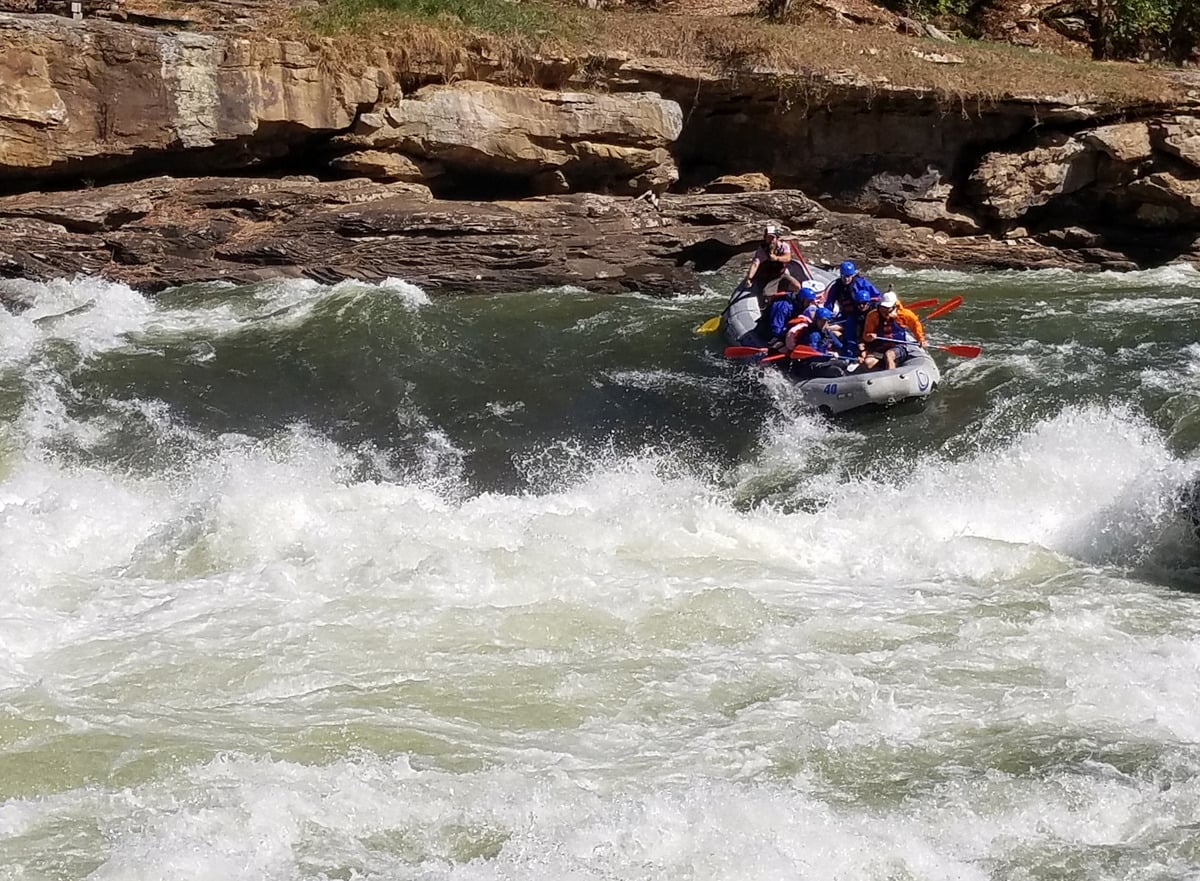
The Gauley River drops more than 668 feet over 25 miles of rugged terrain below the dam and contains more than 100 rapids, according to the National Park Service, which describes its steep gradients, technical runs, large water volume, and huge waves as making it one of the premier whitewater runs in the world.
The Upper Gauley run, which begins just below the dam, includes some of the river’s most famous Class IV and V rapids, including the so-called “Big Five”— Insignificant, Pillow Rock, Lost Paddle, Iron Ring, and Sweet’s Falls, the last of which includes a roughly 14-foot drop.
What makes the fall season particularly unusual is its predictability. Rather than depending entirely on rainfall, Gauley Season is driven by scheduled releases from Summersville Dam, with veteran raft guide Dave Bassage saying the U.S. Army Corps of Engineers provides approximately 2,800 cubic feet per second for fall rafting.
“It’s an ideal water level for fall rafting,” Bassage said.
Wet year could change the ride
Rainfall can still affect the Gauley downstream of the dam, and that’s where this year’s wet weather matters.
Both Bassage and Skip Heater, the owner of New and Gauley River Adventures, pointed to the Meadow River, an uncontrolled tributary that joins the Gauley upstream of Lost Paddle rapids.
Heater said the Meadow River has recently been carrying substantially more water than it typically does late in summer, though conditions could change before Gauley Season begins.
“We could have extra water with everything running the way it is,” Heater said. “I would tend to think that we’re going to have a high-water season on the Gauley.”
Bassage was more cautious. Without additional major rain events, he expects relatively normal water levels, but said rain could increase the Meadow’s contribution and affect the river below its confluence with the Gauley.
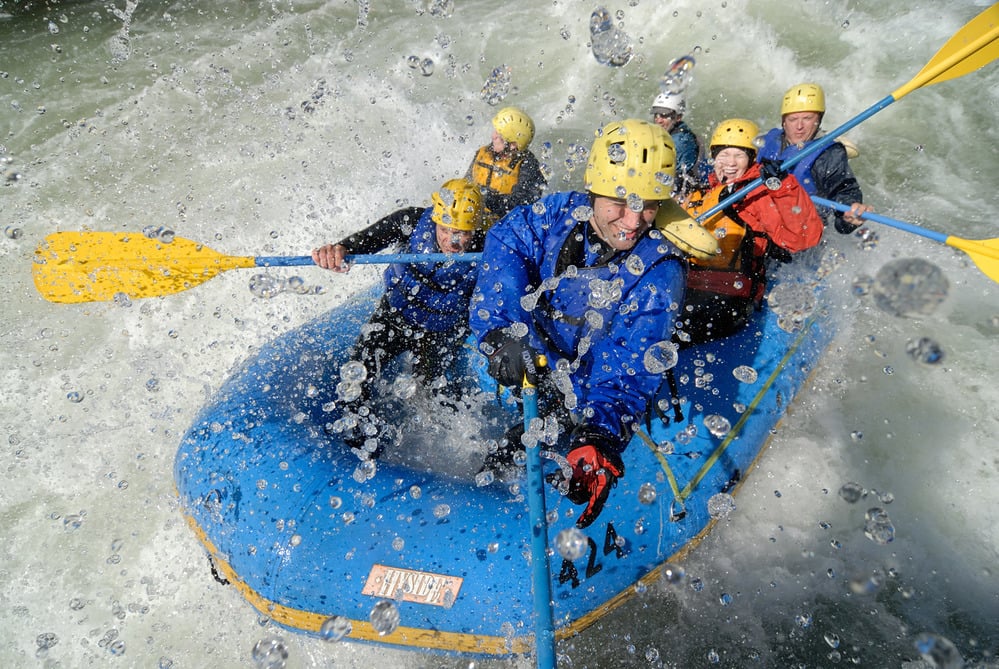
Higher flows don’t simply make every rapid more difficult, he said. Rapids behave differently as water levels change, with some becoming easier and others more challenging.
“The higher the water, the faster it goes,” Bassage said. “It also means some of the features get bigger.” Consequently, guides, kayakers and other boaters have to adapt as conditions change, he said.
Heater said moderately higher water can cover rocks that otherwise create obstacles, turning some features into waves and holes and, up to a point, producing what he considers a better ride.
“Lots of times that higher water makes it a little easier to navigate and a better ride,” Heater said.
Reservations running ahead of last year

Whatever the water ultimately does, Heater said interest in the 2026 season is already reflected in bookings at his rafting operation.
“As far as reservations on the Gauley, we’re probably up about 10%” compared with last year, Heater said.
He said the wet year may also be shaping perceptions among travelers who monitor rainfall and river conditions. Some prospective visitors mistakenly assume dry weather means the Gauley will lack sufficient water, without realizing that the fall season is built around scheduled dam releases.

The National Park Service says thousands of whitewater enthusiasts from around the world travel to the Gauley each fall. The protected river drops through remote terrain within the Gauley River National Recreation Area, which encompasses 25 miles of the Gauley and six miles of the Meadow River.
Gauley Fest arrives during the second weekend
One of the season’s largest gatherings comes early. Gauley Fest is scheduled for Sept. 17–20 at Nicholas County Veterans Memorial Park in Summersville, according to American Whitewater, with river releases planned for the festival weekend.
American Whitewater says the festival began in 1983 after paddlers successfully opposed a proposed hydroelectric project that would have disrupted Gauley River flows. What began as a river-conservation celebration has since grown into what the organization calls the world’s largest paddling festival and its largest public outreach event.
The history echoes Heater’s recollection of outfitters and paddlers organizing against a hydroelectric proposal that he said could have bypassed part of the Gauley’s whitewater. Heater recalled early gatherings at the former Burnwood Campground, featuring food, donated paddling equipment and fundraising, before American Whitewater developed the event into the festival it is today.
Bridge Day closes the season
At the opposite end of the season, the final Gauley weekend will coincide with Bridge Day on Oct. 17 at the New River Gorge Bridge, giving travelers the chance to experience two of West Virginia’s best-known adventure events in the same weekend.
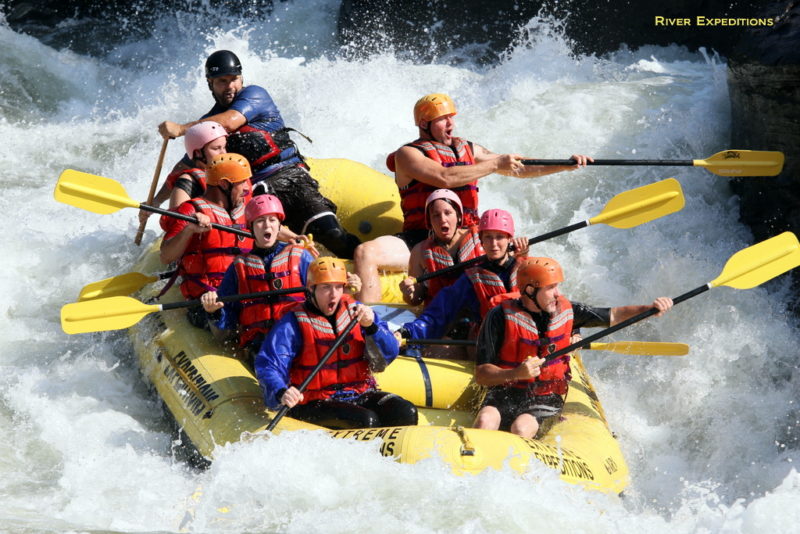
The W.Va. Department of Tourism highlighted the overlap when it announced the upcoming season, which begins with the first controlled release on Sept. 11.
Between Gauley Fest and Bridge Day, however, are the less crowded weekends Bower wants paddlers around the country to remember. His advice is not to regard the festival as the entirety of Gauley Season, but to consider returning for multiple weekends while the scheduled releases continue.
For Bassage, the annual return has become something considerably more personal. This fall will mark his 43rd consecutive Gauley Season.
“If there’s one thing that’s kept me in West Virginia for decades, it’s the Gauley River,” Bassage said. “It’s a magical, special place.”
After more than four decades, he is preparing to run it again.