
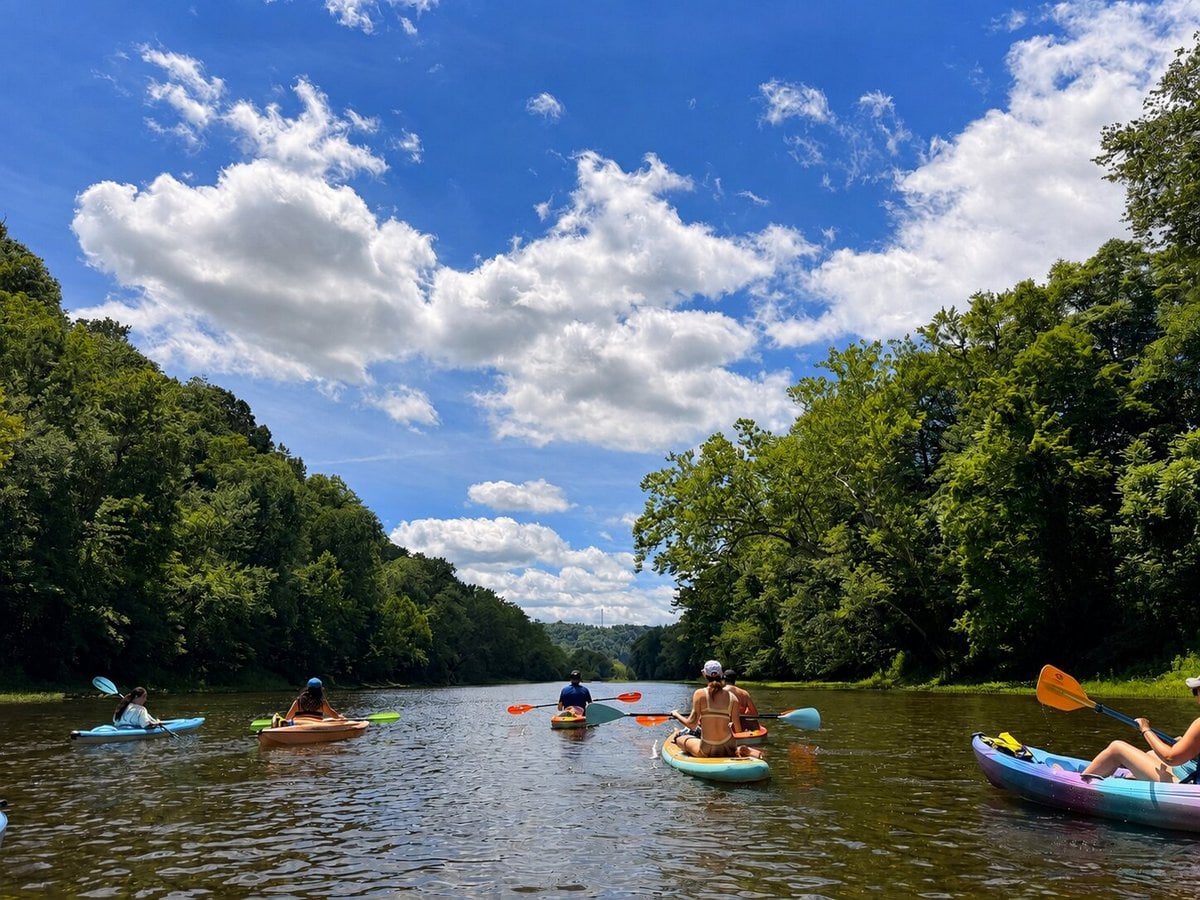
LEWISBURG, W.Va. — At the southern end of the Allegheny Mountains, where the Greenbrier River enters a landscape of bluegrass pastures, mineral springs and cavernous limestone, a West Virginia valley is finding itself particularly well suited to one of the travel industry’s fastest-growing summer trends.

They are called “coolcations”—vacations chosen at least partly to escape oppressive summer heat—and rising temperatures are helping change where some travelers spend their summer vacations. Instead of automatically heading for hot beaches and traditional warm-weather destinations, a growing number are looking northward, toward higher elevations and into forests, mountains and other places where summer can be more comfortable.
The trend has become increasingly visible as extreme heat influences travel decisions. More than half of older millennial, Generation X, and baby boomer travelers surveyed in the United States and Canada for EF Go Ahead Tours said extreme heat was influencing their travel plans.
More recent European research has found travelers adjusting destinations and schedules because of climate conditions, including specifically seeking cooler places and avoiding areas experiencing extreme heat.
In the Greenbrier Valley, however, escaping to higher, cooler country is hardly a new idea. Long before the travel industry invented the word “coolcation,” generations of visitors were making summer journeys into this corner of the Alleghenies, where some of America’s most celebrated mineral-spring resorts developed in the late 18th and 19th centuries.
Kara Dense, executive director of the Greenbrier Valley Convention and Visitors Bureau, said the valley offers both interpretations of the increasingly popular travel term: It can be cooler than many surrounding destinations, but it also gives visitors plenty of reasons to consider it “cool.”
“We have things that, you know, different experiences that are both cool from a ‘that’s a really cool thing to do’ to a ‘cool from an escape the summer heat’ perspective,” Dense said.
Rivers, forests, and caves offer an escape from summer heat
Elevation is one of the Greenbrier Valley’s natural advantages. Lewisburg sits at roughly 2,000 feet above sea level, considerably higher than many cities from which visitors travel to the region, while the Allegheny Mountains immediately to the north and east climb to more than 4,000 feet.

Dense said the difference can become noticeable during the hottest part of summer, particularly for travelers arriving from lower elevations and larger metropolitan areas.
“I think the people that come here and that are regulars know that the Greenbrier Valley of West Virginia is a heck of a lot better place to be in July and August than a lot of places, you know, south of us,” Dense said. “Yes, it’s humid, but it’s not as bad. The temperature doesn’t get quite as high.”
Dense said Charleston can often feel considerably warmer, while Washington, Roanoke and Pittsburgh are among important visitor markets where travelers may also contend with summer heat intensified by the built environment. She said the valley has also seen increased attention from the Pittsburgh area.
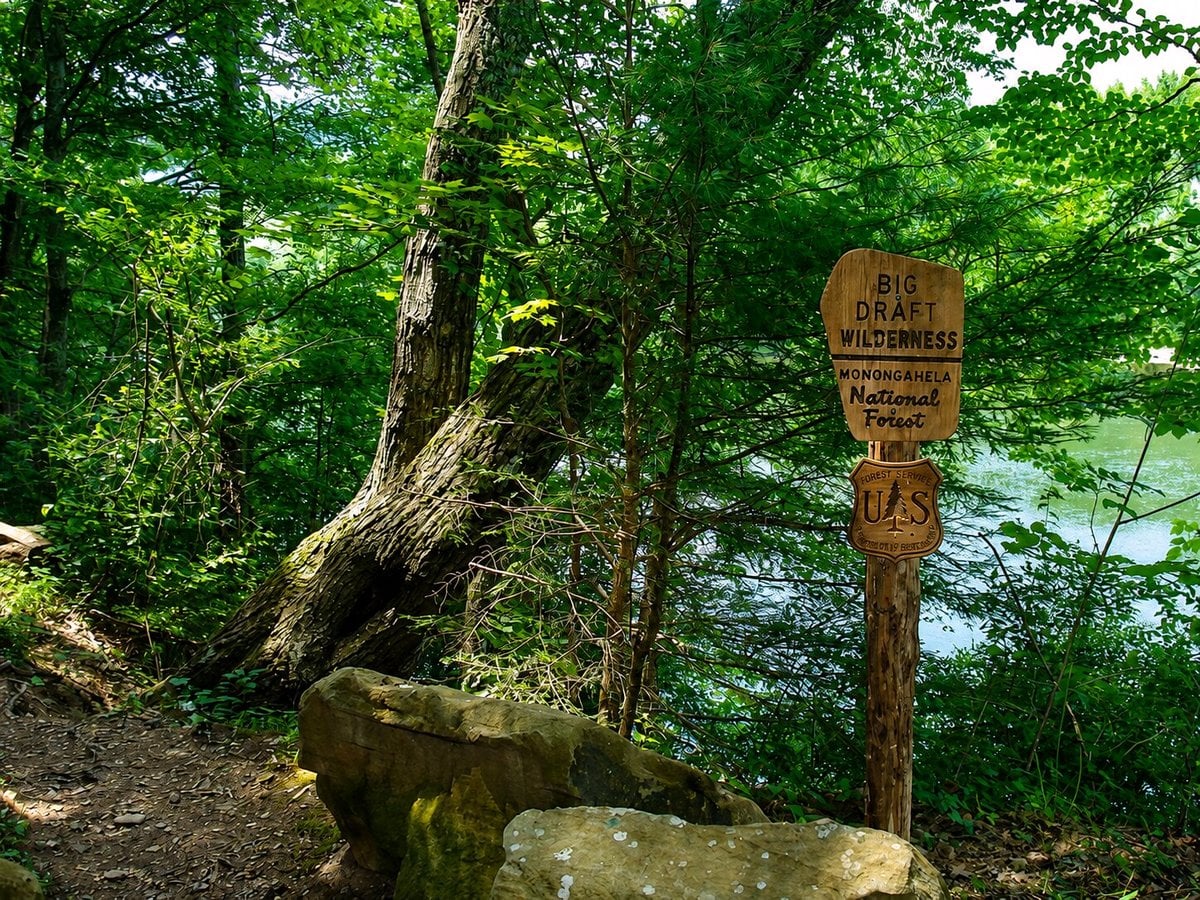
The difference does not end at Lewisburg. Travelers can continue upward into the Monongahela National Forest, where Lake Sherwood Recreation Area lies at about 2,600 feet and includes swimming beaches, camping and hiking trails. Nearby Blue Bend Recreation Area offers swimming in Anthony Creek and access to the Big Draft Wilderness, including the five-mile Blue Bend Loop Trail and its three scenic overlooks.
Dense counts both among the places visitors can use to enjoy summer without simply retreating indoors.
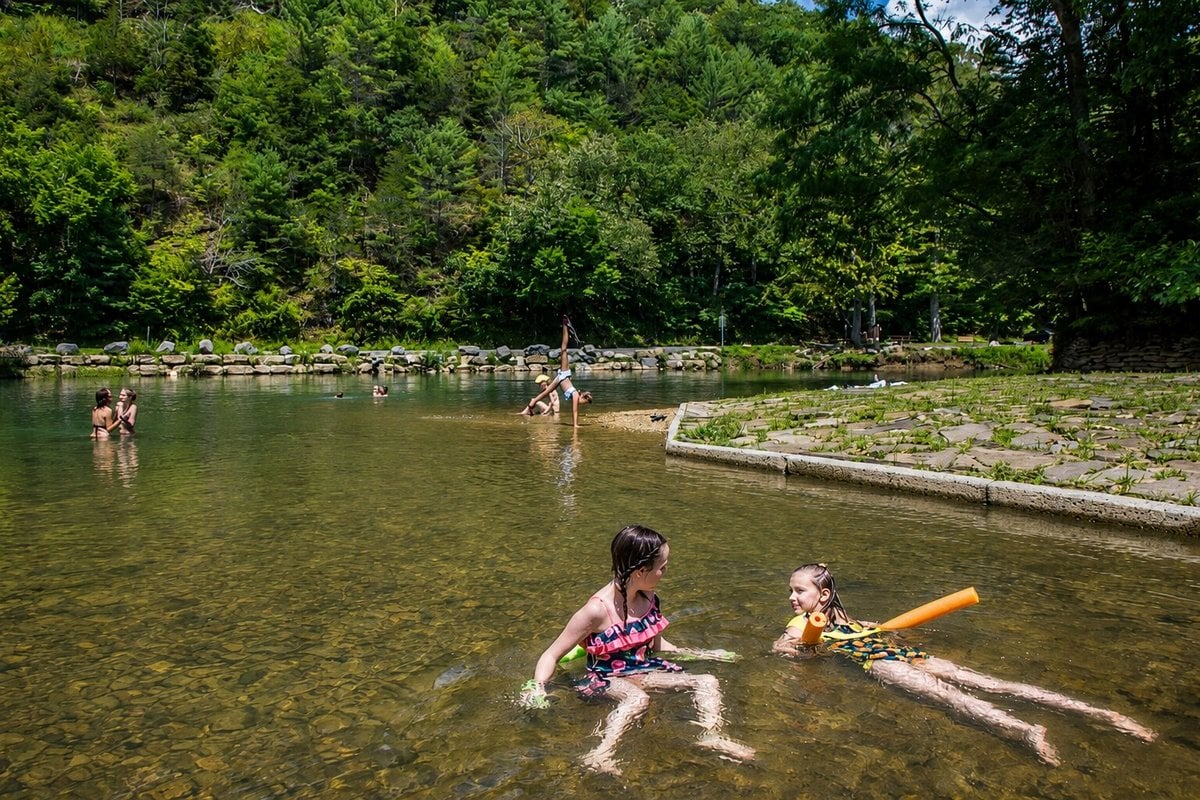
“We have Lake Sherwood, we have of course the Greenbrier River, Blue Bend, which my father says that growing up they camped at Blue Bend a lot, and it was always the coldest place that he’d ever been; the water was always cold,” she said.
The surrounding highlands also open onto miles of hiking in the Monongahela National Forest and along the Allegheny Trail, while Greenbrier State Forest near Caldwell contains more than 5,100 acres of heavily wooded mountain country and 12 designated trails for hiking and biking. Some trails climb and skirt Kate’s Mountain, which rises immediately east of the Greenbrier Valley.
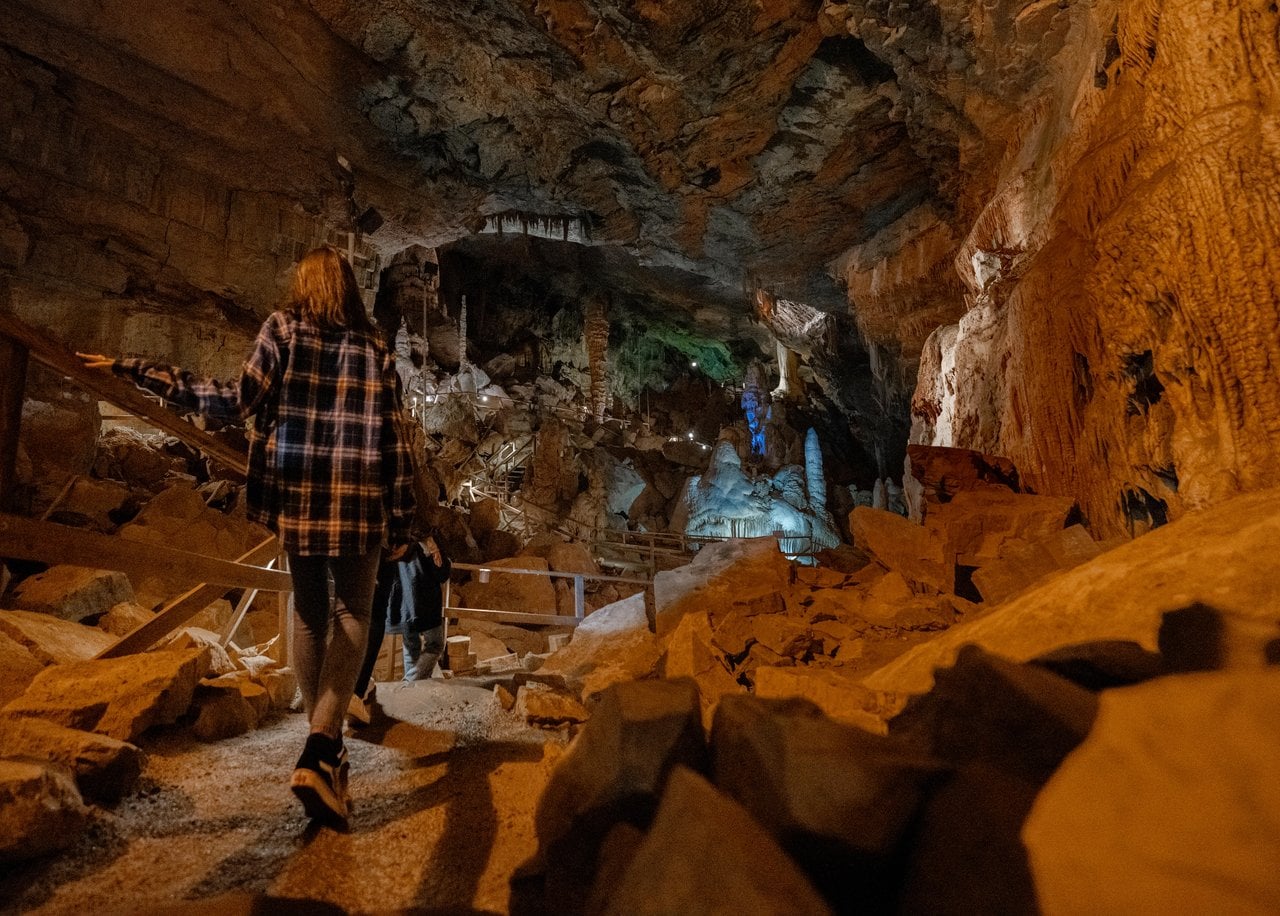
Travelers looking for relief in the opposite direction—underground—can descend into Lost World Caverns near Lewisburg, another attraction Dense singled out for hot summer days.
“If you’re looking to get away from the heat but you don’t want to be stuck inside with the air conditioner on or something, just a great trip into Lost World because it’s so cool down there,” she said.
A slower kind of Appalachian adventure
The Greenbrier River provides another spine for summer recreation, flowing south through Pocahontas, Greenbrier, and Summers counties while the Greenbrier River Trail follows much of its former railroad corridor.
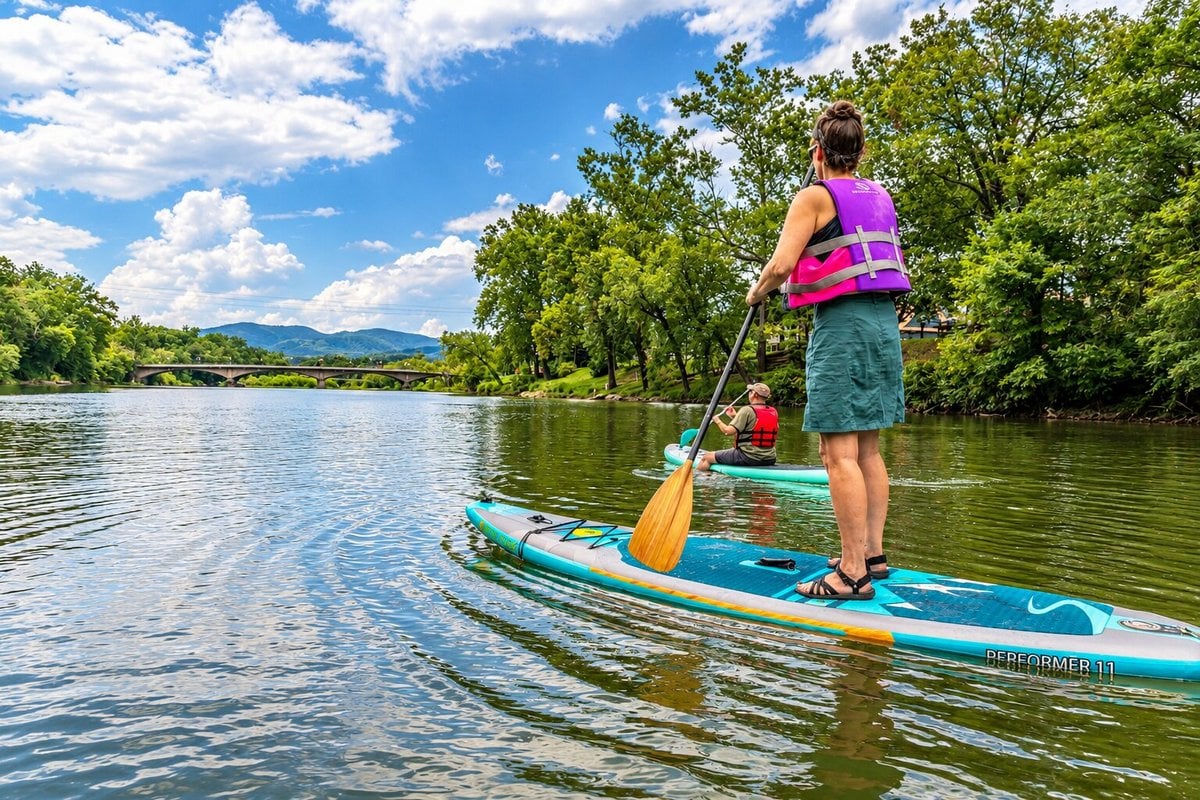
The 78-mile trail extends from North Caldwell, near Lewisburg, northward to Cass, passing through forest and mountain communities while remaining relatively gentle because of its railroad origins. Trail planners list numerous access points between Caldwell and Cass, allowing visitors to use portions of the route rather than completing its entire length.
Dense sees that kind of recreation as part of what distinguishes the Greenbrier Valley from the more adrenaline-oriented outdoor tourism associated with the nearby New River Gorge.
Visitors can fish or fly-fish, float sections of the Greenbrier River, hike, cycle or spend a day outdoors before returning to Lewisburg or White Sulphur Springs for restaurants, shops, theater and other attractions. Rather than requiring a vacation built around strenuous adventure, the valley lends itself to a slower pace, she said.
“You can do those types of things all day, have a great dinner, you know, go shopping,” Dense said. “It’s just a nice relaxing, slower pace kind of getaway.”
That combination has long been part of the region’s identity. Lewisburg was named America’s “Coolest Small Town” by Budget Travel in 2011, a distinction Dense said continues to draw the attention of travelers who see signs announcing the honor along Interstate 64. White Sulphur Springs, meanwhile, has undergone its own revival, with restaurants, lodging and businesses complementing The Greenbrier, the sprawling resort that has anchored tourism there for generations.
The original Greenbrier Valley ‘coolcation’
If escaping summer heat for the Greenbrier Valley sounds like a new marketing idea, history suggests otherwise.
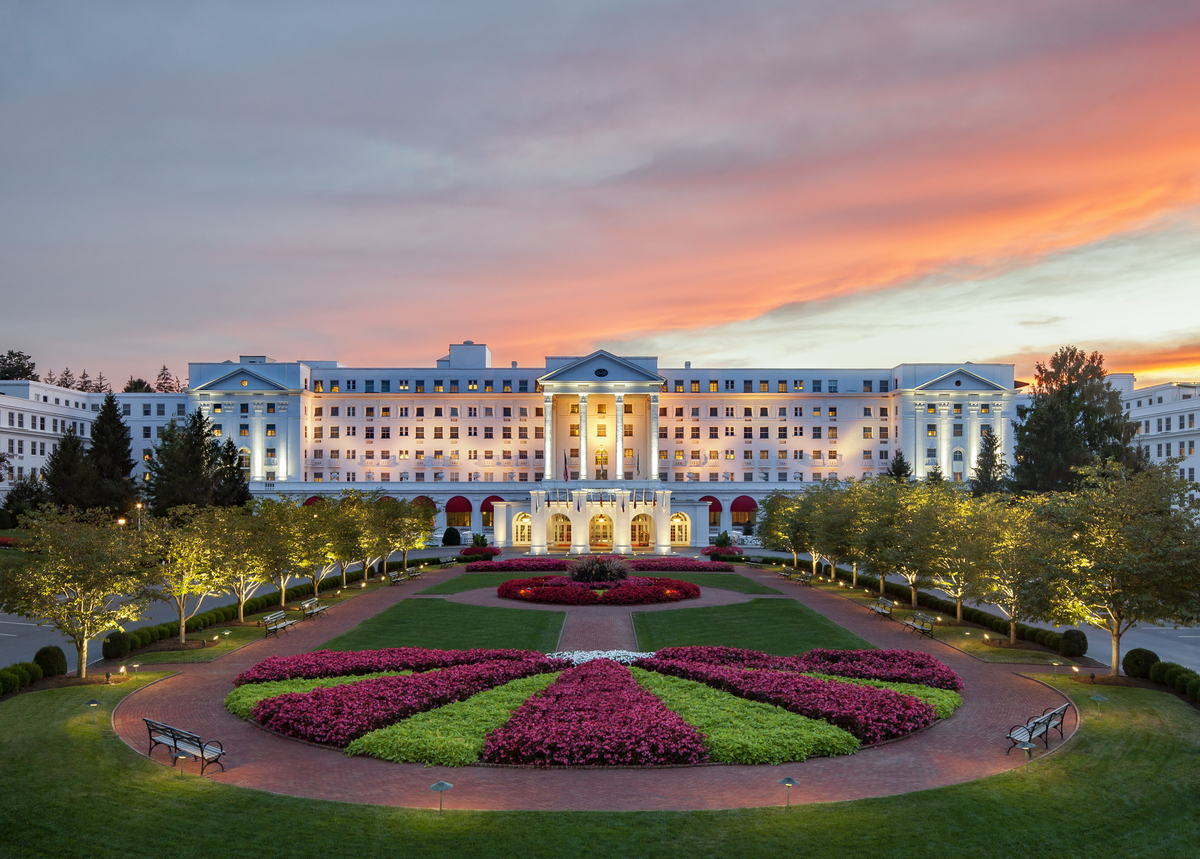
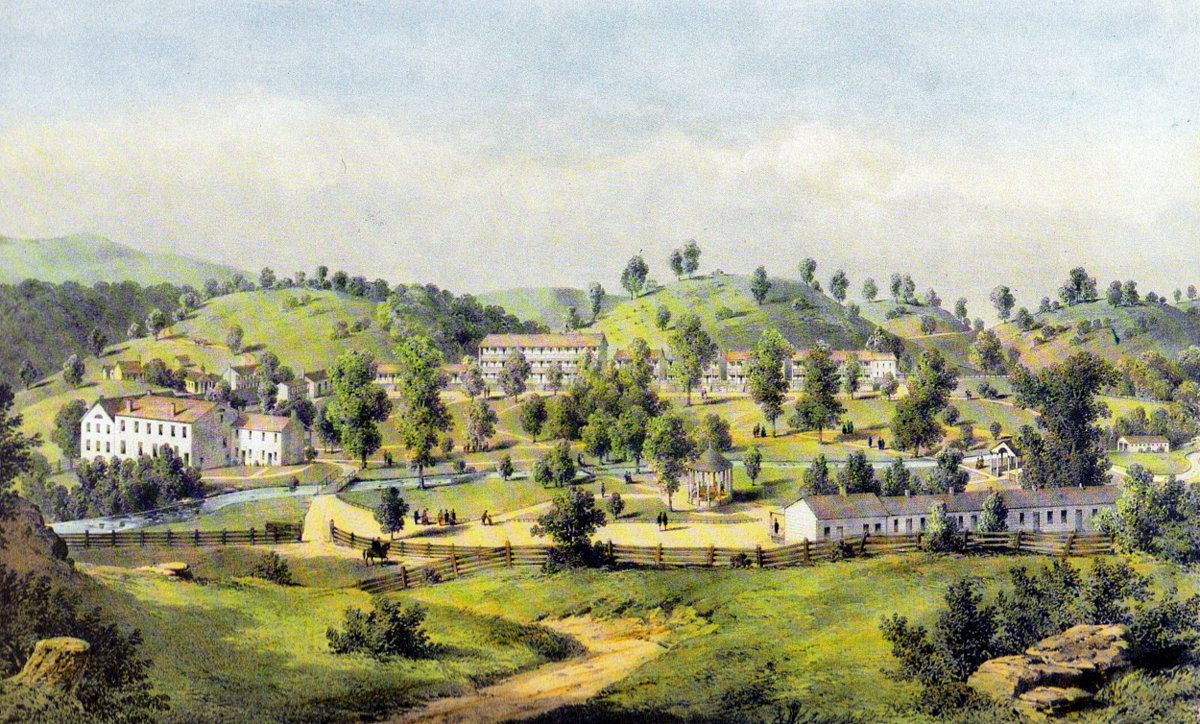
At White Sulphur Springs, visitors began arriving to take the mineral waters in 1778, establishing the beginnings of what would become The Greenbrier. By the 1830s, the resort had become a summer gathering place for politicians, judges, lawyers, diplomats, planters, merchants and other prominent visitors, many traveling from the Southern states.
The resort’s own historical account specifically identifies climate as part of the attraction. White Sulphur Springs offered summer visitors relief from the heat and humidity of the lowlands, but the phenomenon extended far beyond White Sulphur Springs.
Across the mountains in present-day Monroe County, Sweet Springs had developed around another mineral spring by the late 1700s. William Lewis erected its first hotel in 1792, and the resort reached its heyday between about 1820 and the Civil War. “Old Sweet,” as it became known, was part of a circuit of mineral-spring resorts frequented by some of the most prominent figures in early American history, including George and Martha Washington, Patrick Henry, James and Dolley Madison, Chief Justice John Marshall, the Marquis de Lafayette, and presidents Millard Fillmore and Franklin Pierce.
Nearby Salt Sulphur Springs developed after its mineral waters were discovered by European-American settlers in 1805. By about 1820, developers had constructed a stone bathhouse and an elaborate hotel that cost a reported $30,000, creating another destination in a region where visitors traveled in search of mineral waters believed to possess medicinal properties. U.S. Sen. John C. Calhoun of South Carolina was among its notable visitors.
The resort tradition continued downstream along the Greenbrier River into the railroad era. Pence Springs developed later than the antebellum resorts, eventually becoming a prominent mineral-water destination during the late 19th and early 20th centuries, extending the region’s long association with travelers who came for its springs and mountain setting.
The medicinal claims once associated with those waters belong to another era, but the geography that helped sustain the resorts has not changed. The Greenbrier Valley still occupies an elevated landscape between the Alleghenies and the mountains surrounding the Greenbrier River, with forests and higher country readily accessible from its towns.
A new name for an old summer tradition
Dense said she cannot yet point to visitor data demonstrating that large numbers of tourists are specifically choosing the Greenbrier Valley because of the national coolcation trend. But she believes the climate advantage is familiar to repeat visitors, particularly during July and August, when nighttime temperatures can also provide relief from hotter areas.
“We’ve always kind of envisioned ourselves as a little escape from the heat,” she said.
For the travel industry, the “coolcation” terminology may be new. The underlying impulse is not. Two centuries ago, travelers endured long carriage journeys into the Alleghenies to spend part of the summer at mineral springs and other mountain resorts, drawn by celebrated mineral waters, social life, and a climate that offered relief from the lowlands.
Today’s visitors arrive by interstate rather than stagecoach and are more likely to spend their days cycling the Greenbrier River Trail, swimming in Anthony Creek, hiking through the Monongahela National Forest, or exploring a cavern than taking medicinal waters.
But as another hot August settles over the eastern United States and travelers increasingly look toward mountains, forests and cooler destinations for their summer vacations, the Greenbrier Valley finds itself offering something remarkably familiar.
The coolcation may be one of the travel industry’s newest trends. In this corner of West Virginia, it is an idea more than 200 years old.