
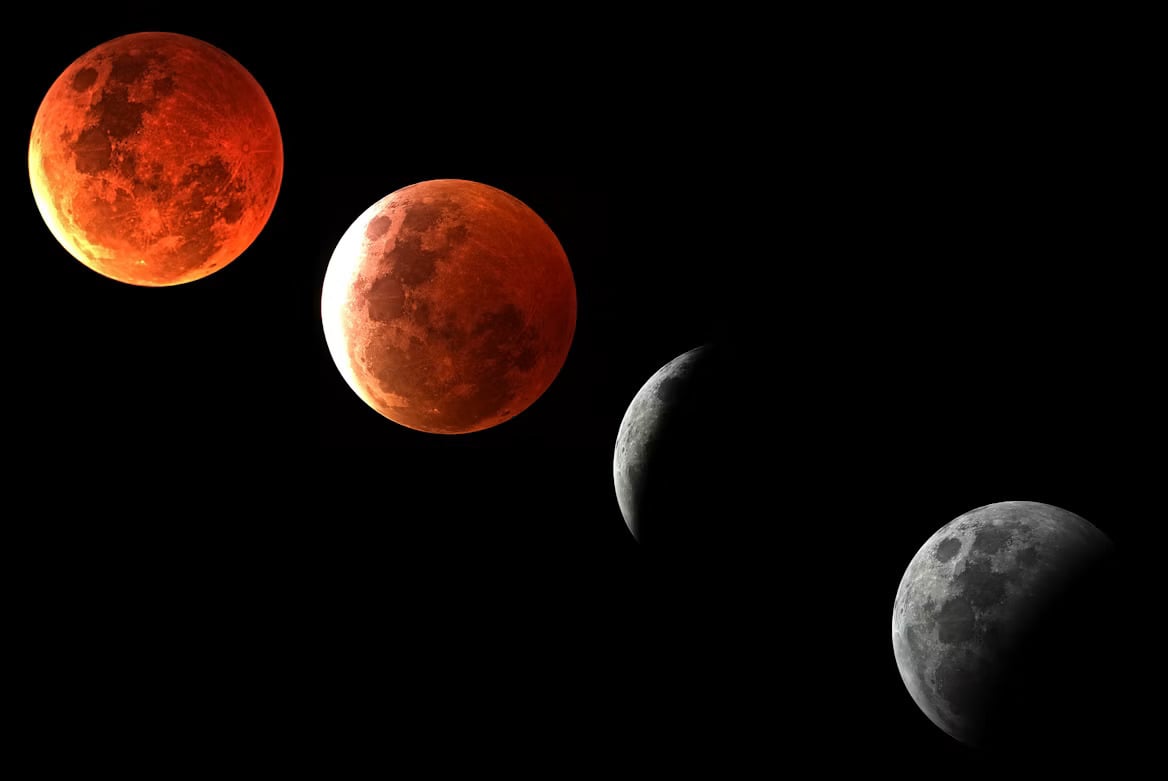
CHARLESTON, W.Va. — West Virginians will have a front-row seat to an unusually deep lunar eclipse Thursday night, when Earth’s shadow covers nearly the entire full moon.
The partial lunar eclipse will unfold overnight on Aug. 27, into Friday, Aug. 28, reaching its maximum at approximately 12:12 a.m. Friday.
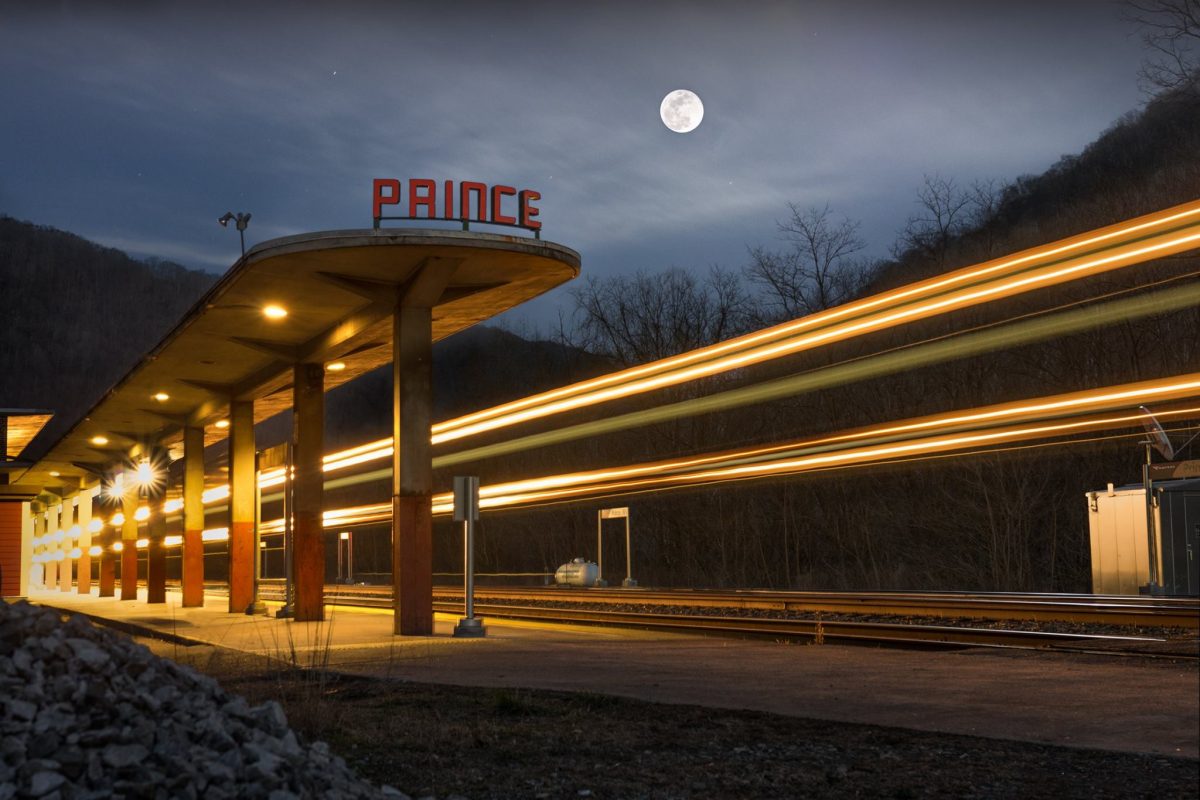
Though technically a partial eclipse, it will come remarkably close to totality. The eclipse will reach an umbral magnitude of about 0.93 as seen from West Virginia, leaving only a small portion of the moon outside Earth’s darkest central shadow.
Much of the darkened moon may also take on shades of copper, orange and red, potentially giving viewers an appearance similar to the so-called “blood moon” associated with a total lunar eclipse.
Unlike a solar eclipse, no special eye protection is required to watch a lunar eclipse.
What time is the lunar eclipse in West Virginia?
The eclipse will last more than five and a half hours, from the start of its subtle penumbral stage to its end, though the most dramatic portion will occur between approximately 10:33 p.m. and 1:51 a.m.
For West Virginia observers:
| Eclipse stage | West Virginia time |
|---|---|
| Penumbral eclipse begins | 9:23 p.m. Thursday, Aug. 27 |
| Partial eclipse begins | 10:33 p.m. |
| Maximum eclipse | 12:12 a.m. Friday, Aug. 28 |
| Partial eclipse ends | 1:51 a.m. |
| Penumbral eclipse ends | 3:01 a.m. |
The penumbral stage can be difficult to notice because the moon passes only through the lighter outer portion of Earth’s shadow.

The show should become much more obvious after 10:33 p.m., when Earth’s dark umbral shadow begins moving across the lunar surface.
By midnight, most of the moon will be immersed in that shadow.
Where will skies be clearest Thursday night?
West Virginians hoping to watch Thursday night’s near-total lunar eclipse may have their best chance in the western part of the state, while clouds and scattered thunderstorms could interfere with viewing across much of central and southern West Virginia.
As of Wednesday evening, the National Weather Service forecast for Huntington was particularly encouraging. Showers and thunderstorms there are expected to end before 8 p.m. Thursday, followed by partly cloudy skies through the night. Because the partial eclipse does not begin until about 10:33 p.m. and the moon reaches maximum eclipse shortly after midnight, the forecast would leave several hours for skies to improve before the main event.
Conditions become less certain farther east. Around Davis and the northern highlands, thunderstorms are also expected mainly before 8 p.m., but skies are forecast to remain mostly cloudy Thursday night. Lewisburg and the Greenbrier Valley face a chance of showers into the early morning hours, along with mostly cloudy skies and possible patchy fog after 1 a.m.
Prospects currently look poorer around Charleston, Beckley and the New River Gorge, where the National Weather Service forecasts mostly cloudy skies Thursday night with scattered showers and thunderstorms. Because the weather is associated with a passing cold front, however, conditions could change substantially from one location to another as storms move through.
For eclipse watchers willing to travel, the forecast suggests looking west rather than automatically heading for West Virginia’s highest mountains. Huntington and the state’s western counties currently appear to offer the best prospects, but viewers should check the latest hourly National Weather Service forecast Thursday afternoon before choosing a viewing location.
Forecast updated Wednesday evening, Aug. 26.
Will the moon turn red?
At least part of it may. During a lunar eclipse, Earth passes between the sun and the moon, blocking direct sunlight from reaching part or all of the lunar surface.
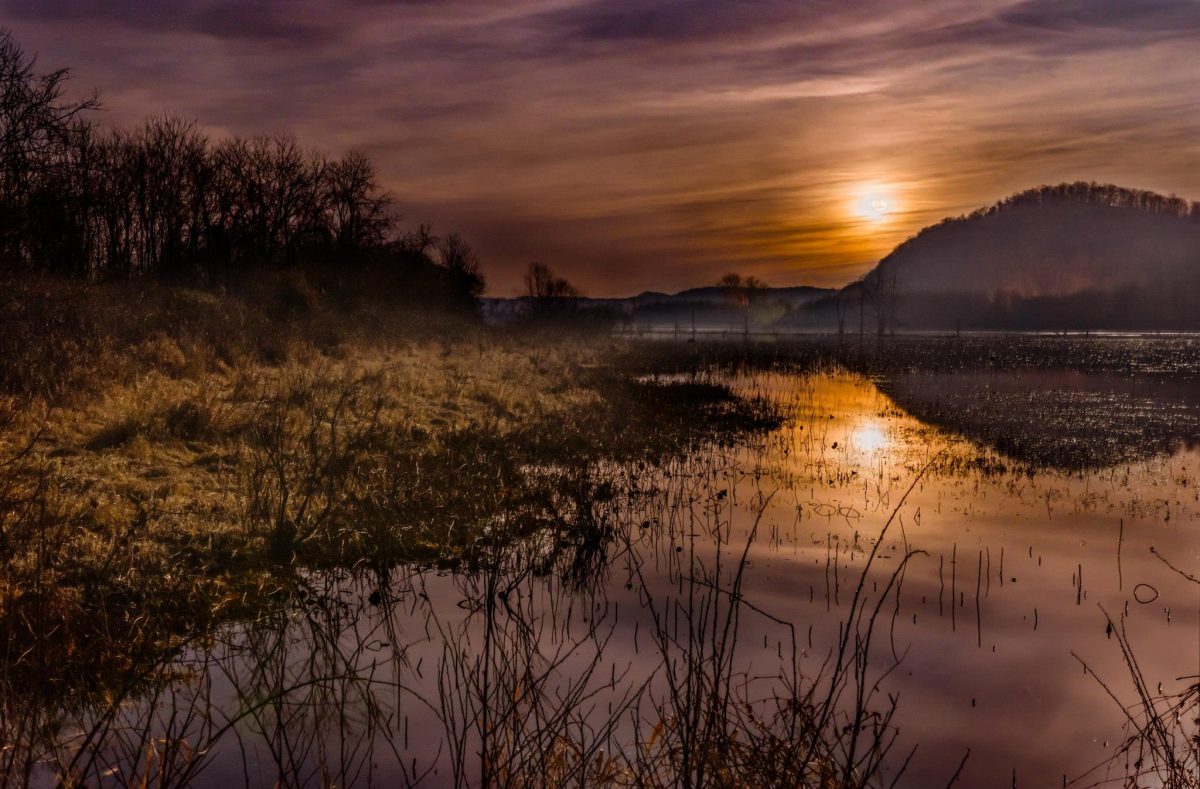
But Earth’s shadow isn’t completely dark. Sunlight passing through Earth’s atmosphere is filtered and bent toward the Moon. Shorter blue wavelengths are scattered more readily, while red and orange wavelengths continue through the atmosphere.
The same basic phenomenon helps produce red and orange sunrises and sunsets.
During a total lunar eclipse, that filtered light can turn the entire Moon a deep copper or reddish color. Because the Aug. 27–28 event is partial, a relatively small portion of the Moon will remain directly illuminated while much of the rest could appear dramatically darker and reddish.
Where will the eclipse appear in the West Virginia sky?
The moon will already be above the horizon when the eclipse begins Thursday evening.
As the partial phase begins around 10:33 p.m., viewers should look toward the southeastern sky.
At maximum eclipse shortly after midnight, the moon will be high in the south-southeastern sky, making the event relatively easy to observe from locations with a reasonably open view.
You can view the eclipse from anywhere in West Virginia with sufficiently clear skies.
Best places to watch the eclipse in West Virginia
While observers won’t need truly dark skies to see the eclipse, escaping bright urban lighting can make the experience more dramatic and improve photo opportunities.
West Virginia offers exceptional dark-sky viewing because of its mountainous terrain, extensive forests and relatively sparse development.
Among the state’s notable stargazing destinations are Spruce Knob, Dolly Sods, Canaan Valley, the Green Bank area, Calhoun County Park and the New River Gorge region.
Spruce Knob, the state’s highest point at 4,863 feet, is particularly renowned among amateur astronomers for its dark mountain skies.
However, viewers don’t need to travel to a remote mountaintop. A backyard, field, park, or other location with a clear view of the sky may be sufficient.
Weather will determine what West Virginians see
Cloud cover remains the biggest unknown. Even a spectacular astronomical event can disappear behind a thick layer of Appalachian clouds, and a reliable local cloud forecast won’t be possible until much closer to the eclipse.
West Virginia Explorer will update this report as Aug. 27 approaches and forecasts improve.
Because the eclipse unfolds over several hours, intermittent cloud cover may still provide opportunities to see portions of the event.
Why lunar eclipses happen
Lunar eclipses occur only during a full moon, when the sun, Earth and moon become closely aligned.
Earth then casts two kinds of shadow into space. The lighter outer shadow is called the penumbra. The much darker central shadow is the umbra.
The moon first enters the penumbra Thursday evening, producing relatively subtle dimming. At 10:33 p.m., it begins entering the umbra, creating the dramatic dark edge that viewers normally associate with a lunar eclipse.
Maximum eclipse occurs at 12:12 a.m. The process then reverses as the moon moves out of Earth’s shadow.

Eclipse will be visible far beyond West Virginia
West Virginia won’t be alone in seeing the celestial event.
NASA lists the Aug. 27–28 partial lunar eclipse as visible across the Americas, Europe, Africa and western Asia.
For West Virginians, however, the timing is particularly convenient. The entire eclipse occurs after nightfall, with its deepest stage arriving shortly after midnight.
That means no telescope, special glasses or expensive equipment will be necessary.
If the weather cooperates, West Virginians will need only to step outside and look up.