
BEAVER, W.Va. — Visitors to West Virginia state parks will find new campsites, expanded snowmaking, renovated facilities and extensive infrastructure improvements as the state invests nearly $20 million in parks and forests across the Mountain State. Gov. Patrick Morrisey announced $19.725 million in projects Wednesday at Kanawha State Forest near Charleston.
The new campground will add overnight capacity near the New River Gorge National Park and Preserve, one of the state’s busiest tourism regions. Little Beaver State Park is located near Beckley, about 20 miles from the New River Gorge Bridge and the national park’s northern recreation areas, where $3 million will finance construction of a new 34-site campground and electrical improvements.
“We know people want to come to West Virginia,” Morrisey said. “They want to experience our mountains, our rivers, our small towns and everything about outdoor recreation that we have in our state.”
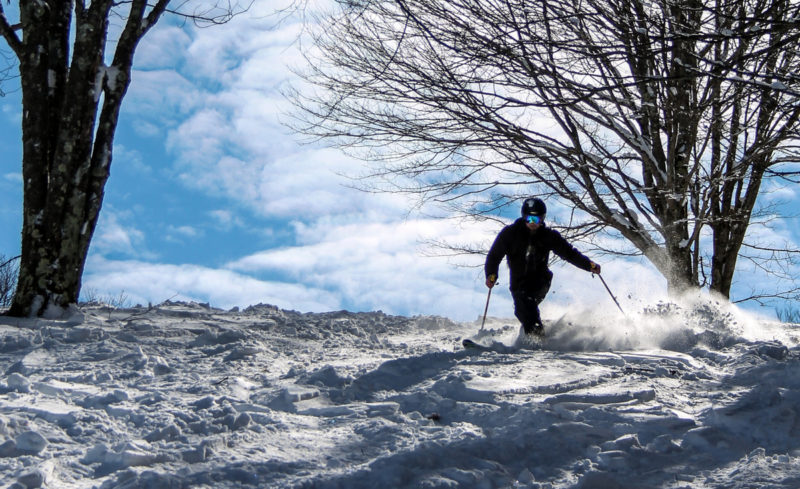
The investment also includes $1 million for snowmaking improvements at Canaan Valley Resort State Park, which Morrisey said will expand ski terrain and help attract more winter visitors.
“Tourism applies to all four of our seasons,” Morrisey said, arguing that West Virginia’s location gives it an opportunity to attract skiers and other winter travelers from surrounding population centers.
Infrastructure accounts for much of investment
While the campground and snowmaking improvements are among the most visible projects, much of the money announced Wednesday will go toward less conspicuous infrastructure, including wastewater systems, pavement, roofs and facilities.
Chief Logan State Park will receive $3 million to replace a deteriorating wastewater treatment plant serving its lodge, cabins and recreation center as well as future facilities. Another $3 million will support wastewater collection and treatment upgrades and improvements to the lodge, cabins and recreational facilities at Cacapon Resort State Park.
An additional $2 million will be spent on wastewater repairs throughout the state park system, while $4 million will go toward paving and repairing campsites, driveways, parking lots and walkways.

Morrisey acknowledged that such projects may attract less attention than new recreational attractions but said maintaining basic infrastructure is essential to the park system.
“Some of these pieces … may not be the sexy stuff that folks want to focus on, but some of this has been neglected for a long time,” Morrisey said. “We have to make sure we’re investing in all those fundamentals.”
At Pipestem Resort State Park and Cass Scenic Railroad State Park, $150,000 will replace aging roofs on cabins and historic company houses.
Blennerhassett Island Historical State Park will receive $300,000 to replace the barge and tugboat used to service the Ohio River island.
At Hawks Nest State Park, $1 million will be used to rehabilitate the lower tram building, including its gift shop, restrooms and boat-rental concession area. The work comes as the park prepares to reopen its rebuilt aerial tram.
Parks part of growing tourism economy
The new spending comes as West Virginia reports record tourism activity. State officials announced in September that the tourism economy generated an estimated $9.4 billion in economic impact in 2025 as the state welcomed 78.4 million visitors. Overnight travelers accounted for $6.8 billion in spending in local communities.
Morrisey had signaled that additional park investment was coming during his State of the State address in January, when he asked lawmakers for $20 million for state parks, citing a need for improved lodging, additional campsites and better roads leading to tourism destinations.
On Wednesday, Morrisey said the Legislature had set aside $10 million of the $19.725 million announced for the latest projects, and another $9.725 million was made possible through the state’s budget surplus. West Virginia finished the 2026 fiscal year with General Revenue Fund collections $370 million above the original estimate.
The projects continue years of investment in West Virginia’s state park system while shifting substantial attention toward maintaining the infrastructure beneath the visitor experience.
Morrisey said more investments are planned.
“We have to keep investing in our scenic lands in our beautiful state,” he said. “Close to $20 million for that goal, I think, will make a big difference in the quality of life for West Virginians and also keep us well positioned to keep adding to those good tourism numbers.”
Where is the money for Watoga pool that we were promised years ago and the project has been designed and engineered already to be released for bid?😡
Excellent question. Advertising and guidebooks even in the cabins still lead people to believe it is there. I was misled this summer and had very disappointed family on my hands.
Please invest some in WMA infrastructure as well. There are several of these that have been neglected even as they (the WMAs) have contributed to the DNR funding by timbering. Chief Cornstalk and Plum Orchard in particular. Cornstalk’s camping area and Plum Orchard’s camping area as well as a very neglected access roadway there.