
MORGANTOWN, W.Va. — Why do people willingly watch movies filled with murder, monsters, and terrifying situations?

A West Virginia University professor says the attraction has much to do with human curiosity about danger, particularly the disturbing things we would rather avoid in real life.
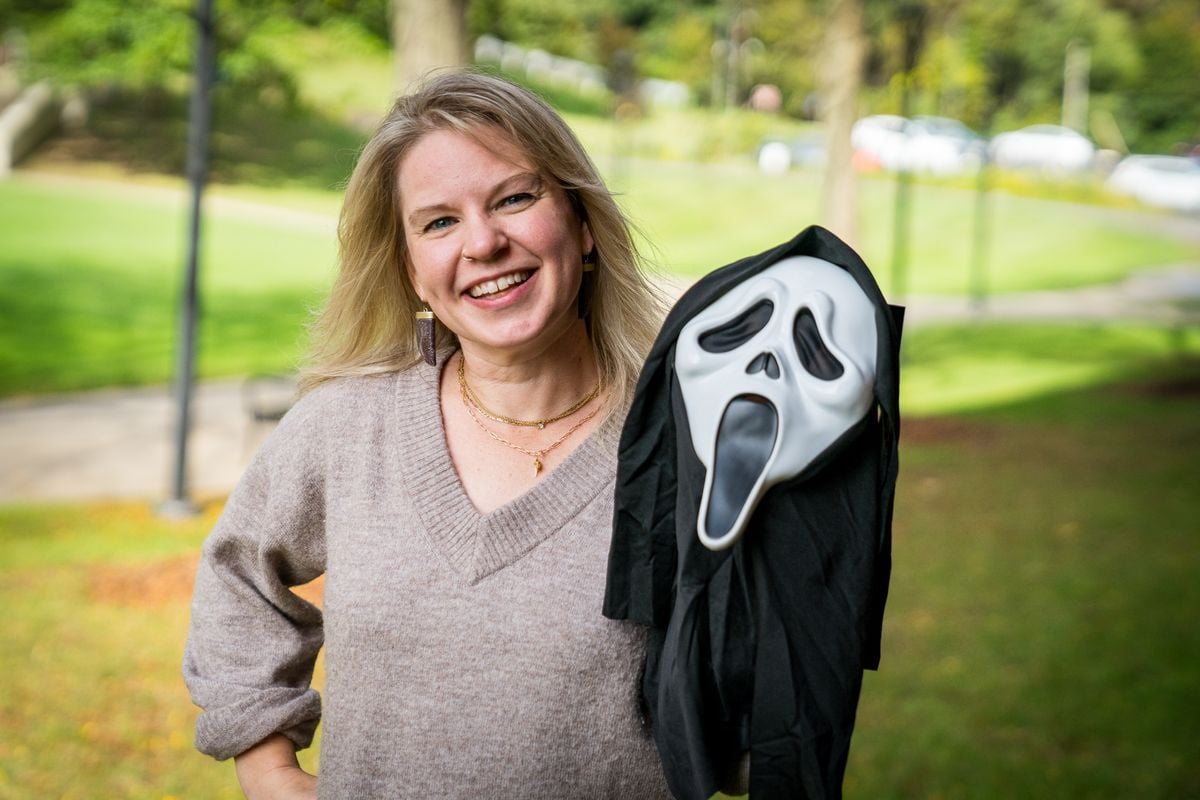
Elizabeth Cohen, a professor of communication studies in WVU’s Eberly College of Arts and Sciences, says horror films appeal to several psychological instincts, including the desire for excitement and our fascination with death.
“Horror appeals to people because it taps into our morbid curiosity,” Cohen explained. “We are all born with an innate sense of disgust that is our body’s way of keeping us away from things that could hurt us—including death.”
Disgust ordinarily warns us away from potential threats, but it can also make those threats difficult to ignore.
“It’s that feeling of being so repulsed by something and yet not being able to turn away,” Cohen said. “It’s normal, and it keeps us interested in things that are gory and profane.”
A 2024 study published in Scientific Reports examined 558 participants’ reactions to horror movie scenes. Researchers found that people with greater morbid curiosity reported more excitement and enjoyment, suggesting that an interest in disturbing subjects helps explain the appeal of frightening entertainment.
Why some people enjoy being frightened
Cohen says people differ in how much stimulation they need to feel satisfied. Those who seek intense experiences may be particularly attracted to horror movies.

“Some people are high sensation seekers. Some people have nervous systems that just require a little more stimulation in their environment to feel good,” she said.
“They seek out risky situations or thrills. These people are also more likely to enjoy horror films, which they have learned can provide a rush of arousing emotions like surprise, shock, and terror.”
The relationship is not straightforward. A 2019 review of horror research found mixed evidence connecting sensation seeking with enjoyment of frightening films. The 2024 study found that sensation seeking did not independently predict participants’ excitement or enjoyment.
Another explanation involves excitation transfer theory, which describes how the tension accumulated during a frightening experience can intensify the relief that follows.
“All that excitation that we have built up while we are feeling fearful jumps over to our feelings of relief and happiness when there is a positive conclusion,” Cohen said.
“So, it’s kind of like we get a boost for our positive emotions because of all the negative energy we built up watching.”
The theory helps explain why a suspenseful movie with a satisfying ending can be enjoyable, although Cohen notes that it does not account for audiences who enjoy films with tragic or uncertain endings.
Why characters matter
The emotional impact of a horror movie also depends on whether audiences care about its characters.
Cohen points to two psychological experiences: identification, in which viewers imagine themselves in a character’s situation, and parasocial relationships, the emotional attachments audiences can develop to fictional people.
“If you don’t care about the characters, then you won’t care what happens to them,” she said. “There will be relatively little suspense. So, any good horror film should work to make the audience invested in the characters.”
Researchers have also examined the relationship between empathy and horror enjoyment, including how concern for fictional victims influences viewers’ reactions.
Some horror films, particularly those involving human killers, rely on familiar conventions. Their villains have recognizable motives, and audiences often know the kinds of dangers the characters will encounter.
“I think one of the reasons this genre resonates with its fans is because they enjoy that the antagonists have clear identities and histories, which makes their bloodlust more frightening, dare I say, more human,” Cohen said.
She believes the predictability of these films can itself be reassuring.
“Even though they are scary with twists and turns during the film, there’s some comfort in their overall predictability.”
Horror reflects real-world fears
Cohen says horror films frequently address concerns that extend beyond fictional violence and supernatural threats.

Science fiction and supernatural stories can examine troubling subjects through imaginary situations, allowing audiences to consider dangers without experiencing them directly.
West Virginia has a long tradition of such storytelling, often connecting frightening legends to actual places. Accounts of hauntings in abandoned New River Gorge communities, the Screaming Lady of Mason County, and the Wizard Clip haunting at Middleway have preserved local fears and historical memories through generations of retelling.
Cohen expects artificial intelligence to remain a recurring horror theme as society weighs the technology’s consequences.
“I think we are and will continue to see similar themes and cautionary tales about artificial intelligence,” she said.
“Horror has always been a vehicle for exploring different issues that society is wrestling with. Precisely because these things in science fiction, fantasy, and horror are inherently unreal, or supernatural, they provide a nice platform for us to imaginatively play around with issues we are dealing with in real life.”