
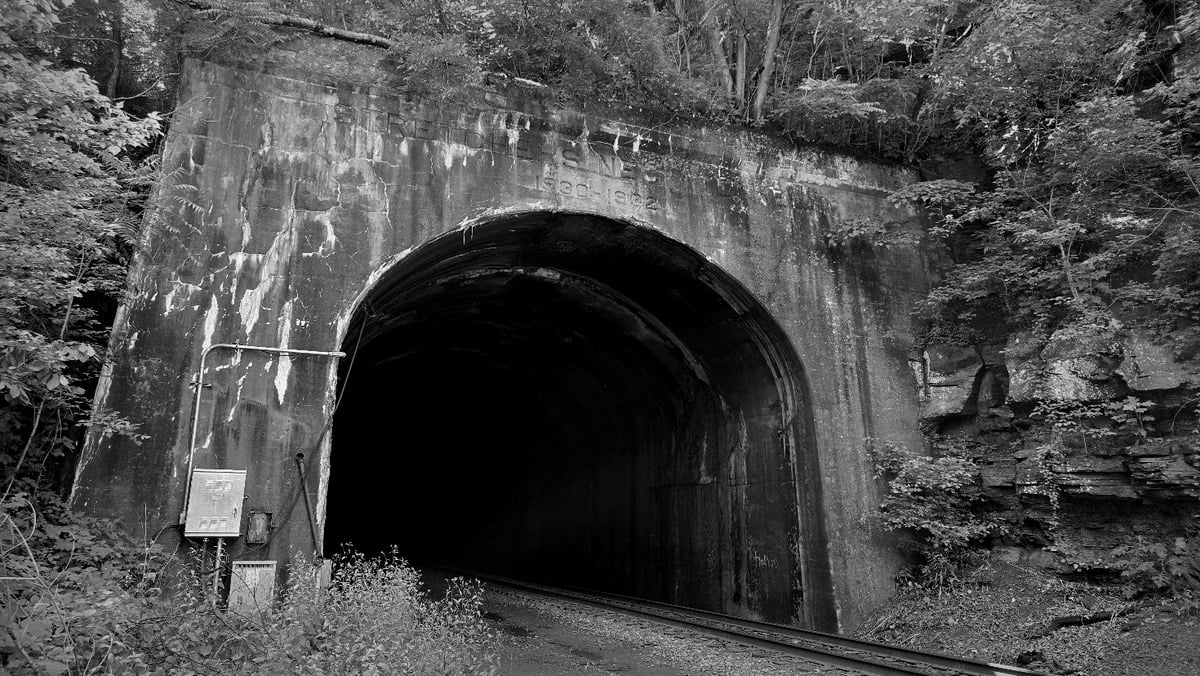
THURMOND, W.Va. — A crying baby, a wailing woman, and a headless man are said to have haunted a coal-company house in the New River Gorge in the 1930s. According to local legend, the disturbances grew so persistent that the coal company eventually demolished the building.
The Haunted House of Red Star is one of several ghost stories tied to the former mining and railroad communities of New River Gorge National Park and Preserve. Others involve a mysterious apparition in a railroad tunnel, a presidential premonition, and a wandering light linked to a Civil War killing.

Historian and professional storyteller Jodi French-Burr, a former park ranger who knows the gorge intimately, says the stories reflect the region’s history and the enduring appeal of the unexplained.
“If those walls, if those lands, if those landscapes—if they could talk, what would they tell us?” French-Burr said in an interview with West Virginia Explorer.
More than 100 industrial communities once occupied the gorge. Many have disappeared, leaving foundations, cemeteries, and abandoned railroad corridors that provide settings for stories passed down through generations of residents.
The Haunted House of Red Star
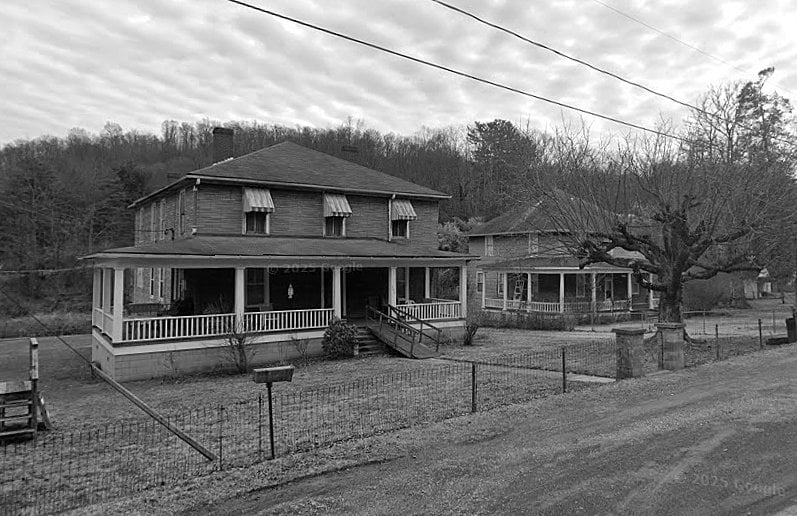
According to the Red Star legend, a family moved into Company House No. 24 in the 1930s after the father found work in a nearby coal mine.
On their first night, they reportedly experienced unexplained disturbances. They heard a woman crying and a baby wailing. Later accounts described footsteps approaching the house and the apparition of a headless man.
When the family questioned neighbors, French-Burr said they learned of a tragedy that had occurred decades earlier.
A young miner, she said, had reportedly become involved in organizing workers during a period of labor unrest. After company security men began disrupting meetings, he fled into the surrounding woods.
The men allegedly visited his home, where his wife and infant child remained. During the confrontation, the woman was shot and killed. The miner never returned, though a headless body was later discovered in the woods, and residents believed it might have been his.
According to the story, the family’s spirits haunted the house for decades. French-Burr described the apparitions as “a wailing woman, a crying baby” and a figure resembling a headless man.
The legend concludes when the coal company, after repeated complaints, demolished the house because of the disturbances. The hauntings reportedly ended with its destruction.
French-Burr has recounted the tale often during storytelling hikes near Thurmond. There, remnants of coal communities provide a setting for discussing the region’s industrial past.
The Ghost of Stretcher’s Neck
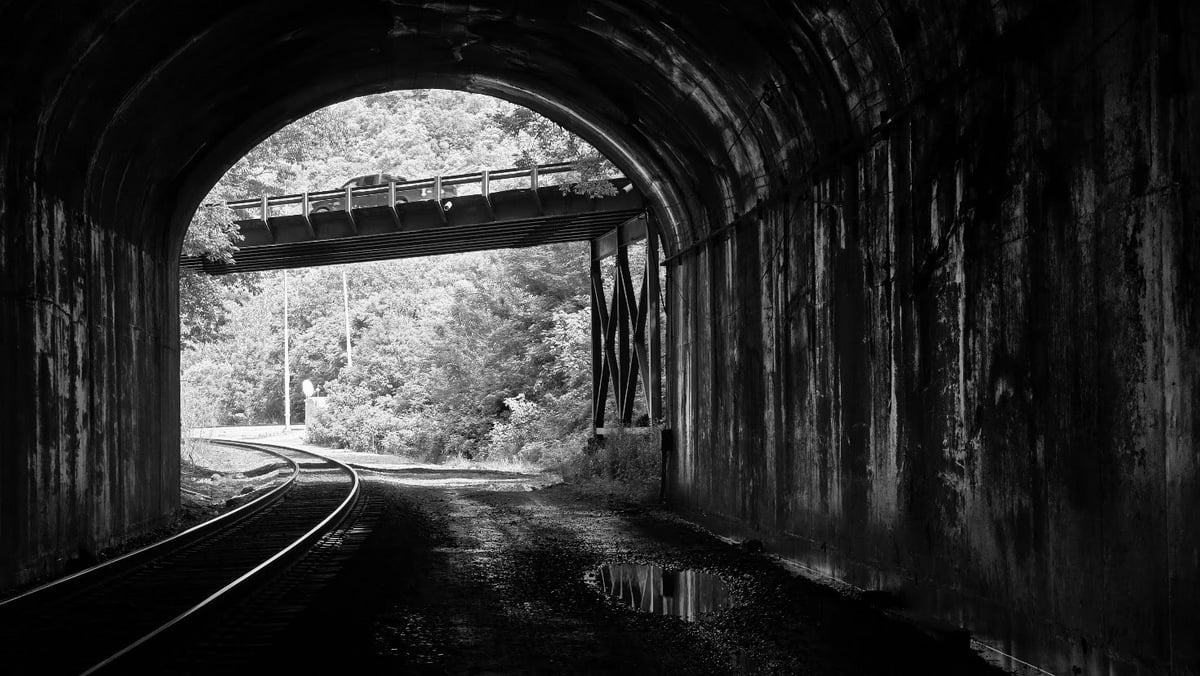
On the New River near Prince, a railroad tunnel is linked to a ghost story about two young men who fall in love with the same woman. It recounts a romantic rivalry that ends in tragedy, and a ghost is now said to linger near the tunnel, searching for a lost companion.
French-Burr described it as “kind of a love triangle kind of thing,” though she acknowledged she did not recall every detail of the story.
Folklore author Jannette Quackenbush cites an account titled Jim, The Ghost of Stretcher’s Neck, attributed to Basil W. Duke in an 1892 volume of Fetter’s Southern Magazine and identifies later references in the Beckley Post-Herald in 1970 and in Goldenseal magazine in 1998.
This suggests the story circulated long before contemporary paranormal tourism, though no one has yet independently examined the original publications.
The tunnel’s narrow confines and the railroad’s history certainly provide a setting for a legend that has endured through multiple retellings.
McKinley Rock and a presidential omen
Along the former railroad corridor near Thurmond, a sandstone formation is said to resemble President William McKinley’s profile.
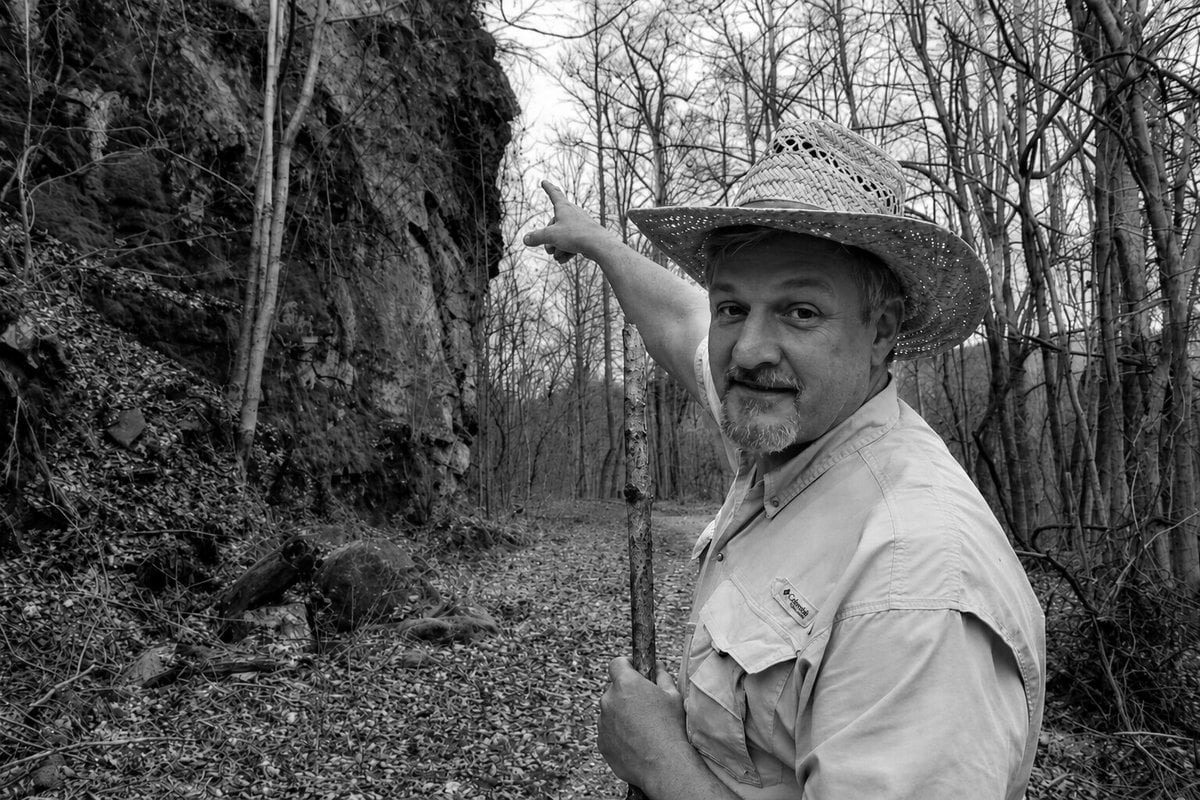
According to the legend, railroad workers blasting a hillside in 1901 exposed the formation. Some interpreted its resemblance to the president as a warning of impending tragedy.
McKinley was shot on Sept. 6, 1901, in Buffalo, New York, and died eight days later.
When news of the shooting reached the railroad workers, the story goes, some believed the rock had foretold the event.

“But according to the legend,” French-Burr said, “a lot of people at the rock thought this was some sort of sign.”
The chronology remains uncertain. A National Park Service historical study dates the construction of the Rend Branch to between 1901 and 1904, while a separate visitor guide dates it to 1906. Neither source establishes when the rock formation was exposed.
McKinley Rock remains associated with the old railroad corridor, now part of the Rend Trail. The National Park Service has closed the trail for rehabilitation, with reopening expected around December 2027.
The Sandstone ghost light
Near Sandstone Falls, a Civil War-era killing has become linked to a mysterious light said to appear over the New River.
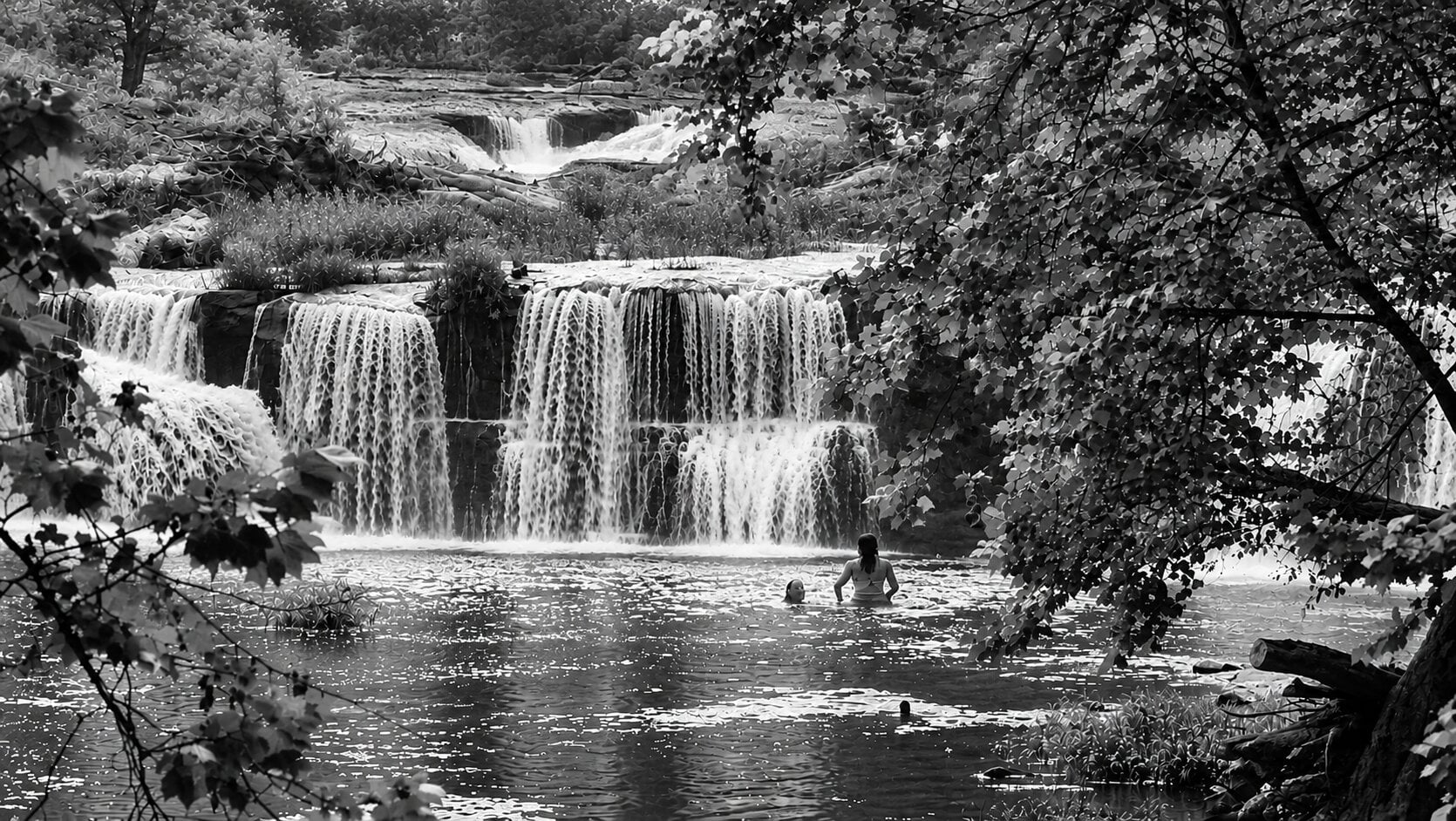
Samuel Richmond was part of a family that operated a ferry near the falls. A 2023 historical marker records that Richmond was murdered in 1863 amid harassment of the pro-Union family by Confederate sympathizers.
A supernatural version of the death and haunting appears in Rosemary Ellen Guiley’s 2014 book The Big Book of West Virginia Ghost Stories.
According to her account, a wandering light represents Richmond’s spirit—still crossing the river long after his death.

Yet a 2024 investigation raised questions about the ghost-light tradition’s origins. Writing in Skeptical Inquirer, Daniel A. Reed described interviewing Sandstone residents who knew about Richmond’s killing but did not recognize the supernatural story.
According to Reed, one anonymous source confirmed the killing, but not the light: “That story is pretty common around here, but no—nothing about no light.”
Reed also noted that Guiley’s account dated the killing to 1865, whereas the historical marker identifies 1863. Reed’s investigation shows how a documented tragedy can become tied to supernatural claims whose origins are hard to establish.
Why the stories endure
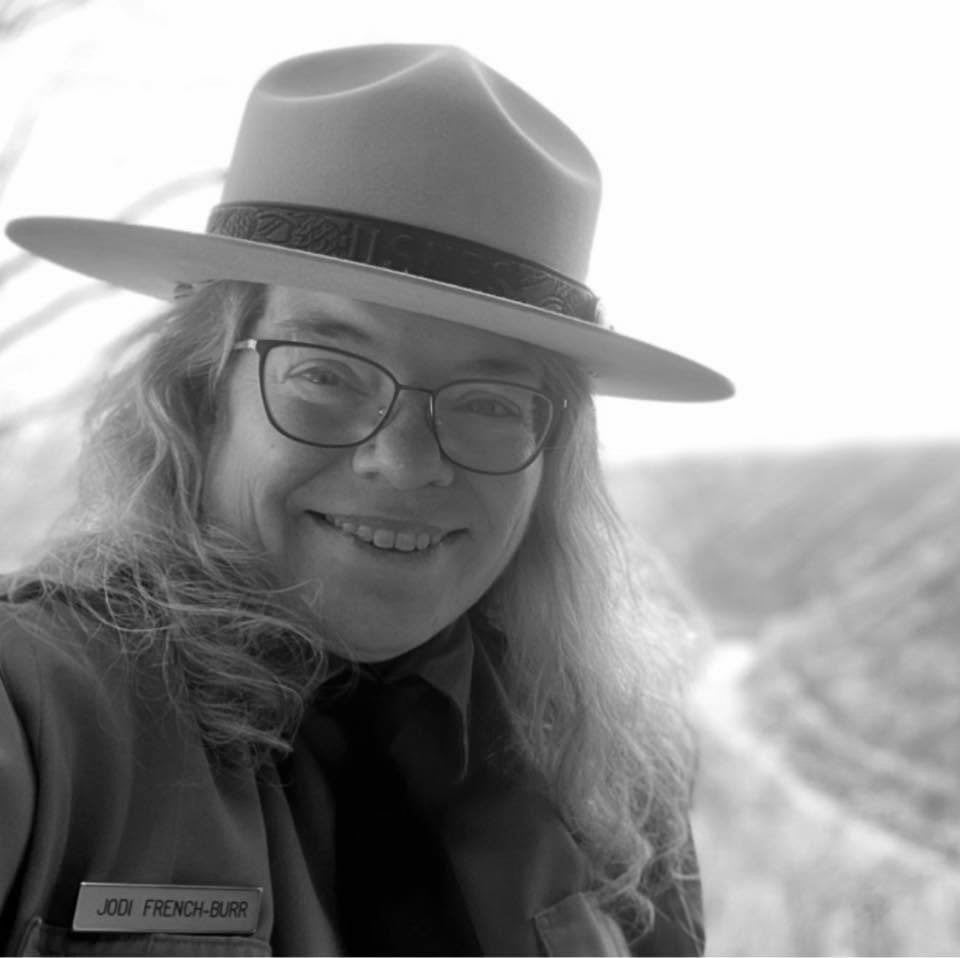
French-Burr believes ghost stories appeal partly because they make familiar places seem mysterious. During a nighttime storytelling hike near Thurmond, she told visitors about a phantom railroad wreck.
Later, as the group returned through the woods, a real train passed nearby. Its noise and vibrations frightened a child who believed the train from the story had appeared.
“It was a real train, you know, but the timing of it was spooky,” French-Burr recalled.
On another occasion, she finished telling a story about a wildcat just as a bobcat called from the surrounding forest.
Such experiences show how darkness, setting, and expectation can shape how people interpret ordinary events.
French-Burr also points to the oral traditions that have preserved ghost stories in Appalachia, noting that similar traditions exist throughout the world.
“There’s a lot of power in the spoken word through storytelling,” she said.