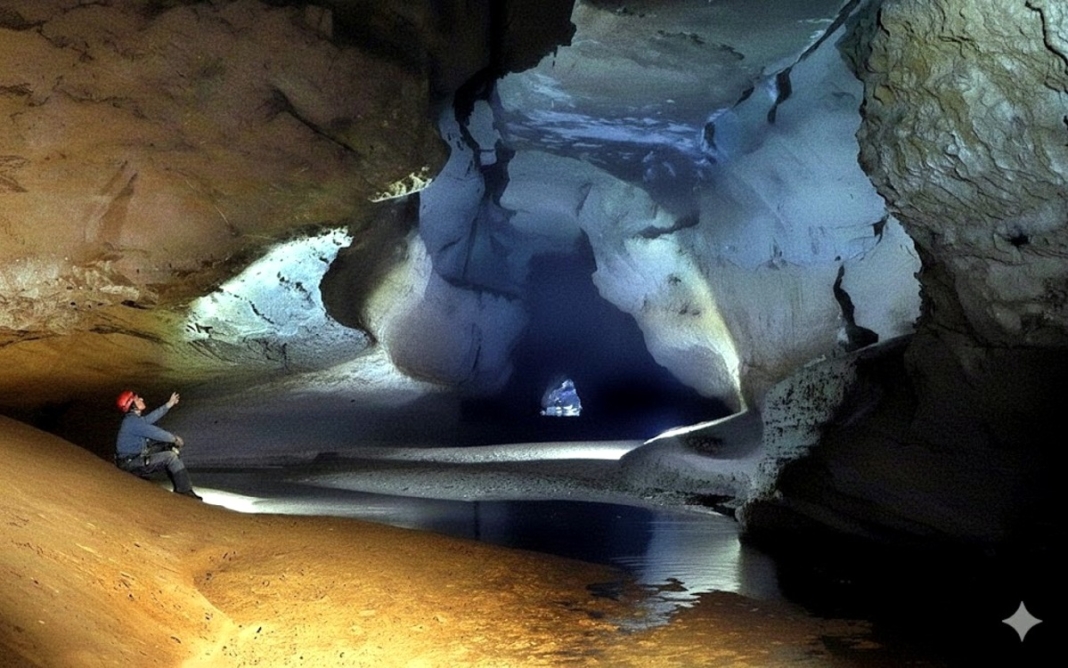

LEWISBURG, W.Va. — Beneath the bluegrass pastures of eastern West Virginia lies one of the most extensive cave networks in North America—a hidden landscape of winding tunnels, underground streams, and limestone formations that attract explorers, scientists, and adventure-seeking travelers.
West Virginia is home to thousands of documented caves, many concentrated in the valley of the Greenbrier River, where thick limestone layers have created ideal conditions for underground passageways. Geology has made it a focal point for both recreational caving and scientific study.
“Greenbrier County, where I have lived for the past 25 years, has over 1,600 caves,” said Bill Balfour, a longtime caving expert. “Some of the longest caves in the world are located in this county. I have a 21-mile-long cave under my farm, and it’s only the fifth longest in the county.”
Perhaps best known as the home of The Greenbrier and mineral springs resorts that have long attracted health-conscious tourists, the valley is becoming more widely known for the attraction most travellers don't see—a subterranean world full of secrets.
A landscape shaped by limestone
The caves form within what geologists call karst terrain—a landscape shaped by the slow dissolution of limestone over millions of years. The result is rolling topography marked by sinkholes, disappearing streams, and extensive underground drainage systems.
“The Greenbrier Valley is an area of rather thick, flat-lying limestone,” Balfour said. “This type of strata forms a rolling open topography characterized by sinkholes and the lack of surface streams. Drainage is underground in cave streams.”
This geological setup not only creates dramatic underground scenery but also explains why surface water is scarce in some areas, while extensive cave systems lie just beneath the ground.
Caves for beginners and experienced explorers
West Virginia offers a range of caving experiences, from commercial show caves designed for the general public to guided wild cave tours and advanced exploration through organized caving clubs.
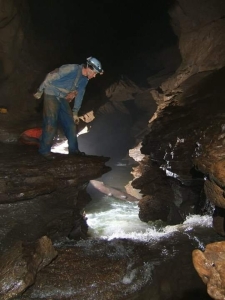
“As far as commercial caves, West Virginia currently has three,” Balfour said. “Each has its own unique place.”
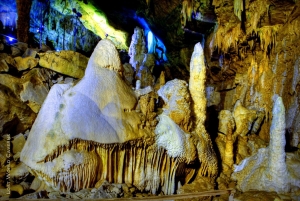
Lost World Caverns, located near Lewisburg, is among the most popular. Known for its large chambers and heavy mineral decoration, the cave provides guided tours suitable for visitors with no prior experience.
“Probably the nicest is Lost World near Lewisburg,” Balfour said. “It is a heavily decorated, beautiful cave. In addition, they offer wild tours to sections that are not open to the normal tourist.”
For many visitors, a commercial cave tour serves as an introduction before moving on to more challenging experiences, such as local "grottos" or organized caving clubs affiliated with the National Speleological Society.
Grottos provide training and community
Grottos play a key role in introducing newcomers to safe cave exploration while also building a strong social network among members.
“A grotto is the gateway for new beginners to learn how to be safe while underground,” Balfour said.
Members receive training in vertical climbing, cave surveying, rescue techniques, and the use of equipment. Proper preparation is essential, Balfour noted, including understanding what clothing and boots are appropriate for underground conditions.
“Knowing what clothes and boots to wear is very important for comfort and safety,” he said.
Beyond safety training, grottos foster a sense of community among people from diverse backgrounds.
“A university professor, a car mechanic, and a nurse might make up a close-knit group of folks who enjoy caving together,” Balfour said. “Cavers are a somewhat different breed of people, and grottos offer a place to accommodate that diversity.”
Safety is critical underground
While caves offer unique adventure opportunities, experienced cavers stress that preparation and caution are essential, particularly in West Virginia’s flood-prone karst systems.
“The most important thing about caving is to know your limitations and those that accompany you,” Balfour said. “Make sure you have the proper equipment. Always tell someone where you’re going and have a contact person with an anticipated return time.”
Weather conditions can quickly change a safe trip into a dangerous one.
“Always check the weather,” he said. “Some caves can flood very easily, and you don’t want to exit a cave to find two feet of fresh snow. If the weather is iffy, it’s better to abort and be safe. The cave will still be there next time.”
Discovery is still driving exploration
Despite decades of exploration, discoveries continue to be made beneath West Virginia’s hills.
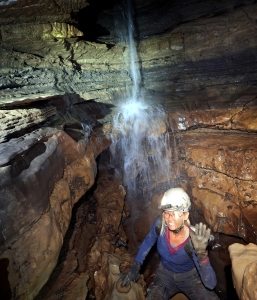
“I’ve found miles of virgin cave passage,” Balfour said. “That’s the exciting part — being the first person to ever see something on or under this earth.”
Each cave presents different challenges, from expansive chambers filled with formations to narrow crawl spaces and silent underground streams. For many explorers, the appeal lies as much in the mystery as in the physical challenge.
A unique destination for adventure travelers
With its extensive cave systems, accessible commercial tours, and strong network of experienced cavers, West Virginia has become a premier destination for underground exploration in the eastern United States.
Whether visitors are seeking a guided introduction or a more technical adventure, the state offers options for nearly every experience level. Grottos, tour operators, and conservation-minded cavers work together to make exploration both safe and sustainable.
“Cavers are a family,” Balfour said. “You will make many new friends and memorable shared experiences.”
For travelers looking beyond traditional outdoor recreation, West Virginia’s caves offer a rare opportunity to explore a hidden landscape shaped by time, water, and stone—one that remains largely unseen, even in a state known for its rugged beauty.
West Virginia caves at a glance
- 4,000+ documented caves statewide
- 1,600+ known caves in Greenbrier County alone
- Home to some of the world’s longest limestone cave systems
- Formed in karst terrain with sinkholes, underground streams, and disappearing surface water
- Three commercial (show) caves currently operate in West Virginia
🧭 Where West Virginia caves are most concentrated
- Greenbrier County — the highest known cave density in the state
- Monroe County — extensive karst and mapped cave systems
- Pendleton County — complex underground drainage
- Pocahontas County — remote caves and rugged terrain
- Preston County — northern karst formations
🛠️ How people explore West Virginia caves
- Commercial cave tours for beginners and families
- Guided wild cave tours are offered at select locations
- Grottos (organized caving clubs) for training and safe exploration
- Opportunities range from walk-through chambers to technical vertical caves
⚠️ Caving Safety: Know before you go
- Always tell someone where you are going and when you will return
- Check weather forecasts carefully: caves can flood rapidly
- Wear a helmet, sturdy boots, and appropriate clothing
- Carry at least three independent light sources per person
- Know your personal limits and experience level
- When in doubt, postpone the trip: the cave will still be there
🌄 Best time to visit
- Year-round, depending on conditions
- Spring and fall are the most popular seasons for stable temperatures
- Extra caution is advised during heavy rain, snow, or freeze–thaw cycles
For more information on visiting the Greenbrier Valley, contact the Greenbrier Valley Convention and Visitors Bureau.
Sign up to receive a FREE copy of West Virginia Explorer Magazine in your email weekly. Sign me up!