
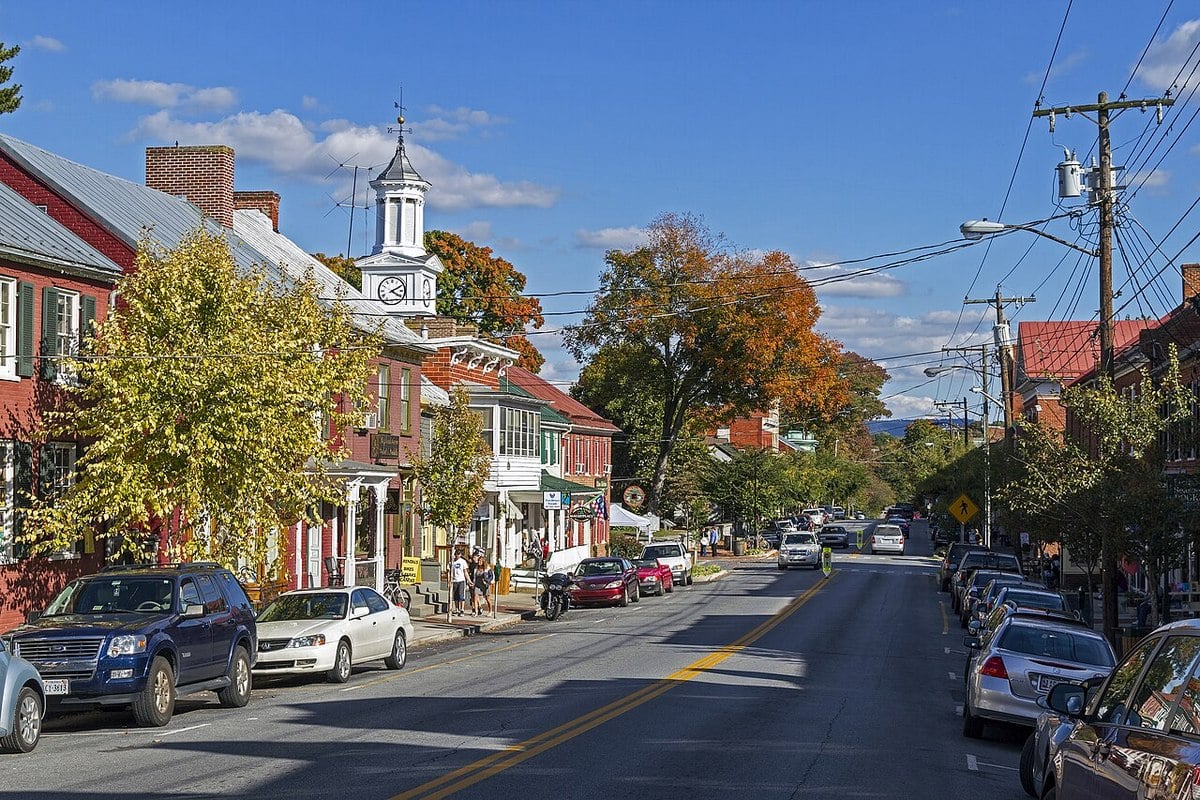
SHEPHERDSTOWN, W.Va. — About an hour’s drive from Washington, D.C., a West Virginia university will mark the 30th anniversary of a festival founded to challenge stereotypes about Appalachia and introduce audiences to the region’s cultural traditions.
Shepherd University will celebrate its 30th Appalachian Heritage Festival Sept. 24-27 with music, dance, history, workshops, and other events on campus and throughout historic Shepherdstown. The university says all festival events will be free and open to the public.

“For 30 years the Appalachian Heritage Festival has celebrated our region’s cultural identity and the living traditions of Appalachia,” said Rachael Meads, the festival’s founding director, Shepherd’s director of student activities, and an instructor in the university’s Center for Appalachian Studies and Communities.
Meads founded the festival with then-Shepherd professor Linda Tate to connect people with what the university describes as the region’s authentic stories, traditions, and experiences while challenging media stereotypes and exploitative portrayals of Appalachia.
The goal remains part of Shepherd’s broader Appalachian Studies program, which states its mission as “To Tell the Appalachian Story.” The university says the program seeks to develop a fuller understanding of Appalachia through its language, lore, history, and cultural traditions, and includes the festival among several programs designed to pursue that mission.
Shepherdstown is located on the Potomac River in West Virginia’s Eastern Panhandle, about 70 miles from Washington, D.C. Shepherd promotes its proximity to the Washington and Baltimore metropolitan areas as an advantage for students, while its Appalachian Studies program says its academic and community programs are intended to help change perceptions and stereotypes about the region.
Festival returned after four-year absence
The 30th anniversary comes a year after Meads said funding problems had led her to consider ending the festival.
The event was canceled during the COVID-19 pandemic and did not return until September 2025, according to the Shepherdstown Chronicle. Meads told the newspaper that funding difficulties had led her to consider ending the festival before members of the Shepherdstown community encouraged its revival.

“We owe a lot to Experience Shepherdstown,” Meads told the chronicle before the festival returned last year. “They are responsible for bringing it back, because I was really ready to walk away.”
Meads said community members and organizations provided financial support and assistance that made the 2025 festival possible. Among those she credited were Shepherdstown Town Council member Shannon Thomas, Alma Bea Restaurant owner Mary Ellen Diaz, and storyteller Adam Booth, who Meads said urged organizers not to let the festival disappear before reaching its 30th year.
The revived festival expanded beyond the university campus into Shepherdstown, with community organizations, businesses, and donors supporting programming. Shepherd says community partnerships are again supporting the festival for its 30th anniversary.
Nearly 80 artists, writers and musicians have participated
Nearly 80 nationally recognized artists, writers, and musicians have participated in the Appalachian Heritage Festival over its three decades, according to Shepherd University.
Past participants include traditional singer and dulcimer player Jean Ritchie, bluegrass musician Ralph Stanley, West Virginia-born singer and songwriter Hazel Dickens, folklorist and musician Gerry Milnes, Piedmont blues musician John Cephas, and author Lee Smith.
Shepherd says thousands of community members, schoolchildren, and students have been introduced to Appalachian culture and West Virginia traditions through festival workshops, lectures, and performances throughout its history.
This year’s featured artists include West Virginia Vandalia Award-winning fiddler Dave Bing, author and festival co-founder Linda Tate, percussive dance scholar and choreographer Becky Hill, and Jake Blount, a recipient of the Steve Martin Banjo Prize and a Smithsonian Folkways recording artist.

The university says this year’s folklife programming will include African American contributions to the string-band tradition and the music and legacy of West Virginia’s Hammons family. Other events will include literary readings and a writing workshop, a percussive dance demonstration and documentary film, an old-time square dance, open jam sessions, and a showcase concert.
Grant supports expanded 30th anniversary festival
Shepherd says support from community partners and a grant from the Mid-Atlantic Arts Central Appalachia Living Traditions program helped expand programming for the anniversary.
The university says it has partnered with Experience Shepherdstown, Alma Bea Restaurant, the Jefferson County Convention and Visitors Bureau, Four Seasons Books, the Shepherdstown Opera House, and community donors to present the festival.
All events are family-friendly and free to attend, according to Shepherd, though pay-what-you-can donations will be accepted.
In case of rain, scheduled outdoor events, including the square dance and showcase concert, will be moved to indoor venues at Shepherd University.
The Appalachian Heritage Festival is scheduled for Sept. 24-26 in Shepherdstown.