
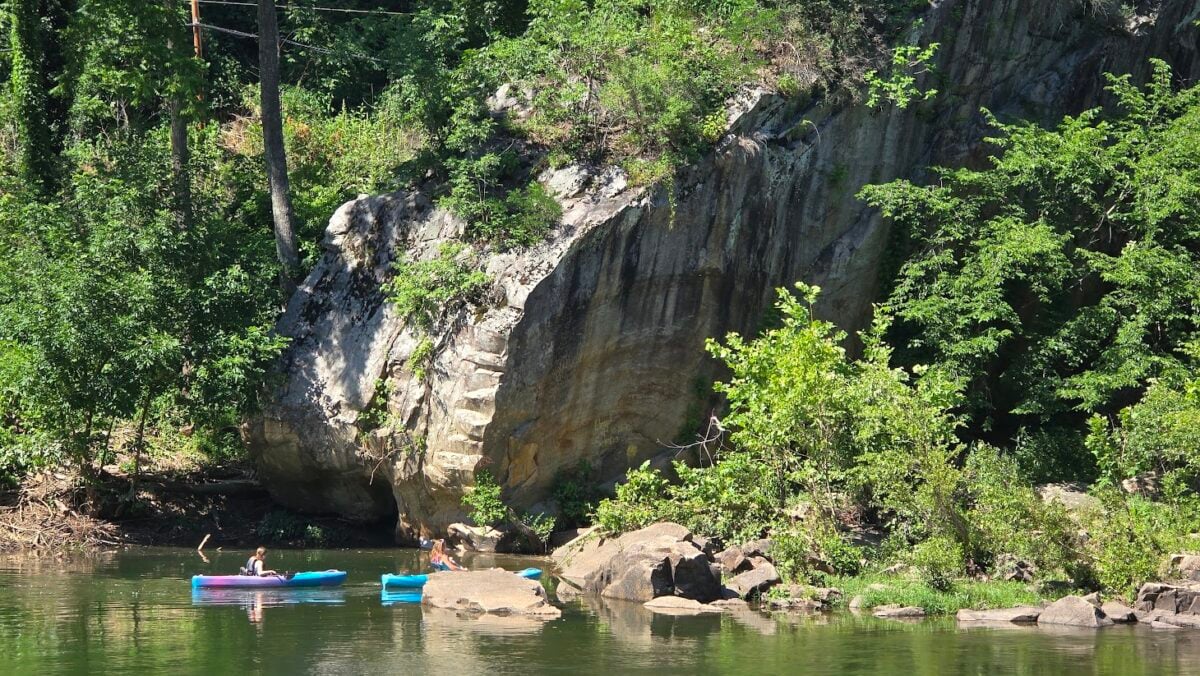
HINTON, W.Va. — Today, Big Rock is one of the best-known landmarks along the lower Greenbrier River, a towering sandstone outcrop where generations of paddlers and tubers have stopped to climb, picnic, and wade into the cool water.

For many, it’s the unofficial finish line of one of West Virginia’s favorite summer floats, just a few miles upstream from where the Greenbrier empties into the New River at Hinton. This year, the Greenbrier earned national recognition when USA Today readers named it America’s best river for tubing.

Long before it became a recreational destination, however, Big Rock was the scene of a remarkable episode that illustrates how isolated the Appalachian Mountains once were.
According to local tradition, armed militia companies encountered one another near the rock roughly a month after the Civil War had ended. Fighting elsewhere had ceased, but word had yet to reach this remote mountain valley.
No one was killed or seriously wounded. Yet the brief exchange has become one of Summers County’s most enduring stories, reminding visitors that there was a time when news traveled no faster than the rivers themselves.
A war that was already over
The Greenbrier River served as a natural highway through southern West Virginia during the Civil War, carrying soldiers, supplies, and local militia through a region where roads were scarce and settlements were widely scattered.
Historian Steve Trail says the encounter at Big Rock wasn’t a battle in the traditional sense but a small ambush involving local militia.
“There were two local militias,” Trail said. “My understanding is that they were ambushed, and there were only three or four or five people involved on each side.”
By then, however, the war had effectively ended. “The war had been over about a month, but they hadn’t gotten word back here yet,” he said. “It’s deep in the mountains, and that’s really all I know about it. Nobody was killed, to my understanding. It was just a little skirmish.”
Trail believes the event’s greatest significance isn’t military but historical.
“The war had been over about a month, and it just shows you how slow information traveled,” he said. “Today it’s instantaneous worldwide. Back then, this area was so isolated that people simply didn’t know the war had ended.”
An early history records the encounter
One of the earliest published accounts appears in James H. Miller’s History of Summers County, West Virginia, published in 1908.
Miller places the encounter near “a large rock just below Powley’s Creek” as men under Capt. Thurmond traveled down the Greenbrier River in a large canoe while others moved along the riverbank. He wrote that Capt. Garten’s company ambushed them near the rock. Although both sides fled, “no one, however, was wounded or killed.”
Miller identified Joseph Hinton, then president of the county court, and Squire Bob Saunders of Forest Hill as participants whose names could still be confirmed when the book was written.
His account differs from the local tradition preserved by Trail, placing the incident in the fall of 1864 rather than after the war’s conclusion in 1865. Whether the discrepancy reflects conflicting memories or separate events remains uncertain, but both accounts agree on the essential details: the encounter occurred near the prominent riverside landmark now known simply as Big Rock, and no lives were lost.
From isolation to industry
Ironically, the same valley that delayed news of the Civil War would soon become one of the nation’s key transportation corridors.
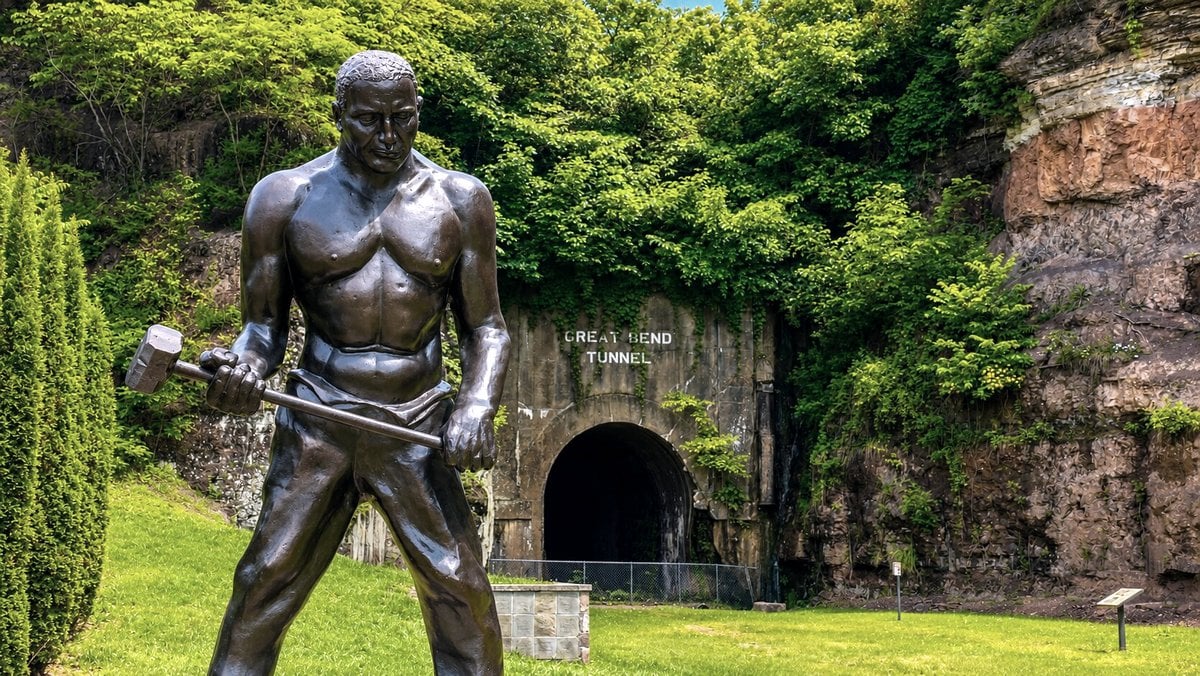
Within a decade, the Chesapeake & Ohio Railway began carving a route through the New River Gorge, forever changing southern West Virginia. Just two miles upstream from Big Rock, workers drove the famed Big Bend Tunnel through the mountain.
According to American folklore, there was a steel driver named John Henry who defeated a steam drill before collapsing and dying with his hammer still in his hand.
The railroad connected the New and Greenbrier river valleys to markets along the Atlantic coast and in the Midwest, ending much of the isolation that had once defined the region. Communities that had waited weeks for news suddenly found themselves linked by daily trains carrying passengers, freight, newspapers, and mail.
A different kind of gathering place
Today, visitors know Big Rock for far happier reasons. Situated about 4½ miles above Hinton, the sandstone formation has become one of the lower Greenbrier’s most recognizable landmarks. Families spread blankets across its broad surface, children plunge into the cool river below, and paddlers pause for lunch before finishing the final stretch to the New River.
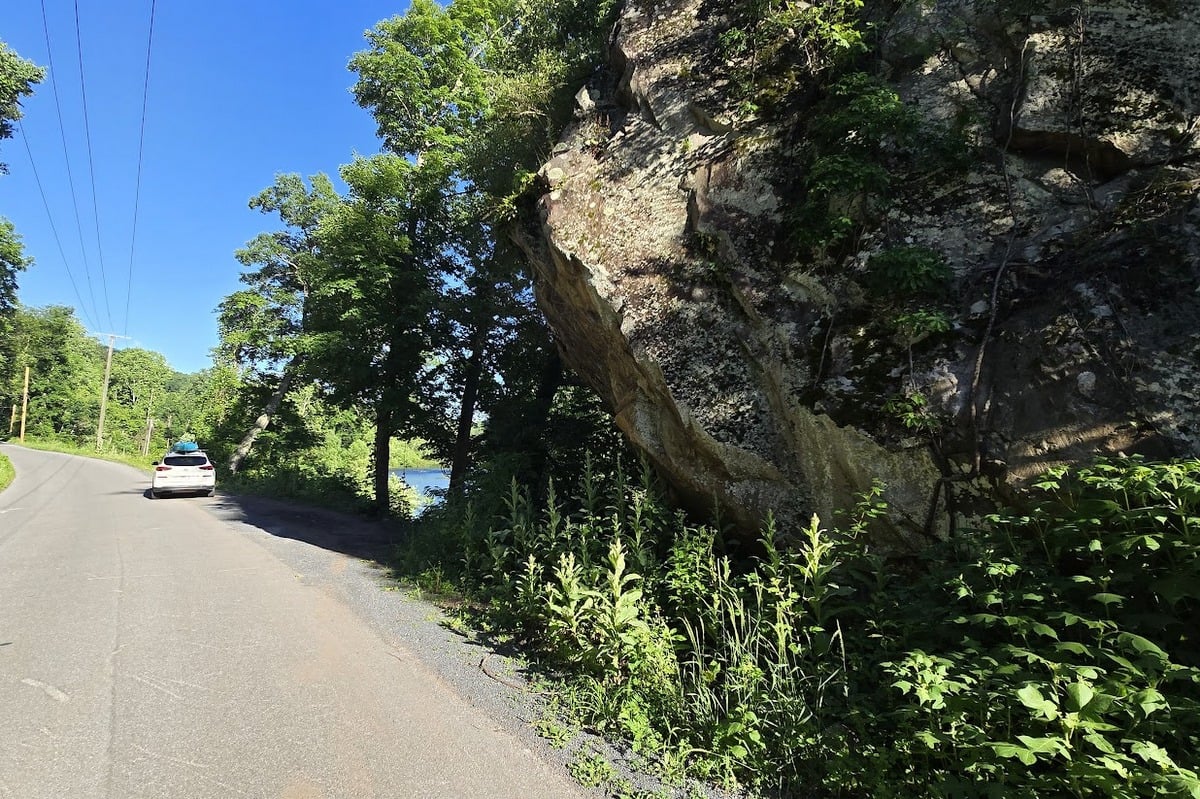
Few realize that the quiet outcrop once witnessed a brief armed encounter during one of the nation’s most turbulent periods. Yet perhaps that’s what makes Big Rock so compelling.
It is more than a favorite swimming hole or the final landmark on America’s top-rated tubing river. It is a reminder that the Appalachian Mountains once lay so far from the nation’s centers of power that history itself could arrive weeks late—a silence eventually broken by the whistle of locomotives echoing through nearby Big Bend Tunnel and by a river that continues to carry travelers, not soldiers, toward Hinton.
About Big Rock
Located approximately 4.5 miles upstream from Hinton near the mouth of the Greenbrier River, Big Rock is one of the river’s best-known natural landmarks and a favorite stop for paddlers and swimmers. The Greenbrier River was recently recognized by USA Today readers as the No. 1 river for tubing in the United States, drawing thousands of visitors each summer to its gentle current, scenic mountain valley, and clear waters.
For more information on visiting Big Rock or paddling the lower Greenbrier River, contact Explore Summers County.
Been going to summers county since 1962 we own a small lot along 4 h camp road I don’t remember every hearing about the big rock I traveled willow wood road many times over the years , thanks for enlightening me.