
CHARLESTON, W.Va. — For many travelers, spring gets all the attention when it comes to wildflowers. Yet some of West Virginia’s most spectacular wildflowers don’t arrive until summer is nearly over.

As August settles across the Mountain State, hillsides, mountain meadows, wetlands, and stream banks burst with a final wave of color. Brilliant reds, deep purples, rich golds, and delicate pinks provide nectar for hummingbirds, butterflies, native bees, and countless other pollinators as they prepare for autumn.
For visitors willing to leave the interstate behind, August may be one of the most rewarding months to explore West Virginia’s mountains.
Which wildflowers reach their peak in West Virginia during August?
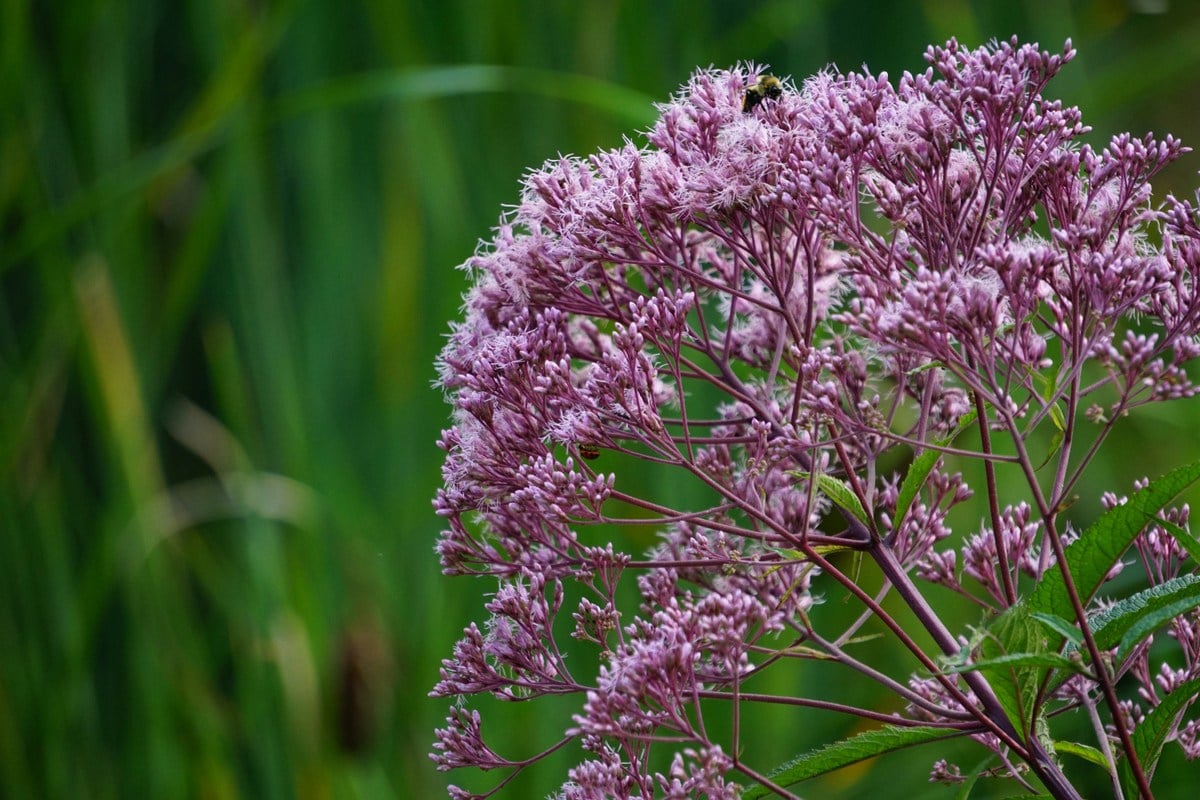
The stars of the season are impossible to miss. Towering stands of Joe-Pye weed often reach six to eight feet tall along rivers and in wet meadows. Their broad clusters of mauve-pink blossoms attract clouds of butterflies, including monarchs beginning their long southward migration.
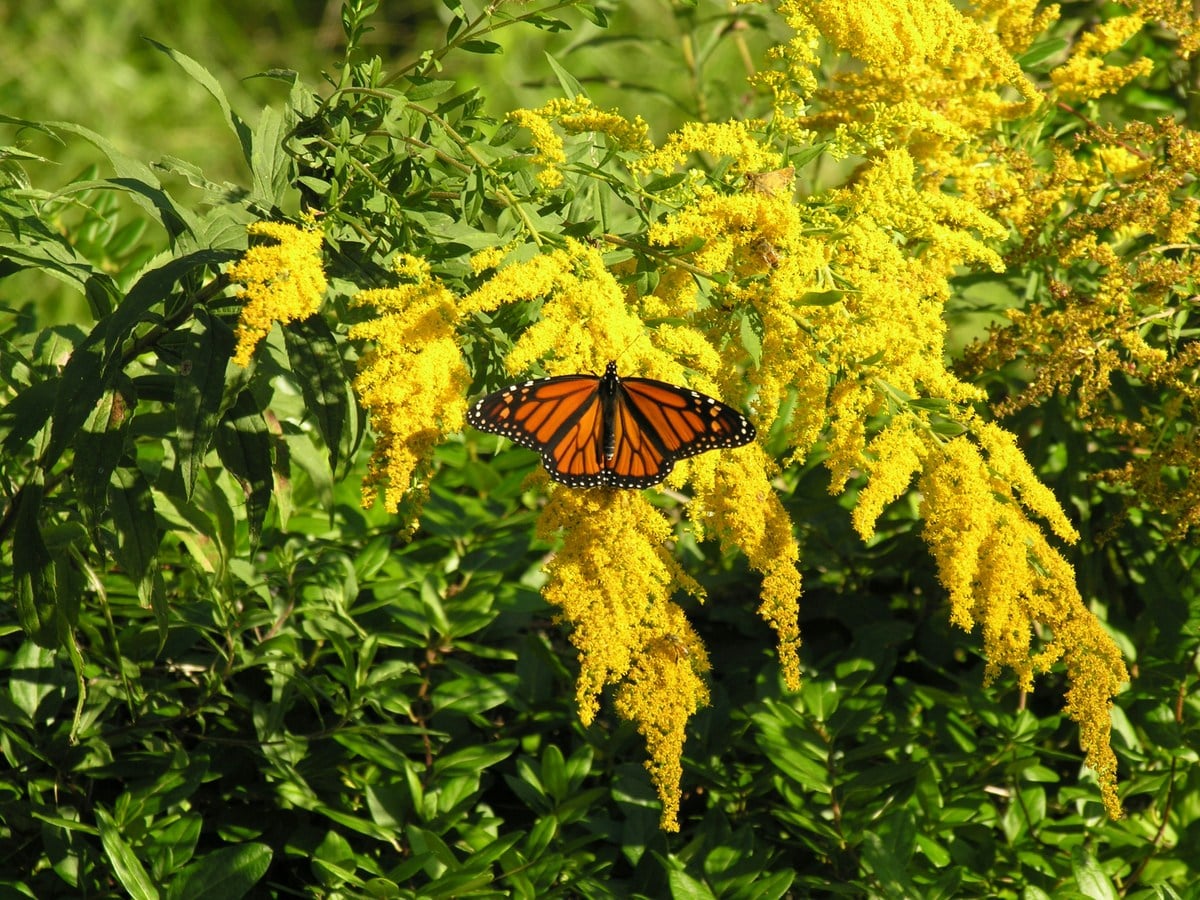
In sunny fields and along country roads, goldenrod turns entire hillsides brilliant yellow. Often blamed for seasonal allergies, goldenrod is actually innocent; the true culprit is usually ragweed, which flowers at the same time but relies on wind rather than insects to spread its pollen. As many as 30 species may be found in the state.
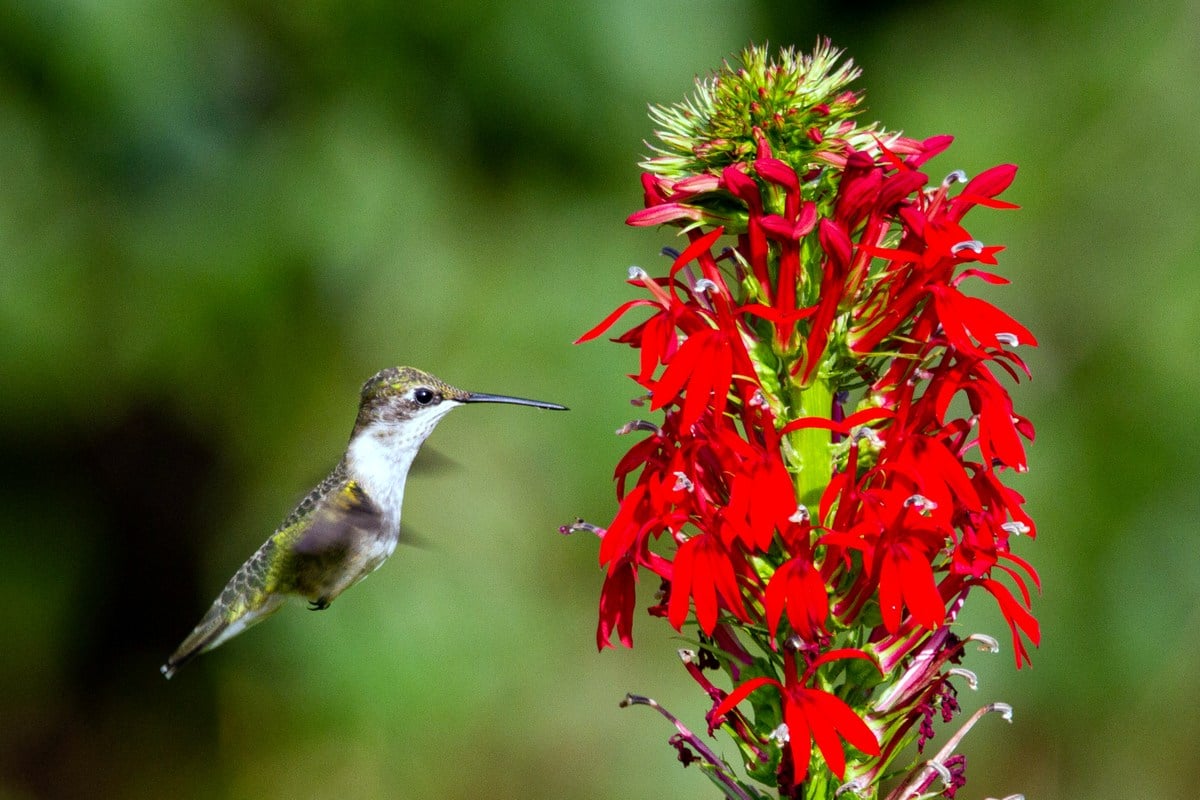
Perhaps no August flower captures attention more dramatically than the vivid scarlet cardinal flower. Growing beside cool mountain streams and seeps, it bears brilliant blossoms that seem almost too bright to be natural. Hummingbirds depend heavily on its nectar-rich flowers in late summer.
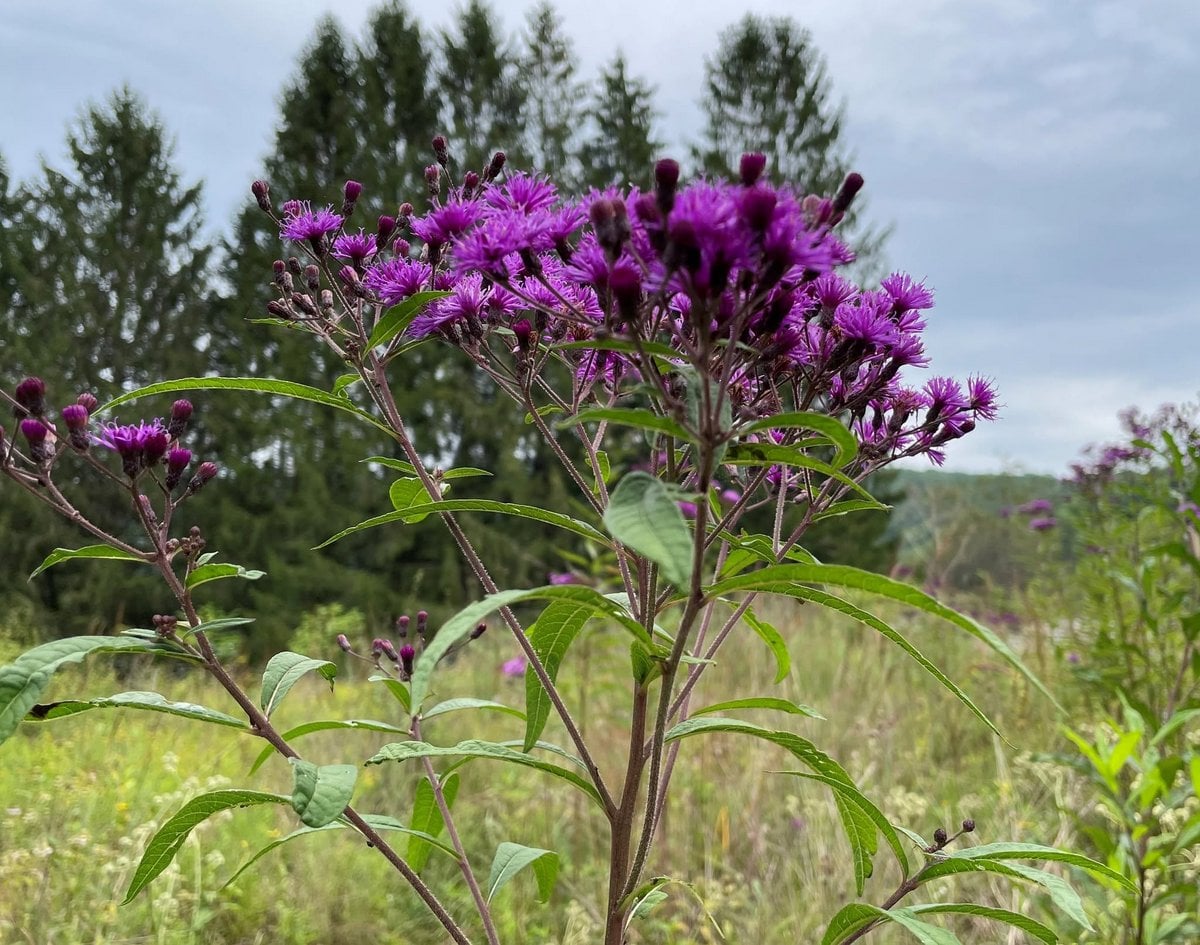
With its brilliant purple flower clusters rising well above surrounding grasses, ironweed is among the most eye-catching wildflowers of a West Virginia August. Blooming from late July through September, it thrives in moist meadows, streambanks, and roadside ditches, where it often grows beside Joe-Pye weed and goldenrod in sweeping displays of purple and gold.
Together, these blooms transform much of West Virginia into one of Appalachia’s finest late-season wildflower destinations.

Where are the best places to see August wildflowers?
One of the best places to experience the display is the high country of the Monongahela National Forest. Mountain meadows around Dolly Sods Wilderness, Canaan Valley, and Cranberry Glades Botanical Area offer mosaics of late-blooming flowers unlike almost anywhere else in the central Appalachians.
Elsewhere, roads winding through the Greenbrier Valley, the Ohio Valley, the New River Gorge National Park and Preserve, and the rolling farmland of the state’s eastern counties reveal colorful roadsides where native flowers flourish.
Why are native wildflowers important for pollinators?
Many West Virginia communities are also embracing native landscaping by expanding pollinator gardens. Planted with regional wildflowers rather than ornamental imports, these gardens provide critical habitat for bees, butterflies, moths, and hummingbirds while offering residents and visitors colorful places to enjoy throughout the growing season.
Scientists say these native plants play an increasingly important role in supporting pollinator populations that have declined across North America. By choosing native species adapted to Appalachian soils and climate, homeowners can create gardens that are both beautiful and ecologically valuable.
Tips for photographing West Virginia’s late-summer blooms
For photographers, August offers ideal conditions. Early morning brings cool temperatures, soft light, and butterflies resting on dew-covered blossoms before they become active later in the day. Evening offers equally dramatic opportunities as golden sunlight sweeps across mountain meadows filled with wildflowers.
“Late summer is one of West Virginia’s most underrated seasons,” says West Virginia Explorer publisher David Sibray. “Visitors often think the state’s best colors arrive in October, but August delivers an entirely different kind of beauty. The mountains are alive with flowers, butterflies, hummingbirds, and some of the richest landscapes you’ll see all year.”
Whether exploring a quiet country road, hiking through a high-elevation meadow, or simply stopping beside a mountain stream, travelers will find that West Virginia’s final burst of summer color is well worth seeking before autumn’s annual show begins.
Learn more: Readers interested in growing native wildflowers or creating pollinator-friendly landscapes can find planting guidance and other resources from the West Virginia Division of Natural Resources’ Native Plants and Sources page.
I was just in the Canaan valley area and the wild flowers were beautiful. I was fishing but had to stop a few times just to get a picture of the beautiful flowers!