
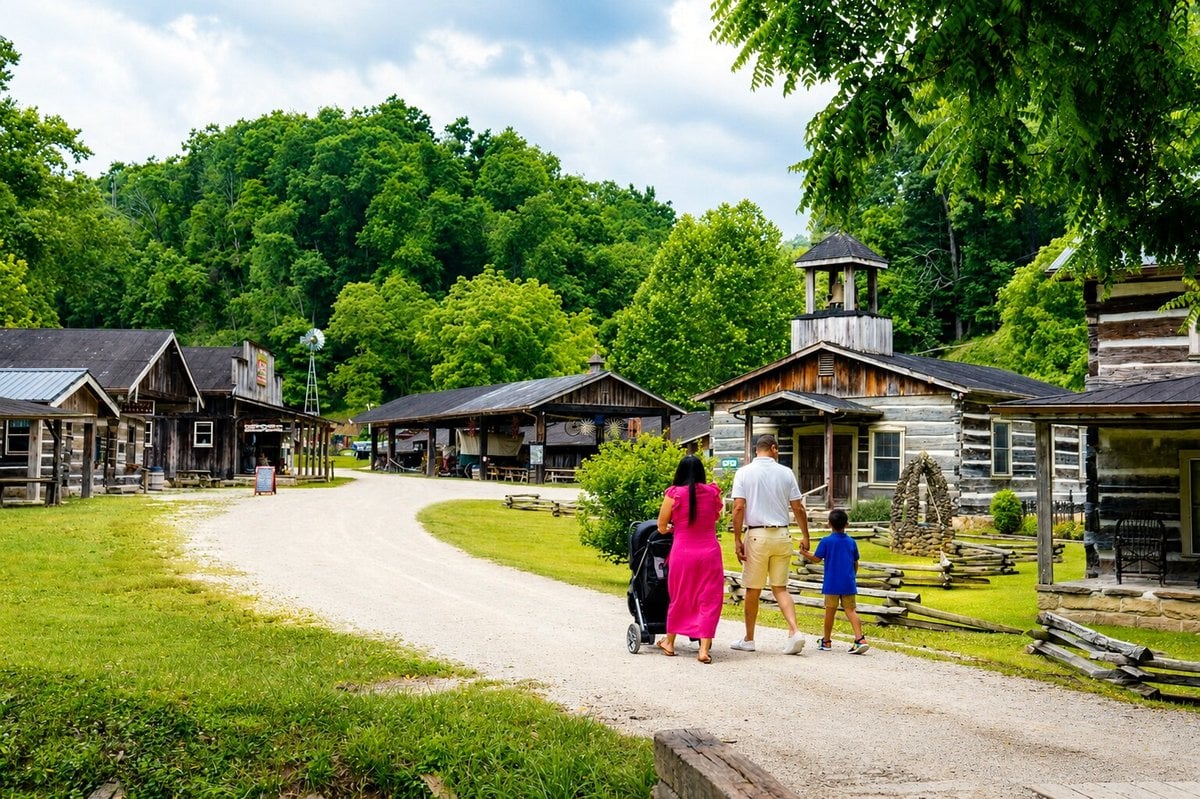
HUNTINGTON, W.Va. — Few travelers expect to find West Virginia’s only Smithsonian Institution affiliate tucked into the hills outside of one of its largest cities. Yet Heritage Farm Museum and Village has become one of Appalachia’s most distinctive destinations, combining seven museums, an interpretive 19th-century village, artisan demonstrations, wildlife encounters, mountain biking, zip lines and an ambitious year-round snow park now under construction.

Located just minutes from Interstate 64, Heritage Farm draws families, history enthusiasts and outdoor adventurers from across West Virginia, Ohio, Kentucky and beyond. For millions of people living within a few hours’ drive in cities such as Charleston, Lexington, Cincinnati and Columbus, it offers an easy weekend getaway that blends Appalachian history with hands-on experiences rarely found in a single destination.

Everything revolves around what Heritage Farm staff call its “Four As”—antiques, artisans, animals, and adventure, says R.L. Ely, outreach coordinator and adventure park manager. “We want to tell the story of Appalachia,” he says.
Unlike many museums, Heritage Farm encourages visitors to experience Appalachia rather than simply read about it. Guests can explore museums in the morning, watch traditional crafts come to life in the afternoon, meet native wildlife, and finish the day crossing suspension bridges high through the forest canopy or racing down mountain bike trails.
A family vision becomes one of Appalachia’s most unusual attractions
Heritage Farm began with Mike and Henrietta Perry, who purchased a historic farm outside Huntington in 1973. Their shared appreciation for Appalachian history and craftsmanship gradually evolved into a much larger vision—preserving the stories of ordinary Appalachian people by creating a living museum where history could be experienced rather than simply observed.
Mike Perry, a lawyer active in banking and public service, believed Appalachia’s greatest resource was its people.
“Dad would often say, ‘There’s genius in these hollers, but many people don’t get to earn a living in what God created them to do because of our economic challenges,'” recalls his son, Audy Perry, now Heritage Farm’s executive director. “So when you do tap into what that person is passionate about, it’s amazing.”
The family transformed the property into an interpretive 19th-century Appalachian village complete with a church, general store, one-room schoolhouse, and other historic structures reflecting everyday life throughout the region.
Heritage Farm first welcomed the public during a spring festival in 1996. Today it welcomes thousands of visitors each season, with school groups, families, and travelers making the museum one of the Huntington area’s leading heritage attractions.
The museum remains a multigenerational family endeavor. Alongside Audy Perry, his daughter, Rebekah Perry Franks, has expanded the organization’s focus on native wildlife and environmental education.
West Virginia’s only Smithsonian Institution Affiliate
One distinction immediately sets Heritage Farm apart from every other museum in the state: it is West Virginia’s only Smithsonian Institution Affiliate.
The affiliation recognizes museums that meet rigorous professional standards while collaborating with one of the world’s most respected museum organizations. At Heritage Farm, however, the emphasis remains firmly on Appalachia itself.
“It is a Smithsonian affiliate, so that means it has lots of things,” Perry says. “Things are nice, but people make the difference. What makes Appalachia awesome is its people, and so it’s a celebration of those people who came before us. It’s important to understand where you’ve been, so you can understand where you’re headed.”
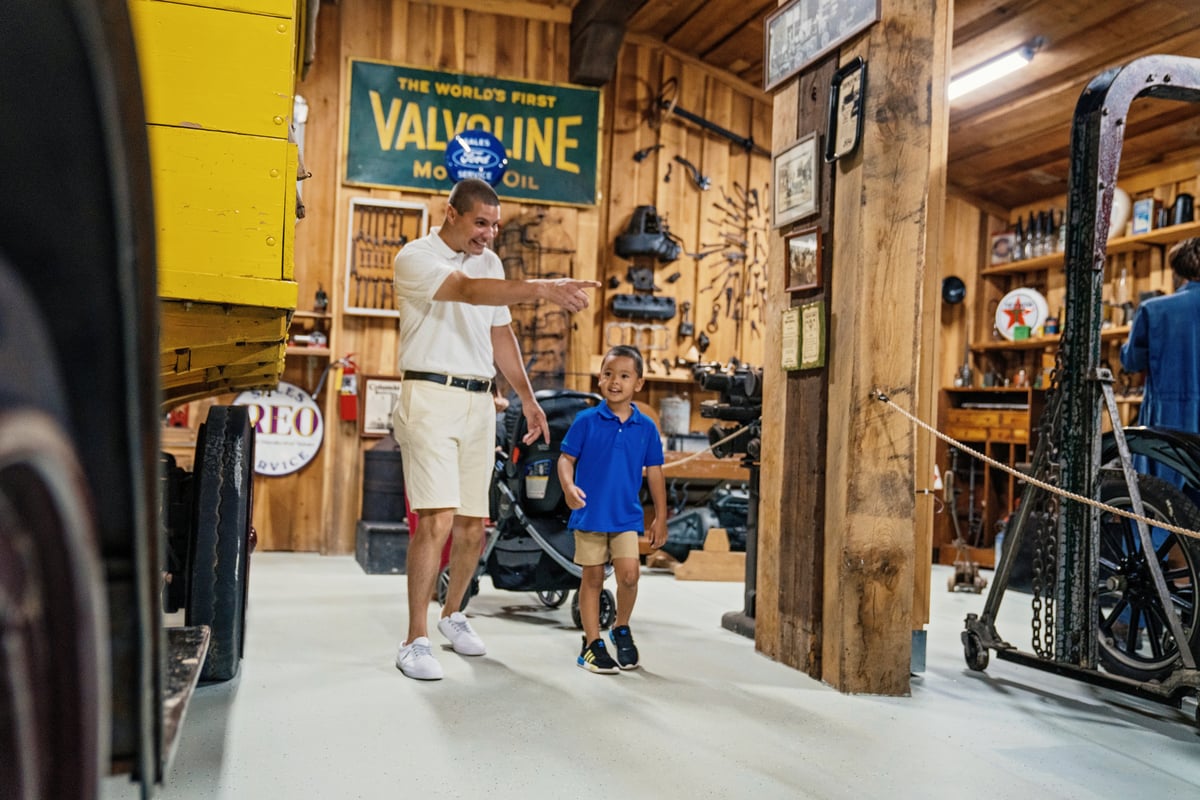
Spread throughout seven museums, visitors encounter the story of Appalachian life through transportation, communication, agriculture, industry, technology, and community development. Rather than telling isolated stories, the exhibits weave together the evolution of Huntington and the broader Appalachian region.
Many artifacts came from Mike Perry’s lifelong collecting efforts. Among his favorite acquisitions is a rare 1908 electric truck, accompanied by an extensive collection of historic washing machines and other innovations demonstrating how everyday life changed over the decades.

“Dad always wanted to see things work,” Perry says. “He wanted to see them come to life before he put them in a museum.”
Railroad history receives special attention, reflecting Huntington’s origins as a city founded by railroad entrepreneur Collis P. Huntington. Visitors can also see an original city map along with Huntington’s suitcase and journal, helping connect the museum’s broader Appalachian story to the city’s remarkable beginnings.
“Not that the museums repeat, but there are pieces throughout, so that way people get the whole story no matter where they are,” Ely says.
Even longtime staff members continue making discoveries. “People are like, ‘What’s your favorite thing?’ Whatever the next thing I see for the first time is,” Ely says. “This is my sixth year working here, and I still find new stuff all the time.”
Traditional Appalachian crafts remain alive
Heritage Farm isn’t simply a place to view historic objects behind glass. Visitors can watch many of the skills that once sustained Appalachian communities continue to be practiced today.
Blacksmiths, potters, basket weavers, broommakers, fiber artists, tinsmiths and wire artists regularly demonstrate traditional techniques while creating works available for purchase.
“We have a wide variety of incredibly talented people who do things that are kind of in the now but also what they would have done in earlier Appalachia,” Ely says.
Guests can join guided tours, participate in classes when offered, and explore an artisan center featuring a working printing press, handmade quilts, maker spaces, dining options, and gift shops celebrating regional craftsmanship.
Wildlife helps tell Appalachia’s story
The Perry family eventually expanded Heritage Farm’s mission beyond people alone.
“Mom and Dad celebrated the Appalachian people, and then my daughter came along and said, ‘Well, the people are awesome, but so are the flora and fauna,'” Perry says.
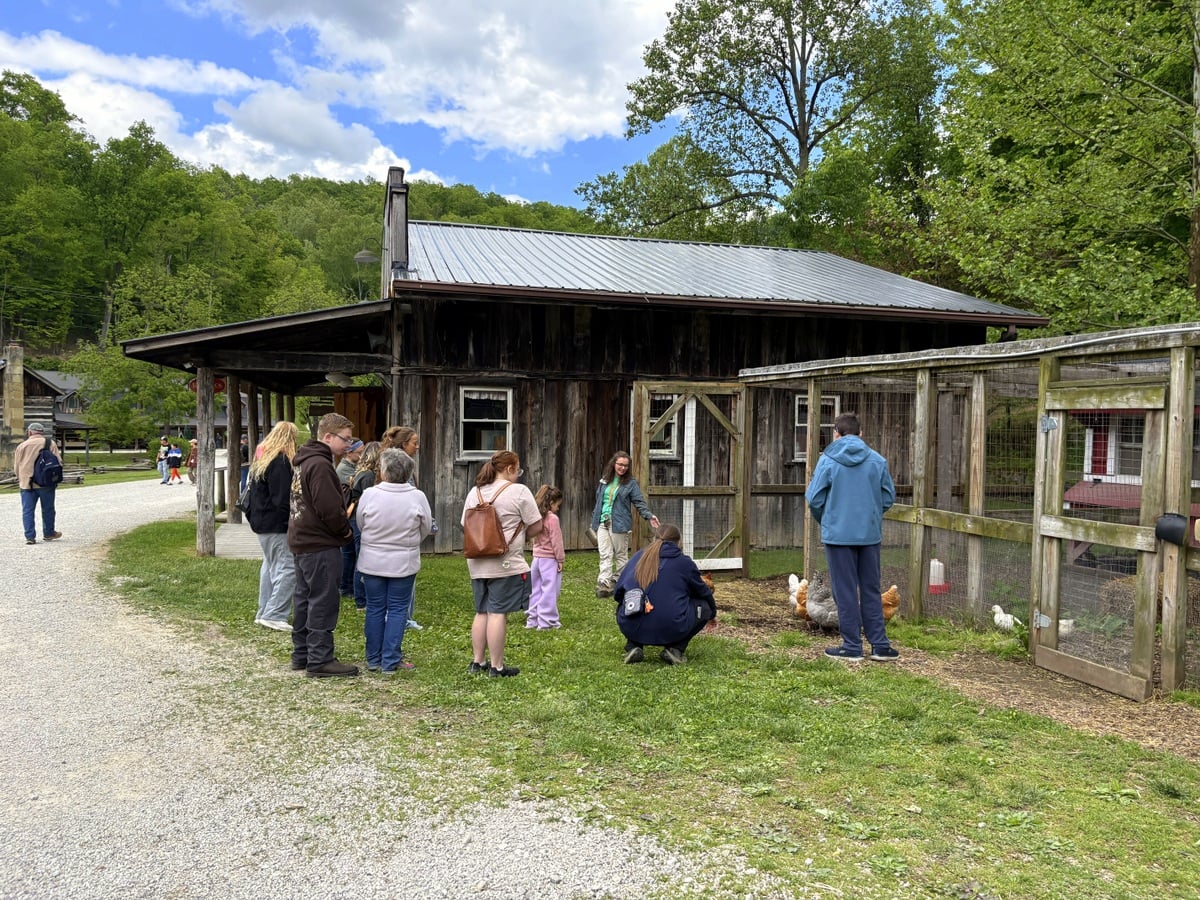
A tractor-drawn wagon carries visitors through the property to observe bison, elk, goats and other animals while learning about Appalachian ecosystems. Elsewhere, the nature center serves as a living classroom introducing visitors to native plants and wildlife, while Critter Corner allows younger guests to interact with piglets, rabbits and chickens.
Together, these experiences encourage visitors to appreciate not only Appalachian history but also the forests, wildlife and landscapes that have shaped life in the mountains for centuries.
Adventure has become part of the Appalachian experience
Heritage Farm believes understanding Appalachia also means experiencing its forests, hills and streams firsthand.
“It’s encouraging people to channel their Appalachian spirit of adventure,” Ely says. “The Europeans that moved this way would have had to cross rivers, streams and mountains, so it’s kind of like letting us have our version of that adventure.”
The property’s Treehouse Trek leads visitors across a 750-foot network of canopy bridges suspended nearly 60 feet above the forest floor, offering panoramic views of the surrounding woodland.
“We started the treehouse treks to get kids into the forest,” Perry says.
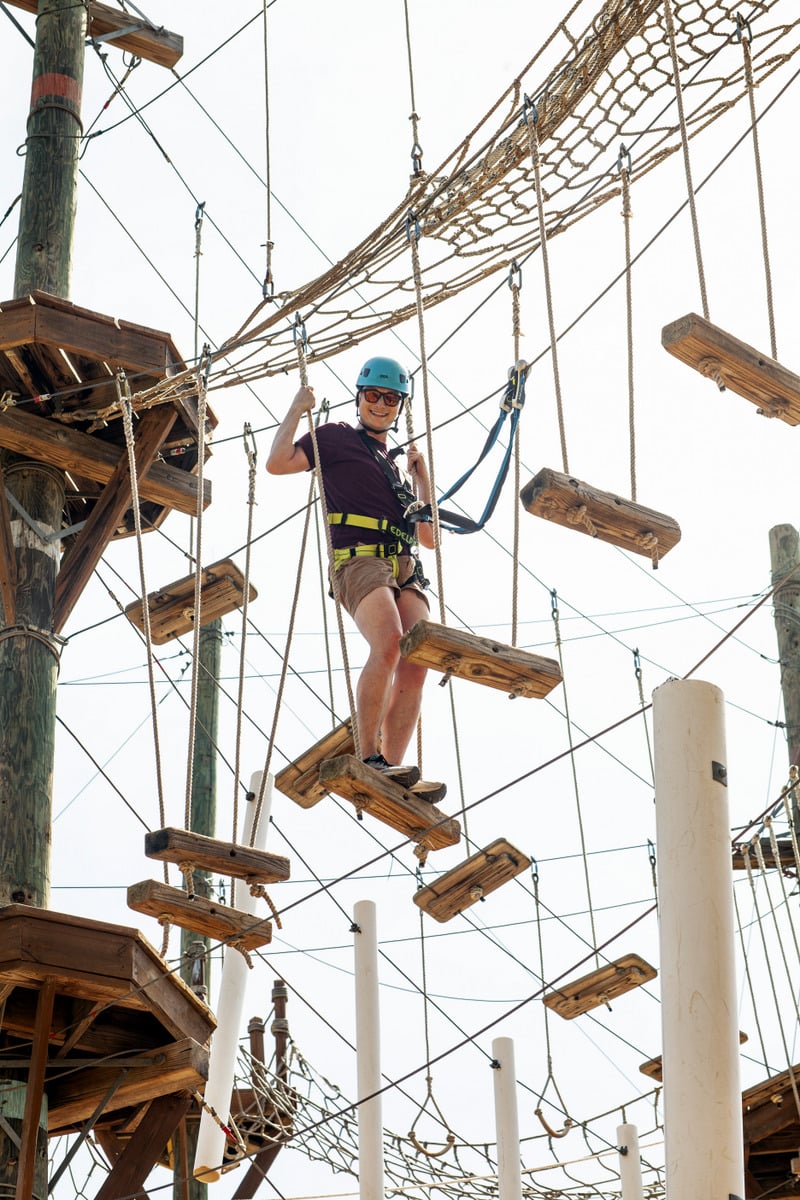
The adjacent Adventure Park includes zip lines, aerial ropes courses and climbing experiences designed for a wide range of ages and abilities. Younger children can tackle Wilder’s Zip-n-Climb alongside parents or mentors, while older visitors can race side by side on the 1,100-foot Red Tail Racers dual zip line or navigate the multi-level TalithaKoum aerial challenge course.
“Wilder’s Zip-n-Climb, where it only goes up to about 15 feet, is super cool because it’s not just an experience for the kid, but they get to have that experience together with a parent, adult, troop leader, youth pastor, whoever,” Ely says.
Mountain bikers can also explore the Mountain Rim Bike Park, featuring 10 downhill forest trails. Bikes are available to rent, while hikers can enjoy nearly a mile and a half of walking paths through the property.
“We have a ‘get people in the woods’ mission,” Ely says. “A lot of the reason for all of these things is for families to have those experiences together.”
The expansion has also created new employment opportunities. Heritage Farm now employs 18 adventure facilitators after opening the Adventure Park in 2021.
“That has allowed us to expand,” Perry says. “I call it edutainment, getting people into the forest, which is something that makes Appalachia unique and celebrates that ingenuity and adventure.”
Snow Oasis aims to make Heritage Farm a year-round destination
Heritage Farm’s next chapter is already taking shape. Construction continues on Snow Oasis, a more than 30,000-square-foot indoor-outdoor snow park designed to bring snow sports and winter recreation to the Huntington area year-round.
Plans include indoor ice skating, tubing, snow play areas and slides, along with outdoor skiing and snowboarding. The project is expected to extend Heritage Farm’s operating season while introducing many Ohio Valley families to winter sports without requiring a trip to larger mountain resorts.
“When it’s cold outside, no one wants to zip line. No one wants to walk from museum to museum, so we’re not open,” Ely says. “So this fills that gap for us programmatically but also fills in for something that people around here don’t get to do, unless you drive hours from here.”
Heritage Farm expects Snow Oasis to create additional jobs while strengthening tourism in the Huntington region and expanding its mission of connecting families with Appalachian history, outdoor recreation and one another.
Nearly three decades after first opening its gates, Heritage Farm has grown from one family’s passion project into one of Appalachia’s most distinctive destinations. By blending history, craftsmanship, wildlife and outdoor adventure in one place, it offers an experience unlike almost anywhere else in the central Appalachian region.
Planning your visit to Heritage Farm Museum and Village
Heritage Farm Museum and Village is located at 3300 Harvey Road near Huntington, West Virginia, just minutes from Interstate 64. Its location makes it an easy day trip or weekend destination for travelers from Charleston, Lexington, Cincinnati, Columbus and much of the Ohio Valley.
The attraction is generally open May through October, with museums, artisan demonstrations, wildlife exhibits and outdoor adventure activities offered throughout the season. Some activities require separate admission or advance reservations.
Visitors can explore seven museums, a recreated Appalachian village, artisan workshops, the Nature Center, Critter Corner, Treehouse Trek, the Adventure Park, Mountain Rim Bike Park and seasonal festivals and educational programs. School field trips and group tours are also available.
Snow Oasis is currently under construction and is expected to expand Heritage Farm into a year-round destination once completed.
Before traveling, visitors should check Heritage Farm’s website for current operating hours, admission prices, event schedules, and adventure activity availability.
I have a dear cousin who works at Heritage Farm. She tells me about all the interesting and educational things to do and see. I can’t wait till I get to experience it all for myself!
Is Heritage Farm pet friendly?