
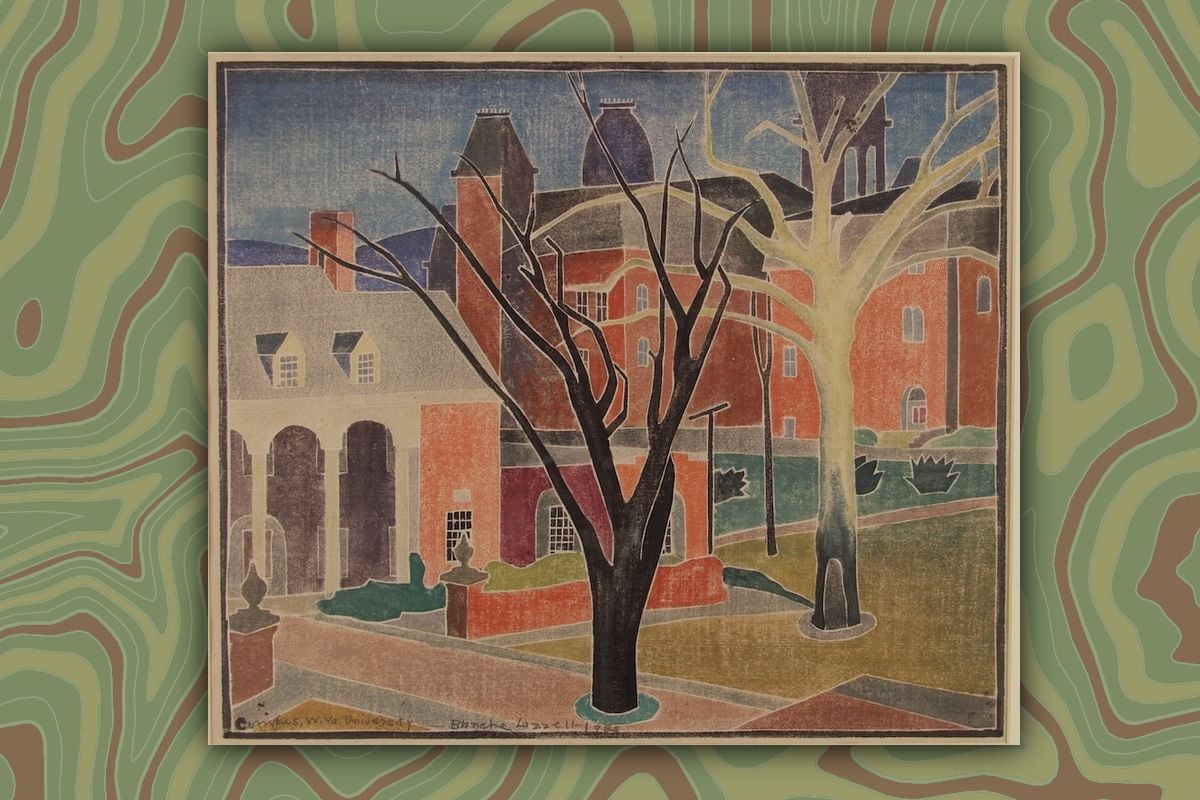
MORGANTOWN, W.Va. — After a two-year tour that introduced museum visitors from New England to the Mid-Atlantic to the work of one of America’s pioneering modern artists, the largest exhibition ever assembled of West Virginia native Blanche Lazzell is returning home.
The Art Museum of West Virginia University will reopen “Blanche Lazzell: Becoming an American Modernist” on Aug. 21, bringing back an expanded collection that celebrates an artist whose influence on American modernism has gained increasing recognition in recent decades.
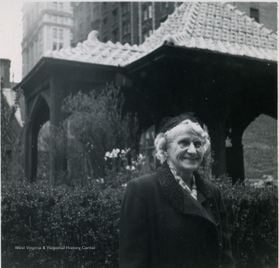
Featuring more than 60 paintings, prints and other works, the exhibition traces Lazzell’s evolution from a young art student in Morgantown to one of the nation’s earliest abstract artists. Its return also marks the conclusion of the museum’s first nationally touring exhibition, which drew audiences in Maryland, Connecticut, Massachusetts and New York.
“Blanche Lazzell has long been overlooked by the larger art world,” museum curator Robert Bridges said. “We felt it was important to get her work out to other museums so those outside the state can view her art firsthand. To fully understand the importance and beauty of Lazzell’s art, you really need to see it in person.”
An overlooked pioneer of American modernism
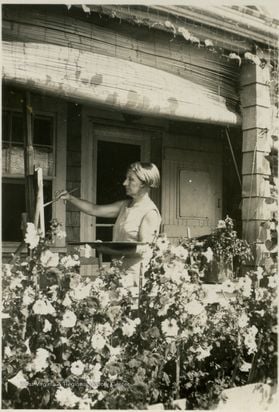
Born in Monongalia County, Lazzell graduated from West Virginia University in 1905 and then continued her artistic education in New York and Paris.
She eventually settled in Provincetown, Massachusetts, where she became a founding member of the Provincetown Printers, a group of artists who transformed American printmaking through the innovative white-line woodcut process.
Lazzell combined that distinctive technique with the bold abstract ideas emerging from Europe, making her one of the first American artists to create abstract prints. Although widely respected by fellow artists, she never achieved the recognition afforded many of her male contemporaries during her lifetime.
Today, museums and collectors increasingly regard her as one of the most important figures in early American modernism.

“Lazzell was pivotal in advancing the color woodblock print technique developed in Provincetown in 1915,” Bridges said. “Lazzell’s early interest in abstraction led her to combine it with this technique, and today she is credited as one of the first American artists to create an abstract print.”
Exhibition traveled to major museums
The exhibition debuted in 2024 and then traveled to the Academy Art Museum in Easton, Maryland; the Bruce Museum in Greenwich, Connecticut; the Provincetown Art Association and Museum in Massachusetts; and the Albany Institute of History and Art in New York.
The tour introduced thousands of visitors to an artist whose achievements have often been overshadowed in traditional histories of American art.
“For our Museum to host a traveling exhibition of this scale was no small feat,” museum director Aaron Levi Garvey said.
“That village’s dedication to Blanche’s work has made it possible for us to build a top-tier exhibition that has gained recognition not only from our peers for our institution but also for Blanche’s life, art, and legacy.”
Garvey credited museum staff, donors, and supporters with making the exhibition possible and said he hopes it marks the beginning of future nationally significant projects for the museum.
Expanded exhibition returns to Morgantown
Visitors to the Morgantown exhibition will see more than the traveling version. The museum is adding works from Lazzell’s early years, including pieces created while she was a student at WVU, as well as paintings and prints too large or too fragile to travel.
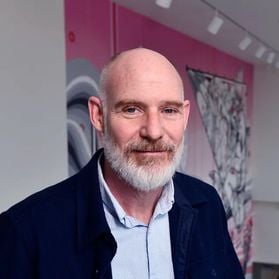
“We have many works that were either too fragile or too large to travel,” Bridges said. “We also wanted to represent early art created in West Virginia and her time here at WVU.”
The exhibition will also feature works from the Lefkowith Collection, a group of 77 Lazzell artworks acquired by the museum in 2024 with support from William and Patricia Bright and other donors.
Together with works donated by Lazzell’s family, the museum now holds one of the world’s largest collections of the artist’s work. A documentary exploring Lazzell’s life and artistic career will also be shown throughout the exhibition.
Botanic Garden partnership extends the experience
This summer, visitors can begin exploring Lazzell’s artistic vision even before entering the museum. The West Virginia Botanic Garden has partnered with the museum to create living displays inspired by the flowers that frequently appear in Lazzell’s artwork.
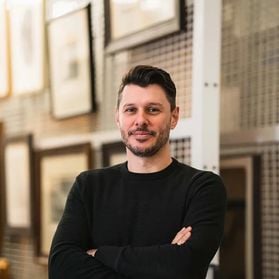
The installations introduce visitors to the natural subjects that influenced many of her prints and paintings and offer educational programs about the artist.
“The Botanic Garden came to us about using images of Lazzell’s art and translating them into living exhibitions,” Bridges said. “We have created a unique opportunity to experience some of the flowers she loved and included in many of her artworks.”
Lazzell died in 1956, but her reputation has continued to grow as museums across the country have embraced her work and scholars have increasingly recognized her contributions to American modernism.
The exhibition opens to the public on Aug. 21, following a faculty and student preview on Aug. 20, offering what is expected to be the most comprehensive presentation of Blanche Lazzell’s work ever assembled in her home state.
What is an American modernist?
An American modernist was an artist who broke from traditional, realistic styles in the early 20th century to experiment with bold colors, simplified forms, unusual perspectives and abstract designs. Influenced by artistic movements emerging in Europe but inspired by distinctly American landscapes, cities and culture, modernists sought new ways to express emotion, movement and everyday life.
Blanche Lazzell became one of the movement’s pioneers by combining modernist ideas with the innovative white-line woodcut technique developed in Provincetown, Massachusetts, helping establish a uniquely American approach to abstract printmaking.
Synopsis: The nation’s largest exhibition of West Virginia modernist Blanche Lazzell’s work will open this fall at the Art Museum of WVU after a two-year tour of museums across four states. Featuring more than 60 works, the expanded exhibition explores the pioneering printmaker’s role in shaping American modernism and includes pieces that have never traveled beyond Morgantown.
How long will the exhibition be up?