
ELKINS, W.Va. — Filmmaker Daniel Byers grew up in West Virginia, repeatedly transformed by industries seeking the value of its mountains. In his new horror movie, Dark Hollow, that history becomes more literal: a monster emerges from a coal mine.
The Elkins-raised writer and director is bringing the movie back to West Virginia for a series of screenings after filming much of it there. Although Dark Hollow is a creature feature, complete with practical effects, gunfights, and a climactic underground struggle, Byers said the story grew out of the history of outside industrial interests extracting resources from Appalachia and the conflicts over land and communities that followed.
Byers sees parallels between that history and current debates over data-center development in West Virginia, where large projects promise investment and jobs while requiring substantial land, electricity, and infrastructure.
“Dark Hollow could not have been made anywhere but West Virginia,” Byers told West Virginia Explorer. “It is a uniquely West Virginia story.”
An old Appalachian question
Railroads opened much of West Virginia’s mountainous interior to large-scale industrial development beginning in the late 19th century, connecting vast reserves of timber and coal with national markets. Outside investors acquired extensive land and mineral holdings, and much of the coal and timber extracted in the state was shipped elsewhere.
The economic relationship became a subject of Appalachian scholarship in the 20th century as researchers examined why communities in a region that had produced enormous natural wealth continued to experience poverty and economic dependence.
Appalachian scholar Helen Matthews Lewis and others described the relationship through a model known as “internal colonialism,” in which outside interests controlled resources and much of the resulting wealth flowed out of the region.
The model has remained influential but has also been challenged by scholars who argue that it can understate the roles of local businesses, institutions, and political leaders in the region’s economic history.
Byers does not use the term “internal colonialism” to describe Dark Hollow, but the history behind the concept overlaps with the history that interested him.
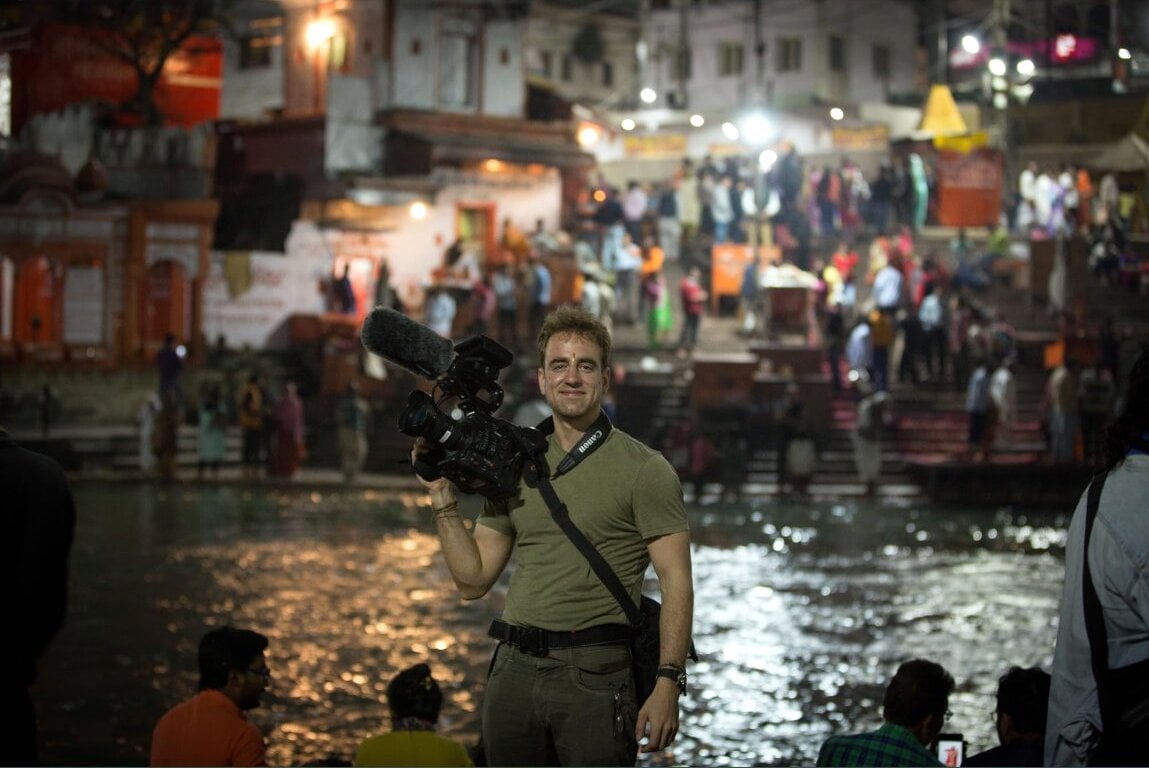
Byers grew up in Elkins and remained there through high school before leaving for college. Now living in Brooklyn, he has worked as a documentary filmmaker in roughly 60 countries, often on projects involving Indigenous communities, wildlife and remote landscapes. He said working elsewhere changed his understanding of the mountains where he grew up and strengthened his interest in the relationship between people and land.
The immediate inspiration for Dark Hollow came partly from Byers’s memories of West Virginia during the expansion of large-scale surface mining in the 1990s and partly from John Prine’s “Paradise,” which tells of a Kentucky community transformed by coal mining.
Byers originally titled his screenplay Paradise. As he developed it, he researched West Virginia’s industrial history, including the state’s mine wars and the Battle of Blair Mountain.
“I’d always wanted to tell a story that was set during that time and set against the backdrop of those events,” he said.
From coal mines to data centers
The historical questions that interested Byers also shape how he views current industrial development in West Virginia.
The state is encouraging construction of large data centers and the power infrastructure needed to serve them. West Virginia law now provides a regulatory framework for qualifying “high impact data centers” and associated microgrid districts.
Supporters have promoted data centers as sources of investment, jobs, and tax revenue, while proposed developments have also sparked debate over electricity, water, land use, and local authority. Byers sees parallels with earlier periods of West Virginia history in the questions surrounding who controls development, what resources it requires, and where the economic benefits ultimately go.
He does not, however, assign a single political meaning to the creature or present Dark Hollow as a literal allegory. The film’s industrial history appears throughout its physical environment. Coal dust is in the air and water and on the characters, while mining-altered mountains contrast with heavily forested landscapes.
“You got to know what you’re fighting for,” Byers said. “You got to feel the hope along with the dread for things to matter.”
Appalachians aren’t the monsters
American horror films have sometimes portrayed isolated Appalachian communities as places where outsiders encounter violent, primitive, or grotesque residents, a convention Byers wanted to reverse. He pointed specifically to Wrong Turn, the 2003 horror film in which travelers in West Virginia are hunted by cannibalistic mountain people.
“There have been too many movies that paint Appalachia as the monsters,” Byers said. “I wanted to tell the opposite of a Wrong Turn story.”
The people rooted in the mountains are not the source of the horror in Dark Hollow. Instead, Byers frames the threat as a history of economic pressure originating outside the community.
His interest in Appalachian folklore provided the framework for turning that history into a creature feature. Byers grew up fascinated by cryptids and cited Bigfoot, Mothman, the Flatwoods Monster, and West Virginia’s lesser-known Vegetable Man among his favorites.

“I wanted to build a big old creature suit, put a big old guy in it and have a ton of fun and scare the pants off of people,” he said.
Making the movie in West Virginia
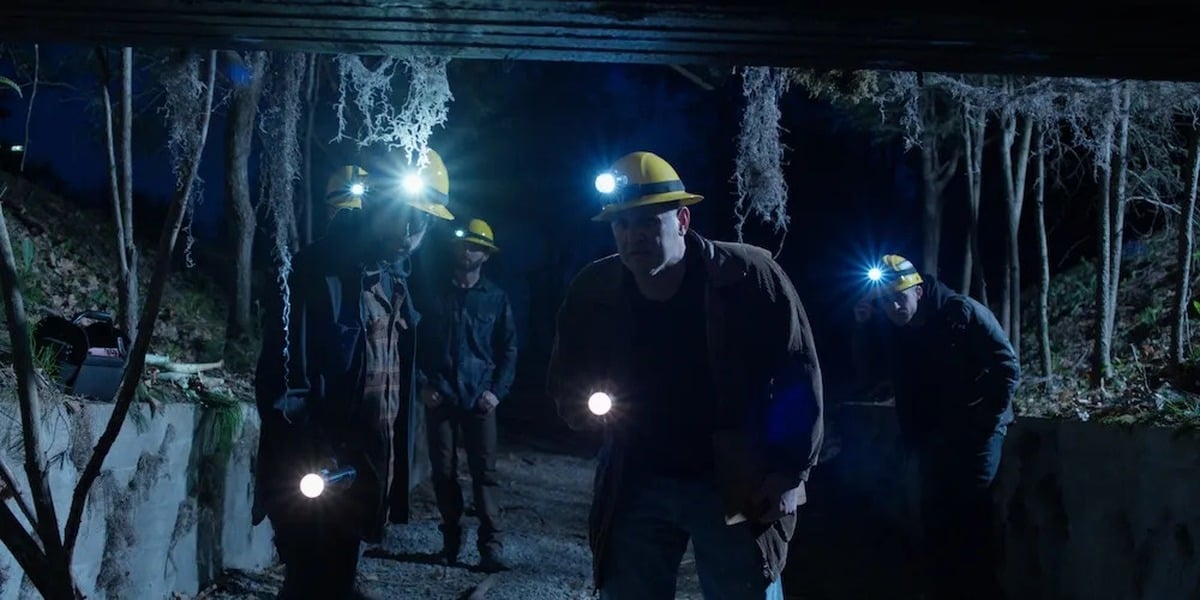
Much of Dark Hollow was filmed in the mountains around Spruce Knob, with underground sequences filmed in a coal mine in Beckley. Byers later returned to West Virginia several times to collect additional aerial and landscape footage.
“There’s no way to do that other than to shoot it in the place where it all happened,” he said.
Byers estimated that about half the cast and crew were West Virginians. Local actors and film workers also helped the production reproduce details of the region, including Appalachian speech.
“There’s a lot of really brilliant artists in West Virginia, but it’s a little bit remote, and so they don’t always get the opportunity to be in something like a feature film,” he said.
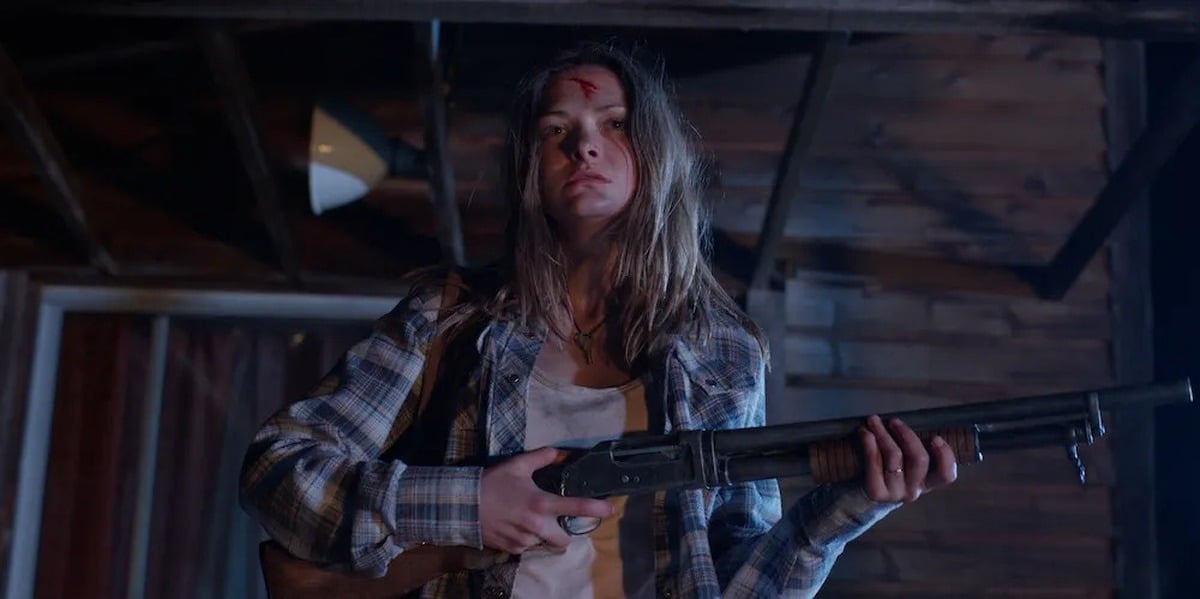
Lead actress June Schreiner worked with an accent coach and listened to West Virginians working on the production to develop her character’s speech. Byers said actors unfamiliar with the region sometimes slipped into a generalized Southern accent.
“You’re doing a Texas accent right now,” he recalled telling them. “That’s not the same thing as you’d hear around here.”
Byers’s father, an experienced hunter, served as the film’s armorer and trained Schreiner to handle the Winchester Model 1897 pump-action shotgun her character carried. Byers said Schreiner practiced with live ammunition before filming so she would understand the weapon’s operation and recoil.
The training left a large bruise on Schreiner’s arm that remained visible during filming.
“So that’s not makeup,” Byers said. “That was her doing the arms training that got her to handle that gun properly in the scenes where she’s doing it on screen.”
From screenplay to independent film
The screenplay attracted national attention before the movie was made. Originally titled Paradise, it won the Horror Screenplay Award at the 2023 Austin Film Festival, presented by Vertigo Entertainment. Columbia University, where Byers earned his MFA in film, reported that the screenplay was selected from more than 11,000 submissions.
Byers initially believed the recognition might lead to conventional studio production, but industry conversations eventually led him to make the movie independently.
“If you can make your movie, make your movie,” he recalled an industry mentor telling him.
Byers described the production that followed as “trench warfare, guerrilla warfare style indie filmmaking.” He said he ultimately completed 280 of the movie’s roughly 330 visual-effects shots himself.
The finished film runs 95 minutes and stars June Schreiner, David Garelik and J. Stephen Brantley. It began a limited theatrical release Sept. 4 through Brainstorm Media and has screened for audiences in Los Angeles, New York and Oregon.
Byers said some viewers outside West Virginia have related the film to disputes over land and resource development in their own communities, something he believes demonstrates that a story rooted in a particular place can still reach people elsewhere.
Bringing ‘Dark Hollow’ home
West Virginia audiences can judge details that viewers elsewhere might miss, from the landscape and accents to the relationship between the characters and the place they inhabit. Byers said that made bringing Dark Hollow home both important and somewhat intimidating.
He also distinguishes his experience from that of West Virginians whose families have lived in the mountains for generations. Byers moved to the state as a boy and said his film represents his experience rather than an attempt to define Appalachia for everyone who lives there.
“I’m telling a story based on my experience of living in West Virginia and my love for the place,” he said. “And I hope that other people tell theirs.”
As part of the West Virginia roadshow, Byers has also been invited to speak with students about growing up in the state and becoming a filmmaker. He said West Virginia writers, filmmakers and other artists have an advantage in the distinctive culture and landscape they already know.
“There’s something you have as a filmmaker or any sort of storyteller, writer, artist coming from West Virginia that other people don’t,” Byers said. “You’re steeped in a culture and a landscape that is very special, and it’s very specific to you.”
Despite the industrial history underlying the story, Byers said Dark Hollow was made first as entertainment.
“It’s a horror movie. It’s supposed to be a good ride,” he said. “We got creature suits, we got blood cannons, we got shotguns, jackhammers, we got knockdown, drag-out fights in a coal mine.”
Byers describes the movie as a “love letter to West Virginia” that doesn’t shy away from the state’s difficult industrial history. Its monster comes from a coal mine, while the mountains and the people who live among them remain at the center of what the characters are trying to protect.
“I made it for West Virginians first,” he said. “They’re my first audience.”
Scheduled screenings in October in West Virginia
Oct 13 (Tues) – Performing Arts Center in Buckhannon
Oct 14 (Wed) – Cohen Cinema in Charleston
Oct 16 (Fri) – Warner Drive-In in Franklin
Oct 17 (Sat) – Marquee Theatre in Beckley
Oct 18 (Sun) – Foundry Theater in Huntington
Oct 21 (Wed) – Cohen Cinema in Charleston
Looks really tasty!!!
Where can we watch this?
Scheduled screenings in October in West Virginia
Oct 13 (Tues) – Performing Arts Center in Buckhannon
Oct 14 (Wed) – Cohen Cinema in Charleston
Oct 16 (Fri) – Warner Drive-In in Franklin
Oct 17 (Sat) – Marquee Theatre in Beckley
Oct 18 (Sun) – Foundry Theater in Huntington
Oct 21 (Wed) – Cohen Cinema in Charleston
When will it be released in Byers hometown of Elkins, WV? We would live to see it here!
Scheduled screenings in October in West Virginia
Oct 13 (Tues) – Performing Arts Center in Buckhannon
Oct 14 (Wed) – Cohen Cinema in Charleston
Oct 16 (Fri) – Warner Drive-In in Franklin
Oct 17 (Sat) – Marquee Theatre in Beckley
Oct 18 (Sun) – Foundry Theater in Huntington
Oct 21 (Wed) – Cohen Cinema in Charleston