
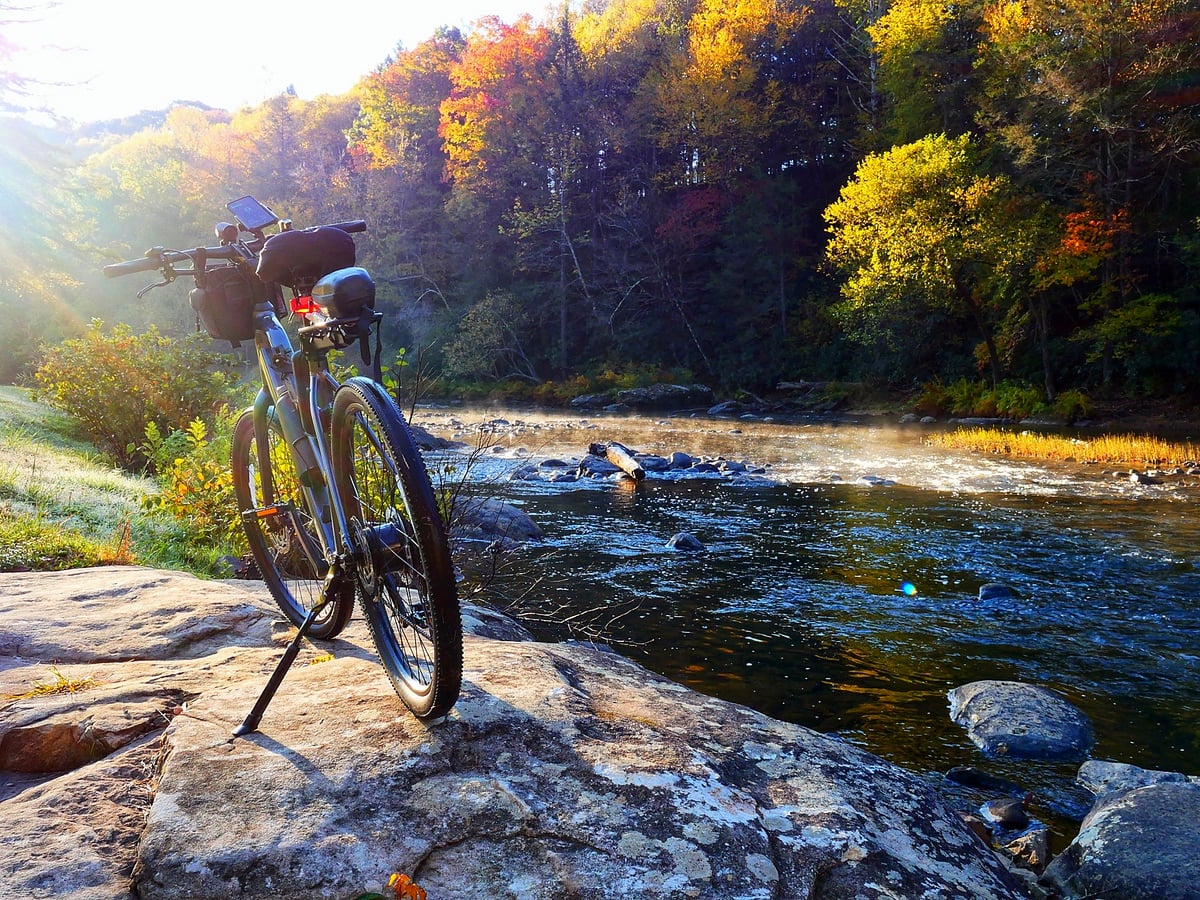
RAINELLE, W.Va. — Several weeks after the Meadow River Rail Trail completed its 18-mile route through southern West Virginia, bicycles are appearing outside businesses, cars carrying bikes are arriving from other states, and visitors to the nearby New River Gorge National Park and Preserve are finding their way to a valley that many West Virginians have never seen.

Matt Ford, the trail’s project coordinator, says he makes a point of talking with visitors when he encounters them, asking where they are from and how they found the trail. Among visitors from outside West Virginia, he says, one answer has emerged repeatedly.
“A lot of people who are from out of state say, ‘Well, we went to the national park, and we asked where is an easier bike trail that’s not straight up and down a mountain,’” Ford said. “And the people at the national park are pointing them to Meadow River Rail Trail.”
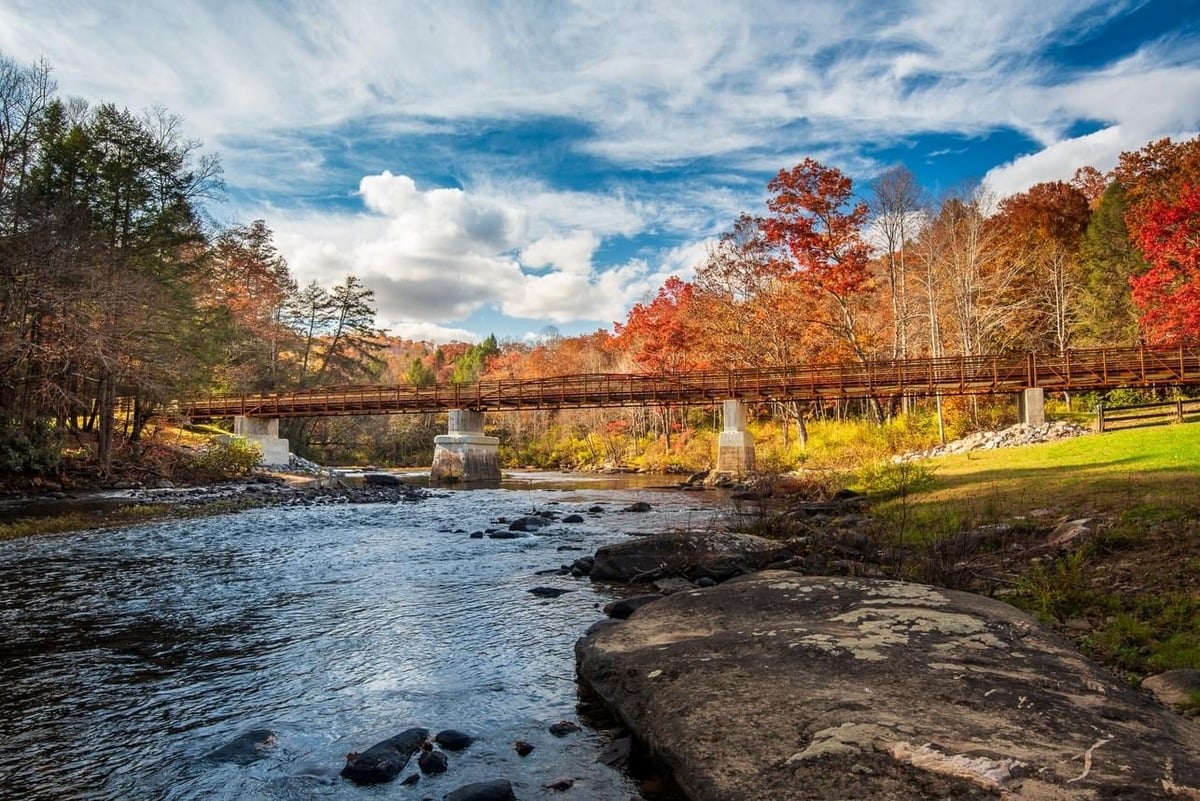
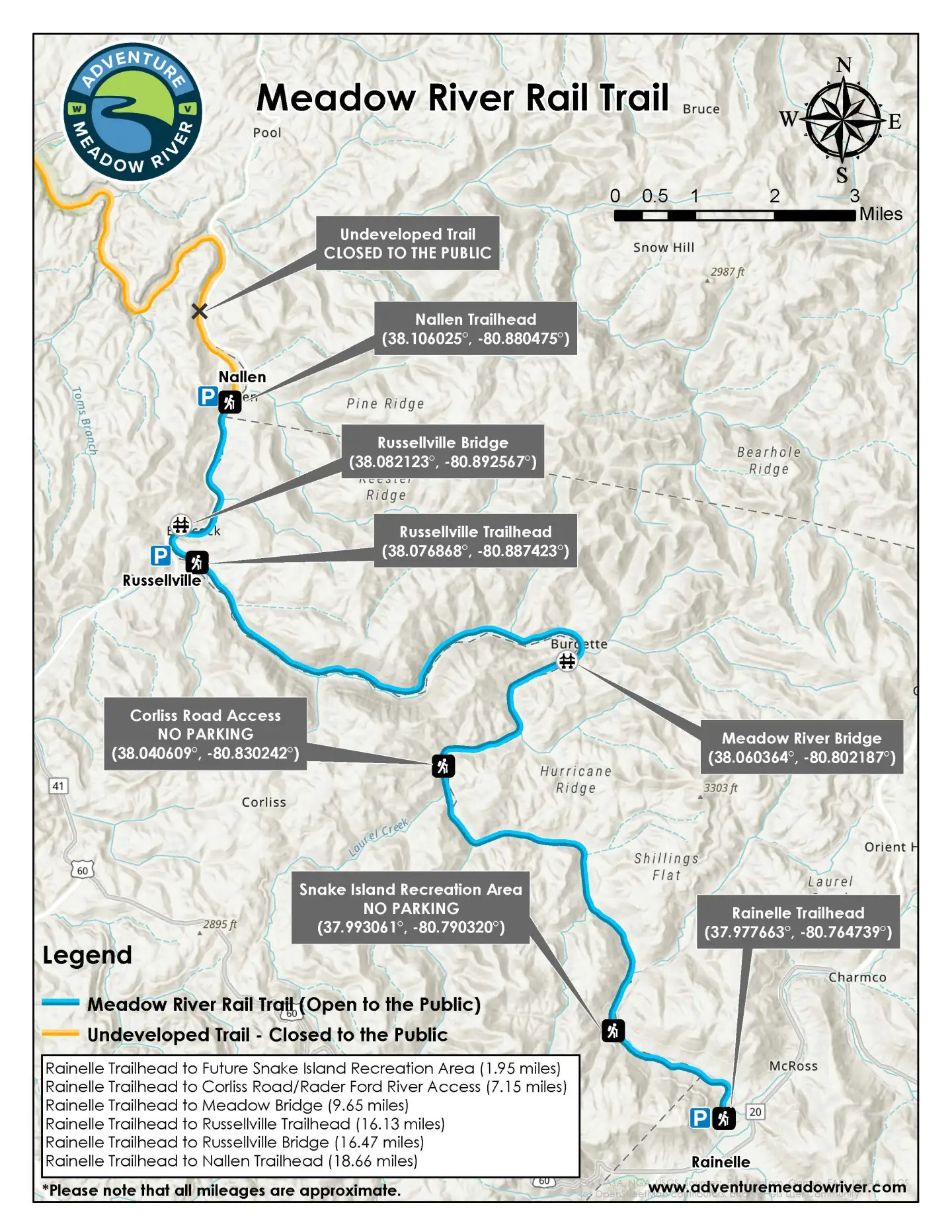
The trail follows a former railroad corridor along the Meadow River between Rainelle and Nallen. Its final section into Rainelle opened this summer, completing a continuous route into increasingly wild country downstream.
Ford said local residents are using the trail, while vehicles carrying bicycles arrive from outside the state. Others are finding it through social media and word of mouth as photographs circulate of waterfalls, whitewater, boulders, and the remote reaches of the Meadow River that few otherwise see.
“There are people who have lived here for multiple generations who are just now finding out about the incredible thing that’s in their backyard,” Ford said.
A different Meadow River appears downstream
Ford says his favorite place on the trail is a bridge near the middle of the route, at a great bend known as “the Loop.” Here, the Meadow twists back on itself in an isolated section of the valley far removed in character from the river that passes through meadows and developed communities upstream.
Ford says he remembers discussing the river with federal personnel while standing in Russellville, where houses and riverside camps line the valley. They were skeptical when he suggested the Meadow had scenery that might belong in a national park.

“They said, ‘Well, the Meadow River—we just don’t feel like it’s national park,’” Ford recalled.
He asked whether they had time for a field trip and took them to the bridge in the loop. “We’re standing on this bridge,” he said, “and standing on that bridge they were like, ‘Oh, okay. Never mind, we get it.’”
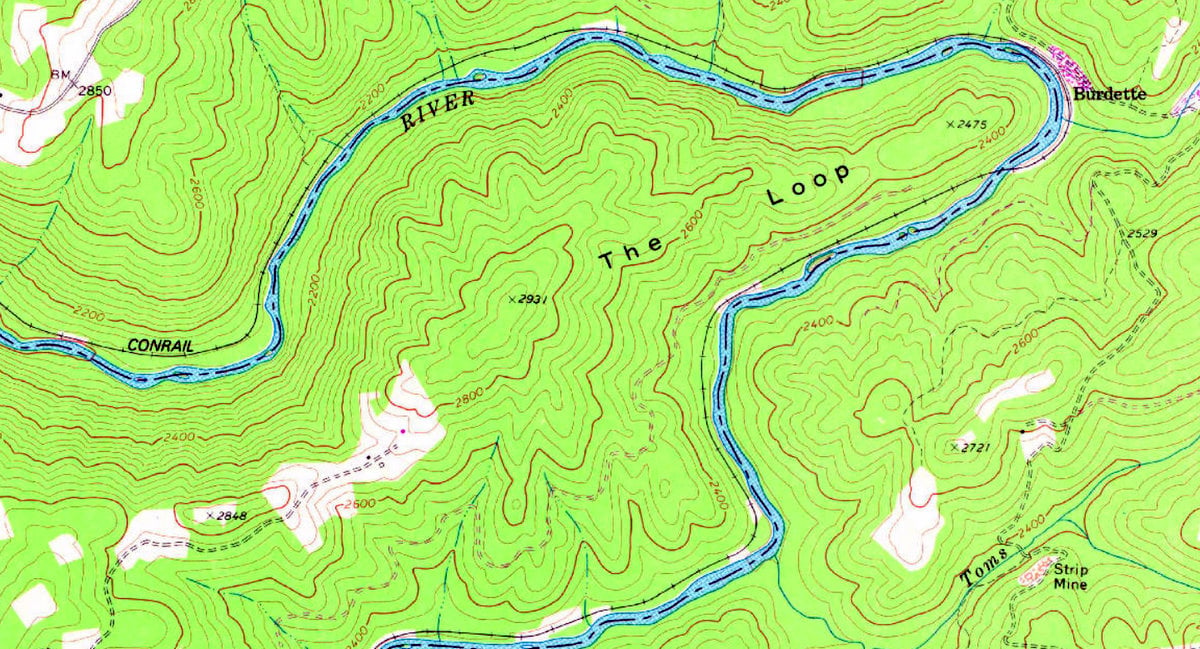
The river they encountered in the loop is dramatically different from the Meadow farther upstream. The upper watershed includes more than 3,000 acres of wetlands, the second-largest wetland complex in West Virginia and one of the largest in central Appalachia. Downstream, the river enters increasingly rugged country on its way toward the Gauley River.
“A lot of people see the Meadow River that flows slowly through Rainelle and Rupert,” Ford said. “You don’t know what’s kind of out in the wilderness downstream of Rainelle, but it’s world-class.”
The railroad followed the river into that country on the gentle grades trains require, leaving behind a route that today lets bicyclists, hikers, and horseback riders penetrate the valley without climbing the steep terrain surrounding it. The trail has a gravel-and-aggregate surface and a typical railroad grade that operators describe as not steep.
A trail nearly two decades in the making
The Meadow River Rail Trail grew from the abandoned corridor of the former Fayette, Nicholas & Greenbrier Railroad, later owned by CSX. The Fayette and Greenbrier county commissions acquired the abandoned line for recreational use, and construction on the trail began in 2014. The Rails-to-Trails Conservancy, which selected the Meadow River Rail Trail as its national Trail of the Month in March, notes that the railroad was built in 1907.
A bridge was completed in 2015, but the catastrophic West Virginia flood of June 2016 dealt the project a major setback. Ford said half of the bridge, where officials had gathered for a ribbon-cutting the previous year, ended up about 100 yards downstream.
Ford had been loosely involved in the project since its early years through his work with a Meadow River watershed organization. Project coordinator Doug Hylton later hired him to conduct an environmental assessment for the six-and-a-half-mile phase that would eventually take the trail into Rainelle. After Hylton died in 2018, Ford was appointed project coordinator, first by Greenbrier County and later by Fayette County.
“My first order of business was figuring out where the project stood, getting it moving, and then writing more grants to finish it out and get it further down the river,” Ford said.
For Ford, 43, the transformation carries a personal connection. His family has lived in the region for seven generations, and his great-grandfather moved to western Greenbrier County in the 1920s as the coal industry around Quinwood was developing. Ford said his ancestor worked in the mines and joined the labor movement during an era when industrial development drew workers into the region.
A century later, Ford is working on the other end of that history—finding new purposes for infrastructure left behind as the industries that built many of those communities declined.
What happens when the industry leaves?
Ford sees the trail as part of a larger question confronting communities across West Virginia. Rainelle developed around the Meadow River Lumber Co., Quinwood around coal, and other nearby communities similarly expanded because workers needed to live near mines, mills, and railroads.
When many of those industries disappeared, the communities remained, leaving another generation to determine what might sustain them next.
“We’re the first generation that have had to try to figure out what to do now when there are these towns that have built up around these industries—work camps essentially, and there’s no need for that work camp anymore,” Ford said.
His own great-grandfather had responded to economic opportunity by moving to Quinwood because work was available there. Ford said people today can stay in communities where their families have developed deep roots and try to build something different.
“We’re the first generation where you could stay put and try and figure it out,” Ford said. “And we’re trying to figure it out.”
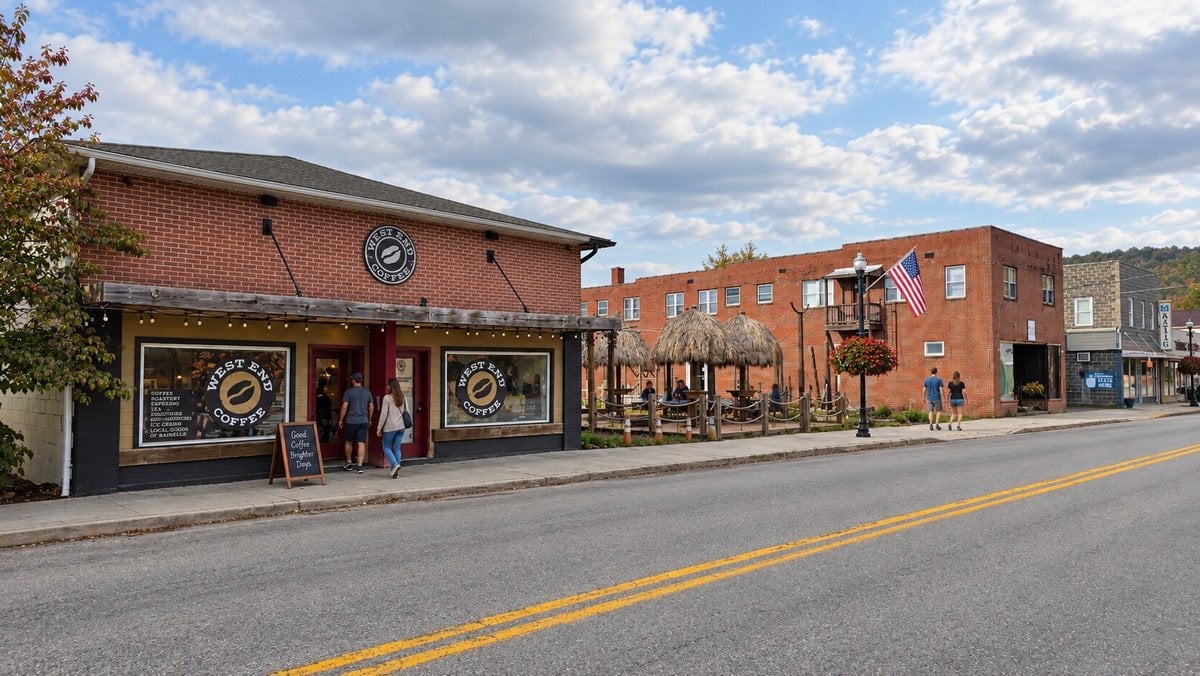
Ford is careful not to portray a recreational trail as an instant solution to Rainelle’s economic problems. Cutting a ribbon, he said, does not suddenly bring prosperity to a struggling town. Instead, a trail can create opportunities by bringing potential customers into a community, but businesses still have to develop to serve them, and some evidence of that process is already appearing.
Ford recently stopped at the Rainelle Deli & Marketplace, where he said employees told him more and more bicyclists were arriving for lunch. So many riders were leaning bicycles against the building’s front window that people worried someone might accidentally break it, prompting Ford to provide them a bicycle rack.
“That’s a pretty good problem to have when you’re getting so much business that you got to install a bicycle rack in front of your store,” he said. “That means the trail’s working, right?”
Building businesses around the trail
Ford himself has also started a bicycle rental and shuttle operation, Meadow River Guides & Gear, to make the trail easier for travelers arriving without equipment or transportation, and he hopes to eventually create an opportunity for a young person from the area to take over the operation after it gets through the difficult startup period.
He is also working to redevelop a former gas station into affordable spaces where entrepreneurs can test new businesses without assuming the costs normally associated with opening a storefront. His goal is for businesses to build a customer base there, outgrow the space, and eventually move into other buildings in the community.
“The trail creates opportunities,” Ford said.
However, the trail is not finished. The Fayette and Greenbrier county commissions own approximately 24 miles of corridor from Rainelle to Glade Creek, downstream from Nallen, and plans are underway to extend the trail farther downstream to the Gauley River. The conservancy reported earlier this year that it had secured millions of dollars in federal funding to advance that extension toward the Gauley River National Recreation Area.
“We’re not done yet,” Ford said. He says he sees that expansion as another piece in a growing concentration of outdoor destinations, including the Greenbrier River Trail to the east and the New River Gorge National Park and Preserve.
“Don’t underestimate how awesome and beautiful West Virginia can be and how much there is to do,” he said. “We’re starting to build up our critical mass.”
Planning a trip on the Meadow River Rail Trail
The completed trail runs between Rainelle and Nallen, with the largest parking areas at those two trailheads and additional parking in Russellville and on the south side of the Russellville Bridge. The trail is surfaced with gravel and aggregate and follows a relatively gentle railroad grade. It has no restrooms or camping facilities.
Visitors should also expect an unusually spotty cell connection. Some carriers offer cell service near the Rainelle, Russellville, and Nallen trailheads, but according to the trail’s official website, reception is “very limited or nonexistent” across most of the route. The trail corridor is generally only 66 feet wide, and land between the trail and the river is private property in many locations, so trail managers caution visitors not to assume that every point along the river is open to public access.
For those who make the trip, Ford believes the bridge at the Loop will continue to do what it has already done for longtime residents, visitors, and even skeptics: reveal a side of the Meadow River that cannot be seen from the highways upstream.
Miles down the old railroad grade, photographs of whitewater, boulders, and forest are beginning to make their way back to Rainelle, across social media and eventually to the next visitor who had no idea the place was there.
I am so very proud of what my state can do. And can save our natural resources this way,it’s the best of both worlds
Beautiful trail. One we will feature on biketrailjournal.com.
I enjoyed seeing a railroad turned into a trail. By the way, the railroad was the Nicholas, Fayette and Greenbrier. At its creation the NF&G was jointly owned by the New York Central and the Chesapeake & Ohio railroads. Every 5 years the NYC and C&O would alternate operating it. Fast forward to today, the NF&G was dissolved in 1996 and trackage was split between Norfolk Southern and CSX.
How close is the Meadow River Campground to a trailhead? I can’t seem to get clarification about that.