
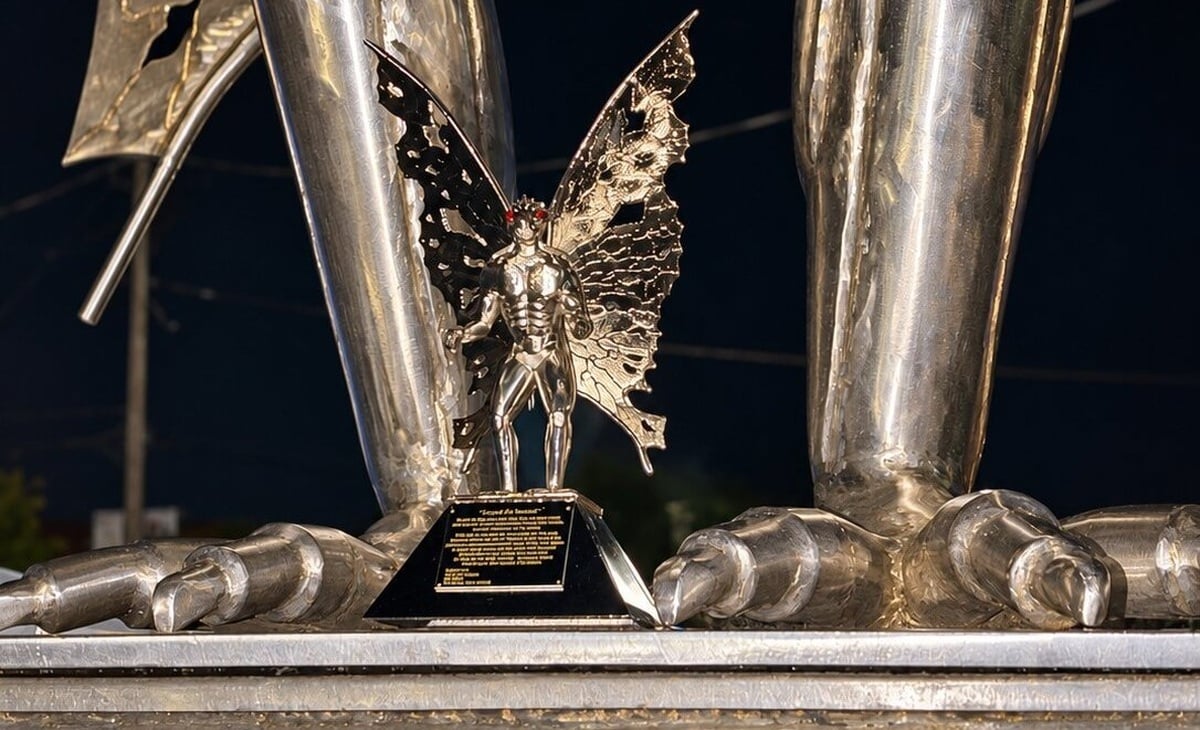
POINT PLEASANT, W.Va. — Before Bob Roach built the famous Mothman statue, he talked with people who said they had seen the mysterious creature decades earlier.
Their descriptions helped shape the stainless-steel figure that has stood on Main Street since 2003, according to Roach’s daughter, Kelly Roach Miller, who accompanied her father during some of those interviews.
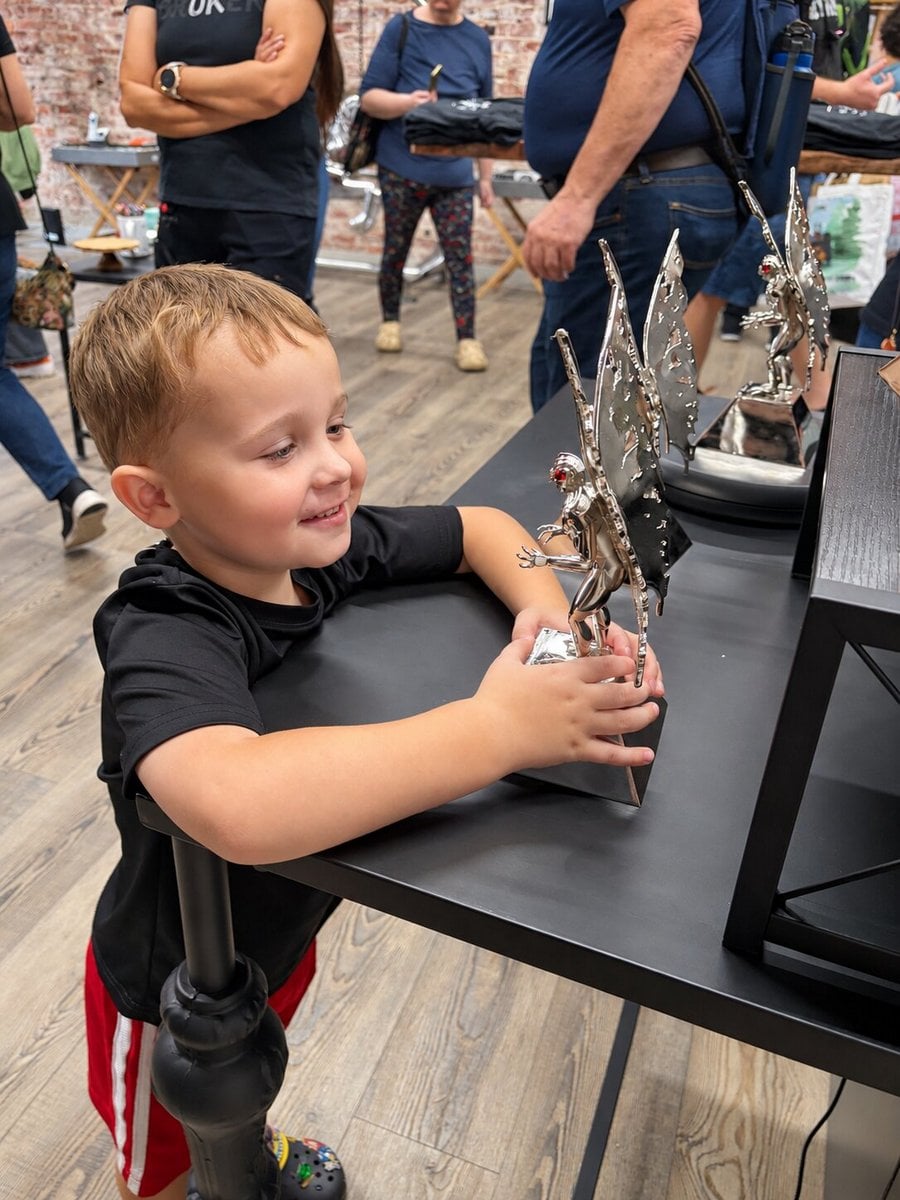
Her account provides a rarely heard look at how one of West Virginia’s most recognizable roadside landmarks took shape and how little her father expected the sculpture to become the attraction it is today.
Miller said in an interview with West Virginia Explorer that the project began when Charles Humphreys, who was involved in efforts to revitalize downtown Point Pleasant, approached her father about creating a permanent Mothman sculpture. “I was sitting in the living room with him,” Miller recalled.
Humphreys, then executive director of Main Street Point Pleasant, saw an opportunity in the attention generated by the 2002 film The Mothman Prophecies. He wanted a permanent attraction that could continue drawing visitors after interest surrounding the movie subsided.
Roach, however, initially had a practical objection. Miller remembers her father explaining it simply: “I don’t know anything about a Mothman.”
Roach sought out people who said they had seen it
Rather than design the creature entirely from his imagination, Roach began looking for people who said they had seen it. Miller said she and her father located members of about five families who reported encounters with Mothman and interviewed them separately.
“They didn’t know that we were even at the other one’s house,” she said.
Miller said she was struck by similarities in some of their descriptions. She also remembers the witnesses appearing genuinely frightened by whatever they believed they had encountered. Roach said she used elements of those accounts to develop the sculpture.
Humphreys later described a similar process, saying Roach interviewed people around Point Pleasant who claimed to have seen Mothman and based elements of the finished sculpture on their recollections.
Those interviews cannot establish what people encountered around Point Pleasant in the 1960s. They do, however, help explain something more concrete—why the Mothman statue standing on Main Street today looks the way it does.
A West Virginia legend becomes a sculpture
Reports of Mothman began attracting widespread attention in November 1966, when people around Point Pleasant described encounters with a large, winged figure, often characterized as having prominent red eyes.
The reports eventually became part of American paranormal folklore. Journalist John Keel investigated them and published The Mothman Prophecies in 1975. A film based on the book, starring Richard Gere, was released in 2002 and brought renewed attention to Point Pleasant.
The city’s Mothman Festival began that year, and Roach’s statue was unveiled downtown in 2003. A CBS News report published shortly after the unveiling documented tourists already traveling to Point Pleasant to visit Mothman-related attractions. Then-Mayor Jim Wilson told the news organization that he had initially doubted the decades-old legend would attract visitors but changed his mind after seeing them arrive.
The statue provided a permanent focal point for that growing interest. Today, visitors regularly stop along Main Street to photograph the sculpture, while the Mothman Museum operates nearby.

Built in a dirt-floor garage
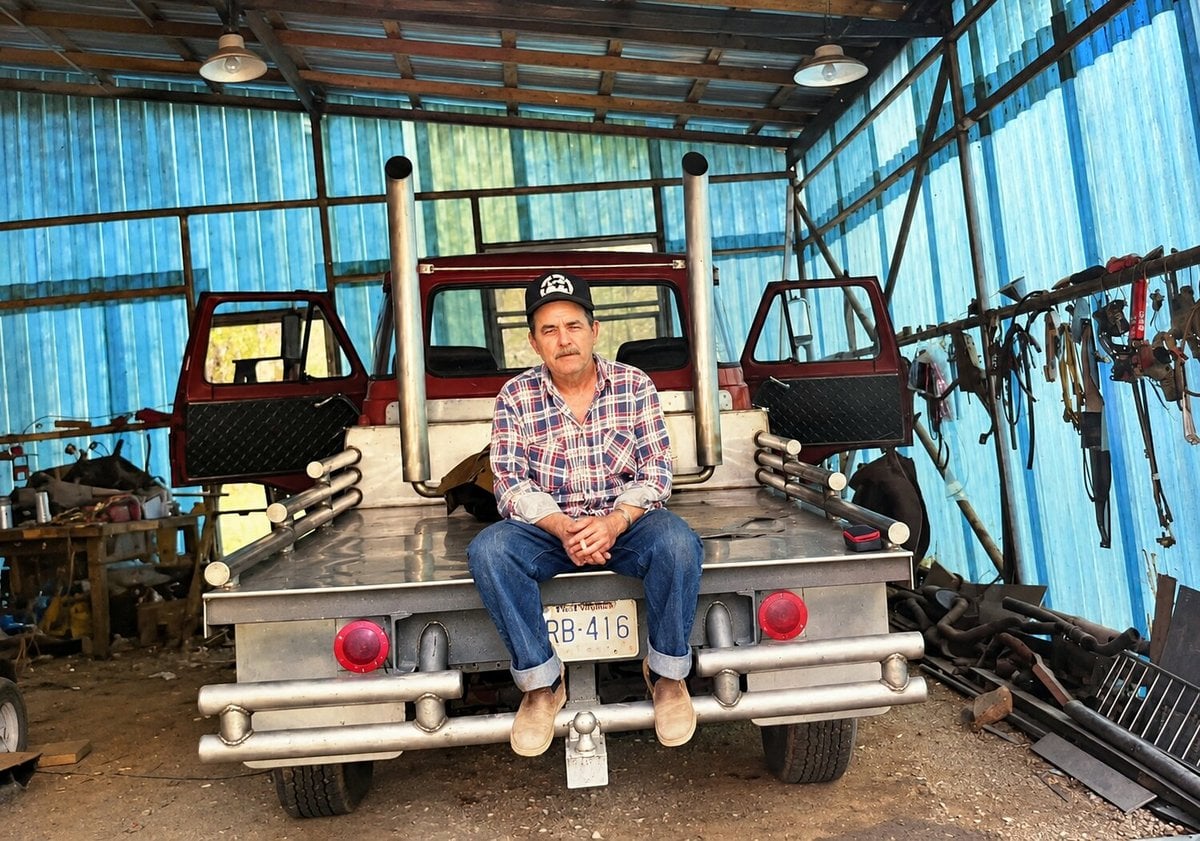
The sculpture that would become a Point Pleasant landmark was built under considerably less glamorous circumstances. Roach was a professional welder who had worked at power plants, Miller said, and he also created art from stainless steel.
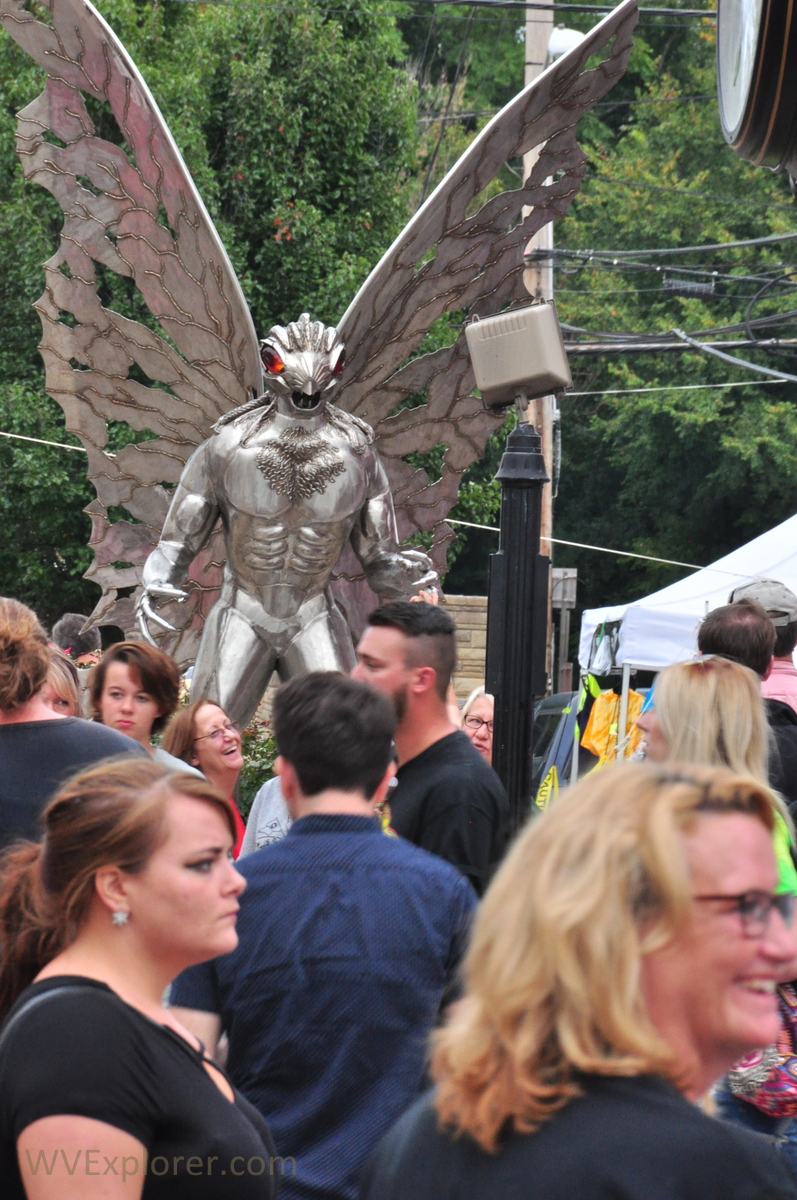
She remembers him building Mothman in a dirt-floor garage using equipment that included a welder, grinding wheels, an anvil and a sledgehammer. “He didn’t have a fancy workshop,” Miller said.
The finished sculpture stands about 12 feet tall. Its enormous wings, muscular body and red eyes have since become defining features of the Mothman image encountered by visitors to Point Pleasant.
Miller remembers the statue before it became a tourist attraction. She and her sister watched their father build his sculptures, she said, and she learned enough about their construction that she still knows which portions of Mothman are hollow and which are solid.
Roach also created stainless-steel representations of historical figures including Chief Cornstalk, Gen. Andrew Lewis, Mad Anne Bailey, Daniel Boone and Lord Dunmore. Miller said her father approached those sculptures differently, researching historical clothing and other details before beginning fabrication.
Mothman presented a different problem. There was no historical portrait or photograph to consult, so the accounts of people who said they had encountered the creature became part of Roach’s source material.
Roach doubted the attention would last
Miller remembers standing with her father near the Mothman statue not long after it was installed. No crowd surrounded it that day, she said, and when she asked what he was thinking, Roach expressed doubts about its future. “Nobody, no one’s going to pay attention to the statue after a couple of years,” she remembers him telling her.
Miller disagreed. “Someday it’ll go worldwide,” she told him, though Roach remained unconvinced.
More than two decades later, the statue remains a centerpiece of Mothman tourism in Point Pleasant and one of the city’s most recognizable landmarks. The city promotes the statue to visitors, while the nearby Mothman Museum draws people interested in the sightings and the folklore that developed around them.
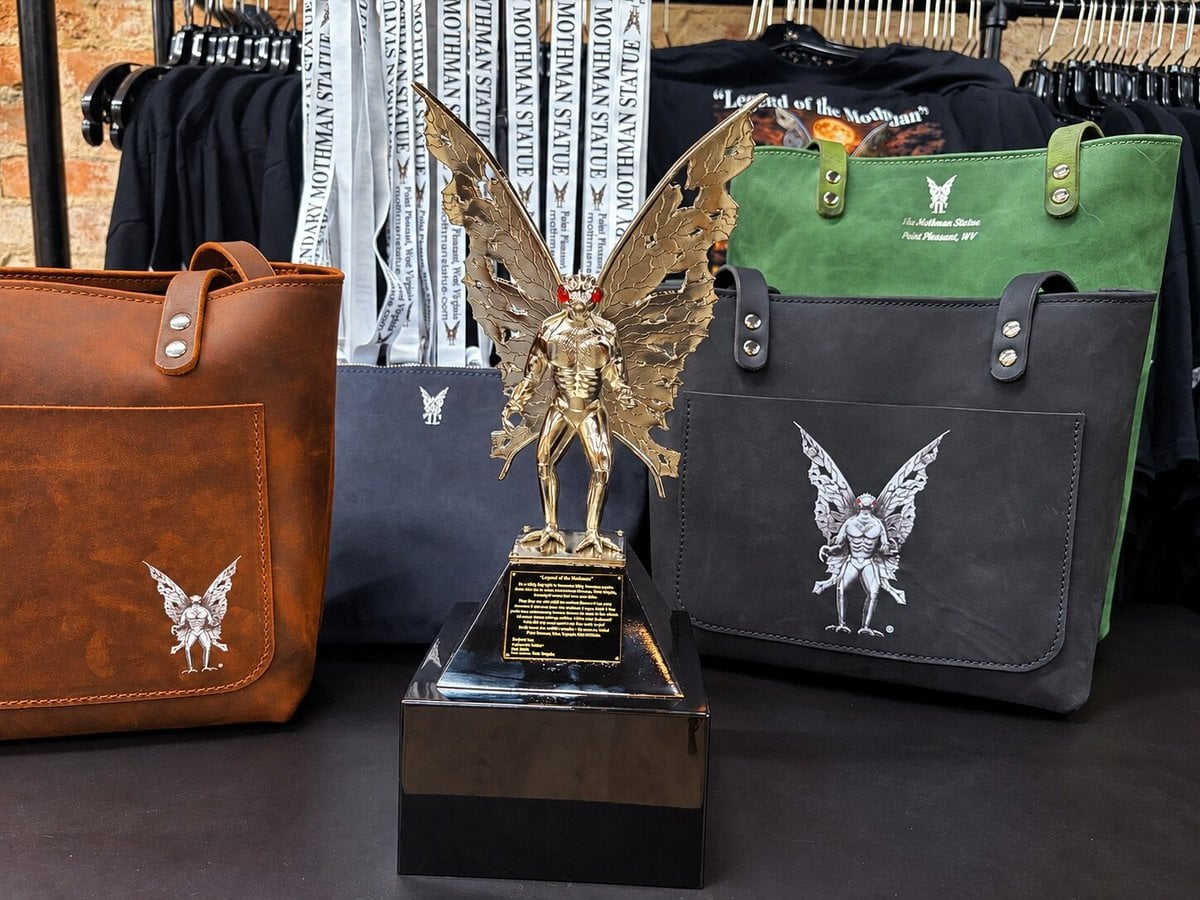
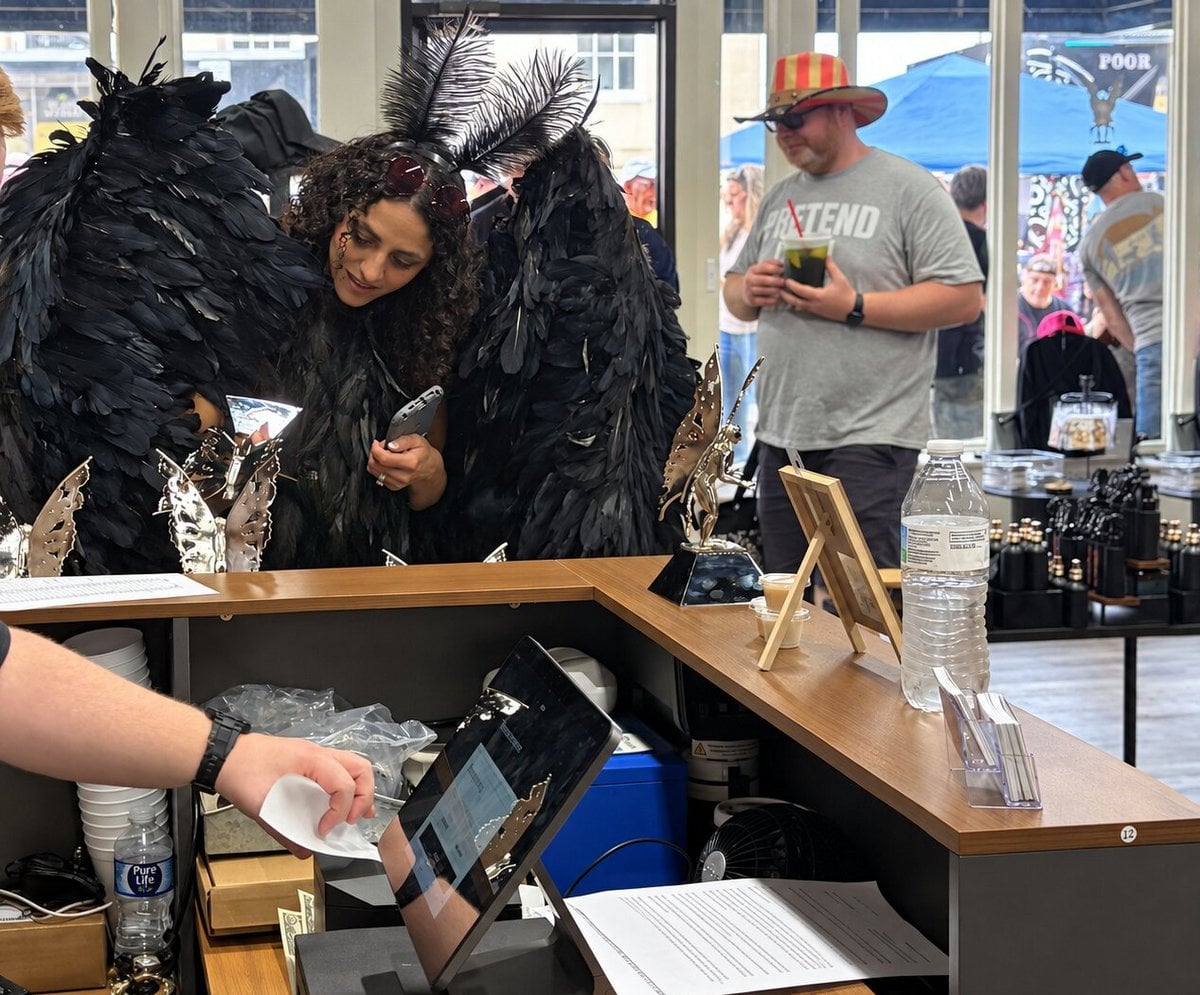
Roach died in 2015. Miller is now working to make the sculptor’s story more visible alongside the legend surrounding his creation. She recently opened The Mothman Statue Legacy at 326 Main Street in Point Pleasant, a store devoted to her father’s work and merchandise based on the statue. She also operates MothmanStatue.com.
For Miller, the project is partly an effort to preserve the story of the welder behind a sculpture that eventually became more famous than its creator. “There was a person behind these statues,” she said. “I don’t want him to be forgotten.”
Roach’s Mothman still stands on Main Street more than two decades after he doubted anyone would continue paying attention to it. Its appearance also preserves something less obvious: details Roach gathered from people who said they had seen the creature themselves.
His shop was in Letart, out Broad Run road, not in Point Pleasant.