
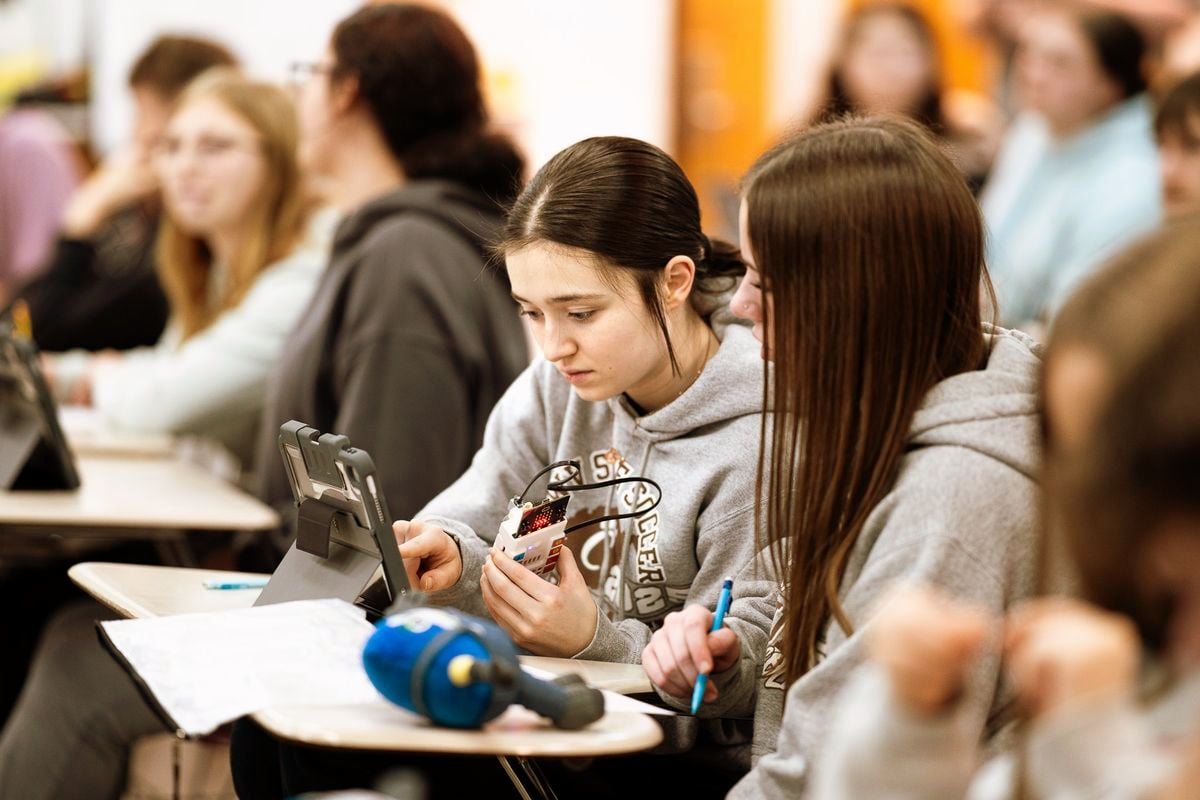
MORGANTOWN, W.Va. — A new $2.6 million initiative is expected to help 15,000 West Virginia middle- and high-school students learn how to develop ideas, solve real-world problems and potentially turn those ideas into businesses.
West Virginia University officials announced Monday that the three-year effort will bring teachers, business experts, and community partners together to give students hands-on experience developing solutions to problems they identify in their schools and communities.
The Appalachian Regional Commission’s POWER Initiative, a federal program, supports the initiative and invests in Appalachian communities affected by changes in the coal economy. The program supports efforts intended to create jobs, develop new industries and diversify local economies.
University officials say the project represents a $2.6 million investment, including $1.14 million in matching funds and university support.
Students will learn how ideas become opportunities
University officials call the new effort the STEAM Innovation Alliance. It combines two existing programs — one that brings hands-on science and technology projects into West Virginia classrooms and another that teaches young people how to develop and test ideas that could become businesses or community projects.
Students will learn how to identify a problem, develop a possible solution, work with others, determine whether their idea meets a real need, and explain or pitch the idea to others.
The scale is far larger than that of the university extension service’s existing Young Innovators program alone. That program reached 147 students at 13 schools in nine West Virginia counties during the 2025–26 school year.
Students worked with teachers and mentors to identify community needs and develop projects in response. Fourteen youth-led projects received funding of up to $3,500 each to help students put their ideas into practice.
The new combined initiative is projected to reach 15,000 students and 300 educators over the next three years.
Creating reasons for young people to stay
University officials have previously linked youth entrepreneurship to the broader challenge of creating opportunities for young West Virginians in their own communities.
When the university received funding to expand Young Innovators in 2023, Lauren Prinzo, a community and economic development specialist with WVU Extension, said young people often leave the state to find employment.
Prinzo said entrepreneurship could give young people another option: creating opportunities in West Virginia rather than leaving the state to find them.
“The Young Innovators program gives youth an opportunity to explore entrepreneurship and innovation in their home school as well as the skills and confidence needed to turn ideas into opportunities,” Prinzo said Monday.
She said the new investment is intended to help develop talent that can support West Virginia’s future workforce, economy, and communities.
The connection between education and economic development is also central to the federal program supporting the initiative.

The Appalachian Regional Commission’s POWER Initiative directs federal resources toward Appalachian communities affected by changes in the coal industry. Its investments include workforce development, entrepreneurship, and other efforts intended to create jobs and diversify local economies.
Program begins with four West Virginia counties
During the 2026–27 school year, the new initiative will begin working with groups of teachers in four West Virginia counties. The university did not identify those counties in its announcement.
The effort is expected to expand to six additional county groups in its second year and eight more in its third, creating a growing network of teachers who can bring the program into their classrooms.
Beverly Wendland, WVU Provost and Vice President for Academic Affairs, said the program centers on educators’ ability to provide opportunity.
“This grant is an investment in West Virginia’s future—one that recognizes that innovation begins with opportunity and that our educators are essential to creating that opportunity for students,” Wendland said.
Wendland said the program is intended to help students develop technical skills while also learning the creativity and problem-solving abilities needed to use those skills.
The W.Va. Public Education Collaborative and WVU Extension are leading the project. It will also provide additional training for participating teachers and develop a new university credential for educators who specialize in the approach.
By the end of the three-year project, organizers expect the effort to have reached 300 educators and 15,000 students, with the larger goal of helping young West Virginians develop skills they can eventually put to work in their own communities.
Read also: POWER initiative funds new Peters Mountain Trail System