
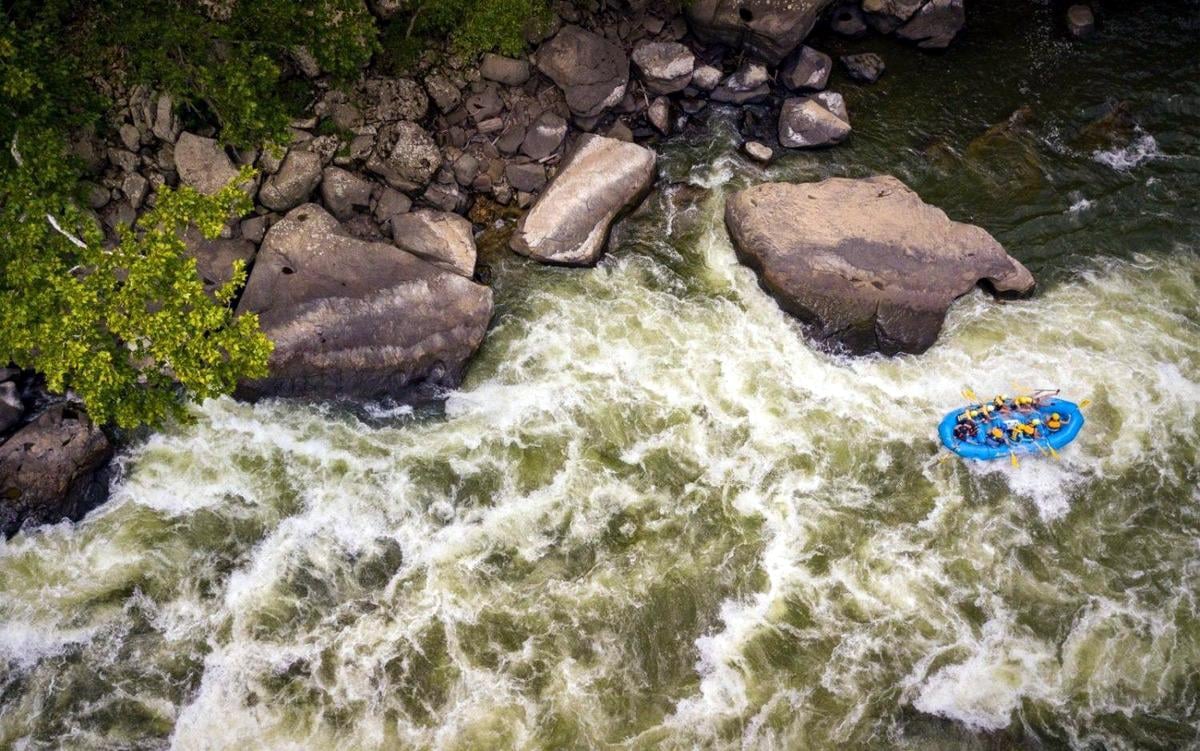
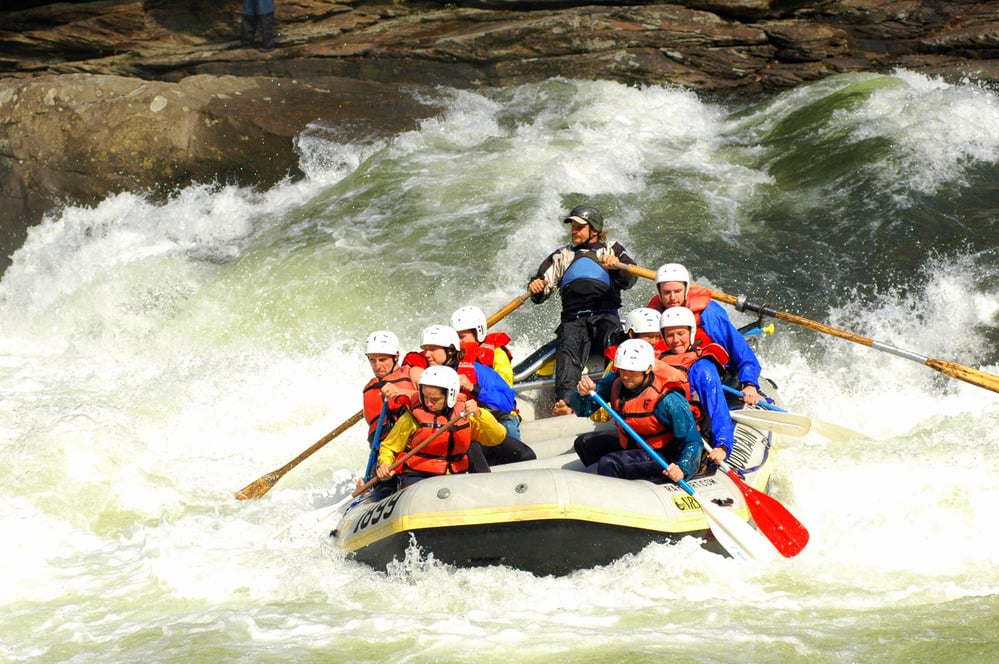
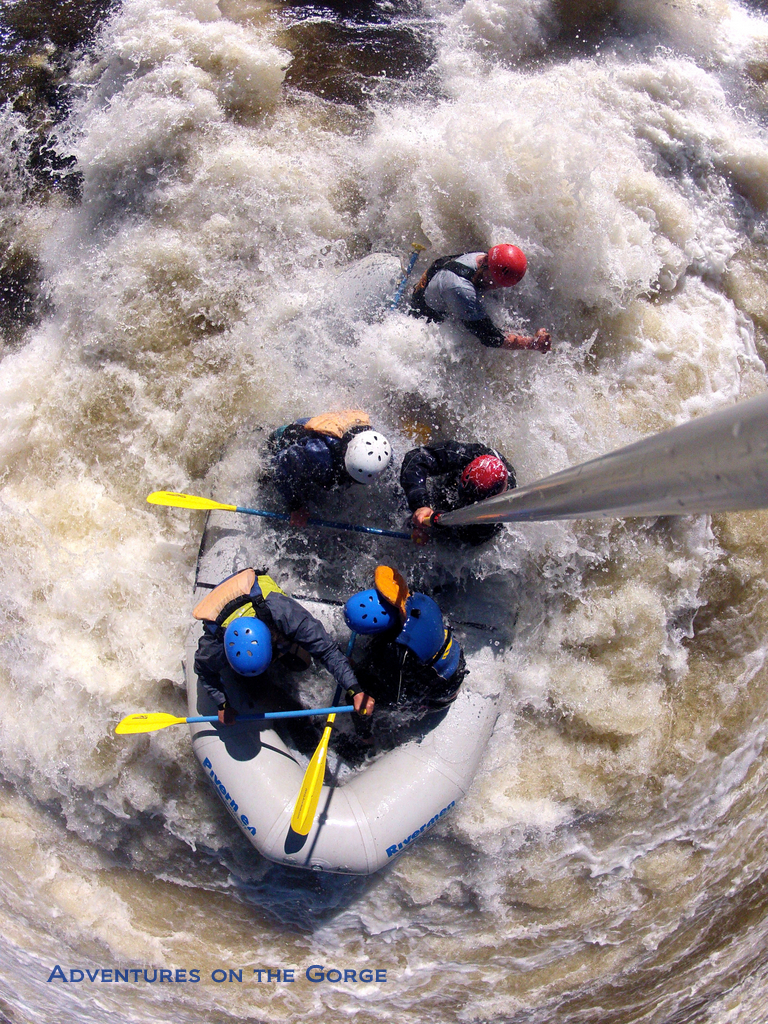
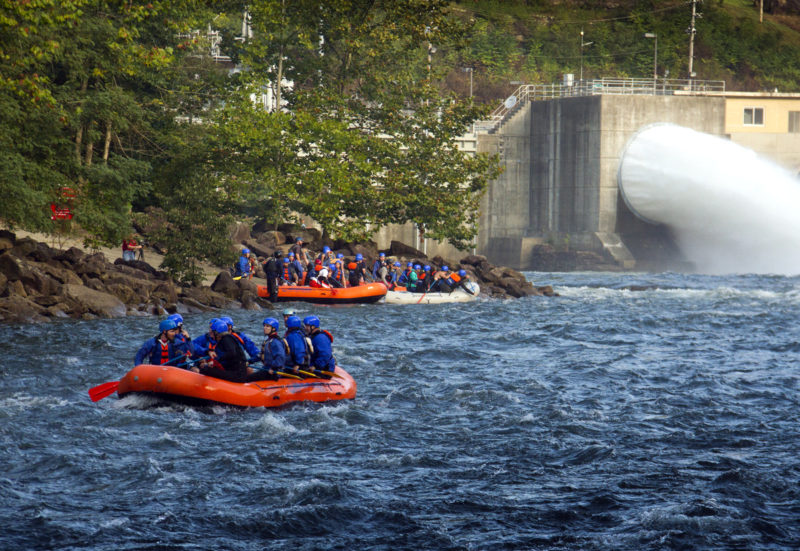
SUMMERSVILLE, W.Va. — Every autumn, thousands of paddlers descend into West Virginia’s mountains to run the Gauley River, one of the world’s celebrated whitewater runs. They come for rapids named Pillow Rock, Lost Paddle, and Sweet’s Falls, as scheduled releases from Summersville Dam send enormous volumes of water through the river’s rugged gorge.
But the river itself bears a name that has proven much harder to explain. Historians have proposed French and, more recently, Scottish origins, while historical accounts preserve entirely different Indigenous names for the river. No surviving account definitively explains where “Gauley” came from or what the word originally meant.
The mystery dates back at least to 1774. That year, before the American Revolution and nearly nine decades before West Virginia became a state, a surveyor traveling through what is now West Virginia recorded that his party was “crossing Gauly mountain.”
A name appears in the wilderness
Surveyor Thomas Hanson was traveling west in 1774 with a party that included surveyor John Floyd. On April 13, Hanson recorded that the party traveled about 27 miles while crossing Gauly Mountain.
The West Virginia and Regional History Center at West Virginia University holds the original journal. Hanson offered no explanation for the name, but his entry shows that a recognizable form of “Gauley” was already associated with the landscape by 1774.
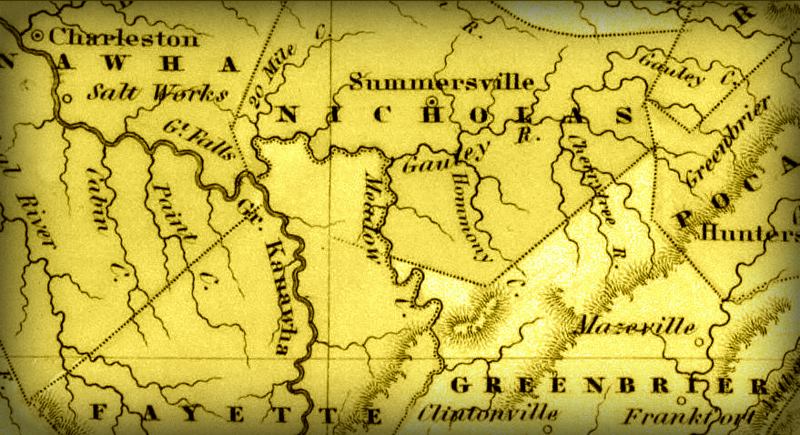
Fourteen years later, another version appeared in an official Virginia record. When the Virginia General Assembly created Kanawha County in 1788, lawmakers described the new county boundary as crossing the Great Kanawha River “at the end of Gawly mountain.” The spelling differed, but a recognizable form of the name was clearly in use.
West Virginia historian John P. Hale encountered the same puzzle while researching the region more than a century ago. In Trans-Allegheny Pioneers, Hale noted that “Gawly” was the earliest spelling he had encountered in Virginia’s statutes, before acknowledging the limits of what he could determine.
“How the stream got the name of Gauley, or what it signifies, I don’t know,” Hale wrote.
The river had other names
The uncertainty does not mean the river was unnamed before European settlement. Native peoples had used the Gauley River region for thousands of years, and the National Park Service reports that archaeological evidence indicates Indigenous people hunted and fished in the area for about 10,000 years before permanent European settlement began in the late 1700s.
Hale recorded two Indigenous names for the river. He wrote that the Miami called it “Chin-queta-na-cepe-we” and that the Delaware called it “To-ke-bel-lo-ke,” which he translated as “Falling Creek.”
Treat these accounts cautiously because Hale recorded them long after Europeans entered the region, and different peoples could have known the same river by different names. Still, “Falling Creek” is an intriguing description of a river now famous for its steep descent through the mountains. The modern whitewater section drops more than 668 feet in about 25 miles and contains more than 100 rapids, according to the National Park Service.
Was Gauley a French name?
One persistent explanation links Gauley to France. Hamill Kenny’s 1945 reference West Virginia Place Names has been cited to support the proposition that the name probably derives from “Gaul,” the ancient name for a region that included much of present-day France. Versions of that explanation have since appeared in histories, tourism literature, and reference works.
Another tradition is more specific. A W.Va. Department of Environmental Protection history of the watershed attributes the name to a French trapper called “Gauloise,” citing West Virginia historian and folklorist Lucullus Virgil McWhorter. Neither explanation, however, provides a contemporary account showing someone naming the river for Gaul or for a trapper named Gauloise.
A third explanation links Gauley to an old French word rendered as “Gaud,” supposedly describing something exuberant or showy. That interpretation has also circulated in West Virginia reference material, though a documentary connection between the word and the river has not been established.
Could the answer be in Scotland?
A very different possibility has emerged from the Scottish Borders. Historian David Phillips has proposed a link between “Gawly” and Galashiels, a town south of Edinburgh through which the Gala Water flows.
Phillips noticed the connection while reading John Buchan’s World War I novel Mr. Standfast, in which a character from Galashiels refers to his hometown as “Gawly.” Phillips contacted the Scottish Borders Archive and Local History Center, where archivist Helen Darling told him she had heard older residents of Galashiels pronounce the town’s name “Gaw-ly.” She also noted that “Gala” is commonly used as a shortened form of Galashiels, as well as the name of the river flowing through it.
The resemblance is striking, especially given that immigrants from Scotland and the border regions moved into Appalachia during the 18th century. However, no known document identifies a particular immigrant from Galashiels who transferred the name to the West Virginia landscape, leaving the Scottish connection as another possibility rather than a documented origin.
A famous river with an unexplained name
The surviving record leaves the chronology incomplete. People had lived, hunted, and traveled in the region for thousands of years, and different Indigenous peoples had names for the river. By April 1774, a surveyor was writing about “Gauly Mountain,” and by 1788, Virginia lawmakers knew the feature as “Gawly Mountain.”
Somewhere before those records were made, the name had entered common use, but the moment it happened—and the person, language, or place that supplied the word—has apparently disappeared from the historical record.
Today, the mystery is attached to a river far better known than it was when Hanson crossed the mountains. The Gauley is protected in part within the Gauley River National Recreation Area, and the National Park Service describes its steep gradient, large waves, technical rapids, and remote scenery as making it one of the world’s premier whitewater runs.
More than 60,000 whitewater adventurers visit the river annually, according to the park service. During the 2026 Gauley Season, controlled releases from Summersville Dam are scheduled across six weekends from Sept. 11 through Oct. 18.
For many paddlers today, “Gauley” has an unmistakable meaning: enormous whitewater in the mountains of West Virginia. More than 250 years after Thomas Hanson crossed “Gauly Mountain,” however, the origin of the name itself remains one of the river’s unanswered questions.
I wonder what the river looked like 2-3 hundred years before the dam? Would it have been as swift, treacherous, wide, fast, etc.? Could it have been so small, calm, that someone, a surveyor perhaps, way back, would have called it a “Gully”? Just a thought.
Had my first experience whitewater rafting on Gauley River. It was in July in middle 1970s so water level was low. Scenery was gorgeous, rocks the size of houses. Four family members in a inflatable raft. Somewhere about halfway down from where we started, raft got a whole in it so we had to walk 5 miles down the railroad tracks to where vehicles were. Having to carry all life jackets, oars, a gallon jug of lemonade and of course the raft. When you’re young it doesn’t register in your brain the possible perils you put yourself in. Was memorable and fun though.